When the company started we offered two products - scalable blockchain and a crypto-powered debit card, but with a 90% focus on the scalable blockchain side. This was right at the start of 2018 when the entire cryptocurrency market had just entered a bear market.
Venture Capital vs. Bootstrapping: Ian Kane On How To Determine If Fundraising Or Bootstrapping Is The Right Choice For Your Startup
INTERVIEW QUESTIONS.
(If you are unable to download it, please click File-Download)
Please answer the questions, and leave the questions formatted as they are in the document. We may schedule a follow-up call or skype to round things out.
Samples Here
Founders are often faced with the nagging question of whether Fundraising or Bootstrapping is the best choice for them. What is better, having access to capital or maintaining full control over your vision and profits? What is preferred, to have the seasoned oversight of an experienced investor, or to plow forward with a disruptive and pioneering 'can do' attitude? Of course, every situation is different, but what standards can be used to help a founder decide? As a part of this series called “Venture Capital vs. Bootstrapping: How To Determine If Fundraising Or Bootstrapping Is The Right Choice For Your Startup”, I had the pleasure of interviewing Ian Kane
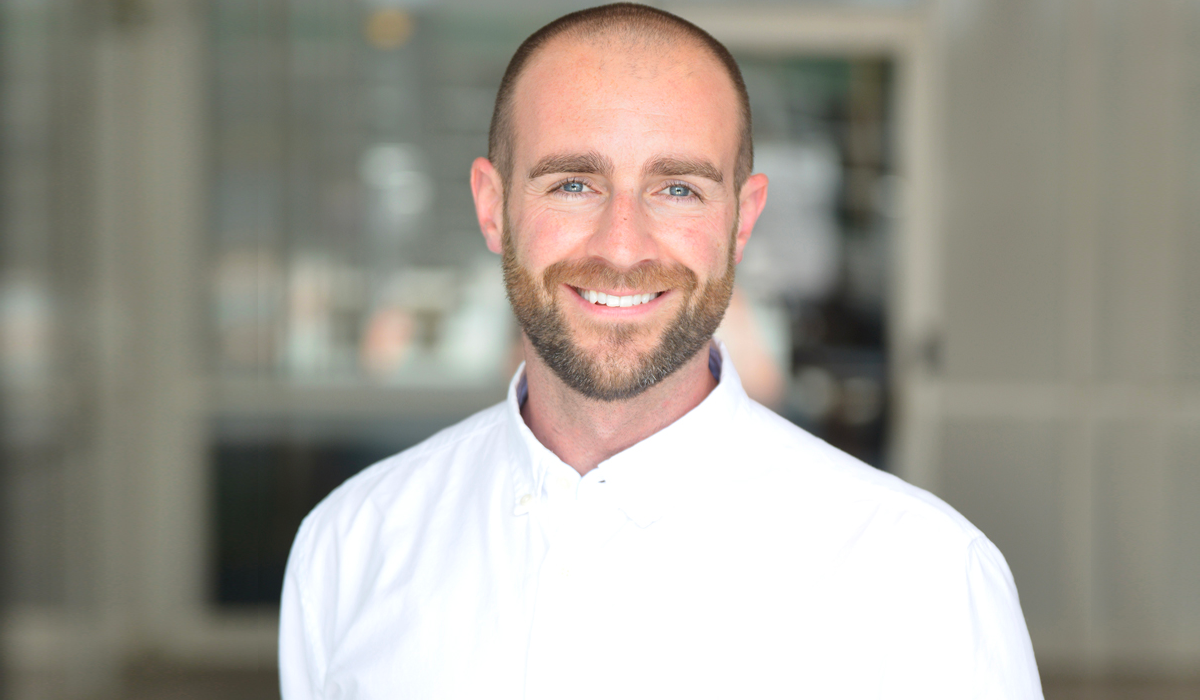
Ian Kane is the Co-Founder of Unbanked, a global fin-tech solution built on blockchain. Predicated on the ethos that people should be in control of their own money, Unbanked connects traditional enterprise, fin-tech, and banking systems with blockchain infrastructure, expanding the utility of cryptocurrency for investing and everyday purchases like never before.
Thank you so much for doing this with us! Before we dive in, our readers would love to learn a bit more about you. Can you tell us a story about what brought you to this specific career path?
Before starting Unbanked, I worked in the advertising technology space for many years in NYC. Being in the tech industry I was exposed to Bitcoin early on, but like many others, I couldn’t understand what gave Bitcoin its value - until I started researching blockchain. The more I understood about blockchain, the more I began to see how this new protocol could improve many aspects of finance and payments. However, at that time infrastructure was lacking and most people were genuinely confused about the differences between blockchain and cryptocurrency or why it was even necessary to begin with.
I was at a fork in the road, looking in one direction at the ad-tech industry which was largely established with big players. In the other direction was the wild west of nascent technology and opportunity. It was probably similar to what people felt like in the early days of the internet. I decided to make the switch and couldn’t be happier. Over 3 years later I still think I’m super early in the space and learning new things every week.
You are a successful business leader. Which three character traits do you think were most instrumental to your success? Can you please share a story or example for each?
Great question! Persistence, Flexibility, and a Sense of Urgency.
Hands down persistence is the thing that I believe is most important for any Entrepreneur. When the company started we offered two products - scalable blockchain and a crypto-powered debit card, but with a 90% focus on the scalable blockchain side. This was right at the start of 2018 when the entire cryptocurrency market had just entered a bear market (which would last years). For months we were selling a scalable blockchain solution without any sales, while the market just continued to drop and overall customer confidence in the industry remained low. It’s really hard to stay motivated without a single sale and what looks like the entire industry imploding, but progress is oftentimes two steps forward, one step back.
Focusing more on our card product resulted in more traction. That leads me to flexibility. It can be tough as an entrepreneur when no one sees your vision or buys your product, but you need to be flexible and listen to market feedback. I like Jeff Bezos’s quote, “stubborn on vision and flexible on details.”
Last, is a sense of urgency. This space is 24/7/365 and global, so there is always someone, somewhere around the world looking to build a solution to compete. I never worry too much about the competition I know about, but rather the competitors I don’t know about. That’s why moving with a sense of urgency is important - never put off to tomorrow what you can accomplish today.
Are you able to identify a “tipping point” in your career when you started to see success? Did you start doing anything different? Are there takeaways or lessons that others can learn from that?
Success came in small waves rather than one big tsunami. It was hitting the first milestone of 5,000 customers, then 20,000, then 50,000, etc. As we release more product features, we would gather and retain more customers. These milestones also coincided with new business partners or new product features. This was important because it allowed our team to develop a reputation for executing and delivering. In turn, it leads to more customer confidence and that fed a virtuous cycle.
The biggest tipping point for us in the last 12 months was when we opened a Reg-CF crowdfund in June 2020. Unbanked had already developed a strong reputation in the space and a good-sized customer base. We thought it would be a great idea to allow the people who use our product to also invest in our long-term success. We opened and in a matter of months hit the legal limit (at that time) of $1,070,000. This was the second time we had an oversubscribed investment round and that capital infusion allowed us to grow our team from about 15 people to 40. Most important, our customers now own a piece of the overall value we create as a company. It’s a great feeling!
None of us are able to achieve success without some help along the way. Is there a particular person or mentor to whom you are grateful who helped get you to where you are? Can you share a story about that?
I’m most thankful for the people that went out of their way to help us in our early days, without ever expecting something in return. It came in the form of taking their time to give us advice on a certain situation or more often than not - a warm intro to a potential partner. Some entrepreneurs may underestimate the value of a warm introduction, but it can do a lot for an unknown startup that is looking to get its foot in the door.
One name I will share is Tom Tiedemann who I ended up meeting at a party thrown by someone else who also helped us in our early days. Tom was instrumental in opening some doors for us like a warm intro and generally being supportive of our company mission. Those partners Tom introduced us to did their due diligence on us like they would any company, but that warm intro helped us as an early-stage startup with a little reputation at the time.
You have been blessed with great success in a career path that many have attempted, but eventually gave up on. Do you have any words of advice for others who may want to embark on this career path but are afraid of the prospect of failure?
Failure is part of the process. No one ever gets it right on their first try. Failure is also a great educator. I think people need to be honest with themselves if they are ready to handle some level of failure as part of the process.
I also think people need to be financially secure to undertake an entrepreneurial journey. Anyone launching a startup should start and operate as a side hustle for as long as possible. It gives you the best chance to be financially stable and create a track record of success.
However, most investors will not give you money if you’re not doing it full time, so at some point, you will need to make the jump to full time. When you do make the transition, make sure you have a year’s worth of savings. Inevitably things come up and being an entrepreneur is stressful. Adding personal financial stress only compounds it.
Ok, thank you for that. Let’s now jump to the main part of our discussion. Can you share a story with us about your most successful Angel or VC investment? Or an investment that you are most proud of? What was its lesson?
I’m most proud of our Reg-CF capital raise because it demonstrated the way the public saw Unbanked and the value they put on what we were doing. However, it wasn’t easy. I had to answer close to 800 public questions on our investment page over the course of 6 to 7 months, and almost all within 24 hours. Most people don’t know this, but I was actually on my honeymoon and the only thing I was allowed to do work-wise was respond to potential investor questions!
I’m most proud of it because I had to earn it every step of the way and from over 3,500 different people. Best of all, we have a Reg A+ scheduled for the coming months, so I get to do it all over again, but on a much larger scale!
Can you share a story of an Angel or VC funding failure of yours? What was its lesson?
We have been rather lucky. Outside of not getting an investment at the terms we wanted, we never had any large failures. One thing I would caution any Entrepreneur on is working with companies or individuals who require you to pay them money in order to raise money. That is 99.9% of the time a red flag and we were pitched that concept countless times. If someone needs to spend a small sum of money on materials, that’s fine, but oftentimes we were pitched on the idea of paying 5 or 6 figures for “due-diligence” or “research” into what we are doing. That was a hard pass!
Super. Here is the main question of this interview. Let’s imagine that a young founder comes to you and asks your advice about whether Fundraising or Bootstrapping is best for them? What would you advise them? Can you kindly share “5 things a founder should look at to determine if fundraising or bootstrapping is the right choice”? If you can, please share a story or example for each.
My initial reaction is to recommend a Founder bootstraps for as long as they can if they can. However, the devil is in the details and for certain companies or industries, this isn’t possible. The 5 things a founder should look at when deciding fundraising or bootstrapping are:
Barriers to Entry - What is the capital expenditure needed to start the endeavor? For most tech companies, the barrier to entry is rather low and can be started with sweat equity and $1,000. Usually, an Entrepreneur will build an MVP (minimally viable product) to test their product fit in a market before expanding. This could be a simple website or app and also allows the founder to easily pivot if necessary. However, for something like a car wash you’re going to need significant capital to buy the machinery to get started and you may not want to take on that risk alone.
Market Size and Growth Potential - Are you building in a market that is expanding or has it already consolidated? Tapping into an unserved market with new technology or product gives you a huge opportunity to capitalize and grow organically. On the flip-side, if you’re entering an already established market with large competitors then-new technology alone may not be enough. For example, a large competitor may not be able to compete with you on tech, but could just decide to lower prices and lose money until you’re out of business. Having some funding would enable you to compete long term making the larger competitor rethink their strategy.
Type of Investment Capital - All dollars are green, but all investment capital isn’t equal. What does an investment give you outside of the capital? For example, a Venture Capitalist may have other portfolio companies that could complement your business or they could open doors in other areas because they have a vested interest. Keep in mind that a VC typically has many portfolio companies and will spread their time across each.
Crowdfunding is another option. This enables many retail investors to each contribute a smaller amount of capital towards your company. Often times your customers are your investors and your investors are your customers. This cross-pollination will allow your business to grow and those investors to benefit long term.
A combination of both retail capital and venture capital is probably the best approach for a founder. The important thing is to value your company appropriately and set deal terms that are a win-win. A square deal, that allows the Entrepreneur to build their company with the funding they need, and for the investors to capitalize on the success of that Entrepreneur for fulfilling the vision.
Age of the Company - Have you been bootstrapping already? If so, what would capital give you at this stage? Many Venture Capitalists look for roughly $5 million ARR (annual recurring revenue) to make an investment and will likely invest $500k - $1 million for 10-20% of the company. This doesn’t mean you can’t get investment at an earlier stage, it’s just more difficult. The question you need to ask yourself as a founder is if you’re doing millions in annual revenue, what would that investment capital do for your business? Could you get to $20 million or would giving up 20% of your company just to get to $8 million?
End Goal - There are 3 likely paths for a company. A sale of the company, a public market listing like an IPO, or just retained ownership while making a profit or paying dividends. The founder needs to be honest with themselves as to what they want long term and this will help them decide if taking an investment aligns with that vision. By taking an investment, the founder now has a fiduciary duty to those investors.
You are a person of enormous influence. If you could inspire a movement that would bring the most amount of good to the most amount of people, what would that be? You never know what your idea can trigger. :-)
There are many, but two things that stick out to me personally are income inequality and untreated mental health issues. These exist on various levels of severity based on country, but in my opinion, many of the other issues around the world can be helped tremendously by first solving those two.
How can our readers further follow your work online?
You can connect with me personally on LinkedIn https://www.linkedin.com/in/iankane1/ or follow me on Twitter https://twitter.com/IamIanKane. You can learn more about my company Unbanked at unbanked.com or by following the company on Facebook facebook.com/unbankedhq , Twitter @unbankedhq, Linkedin linkedin.com/company/unbankedhq, and Instagram @unbankedhq.
Thank you so much for this. This was very inspirational, and we wish you only continued success and good health!