We spent 3 years building and growing Bridge2Act, and I also wrote and published my first book, How to Pack: Travel Smart for Any Trip during that time.
(Hitha Palepu): Five Things I Wish Someone Told Me Before I Became A CEO
As a part of our series called ‘Five Things I Wish Someone Told Me Before I Became A CEO’ we had the pleasure of interviewing Hitha Palepu.
Hitha Palepu is a consummate multi-hyphenate. She is an entrepreneur, author, and speaker. She is the CEO of Rhoshan Pharmaceuticals, whose lead product was acquired by Hyloris Pharmaceuticals. She is the author of We’re Speaking: The Life Lessons of Kamala Harris (Little, Brown Spark) and How To Pack: Travel Smart for Any Trip (Clarkson Potter). #5SmartReads is her Webby-honored news curation that reaches over 82,000 accounts. Hitha is a sought-after speaker on the topics of entrepreneurship, investing, parenting-work juggle, and on diversity and inclusion. She lives in NYC with her husband and two sons.
Thank you so much for joining us in this interview series! Before we dig in, our readers would like to get to know you a bit more. Can you tell us a bit about your “backstory”? What led you to this particular career path?
It really did start in college. I attended the Unversity of Washington, where I majored in both chemistry and history with the goal of becoming a doctor or a lawyer. A marketing internship my junior year opened my eyes to opportunities in business, and I spent the rest of my time in college in sales and marketing internships at different companies and was offered a role at Cisco Systems’ competitive Sales Associates Program after graduating. After completing the program and spending two years on the Global Pharmaceuticals team, I was ready to be in the pharmaceutical industry instead of supporting it as a vendor. As luck would have it, my father’s company SciDose was beginning to grow and I joined the company in 2009 as a project manager. Working at SciDose took me on the road 3 weeks out of every month, and I started my blog Hitha On The Go as a creative outlet that I could do anywhere. Over the next few years, my role grew to oversee operations and later business development as my blog became a leading travel and packing website. In 2014, I found out I was expecting my first child and decided to step away from pharmaceutical development and build a impact-focused technology company with my close friend and former Cisco colleague. We spent 3 years building and growing Bridge2Act, and I also wrote and published my first book, How to Pack: Travel Smart for Any Trip during that time. When it was clear that we hadn’t found product-market fit for B2A, we wound down the company as my father approached me to step into Rhoshan Pharmaceuticals as CEO in 2017. I spent the next few years raising a $5M seed round, building out a clinical advisory board, and identifying and entering diligence with potential commercial partners. I shifted my personal brand from Hitha On The Go to #5SmartReads, a daily news curation and conversation aimed to help people feel informed without being overwhelmed. I also had a miscarriage and gave birth to my second son during that time. In October 2021, we executed a licensing agreement with Hyloris Pharmaceuticals and my second book WE’RE SPEAKING: the Life Lessons of Kamala Harris was published.
Can you share the most interesting story that happened to you since you began leading your company?
I was researching cardiologists that I wanted to join our advisory board, and stumbled across a familiar sounding name in an article about women’s heart attack symptoms being different than men’s. I asked my parents why that name sounded familiar, and they informed me it was former babysitter when I was 6 years old and we lived in Ohio. Reconnecting with her and having her support for our company and me, personally, means the world and was such a serendipitous experience!
Can you share a story about the funniest mistake you made when you were first starting? Can you tell us what lesson you learned from that?
I don’t have a really funny story to share, unfortunately.
None of us are able to achieve success without some help along the way. Is there a particular person who you are grateful towards who helped get you to where you are? Can you share a story about that?
My pharmaceutical career would be completely different had it not been for my father. Nepotism was a significant factor in my career, and it would be inauthentic to say otherwise. That said, my father did so much more than just give me a job. He and his business partner Joe modeled the leadership we sorely need at scale in the workforce today, having built fully remote, asynchronous companies with a culture of deep trust. Both also put a lot of trust in me and made sure I was at every table that they were at, to give me opportunities that would let me grow my skills and experience, and to be incredibly supportive of my non-SciDose goals. There isn’t a specific story that emcompasses this, but so many memories and experiences that made working at SciDose an incredible time in my life. These are the same values and principles I’ve brought to Rhoshan Pharmaceuticals and #5SmartReads, and how I plan to build future companies.
As you know, the United States is currently facing a very important self-reckoning about race, diversity, equality and inclusion. This may be obvious to you, but it will be helpful to spell this out. Can you articulate to our readers a few reasons why it is so important for a business or organization to have a diverse executive team?
For most of my career, I’ve often been the youngest person in the room, or the only woman in the room, or one of the few people of color in a room. It is a very lonely place to be, and I’ve witnessed firsthand how people who have largely the same upbringing and experiences are limited in their viewpoint when making decisions that will significantly impact people, especially those who don’t look like them or have the same experiences. DE&I isn’t a box you check or an afterthought - it’s building a new lens in how you see the world and make decisions, and the people sitting at those tables are what builds that lens. At Rhoshan Pharmaceuticals, it’s working with physicians of different genders, racial backgrounds, and geographies to understand the standard-of-care in their hospitals, who they’re seeing and treating, and what they’re observing. It means recruiting diverse subjects in our clinical studies. At #5SmartReads, it means hiring diverse contributors who I can also learn from. Not a single one of us has all the answers, and surrounding ourselves with others we can learn from is simply vital.
As a business leader, can you please share a few steps we must take to truly create an inclusive, representative, and equitable society? Kindly share a story or example for each.
I find it really hard to offer answers here, but I hope my answer above is sufficient.
Ok, thank you for that. Let’s now jump to the primary focus of our interview. Most of our readers—in fact, most people—think they have a pretty good idea of what a CEO or executive does. But in just a few words can you explain what an executive does that is different from the responsibilities of the other leaders?
I view my job as a CEO to make sure my team has the resources they need to do their jobs, to communicate regularly to our shareholders and partners, and to facilitate and make decisions with the right people at the table. My job is also to look ahead and plan for the future as best as I can, and to continue to seek more information or perspectives to refine these plans and the direction we are moving in. I regularly audit my calendar and sent mail folder to see where I’m spending my time, the impact each activity has on the company’s key goals, and adjusting where and how I spend my time. The other leaders in my company are focused on a particular development or business function, and they own that entire function, whether it’s operations and finance or manufacturing or clinical development.
What are the “myths” that you would like to dispel about being a CEO or executive. Can you explain what you mean?
My answer in the following question addresses this question!
What is the most striking difference between your actual job and how you thought the job would be?
When I think of a CEO, I still think of an older white man, wearing a suit and sitting at an intimidating desk reviewing documents or listening pensively to people sitting in the seats in front of his desk. My reality as a CEO could not be more different. I try to cram in my meetings in the hours my kids are at school or at camp, am catching up on e-mails while sitting on my couch with reality television in the background, and spend most of my time touching base with people and scheduling meetings to provide updates and make decisions. I thought that people worked for a CEO, but in reality I find myself working for my team to make sure they have everything they need to drive development and company operations forward, and making sure everyone is on the same page.
Do you think everyone is cut out to be an executive? In your opinion, which specific traits increase the likelihood that a person will be a successful executive and what type of person should avoid aspiring to be an executive? Can you explain what you mean?
I don’t think everyone wants to be an executive or should, but I will say that mothers make the best executives and leaders. We are extremely comfortable with rejection and negotiating with difficult people, are great at managing cash flow, and can make difficult decisions. All of these traits are cultivated and honed in the home, but they aren’t valued unless they’re gained in a professional setting. Care work IS work and an excellent indicator of success as an executive, and I know this firsthand. I’ve gained more of these skills in raising my two sons than I have in any of my jobs.
What advice would you give to other business leaders to help create a fantastic work culture? Can you share a story or an example?
I mentioned it earlier, but embracing a fully remote, asynchronous work is great for your team and for your bottom line. If your team is happy and fulfilled and respected, they will be productive. At SciDose, we co-developed 5 commercialized products in this manner, and we will do the same for RHO-11 (our lead product at Rhoshan Pharmaceuticals). This is the same culture we have for #5SmartReads and my other content partnerships.
How have you used your success to make the world a better place?
The free labor that keeps the world running disproportionately falls on the shoulders of women, and moms especially. We do not value care work commensurate to the impact it makes on a personal level nor at a company-wide or country-wide level. We need to talk about more widely, and then offering better, more accessible solutions. My personal North Star is to help women save time and energy on the things they have to do so they have time and energy to do the things they want to do, and every piece of content I publish or partnership I accept must deliver on that. It’s why I started #5SmartReads - to help folks get informed on what’s happening, quickly and without overwhelm. And it’s why I offer my team at home that keeps things running here above market wages and flexibility as they need it. On a larger scale, I contribute my time, money, and platform to talk about this at a greater scale. I’m an advisor to Mother Honestly, who is equally committed to this mission. I serve on the boards of Youth Represent and Feminist Press, to make the greater New York City area more equitable and just and to amplify the stories worth publishing that often get overlooked. There’s so much more I can and want to do, and that will definitely be a big part of my next chapter once our product is on the market.
Fantastic. Here is the primary question of our interview. What are your "5 Things I Wish Someone Told Me Before I Started" and why? (Please share a story or example for each.) - Hitha created a video summarziing the below linked HERE!
I wish someone told me how to hire the right lawyers.
Your lawyers - internal and external - are some of the most important people you will hire, from incorporating your company to helping you execute a sale or licensing agreement. It took us a little while to find the right firm for us, but they were a critical member of our team in executing the licensing deal. Ask your peers about their outside counsel and specific questions on how they’ve handled certain situations you’ve faced and anticipate facing. You also want to make sure your counsel has the right industry experience and experience with companies at your stage and size.
I wish someone told me to add 6 months to any expected deadline
Everything took me longer than I expected - reincorporation and formalizing a lot of legal documents, fundraising, diligence, development activities, dealmaking. Whenever I talk to any new CEO or founder, I tell them all to pad their timelines and to have contingency plans for every issue they (and their team) can think of. When we converted from an LLC to a C-corporation (something we could’ve avoided by hiring the right counsel on the onset), we needed time to let the lawyers correct some of the LLC-specific things before we could reincorporate. I spent those months working on my fundraising plan - researching and writing my target list of investors, refining my pitch deck, organizing the diligence room, and practicing - that led to our successful seed raise once the reincorporation was complete.
I wish someone told me to take my vacation days
I took a very short maternity leave after delivering my second son, and didn’t take a vacation for over two years later because I thought I had to constantly be on and available to anyone who needed me. Even though we were still in negotiations of our licensing deal in August 2021, I put on my out-of-office message and mostly avoided checking my e-mail to spend a week with my family before the school year began, and it was the best thing for myself personally and for the company. I came back refreshed and focused, and it was a much-needed reset in the midst of a chaotic time.
I wish someone told me how to embrace rejection
When you’re a fundraising or deal-focused CEO, you will be told no. A lot. Some of these no’s will be immediate, some will take a while (and raise your hopes in the process), and some will never come but will be hanging out there. “Eating no for breakfast” is one of my favorite pieces of wisdom from Vice President Harris and is the best advice I can relay to a CEO - by shifting your mindset so the “no” is something to be devoured and consumed instead of something you react to and take personally. In that chapter of the book, I pair this advice with cultivating rituals to help you connect with yourself and remind you of who YOU are, versus dwelling on the negative feedback you will get as a CEO and taking it personally. For me, taking care of myself with good health habits and making time to read and craft allows me to show up and handle rejection, setbacks, and the hard moments of being a leader. I got 562 no’s while raising and in diligence with potential partners before I got the 1 yes. A daily Peloton workout, a salad at lunch, 6-7 hours of sleep a night, and hundreds of novels got me through those no’s.
I wish I knew that the deal was just the beginning
Closing a deal is a huge achievement - but integrating with another company and establishing strong communication, new processes, and how to manage conflicts with your new team is what is waiting for you, and it can be just as hard as negotiating and closing the deal. The good news is that you will have a decent lay of the land in who the team is and what their priorities are, but it’s important to communicate that with your team and convene as a larger group more often than not in the beginning, so folks can get to know one another and start building individual relationships. Looking back, I wish I had cleared my calendar for those first few months to focus on this more than I actually had.
You are a person of great influence. If you could inspire a movement that would bring the most amount of good for the greatest number of people, what would that be? You never know what your idea can trigger.
My movement would be to teach people how to think critically. I think the word “critical” has been dragged through the mud lately. The definition of “critical” that I come back to is “involving the objective analysis and evaluation of an issue in order to form a judgement.” I want to teach people to seek out multiple sources, to sort accurate and reasoned sources from commentary and opinions, and to form an informed opinion and communicate it with confidence and respect. College helped hone my critical thinking skills, and it’s the quality I look for when I’m hiring and I’m focused on cultivating it in my children.
Can you please give us your favorite "Life Lesson Quote"? Can you share how that was relevant to you in your life?
“Do something about it, and don’t do it half-assed.” This is one of my favorite quotes from VP Harris’ mother, Shyamala Gopalan Harris, and it’s a powerful reminder to take action and at the best of your ability. You won’t change your life by sitting behind a computer or your phone, wishing for something new. If something doesn’t work as you hoped, you’ll take those lessons learned into your next attempt or to work on another new goal. I’ve never once regretted trying something, but I do wish I had acted on some of the ideas I had.
We are very blessed that some very prominent names in Business, VC funding, Sports, and Entertainment read this column. Is there a person in the world, or in the US with whom you would love to have a private breakfast or lunch with, and why? He or she might just see this if we tag them
I would love to share a meal with Emma Walmsley, the CEO of GSK. Her path into life sciences is unconventional and I think she’s navigated some major challenges at the company with grace and strength, and I have a million or so questions for her!
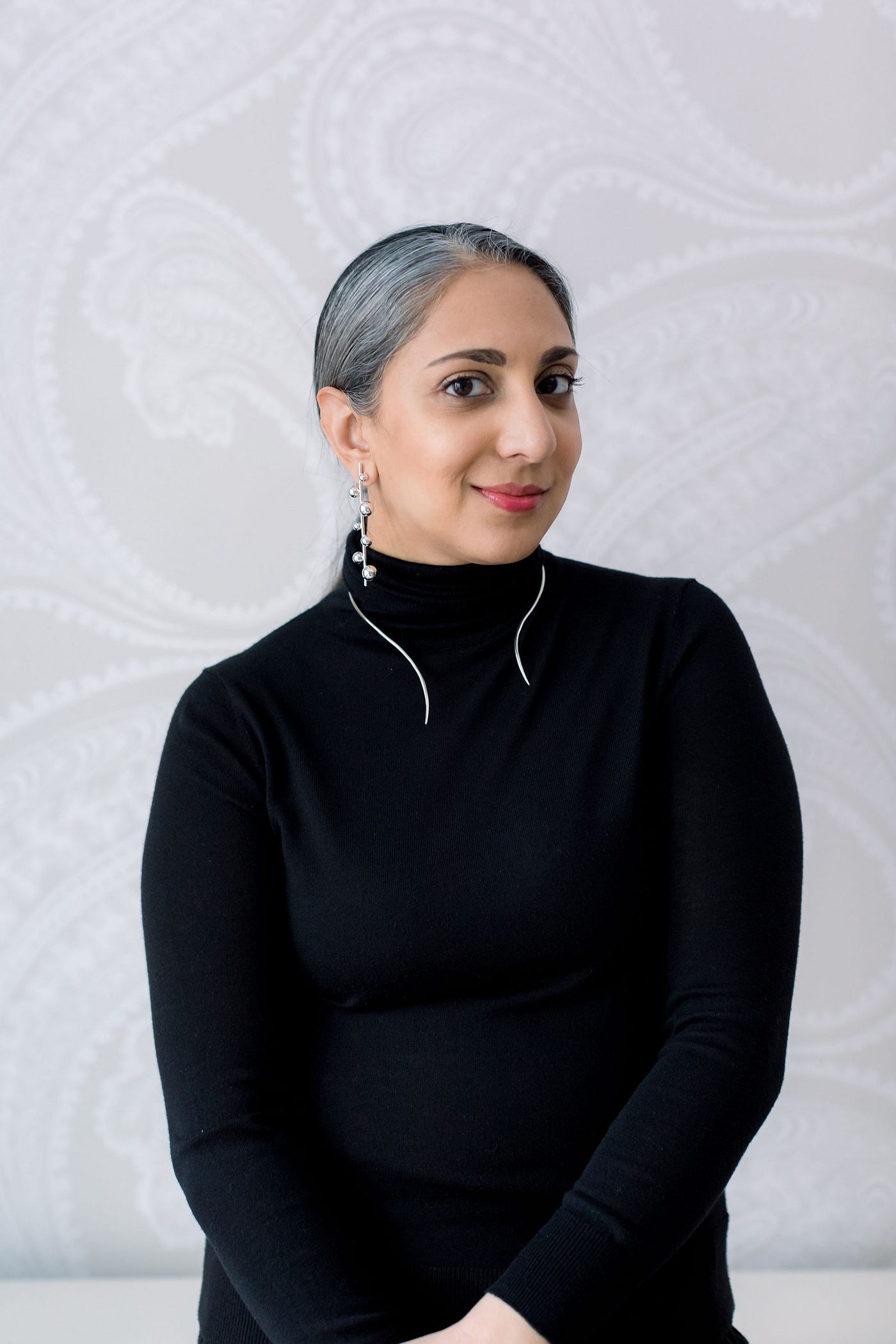
Photography Credit (submitted headshots): Molly Morris