The emotional impact was further magnified, as I could not afford to fail - I had a family that needed my support, including young children.
Hema Tallman and BioLife Plasma Services: I Am Living Proof Of The American Dream
Please see the samples here
Is the American Dream still alive? If you speak to many of the immigrants we spoke to, who came to this country with nothing but grit, resilience, and a dream, they will tell you that it certainly is still alive.
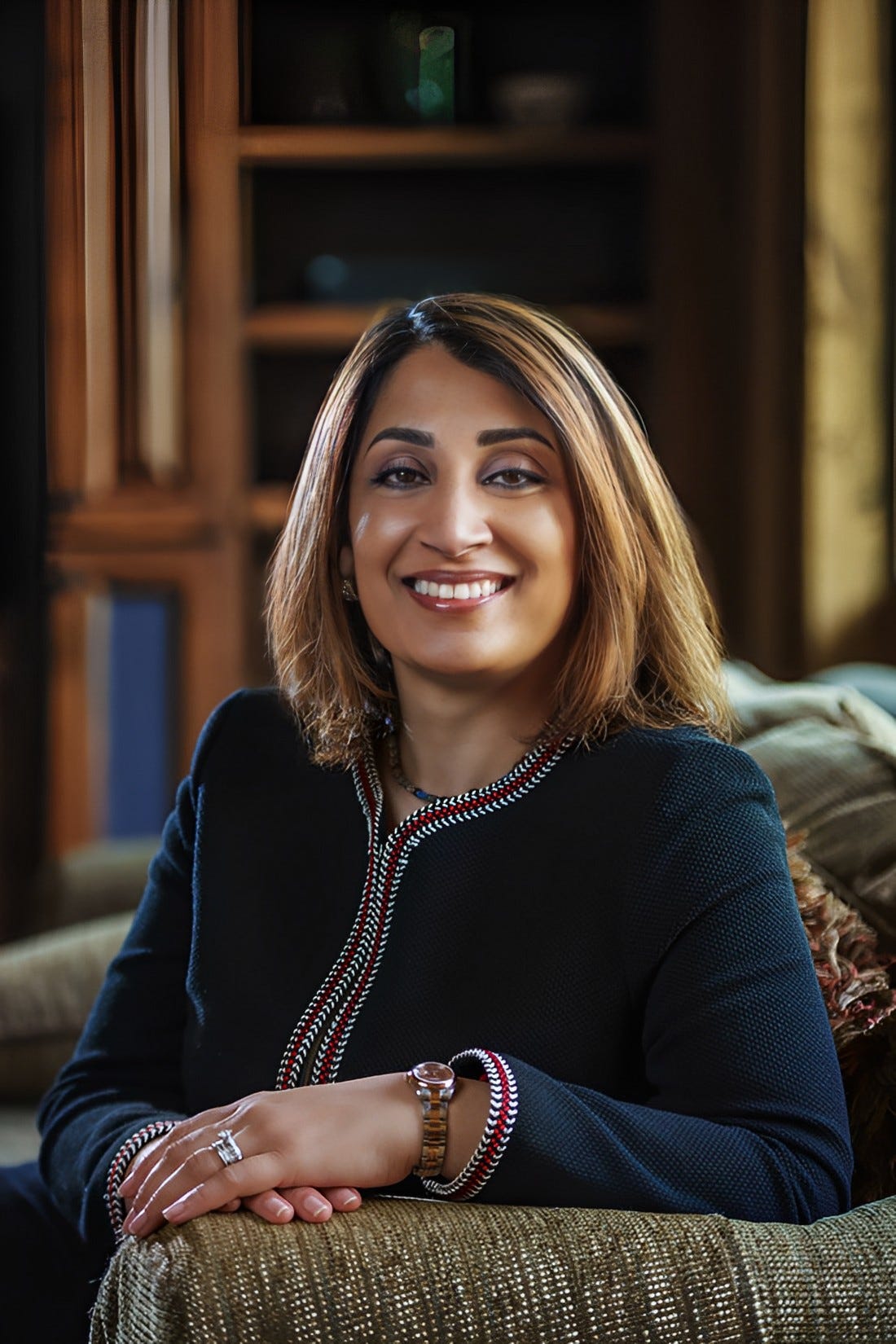
As a part of our series about immigrant success stories, I had the pleasure of interviewing Hema Tallman.
Hema Tallman is a compassionate leader known for transparent and authentic communication and cultivating resilient, high-performing individuals and teams. She is currently Senior Vice President and Global Head of BioLife Plasma Services at Takeda, with leadership of more than 225 plasma donation centers and three testing labs across four countries 36 U.S. states, and has responsibility for more than 10,000 team members. Hema is a pharmacist by profession and has been serving patients for more than 30 years in various capacities, always driving positive health outcomes.
Thank you so much for joining us in this interview series! Can you tell us the story of how you grew up?
Of course, thank you for the opportunity to share my experiences. I was born and raised in South Africa under The Apartheid rule, and my family is of Indian descent. For someone of my ethnicity, living in South Africa during that time was very stifling as the environment was highly discriminatory, particularly for females of color. As a child I knew no different and learned to accept that this was my way of life.
I did always appreciate the crisp colors, the warmth of the African sun and the stunning wild animals; Africa was a most beautiful place to live. But I experienced it only through watching others enjoy the freedom of playing in parks as children, eating in restaurants, and going to the movies – venues that were boldly signed ‘Whites Only’. The little town I lived in was only inhabited by Indians, so my friends and teachers all looked like me. At the age of 11, when I learned there was a tiny loophole in the law that allowed Catholic convents 5% of their student base to be of mixed ethnicity, I rapidly pursued this and was lucky to be accepted. I spent the next five years living an incredible experience of being amongst the privileged, a feeling I truly enjoyed as it made me feel unique and differentiated, within the walls of the school at least.
Was there a particular trigger point that made you emigrate to the US? Can you tell us the story?
As I grew older, with a rather bold personality, I began to truly realize the limitations around me as I attempted to experience different things. I will never forget when I was 16 years old, and my team had made it to the National South African Field Hockey Finals. I was so excited to play! But I was told by my principal, who gently placed her hand on my shoulder I can never forget, that I could not legally participate in the game because it was against the law for a person of color to compete on a team with another race. It was as I walked off the field beside her, I realized that while I had always lived in an environment that did not embrace equality, this event brought into clear focus for me the challenges I would face and, perhaps more importantly, the opportunities I would not be able to pursue if I stayed. I aspired to and knew I was capable of more than I would ever be able to achieve there, so I knew leaving was going to be my only path to achieve my full potential and happiness.
It became apparent to me why I had always had such a fascination for American television shows where people always seemed so lively and happy, and even in the 1970’s, there were famous singers onstage of color. I realized there was a place where people of color could thrive and fixated on the pursuit of a life in America in my teens. When asked what I wanted to do one day, I would always reference ‘going to America’ even though I had never been there.
Can you tell us the story of how you came to the USA? What was that experience like?
I moved to the United States about 30 years ago seeking an opportunity to overcome the racism that I faced for 23 years. I left South Africa with a desire to experience inclusion as a right instead of a privilege. However, the immigrant experience was jarring – it took a while for me to feel like the person that I was presenting on the outside. Arriving in Los Angeles with millions of people buzzing around at a pace I could not even conceive, it was initially daunting. I recall the concrete buildings looking larger than life. But I recall an excitement I could not even define. As each day passed, the first two years were incredibly challenging trying to assimilate into an environment where every social rule contradicted everything I learned. It was a slightly different America because it demanded that you keep up to fit in. But I was elated to have the choice.
There was also a lot of pressure as someone who was a part of “generation zero,” as there was no established path or mentor for me to follow. While I knew coming to the United States would be a dramatic change for me, one cannot fully appreciate or understand the magnitude and impact of that change until you find yourself in the center of it. The emotional impact was further magnified, as I could not afford to fail - I had a family that needed my support, including young children. And in the absence of any extended family, key moments like birthdays, the birth of a child or serious illness were difficult to manage. But I remember always feeling determined to succeed and to appreciate the wonderous opportunities in front of me. This was my fuel to overcoming just about any challenge I faced.
I think generally people can appreciate and understand the difficulties of coming to a new country, finding an appropriate location for you and your family and establishing a career. But the more subtle changes can be equally as daunting and can challenge one’s confidence. A very simple example is that I found myself as a mother with three young children trying to ensure they had every opportunity to assimilate to and embrace this new country and culture, but there I was at the end of October trying to learn how to carve a pumpkin. I needed not only to get the big things right, but our success here would require me to get the seemingly small, but very important things right as well.
The rest was history I learned to cook Thanksgiving dinner, follow American football and recite the Pledge of Allegiance with my toddlers as they practiced it for school assembly. The beauty of America is that you grow to love it and be a part of it, because it lets you. I recall the overwhelming feeling of pride as I watched the Olympic Games when the American athletes received the gold medal and the National anthem rang through my ears straight to my heart. In that moment, I knew I was included. I had a belonging I had yearned for as a child. I was American. And in the early 2000’s, I teared profusely as I placed my first voting ballot into the box, exercising my first right to vote, something every person of color in South Africa was denied.
Is there a particular person who you are grateful towards who helped make the move more manageable? Can you share a story?
My coworkers in my first few years became my family and other immigrant professionals in the same situation held onto each other as they grew together in this great country. In my first job as a pharmacist, I worked 12 hours a day on my feet and in a box at the back of a drug store. My manager, Bill, was very astute in recognizing that my adaptation to a new country at the age of 23 was seemingly a challenge. He saw that it was all very fast and big for me. And his wife and he rapidly adopted me into their lives, where I learned so much about the social culture in this country. They helped me experience so many firsts, like my first boat ride on a lake, visit to a beach where I could freely walk, and going to parties without worrying about whether I would be accepted. All seemingly simple things but huge moments for me. Moments I can still not forget. The funniest story was at Easter when I learned from them of plastic Easter eggs that one hid in the garden for kids to find. Except someone forgot to tell me to fill it with candy. I found that out the hard way! My husband has carried the torch the past many years in helping me refine my parental skills in raising American children, skills not normally learned but rather acquired in America.
So how are things going today?
I have a fulfilling career of which I am incredibly proud of, and a full life. I have taken full advantage of every opportunity afforded to me over the past 30 years and have left no rock unturned. I’ve been able to elevate my career to today running a multi-billion dollar business within a global biopharmaceutical company. My experience in America and ability to try many different things, has enabled me to see the proof of my potential. My career which started as a pharmacist broadened because I was in an environment that celebrated a person’s effort more so than just a person’s credentials.
The American dream is about people having vast opportunities at their fingertips. But I learned the American dream isn’t just handed to you. Competition is great; you have to work harder than you ever imagined.
Americans have their own biases, but the difference is there is a desire to change – in mindset and culture. The American dream is about making use of things and not about sitting and waiting for it to come to you. It is achieved from picking yourself up from more failures more than from focusing on successes. It is about being resilient.
I’m happily married, and between the two of us we have six children between the ages of 19 and 29. I enjoy spending time with my family and my dogs, hiking and experiencing nature. Three of my children are continuing on their learning journeys. I’m also proud of my three graduated children – two physicians and one in the sciences – that will continue the legacy of changing people’s lives.
My journey to get to today was full of ups and downs, but every peak and valley helped me to not only achieve my dreams, but also realize I have the opportunity to help others achieve theirs as well. I have made it my mission to mentor people that are disadvantaged, whether by skin color, gender or sexual orientation. This has allowed me to fulfill my core purpose.
When I started out on my journey to the United States, I could have never imagined I would be where I am today, with a role that can make a difference in the lives of so many individuals around the world.
How have you used your success to bring goodness to the world?
I’m a pharmacist by training and spent my first 26 years in the heath retail space in various roles spanning pharmacy operations, technology, strategic procurement and biopharmaceutical across the United States. I was fortunate to become a part of the BioLife Plasma Services family (which is part of Takeda) six years ago, and I’ve held a few roles at BioLife, first leading U.S. Operations, and now I lead all of BioLife globally.
BioLife is a complex organization at the epicenter of patient need. Our organization is responsible for the collection of plasma that is used for the development of plasma-derived therapies (PDTs). These medicines are life-changing and lifesaving for thousands of people with rare and complex chronic diseases – and the plasma needed to produce them can only be obtained through donations from healthy individuals. The efforts of our BioLife team and the commitment and altruism of plasma donors enable patients, many who have no other treatment options, to get the medicines they need.
It has been most fulfilling to serve the patient from both ends of the value chain over the past 32 years. Today, I’m proud to make an impact by inspiring millions of donors and providing a best-in-class infrastructure for people to donate the gift of their plasma so that we can make medicines for patients with rare and complex chronic diseases.
I am also passionate about using my leadership skills, knowledge and emotional intelligence to lift others up and to help people fulfill their potential. I faced a lot of adversity as a young person, which has given me strength. For people who haven’t faced adversity, how can we build resilience and strength? As a leader, I support and challenge my teams to continually push themselves so that they can grow and evolve.
Finally, it also important for me to help advance a diverse, inclusive, and equitable global workforce. My passion is to help people secure a seat at the table if they don’t have one, and to encourage my teams and colleagues to hold themselves accountable for the environments they’re a part of.
You have first-hand experience with the US immigration system. If you had the power, which three things would you suggest to improve the system?
There are actually just two things that I might suggest to improve the U.S. immigration system. The U.S. does a lot of humanitarian good, however there are so many intelligent, globally astute people that today don’t have the opportunity to come to the U.S. I would expand the visa quota limit that would allow more people to come to the U.S., especially for those in professions where the US has a shortage. Secondly, I would open the green card lottery process more to allow those that fall in between a chance at the American dream.
Can you share “5 keys to achieving the American dream” that others can learn from you? Please share a story or example for each.
Based on my experience and illustrated by a number of the things I have already shared, the five keys to achieving the American dream I believe are:
Remain in a mindset that allows you to overcome obstacles and persevere forward.
It is crucial to assimilate and adopt the American culture and traditions in order to feel like you belong.
Be patient with the growth of your career. It’s not always fast. It’s the breadth of experience that will get you to the top.
America is a vast country with huge influences that are not always positive. Raising a family requires being close to one another to support each other.
If you’re planful, retirement in America is really a gift compared to many other countries. It doesn’t take a lot to have a high quality of life in America.
We know that the US needs improvement. But are there 3 things that make you optimistic about the US’s future?
First, the U.S. education system is evolving to focus more on the holistic person than the ranking and academic scores, thereby lending opportunity to more diverse thinking individuals and raising a stronger generation to come.
Secondly, the U.S. is rapidly becoming socially progressive and allowing people to break barriers especially with the influence of the Millennial generation.
And third, despite the inflationary environment, most people who work hard in the U.S. will be able to have a high quality of life, where poverty remains low in comparison to the rest of the world.
We are very blessed that some of the biggest names in Business, VC funding, Sports, and Entertainment read this column. Is there a person in the world, or in the US whom you would love to have a private breakfast or lunch with, and why? He or she might see this, especially if we tag them. :-)
Helen Mirren. She’s graceful and poised, but she has the grit of a rough cowboy when she needs to. She is an English immigrant who worked her way to become a highly accomplished and decorated member of the performing arts by no stroke of luck.
What is the best way our readers can further follow your work online?
They can follow me on LinkedIn where I share content about topics I am passionate about, including the importance of plasma donation, DE&I, and compassionate leadership.
This was very inspiring. Thank you so much for joining us!
Thank you!