I’m continuing to do that which was innately within me, which is tell stories, move people, and pull at the heartstrings of the human experience — both intimate and universal.
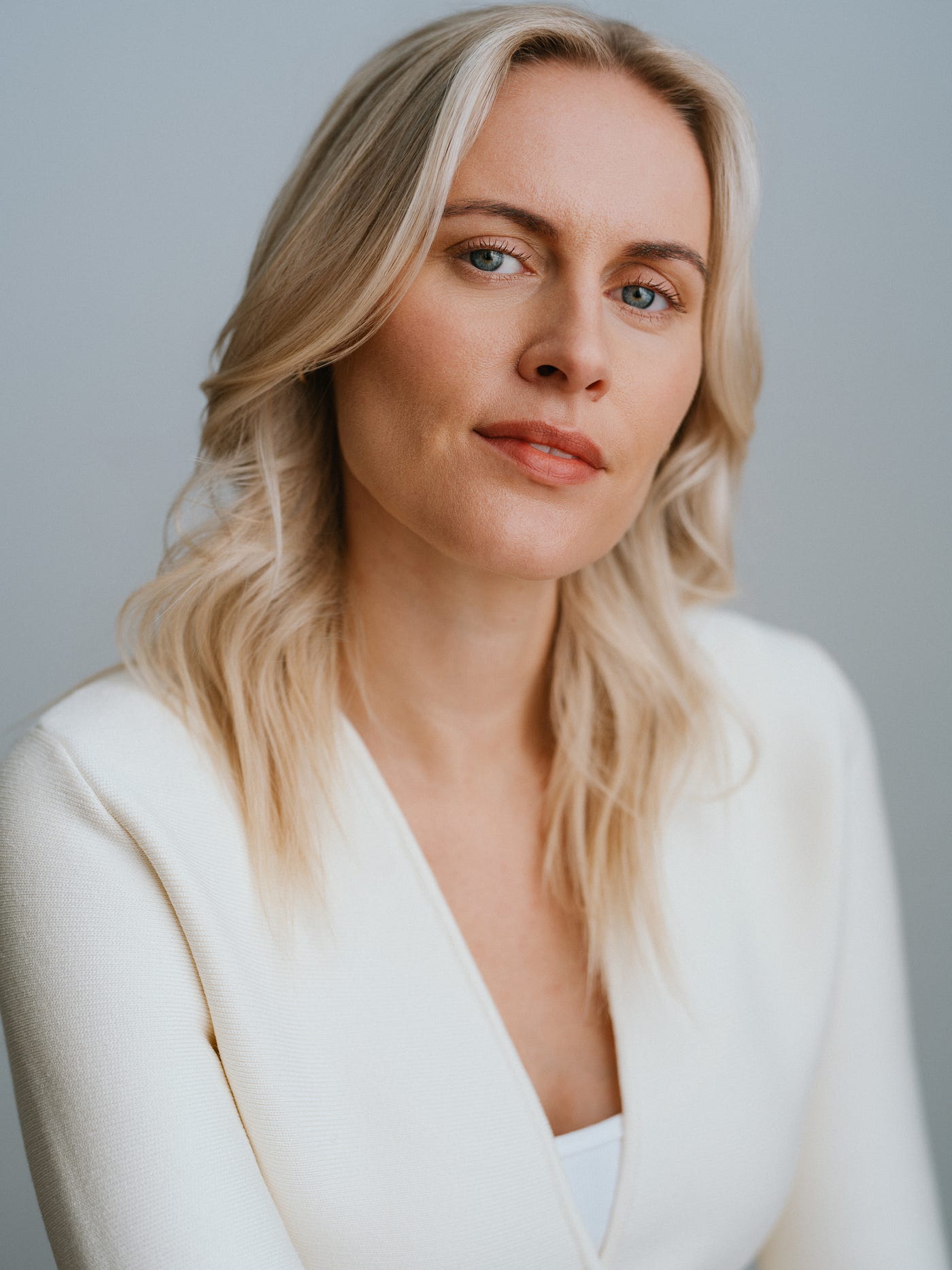
I had the pleasure of talking with Giulia Eve Flores. In her final year of drama school in London, she won the role she wanted in Christopher Marlowe’s Tamburlaine the Great. Then she discovered that getting the part and being able to play it were two very different things. A training environment she had loved for its collaborative spirit had turned fiercely competitive. Her character, Zenocrate, demanded extraordinary emotional vulnerability, and Flores struggled to find it in a room she felt had become hostile. Only during a technical rehearsal, with the stage lights on and her fellow actors backstage, did the performance finally come together. “Then it happened,” she recalls.
The production eventually went well. The experience left her questioning the profession she had spent her childhood preparing to enter. “This is not the way to do it,” she remembers thinking. Years later, as the founder of Lila Studios, Flores has made that conviction central to her approach to filmmaking. She wants to create emotionally ambitious work without reproducing the conditions that once made performing so difficult for her. “How we do something is more important than what we do, to a degree,” she says. It is an unusual proposition in an industry where the finished product often receives far more attention than the people and circumstances behind it.
Flores grew up moving between cultures long before she began moving between creative disciplines. Born in Queens to a Bolivian father and Dutch mother, she spent her early childhood in Amsterdam and La Paz before returning to the Netherlands at six. Her mother spoke Dutch to her, her father spoke Spanish, her parents communicated in English, and her preschool in Bolivia taught in French. Storytelling came just as naturally. Her grandmother recently reminded her that, at four or five, she organized weekly performances for relatives. “You were just talking,” her grandmother recalled. Flores even collected admission money in a hat, then gave the proceeds to people on the streets.
By adolescence, her productions had grown considerably more serious. At 13, she wrote a piece about domestic abuse that alarmed a school talent-show panel enough to ask whether it reflected her home life. It did not. She was exploring a subject that interested her, but she was asked to write something less disturbing. Her replacement concerned a sister whose encouragement sends her brother into the First World War, where he dies. At 17, she wrote, directed, produced, and performed The Sea, a minimalist, philosophical piece for a national youth theater competition. She remembers the silence after the performance, followed by thunderous applause, and her father approaching her in tears. He told her she had created something that spoke to people at a deeper level.
That early confidence carried Flores to London, where she studied at the Royal Central School of Speech and Drama. She was particularly drawn to training that encouraged actors to write, direct, devise, and produce their own material. The later experience with Tamburlaine exposed a contradiction she could not easily dismiss: an industry devoted to human expression could also foster conditions that made its artists feel unsafe expressing themselves.
After graduating, she moved to New York and eventually found representation, auditions, and professional momentum. Yet the closer she came to the acting career she had imagined, the more she questioned its underlying rewards. She was becoming increasingly interested in spirituality and uncomfortable with what she saw as the industry’s dependence on validation, status, and applause. “Why acting?” she remembers asking herself. The answer ultimately brought her back to storytelling, but with a determination to exercise more creative control.
She left New York, traveled through the North Indian Himalayas with the man who would become her husband, and became a mother in her early twenties. The transition was difficult. Flores speaks openly about experiencing postpartum depression and isolation, even as she embraced motherhood. She had stepped away from the conventional acting path but had not lost the desire to create. Eventually, she recognized that waiting for someone else to build the artistic community she wanted was leading nowhere. She founded the Conscious Performers Collective, a nonprofit theater company, and began making work on her own terms.
After three and a half years producing series at Gaia, Flores confronted a familiar decision. She had gained experience and professional stability, but she wanted to originate projects rather than enter them after someone else had established the direction. Despite warnings from colleagues and mentors about the difficulties facing independent entertainment, she left to establish Lila Studios. Now raising two sons, she is developing a slate that includes the feature documentaries Timeless and Rise of the Visionary, alongside ECHO, a narrative feature she is writing and producing with plans to star in it.
Her ambitions extend beyond the stories themselves. Flores speaks about establishing intentions on set, attending to performers’ emotional needs, and considering how the working environment affects the finished film. These ideas reflect her spiritual outlook, but they also have a practical origin in her own experience of an artistic process that became unnecessarily combative. She is not claiming to have solved the problems of filmmaking. “I have my blind spots, don’t worry,” she acknowledges, emphasizing her willingness to receive feedback. That admission matters because the pressures of financing, scheduling, leadership, and creative disagreement do not disappear simply because a filmmaker approaches them with compassion.
Yitzi Weiner: Giulia, it’s such a delight to meet you. Before we dive in and talk about your amazing work, our readers would love to learn about Giulia Eve Flores’s personal origin story. Can you share with us the story of your childhood and how you grew up, and particularly the seeds of all the amazing creativity that has come since then?
Giulia Eve Flores: Wow, yeah, that’s a big question. I was born in New York City. I was born in Queens to a Bolivian dad and a Dutch mother. We moved before I actually turned one, and we moved to Amsterdam. I think my parents were just going back and forth about which country they were going to live in. So we moved to Amsterdam, lived there for a couple of years, and then moved to La Paz, Bolivia, which is the highest capital city in the world. It was a very different landscape from sea level to the Andes.
I lived there until I was six, so a good four years. I went to a private elementary school or a pre-K where they spoke French. At that point, my mom was speaking Dutch to me, my dad was speaking Spanish to me, and they were speaking English together. Then they put me in a French school, so I got fluent in French when I was really young. I was singing in French and who knows what else. Then when I was six, we moved back to Amsterdam. My parents did get divorced as well. They came together and stayed friends, but they did get divorced once I came back.
Then I spent the majority of the rest of my childhood in Amsterdam, essentially from 6 to 18, in what I would call a regular Dutch school. I wasn’t in an international school or anything, just a high-level Dutch school. We had a lot of amazing free education. I learned astrophysics and seven different languages and philosophy and film, and it was a very rigorous, non-pressured type of education. I went to the Amsterdam Youth Theater School since I was very young, I think four or five. Since I can remember, I always wanted to act, write, and direct. Of course, I didn’t have the words for it at that point.
My grandmother actually recently told me something really funny which I didn’t know. She said when I was still living in Bolivia, I was probably four or five. She said, “You would put on these little shows for the whole family once a week.” I asked, “Oh, was I singing and dancing? I feel like kids do that more easily.” She said, “No, you were just talking. You would just put on these little productions, and then you would go around with a hat too to make sure that we all paid to watch you,” which I think was a funny addition to that. Then she said, “You would take that money and give it to people on the streets.” Then when I realized I lost my money, I wanted to redo it.
From a very young age, I feel like I’ve had the luxury to know that I wanted to do this, and that hasn’t changed. I started in youth musical school when I was really young, five or six in Amsterdam, and then eventually joined the Amsterdam Youth Theater School from 10 or 11 all the way up to 18. I was there every weekend doing writing, collaborating, directing, devised theater, mime, and all sorts of different types of stuff.
I had my biggest awakening when I was 14. I went to London and saw a play there for the first time at a very high level, and completely fell in love with the craft in a much more profound and rigorous way. At 16 or 17, I went to the Royal Academy of Dramatic Art and did a summer program there. The teacher said, “You have to come back and audition.” I did. I did not get in, though, but I loved it, and that’s what made me fall in love with London. Then I moved there at 18 to do a foundation degree in acting at the Royal Central School of Speech and Drama, and then did my accelerated bachelor’s degree there in acting. That’s the recap of my childhood, I would say.
Yitzi Weiner: Please tell us about the amazing work that you’re doing today.
Giulia Eve Flores: Today I’m wearing many hats at this point. I’m a founder, I’m a mother, I’m an actress, I’m a writer, I’m a producer, and I’m a director. My childhood dream has extended into larger-scale work with actual budgets, I should say. I’m continuing to do that which was innately within me, which is tell stories, move people, and pull at the heartstrings of the human experience — both intimate and universal.
I run a production company now. It’s been 16 months at this point. I left my producing job at Gaia Network, where I was for three and a half years. I produced many different series there and realized I wanted to go back out on my own. I always felt more like an originator than someone who comes in afterwards. I like to initiate and originate the ideas and put everything together, and I seem to have a knack for that.
We are now creating two feature documentaries. We’re in the final stages of production going into post-production; actually, I’ve already started, and we’re officially wrapping in a month. Then I’m creating my narrative debut feature film. I’m the screenwriter on that, the producer on that, and the lead actress in that. We closed our development round on that at the beginning of this year, and we’re packaging right now to open the production financing round to hopefully shoot next year. I’ve found myself in my dream world creating films that hopefully are meaningful and can show us what it means to be human, while also showing us what we can become beyond what we currently are, pulling us into our higher potential.
Yitzi Weiner: We’ll talk more about all that soon. You probably have some incredible stories from your successful career, and I’m sure this is difficult to single out, but can you share with our readers two stories that stand out in your mind from your career?
Giulia Eve Flores: Yes, let me think which ones would be really good. I don’t know why these come to mind, and I can give you many more and many different types as well. The first time was early on in my career, and it was the onset of feeling like, “Oh, this isn’t just my passion that I’m obsessed with. I have something here that I can learn to develop and craft more,” and that’s what made me want to go into training.
Like I mentioned, I was creating my own little productions and shows here and there around seven to nine years old, and it was about topics inspired by Harry Potter and Saved by the Bell and things in pop culture that I was consuming and seeing. Around 13 or 14, I started creating, writing, and performing deeper, more profound materials. I wrote something about domestic abuse, and when I was auditioning with that piece at 13 for the talent show at school, the talent panel pulled me aside afterwards. They said they were worried that this was inspired by my real life. I was so taken aback by that. I said, “Oh no, I’m very close with my dad. No, I just had this idea and I wanted to write it.” They said, “Well, this is too intense for the 12-year-olds.” And I said, “Well, I’m 13.”
They invited me to rewrite something, and then I made it about a sister who encouraged her brother to go into the First World War and regretted it because he ended up passing. Still heavy, maybe not as heavy. So I started exploring more of those topics.
Then at 17, there was a national youth theater competition in all of the Netherlands. I wrote a piece that I called The Sea. It was very minimalistic, very poetic, and very philosophical. We had multiple stages of performing that, and I wrote it, directed it, produced it, and acted in it. I remember it being so quiet after that performance, and then there was this outburst, this roar of applause. This was the first time my father — who had always supported me — came up to me really crying. He said, “No, you’ve got something here that was really speaking to everyone at a deep level.” That was a really big moment for me.
I can also share when I came to New York City. I moved from London after I graduated there, then came to New York City and needed a break from acting because I’d had a pretty rough experience at the end of my acting school, which is also a story I’m happy to share. It shows you a lot about the pressures that are put onto young actors and the competition that was fostered. It was a Whiplash-esque situation there, and it made me want to step away. I needed a real break from it.
I moved to New York, gave myself some time to readjust and calibrate there, and then I decided, “Okay, I want to get back into the industry,” and set my goal. Within a month, I was thriving. I had a good acting manager and an agent. I started auditioning and seemingly I was climbing up the scale, the social ladder, so to speak, of the acting world. I was doing really well. On the outside it looked like I was doing amazing, and to be honest, I was having a fantastic time.
I did have a lot of fun, though I had already been going through — and was hitting a new peak of — the depth of my own spiritual experience and the way that I was connecting with myself beyond just wanting to act and get in front of a camera or on a stage. I started feeling a dichotomy within me where I thought, “Oh, this industry and this profession seem really driven by ego, validation, applause, and all of the fabrications which I do not hold as meaningful or valuable.” So I went through a crisis and I had to ask myself, “Why acting? Why am I into this? Is this a conditioned thing? Did everyone want to be famous? Where is this coming from?” I had to dig really deep to realize, “No, I’m an innate storyteller. I see the power of story in the world, and storytelling has a very sacred purpose.”
I had a really difficult time merging the spiritual unfolding that was happening within me with McDonald’s auditions, so to speak. I went through a very profound, catalytic spiritual experience at the time that made me step away momentarily from the acting industry. I actually left the city, left New York, left my agent, left my manager, and ended up meeting who would become my husband at the time — he’s now my ex-husband. We ended up traveling to the Himalayas, got engaged in the Himalayas, got pregnant there, spent many months in the North Indian Himalayas, spent time in ashrams, came back, gave birth, and became a mother.
Then I hit a deep low a couple of months after that because of the stark contrast between making it in New York City as a young adult — which had been my dream since I was so young — and suddenly rocking a baby very deep in postpartum depression. I was barely 24 years old and felt very isolated. That was such an alchemical, crucible type of experience. It made me dig really deep because I did always want to be a mother; I was very much in love with that process. It just came early and it was an identity shock that I wasn’t anticipating to that degree.
I really prayed and dug really deep and meditated on: “I have these gifts and these talents and I don’t know how to put them to use anywhere. I don’t see the path forward in a way that isn’t a traditional mainstream performing monkey, going to these auditions and outsourcing so much of your creative power, when I just want to share with people what I have inside, which I think can illuminate them, uplift them, and inspire them.” That’s how I ended up creating my nonprofit theater company — a conscious theater company — because I realized, “You’re looking everywhere for the thing that you want to join, and you are the originator of these things. You’ve got to create it.” That ended up being a mirror reflection of what then happened with Lila Studios a little over a year ago. That’s my long spiel.
Yitzi Weiner: Oh, Giulia. You’re an amazing storyteller. You really are a master storyteller. Going back, we’d love to hear the Whiplash story.
Giulia Eve Flores: I was in my final year of drama school in London, and I was with a pioneering theater company at the time. Now it’s grown so much in the past 10 years, though it was new at the time and they wanted to do training in a different way. Rather than learning in a stuffy room for three years and having one showcase at the end, they wanted you to learn on stage through experience. They also believed in the actor-creator, which I was so excited about: writing your own material, producing it, directing it, always acting in ensemble pieces, a lot of physical theater, and different ways of storytelling that really excited me. I was very much in love with the process.
Then towards the end, we had our classical season and we were going to do a Marlowe piece — a Shakespeare contemporary — called Tamburlaine the Great, Part One and Two. Suddenly, it was like they had decided to completely change the temperature in the room. Where before everything was about collaboration and doing things together, now suddenly — and I don’t know what triggered that — they decided that this was going to be about competition. Some really weird things were happening in the room where we were all auditioning for the same roles. They said, “The person who really wants to play this role, run across the room,” and we had to wrestle, run, and perform. It was a power-game, power-trip situation that was happening.
In many of the conservatories — I don’t know how intense it is today — there was a long period of time where the idea was, “We’ve got to break you down to build you back up.” When you’re so young and susceptible and you have this dream, acting is already a very vulnerable profession. They were very ruthless in their feedback — initially from a space of love and encouragement, though it became more and more twisted. I ended up getting the lead role I wanted of Zenocrate, who was the kidnapped Egyptian princess, and it was a fantastic role. I was very happy with it at the beginning.
However, they had created so much competition that it became really difficult to perform. In the play, this woman sees her father battle her husband and they go at it, and there’s murder everywhere, and she has to go so deep. She has pages and pages of a soliloquy, and she has to break down to the bare bones of her being. On Monday morning at 8:30 a.m., when everyone’s sitting there wanting to see you fail, that’s a really hard thing to ask.
I couldn’t get it. I couldn’t get it. And everyone was pulling their hair out — the directors, the producer. Everyone was saying, “Well, your audition was so fantastic and you’re always so on point.” I just felt so much hostility in the room, being so sensitive and empathic. Now, being much older, I have systems in place to not let that penetrate as deeply, right? At the time, I was so sensitive to that because I operate differently. I want to see everyone thrive, and I was always encouraging of other people who would get the lead.
It really shook me, and the climate just got increasingly hostile, increasingly competitive, and increasingly demanding: “You’ve got to perform X, Y, and Z.” We ended up doing the run, and I still couldn’t get it. Then we were at the tech run. The stage was set, the lights were on, and all the other ensemble members were behind the scenes. I got on stage and it was just me with the empty space, and then it happened. I think we underestimate the level of hostility that is fostered, and then you’re blamed for that. At the time, I was very porous in my boundaries. I was even physically attacked by one of the girls.
She ended up getting physically attacked herself afterwards on the streets, which was a strange, horrible karmic loop that I would have never wished on anyone. It was just a very intense setting. We completed that run and it ended up going really well at the end, though I had such a distaste for this. I thought, “This is not the way to do it. This is psychologically damaging. It’s never how I would create something.”
I remember going home to Amsterdam when we had two weeks off, and I saw Whiplash, which had just come out. I thought, “That was it.” It really was like that. I was yelled at. I wouldn’t say I quite got a chair thrown at me, though it was very intense and it made me want to leave. I still had two or three more shows to do. When I graduated, it ended up lightening up a little bit towards the end, yet it made me really detach and realize this is not a healthy, normal environment for young artists with dreams.
Yitzi Weiner: When I saw Whiplash, before that I saw Full Metal Jacket and the famous first half of the movie where he gets torn down by the drill sergeant. Every soldier I asked said it’s not true and that’s not how it is. So I assumed Whiplash doesn’t happen either — that it’s just Hollywood fantasy. Now I’m hearing that maybe it does happen.
Giulia Eve Flores: I do really think so in those high-level conservatories — Whiplash being based on Juilliard — and in this type of British environment. Like I said, it might have been an isolated experience, though there were also so many girls with eating disorders and it was very unhealthy. I’m not saying that’s just based on the school. I also think that’s the programming of the industry and most media in general to make us feel like we’re not good enough. For women, there’s even an extra layer on that as an actress. There are many different things that are very fundamental to dismantle as a young artist — especially a female artist, and for the men too — that are not addressed in any conservatory setting, which are actually foundational for you to last and thrive in this industry.
Yitzi Weiner: Wow. So now you’re in a position to call the shots. Based on those experiences of seeing how it’s dysfunctional, now you’re able to rebuild it in your image. Please tell us what your plans are to get rid of that dysfunction and Whiplash culture.
Giulia Eve Flores: I don’t know if this is an existing term or not, though I actually call it reverse engineering in film. I feel that how we do something is more important than what we do, to a degree. How we do something is going to be very influential in terms of what the final result is going to be. As a filmmaker, a writer, a producer, an actor, an artist of any type, or really any human being, you have a vision and an intention for your project and your creation. It’s really important to seed that intention very strongly at the beginning and to start creating what I would call an energetic container that transcends this point in space and time to really hold that.
What’s also really important — at least in how I work, and documentary is similar to narrative in its own way — is that I tune into the audience’s experience on the other side in the future. I tune into how I want them to feel watching this, how I want them to feel stepping away from this film and this experience, and what I want to happen at an emotional, psychological, and almost cellular level. It’s always uplifting, inspiring, empowering, unifying, and softening — a softening effect on the nervous system. That doesn’t mean it’s going to be all fluff and woo; you have to explore the darker dimensions as well to have a story that ultimately triumphs in the light, so to speak. You have a huge responsibility as a filmmaker because people are in a very receptive brain state when they’re watching.
Hence why it’s called programming. You are literally programmed by what you are watching in that state of mind. So if we’re constantly sending out violence and gore mindlessly — again, there’s opportunity to explore the deeper and darker dimensions of the human experience as long as you leave that integrated, I believe, and on a hopeful, unifying, loving note. If you’re spewing out fear rather than love, even in the sense of making a fun or funny horror film — and I’m not trying to come after horror filmmakers or anything like that — I do feel like we carry a huge responsibility.
When I can attune to the audience’s experience and start to bring that back from the future to the now, that means every decision and every micro-decision is either feeding or not feeding that ultimate experience. We can’t have a huge conflictive, combative experience on set with each other, in the process of making it, or even inside of ourselves if we want to have the type of effect that we want to have.
I treat every person who touches my company and any of my projects with huge reverence and love. I would do that hopefully with anyone regardless of whether they’re involved with me or not, and there’s an even higher level of responsibility and intentionality when you’re bringing people on board. We always set intentions on set. I always make sure that the talent feels really cared for — not just from a basic professional level, rather with an emotional attunement from everyone on set, because I’m always asking them to be vulnerable and authentic, which is hard when the cameras and the lights are on you.
I believe that life and the reality that we experience is a mirror. Our creations are going to be amplifications of who we are. If we are conflictive, combative, reactive, or dysregulated within ourselves, that is going to infuse everything we touch and everything we create, and it’s ultimately going to create a larger ripple effect. That’s a responsibility that comes with influence. That doesn’t mean that you’re going to be this perfect human who is always super regulated without ups and downs. Of course you’ll have them. Yet being highly aware of what you are broadcasting from yourself and how that’s affecting everyone with you at any point in time and space is crucial. The micro-ecosystem is going to affect the macro-ecosystem of where we want this film to go and how we envision it reaching people. So I work very much from the inside out.
Yitzi Weiner: Maybe this is reductive, though it sounds like you’re bringing maximalist emotional intelligence to filmmaking.
Giulia Eve Flores: Hopefully, yes. That’s the intention. I have my blind spots, don’t worry. I hope that I’m very open and receptive when someone says something. I don’t think I’m a very reactive person, and it’s important to be able to take feedback. As a producer and director — someone at the center of a film, and I mean that as the nexus where everything flows through and from you — you have a responsibility to be like the sun rather than dark matter that sucks everyone up.
Yitzi Weiner: I really loved the wordplay of how you are programmed by your programs. I never thought about that connection, and now I have to look up the etymology of the word “program” because I have to see if it’s coincidental or if it literally means the things that program you. I love that. This is our signature question. Giulia, you’ve been blessed with a lot of success, and you must have learned a lot from your experiences looking back to the beginning when you were young. Can you share five things that you’ve learned over the years — maybe sometimes the hard way — that someone starting out today can really benefit from?
Giulia Eve Flores: Okay, let me sit with that: five things.
1. Hold strong boundaries and know your worth. Watching young people and women in the industry, I see that there are boundary issues. Whatever types of violations are happening on the other end are obviously true and valid, and I’m not saying that the person who is struggling to hold their boundary is in the wrong in any way, shape, or form. However, I do feel that there is something to the truth of being a vibrational match for something.
A couple of years ago, when I had just started at Gaia for a few months, we had higher-level talent there who definitely abused that status. It wasn’t fully malicious or intentionally cruel, though he was dabbling in the world of ego and essentially kissed me on the mouth. I was married at the time, and regardless of whether I was married, it’s just not okay. I had a director and the lighting director or director of photography in the room with me, and we were all taken aback. It happened so fast that I was in shock. I wouldn’t say I let it happen, yet that would never happen again. If someone were in my field today, my level of awareness around my boundaries is so much stronger.
I’m also not talking only about romantic violations. A lot of the time on set — especially if you are not calling the shots, and in more organizational networks or corporations — the newer ones have endless things added to their plate under this illusion of having to prove yourself over time. I definitely subscribed to that idea: “Oh, if I prove myself, if I prove my worth and work really hard, then they are going to see my worth.” That’s very externally based; that’s not the reverse engineering I’m talking about.
One of the bigger lessons I learned while I was at Gaia — and on the one hand I had a great time and have nothing bad or disgraceful to say about them specifically; for me it was just a lesson that I had to leave — was how easy it was to fall into a victim mentality and say, “They don’t recognize me, they don’t see me, they’re not paying people enough, they keep cutting people in higher positions and putting everything on us.” Some of that is true and valid, and I wasn’t the only one who had that perception. Yet at the end of the day, I had to say, “Okay, I can complain all I want about these external things, yet clearly on some hidden subconscious level I think I deserve this, otherwise I wouldn’t be experiencing this.” I’m not saying every victim deserves victimhood in any shape or form, though for myself I noticed that I was allowing these things and my identity was tied to it.
It’s easy to put the blame outside of yourself and say, “The system, the industry, the corporation, Hollywood is dead.” At the end of the day, I am the only one keeping myself here. Boundaries tie to worth and radical responsibility for yourself and your own life. Eventually I thought, “If you’re challenging that, put your money where your mouth is. What are you going to do?” So I left, and worked from the inside out.
2. Block out other people’s projections and limitations. I know so many people in the industry of all levels and ages who are caught in the trap of thinking, “If I just work hard enough and prove myself, I’m going to be handed this opportunity.” It’s a very convenient trap to stay in. We underestimate the amount of creative power and autonomy we actually hold in our lives and in our ability to create our own reality.
When I tried to leave Gaia, I had every single person — mentors and peers in the industry — tell me not to quit. Why? “Because the industry is dead.” Why? Because they were struggling. Even though I didn’t see the path forward yet, I knew in my heart, in my gut, and with every fiber of my being that I had to leave and do something for myself. Fast-forward: despite everyone saying there are no investors in entertainment, I had investors before I even wrote a script. My mentor said, “Wow, that’s unheard of.” That’s because I’m not limiting myself through other people’s projections and experiences of what life, the world, or the industry is.
For aspiring filmmakers, artists, or anyone who has a dream, know that most of the advice and concern comes from a place of love — maybe sometimes envy or discouragement, though mostly concern — and it’s all a projection of how people limit themselves. Block out the sense of limitation completely. You’ve got to be a little bit delusional to go for it, and there’s a lot of inner work that goes with that. Don’t get caught in the dangling carrot of “work harder, work harder.” You probably will not be handed the opportunity; you need to hand the opportunity to yourself, and that’s an inside job. Something has to shift on the inside for you to take up the space of that next iteration of yourself.
3. Don’t wait for permission — create your own opportunities. First and foremost, we are creative beings. How we call the Divine in almost every language is “the Creator,” because that is the quality we value the most. We underestimate how much creative power and resourcefulness we have inside of us. We fight a lot of the time over what seems like a finite pile of resources, opportunities, jobs, acting gigs, and money. We don’t realize that we can create our own opportunities. I created my own films and that created its own budget. We outsource so much of our creative power sitting here waiting for permission and waiting for someone else to hand us something, and it’s just not going to happen for most of us. You’ve got to do it yourself.
4. Love the art in yourself more than yourself in the art. Art has a very specific role in culture, society, and humanity. Stanislavski, the famous acting teacher, would say, “Do you love the art in yourself, or do you love yourself in the art?” You can tell when an actor or a writer likes to see themselves as something more than they actually love the art that’s emerging through them — which they actually cannot take credit for.
When you think of anything that you want to create, listen to that gut instinct, that hunch, the image or story you can’t get rid of. Also, the most personal is the most creative. People try all this razzle-dazzle over here, when actually the most personal is usually the most creative. And set some limiting choices for yourself; as Orson Welles said, “The absence of limitations is the enemy of art.” Ultimately, love the art that’s emerging through you more than yourself in the projection of success or fame or whatever we think is going to show us that we’re worthy as human beings and artists. Keep your finger on the pulse of the collective evolution, and pray or meditate on: “What does humanity need, and what is inside of me that can be a match to that in a way that feels playful and exciting for me?”
5. Remember to play. Lila Studios means “the divine play.” As serious as this world is, and as many tragedies as exist in the human experience — alongside comedies, dramedies, and satires, with both horrific and beautiful things happening in the world — it’s really important to remember that this is supposed to be playful. We get to be like children who play and co-create together, and we have the power to co-create a more beautiful future for all of life, not just for ourselves. So, play.
Yitzi Weiner: This is our final aspirational question. Giulia, because of your amazing work and the platform that you have built, you’re a person of enormous influence. If you could spread an idea or inspire a movement that would bring the most amount of good to the most amount of people, what would that be? Because you never know what your idea can spread.
Giulia Eve Flores: That’s such a beautiful question. When I look at anything from my adult life on that I’ve ever created or wanted to create, and anything I’m creating now, it has so many different faces, shapes, expressions, and ingredients. Yet when we think about the ultimate transmission, it is to transmit the actual feeling — beyond just an intellectual concept — of interconnectivity: how interconnected everything is, how unified we actually are, and the well of love that is underneath everything.
Within that feeling is knowing: I am connected to everything, everything is a reflection of me, and we are one being. People sometimes say there’s a separation between us and nature or the earth. No, we are the earth. We’re not just on the earth; we are the earth. If the earth is a being, we are literally its little neurons. Yes, we’re individualized units of consciousness, and we are one consciousness that can zoom in and zoom out on so many scales and shapes. As Indigenous peoples say, we’re all related. We are all family members and relatives of each other in every kingdom — the plant kingdom, the animal kingdom, and all humans. I wish people could feel that at a deep level.
One of the things I also really want to transmit is hope. Not passive hope, or anticipating a negative outcome, rather hope in action: an empowered, inspired, dynamic forward motion of creating a more unified, harmonious, and beautiful world. One that, as much as we humanly can, transcends the easy binary of victim and villain, black and white, and feels the unity beneath all of it.
When I die, if I could only leave one thing behind, it’s to find deep forgiveness for everything that was, everything that is, and everything that will be. There is a divine orchestration that we can’t always make sense of. When we are zoomed in at a specific level, it looks very chaotic. Then when you start to zoom out, it’s this beautiful, organized, harmonious fractal. Things look chaotic, erratic, and nonsensical at some levels, and at other levels they look absolutely beautiful, perfect, and divine. Trust in the perfect imperfection, be an emanation of love, and let each and every one of us use our gifts and talents to create a more loving, better world.
Yitzi Weiner: Giulia. It’s been such an honor to meet you. How can our readers continue to follow your work? How can they get involved or watch any of your projects, and how can a reader support you in any possible way?
Giulia Eve Flores: Thank you. Right now I have my website, which is my full name, giuliaeveflores.com. We will have an increasing amount of our material on there in terms of the films as they’re developing. You can also follow me on Instagram, which is where I’m most active — it’s pretty much the only social platform I’m on, very millennial of me. My Instagram is my name, @giuliaeveflores. Through my Instagram account and my website, we are creating a larger community and an email list, and people can always contact me through my website form as well.
Yitzi Weiner: Amazing. Well, Giulia, it’s been a joy to meet you. I wish you continued success, blessings, and good health, and I’d love to do this again in the near future.
Giulia Eve Flores: Yes, thank you so much. This was such a lovely experience. I really appreciate it.
Yitzi Weiner: Truly a pleasure. Wish you an amazing day.