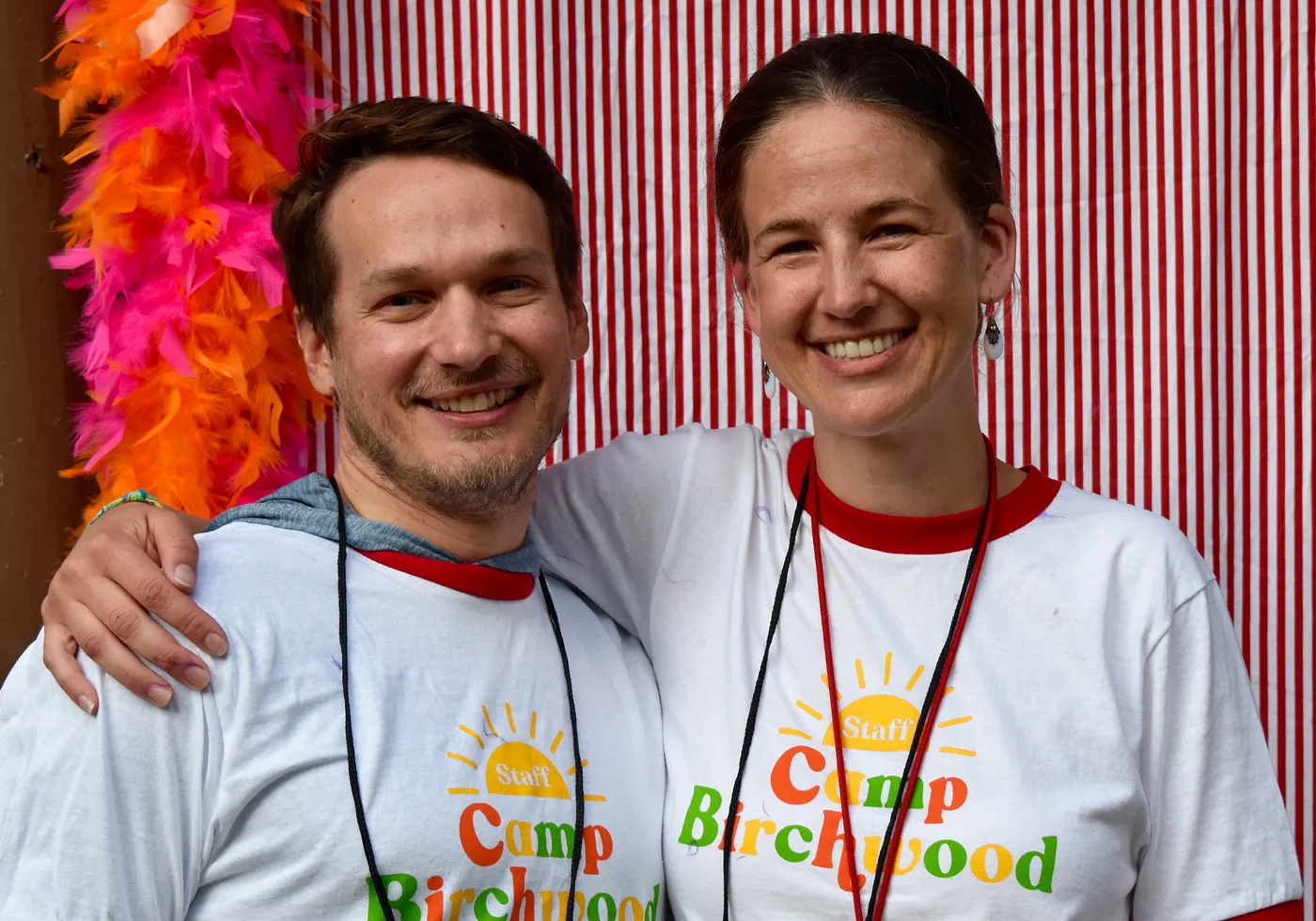
I really didn’t understand until fairly recently that the underlying thread that connects every single thing that I do or have done is this love for experiential education. That’s what camp is.
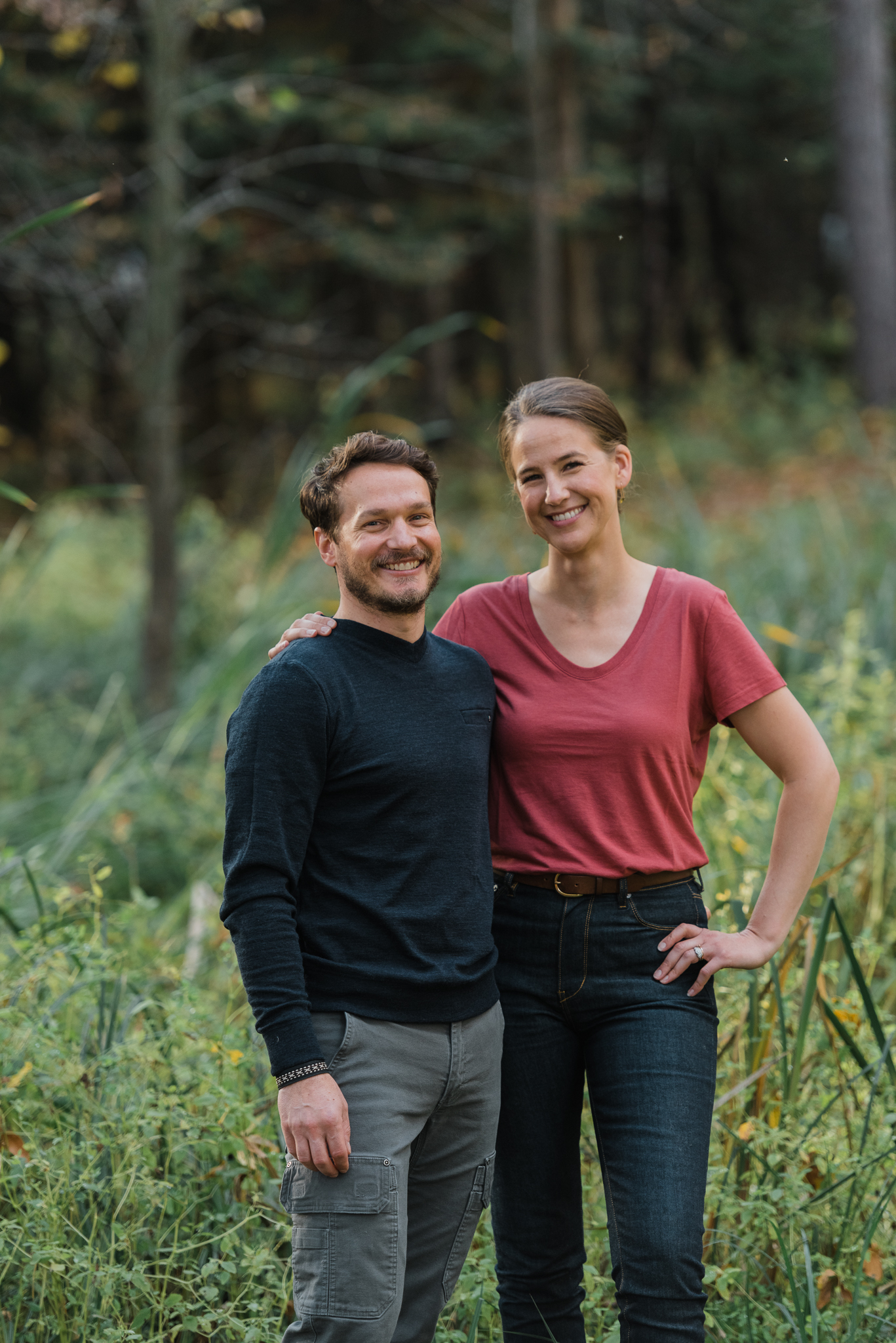
I really didn’t understand until fairly recently that the underlying thread that connects every single thing that I do or have done is this love for experiential education. That’s what camp is.
As a part of our series about lessons from Thriving Power Couples, I had the pleasure of interviewing Georgia and Samuel Del Favero, the owners of Camp Birchwood for Girls in Northern Minnesota since 2021. Georgia’s ties to Camp Birchwood run deep, full of family connections and first-hand experience as a camper, along with time working as a counselor during college. Both Samuel and Georgia are putting their deep experience with — and passion for — the outdoors, supporting youth development and experiential learning to work at the iconic camp, which opened in 1939.
Thank you so much for doing this with us! Can you tell us a story about what brought you two to your respective career paths?
GEORGIA: I knew that I always wanted to own Camp Birchwood, but I never believed it would happen. I remember where I was standing when I told the prior owner that I wanted his job. I was 13 years old. But I didn’t really think Camp would ever leave that family of ownership, so instead I set out to shape a life that centered on as many of my passions, skills, and talents as I could. I got a degree in peace and conflict studies because I love socio-emotional dynamics, group dynamics, leadership, conflict resolution, etc. I guided wilderness expeditions with Outward Bound because I was fascinated by facilitating life-changing experiences. I trained horses, in part because I love them, but now I realize it was also in part because I love teaching, and training is teaching! I studied law because I love meeting people where they are at, walking alongside them to understand what they are facing, and seeing beyond their conflict to find a way forward. I also love advocating for people, so I spent time as a child protection prosecutor and then as a family law attorney.
I really didn’t understand until fairly recently that the underlying thread that connects every single thing that I do or have done is this love for experiential education. That’s what camp is. The underlying experiential education approach to it all is something that is common in every single one of my passions. Camp is the epitome of that. Every aspect comes down to mentoring and supporting and discussing with people their strengths, their room for growth, but doing it in a way that you’re walking alongside them, not standing over them, micromanaging them. I carried those passions with me through everything else I was doing. Then, when I learned that the previous owners were thinking of selling, there was no hesitation. I’m the first person in the history of Camp Birchwood to be a camper and then a counselor and now an owner.
SAMUEL: I spent nine years as a wilderness educator and director at Outward Bound before becoming a youth treatment counselor and behavioral therapist for children on the autism spectrum. For me, owning a camp wasn’t necessarily my dream or a goal, but when the opportunity presented itself, it was obvious looking back that the mosaic of all my experiences aligned well with the skill sets that a camp director needs. I’ve always had a passion for working with kids, and what’s incredible about being in the summer camp industry is that you have the unique opportunity to be a part of these kids’ lives over the long term. You see them grow as individuals, and to be a part of that development year after year is incredibly rewarding. It was always my intention to work with youth in a way that fosters their well-being and development, though I can’t claim to have had the forethought or vision to think of owning a summer camp as a way to accomplish that. It’s already been more fulfilling than I could have possibly imagined.
Can you share the most interesting story that happened to you since you two got married?
GEORGIA: Easy — buying and running a summer camp. As I said, we never imagined Camp Birchwood would be available for purchase. Finding out that it was, was actually an accident. Samuel and I were living in California, COVID had hit, we were well into several months of sheltering in place. We loved our jobs, but had no lives outside of them anymore. We realized we wanted to formulate a plan to at least own land in Minnesota, where I am from. We found a land parcel we liked listed for sale, but it was mis-mapped. It was showing online as being about 15 miles as the crow flies from where it’s really located. It didn’t have a fire number or address yet, because it was undeveloped. It was just listed as “13XXX TBD.” After looking at the pictures, we decided it looked interesting enough to try and find out more. It took some digging through county GIS, but I found the real location of the land — accessible only via easement across Camp Birchwood property. I called Camp’s owners at that time, who had given me the camp experience I cherish so deeply, to confirm that the easement was legitimate and to catch up. During that conversation they informed me that they had tried selling camp twice to non-alums and backed out both times. They just couldn’t sell to someone who wasn’t an alum. That conversation was July 2020, and by May 2021, we were under contract. Life moves pretty fast when you’re headed in the right direction.
It has been said that our mistakes can be our greatest teachers. Can you share a story about the funniest mistake you made when you were first starting? Can you tell us what lesson you learned from that?
SAMUEL: In the beginning of camp the first year, we needed firewood. I called a company and told them, “You know what, I’ll just get five cords of wood.” They came with a dump truck. They set it down and the pile was the size of a small cabin. It was so much. We realized, “Oh, no, where are we going to put this?”
What did we learn? You can just call and order something. People will absolutely bring something to you whether or not you have the infrastructure to handle it. It was a really big learning about how people are not going to ask you, “Do you have a place to store this? Are you going to be able to keep this dry for the next six months? Do you have somebody to move all of this stuff around?”
I had to put it in every random space that was enclosed to keep it dry. Today, 16 months later, we just got it all put away. It’s all over camp.
What do you think makes your company stand out? Can you share a story?
GEORGIA: It’s our pursuit of forming a culture and a community that is essentially this little bubble of magic and possibility out in rural northern Minnesota on a beautiful lake under beautiful pines. We’re really focused on canceling out the noise of what girls and women can and cannot do or how they’re supposed to do it. Let’s stop listening to what everyone else says we’re supposed to be doing. Let’s be here. Let’s tune out the negative messaging. There are no magazines, no phones, hardly any mirrors. No social media! I mean, let’s forget about everything we’re “supposed” to be doing right now and let’s just be together, and let’s be intentional about being kind to each other, and let’s talk about, “Okay, we’re going to be together for this amount of time. What kind of environment do we want to create?”
This opportunity to form something so intentional and then work to really make it alive and functional and see what happens is the most empowering, most incredible thing. You come to camp, you go sailing, you learn horseback riding, you gain all of these skills, and that’s very important. If that’s all you did, you’d have a wonderful time. But I’ve come to understand those skills are really just pieces of the bigger puzzle of helping people become a part of something so much bigger than themselves.
SAMUEL: I think this year was a particularly momentous year where you really saw that the values behind the experience that are the backbone of it, carrying the culture and what makes Birchwood, Birchwood. I think certainly Georgia’s background of being here, also being a very strong influential leader has really been great for Camp Birchwood.
Are you working on any exciting new projects now? How do you think that will help people?
GEORGIA: I am really excited about our Senior Camper program. I’m especially excited to take more creative freedoms with it these next few years. I feel more inspired than ever to really take a hard look at some of the things that we could be doing in slightly new ways. It’s important to tradition to keep the same structure, but I’m working on how I’d like to refine some of the programming to just do it even better. I can’t wait to see how we can have an even bigger, more positive impact on our senior campers.
SAMUEL: When we bought Camp Birchwood in 2021, we immediately identified some ways to expand the wilderness program. And while it’s been great to re-install some of the wilderness trips back into camp, we also want to create Camp Birchwood Wilderness Education School, where we’d have a portion of the camp that was expedition-focused and with double the number of wilderness trips. Not because I just want more people to go on expeditions, but because profound experiences happen within those expeditions. The amount of learning, the friendships that deepen, the entire experience of Birchwood values continuing to deepen, and morph into skills that become more transferable to the real world. The level of confidence that girls have here when they come back from a trip is amazing. You can just feel it. Every part of them is just so ecstatic about what they just did, and they feel like they can come back and do anything. That’s super powerful. The more we can provide that experience, the more we’re succeeding. It’s in its infancy, and I can’t wait for that culture to keep growing in camp.
What advice would you give to other CEOs or founders to help their employees to thrive?
GEORGIA: Without a doubt, it really comes down to getting your team immersed in the purpose of what you’re doing, then watching them take that and own it. This year the staff just blew me away. They really felt ownership over the mission, and they took it upon themselves as a group of adult women to say, “Okay, you guys, how are we going to make this the best experience for our campers and each other? Let’s do this, let’s do that. How do we bring more of ourselves into this?” Because they really believed what is true, which is that Camp Birchwood is a living, breathing experience that adapts to the incredible, diverse people that come here and add to it. They believed that by showing up as the best version of themselves, they could have a profound impact on these girls and each other. There was a sense of reestablishment and reinvigoration this summer where our returning team members were saying, “This summer feels like how I remember it felt in the most transformative summers that I experienced as a camper or as a counselor.” It felt the same way to me.
Because the staff took so much ownership over the incredible power they have in bringing their own perspectives to the table and infusing this place with their own humor and sense of person and goodwill, this summer was just incredible. At Camp Birchwood or at any organization, it really is all about the team feeling that mission and being a part of things. If you put together a capable, trustworthy staff who can get to a place of shared inspiration, you’ve got purpose. If they feel empowered by you and have a sense of ownership to be creative and authentic, that’s freedom. When they support each other and are in it together, that’s community. Purpose, freedom, and community … that’s what thriving looks like.
SAMUEL: Live and role model the values you want your staff to emulate that define your organization. People notice consistent behavior more than something on a PowerPoint in a meeting once a month.
None of us are able to achieve success without some help along the way. Is there a particular person who you are grateful towards who helped get you to where you are? Can you share a story about that?
GEORGIA: For me, it’s our office director Rae. She’s a longtime friend of ours — and actually we met because she was our florist for our wedding. She had her own relationship with Camp Birchwood independent of me. Over the years, she and I would spitball about how badly I wished that Samuel and I could buy Camp Birchwood. I remember sitting in my car in the hot California sun in a Whole Foods parking lot for four hours just sweating to death, because I was so engaged in this conversation with her about Camp Birchwood and all of the things we could do or how amazing it would be, that I never bothered to get out of the piping hot car while immersed in this conversation with her.
From the beginning, she’s been this sounding board for so much passion and vulnerability and confusion and fears and hopes and dreams and ideas. Then in the process of actually buying the business, she shared so much of her own personal experience about what it felt like for her to sell a business and how the logistics went. And then after we bought the camp, the pieces just came together, and she and her husband moved back to Minnesota so that Rae could work here. We’re so glad she’s part of the team. Everyone adores her, and every time I talk with someone who has interacted with her, I hear the same thing — “she’s incredible!” She’s one of the best people I’ve ever met — I still can’t believe we hoodwinked her into coming back and working with us. Her husband, Christian, has been a truly incredible part of our little village here, too.
SAMUEL: I’m grateful for Georgia’s father, Paul and his impact on me. Initially when we were considering purchasing Camp we were consulting with various business owners and after several conversations it was basically Paul’s confidence in us and mentorship that made us feel like we could do this, and that we had the skills and resources to do this successfully. Not just successfully, but achieve our goals in the camping industry by taking the experience at Camp Birchwood to the next level, as one of the best summer camps in the world. It was in a state of decline over the past decade, so we weren’t buying a turnkey, successful business in its prime. It was a scary premise to leave what we knew and go all in on turning Camp around, but by chatting with Paul he helped us to see the viability of owning a summer camp as a business. He is a very practical, logical, and methodical person, and his confidence in us was the push I needed when deciding to pursue a business endeavor of this magnitude that affects this many people — because it’s not just the kids in our care, but also thousands of alums counting on us to get this right, to perpetuate this place that they love and that changed their lives. To continue the legacy that is Camp Birchwood.
How have you used your success to bring goodness to the world?
GEORGIA: If I’ve brought any goodness to the world, it’s been by helping girls and women realize that they’re capable. Creating a space where they can find refuge from all the pressure being placed on them, where they can take a breath and explore who they really are and what they really love is like nothing else. It’s been really, really incredible to me to see these kids grow. You really get to know them one summer, and it may be like a camper who’s 10 years old who loves sketching in a fashion sketchbook that she carries all around camp. You see her grow that summer, becoming more comfortable and confident in doing that, because she’s got people around her who are genuinely excited to see those sketches and think it’s so neat that she brings it everywhere with her.
People say, “Oh my gosh, can I see? Can you draw me one? How do you do that?” It doesn’t matter how old you are. Even the 7, 8, 9, 10-year-olds are showing older campers and counselors really wonderful things that they’re passionate about, and vice-versa. You spend two, four, or eight weeks with these girls and you see their passions and you get to know them, and you watch them really come out of their shells at camp. Just the natural way or natural results of being around people that are excited about what you do and excited to understand you as a person and really just filling you up with that sense of being seen. Then they go away for 10 or 11 months, they’re gone for the school year and they come back and they’re still sketching. They’re still doing the thing that they’re passionate about.
But what is really incredible to me, is oftentimes you can pick up on this change in them that now that they know what it’s like to be authentically supported, they don’t have the same tolerance for negative folks in their lives anymore — people who don’t genuinely support them as much. They’ve got higher-quality friendships, or they may have fewer friendships because they realize the people they were friends with weren’t really being supportive of them. Yet, even if they have fewer friendships, they’re okay in that, they’re secure in that, because they know what it feels like to be really seen by all their supportive Birchwood friends, and they aren’t willing to settle for less. The same is true for the staff that come back year after year.
SAMUEL: I think the way we are really having an impact here, is our socio-emotional focus and development that is integrated right into the programming every day to help people develop in that way. One of the things that really propels that and just camp in general is that the intensity, the frequency of interactions, the amount of feedback you get, the opportunities you have to succeed and fail at anything each day, whether it’s archery or friendship. I think with that support as the foundation of the culture, you want to learn and be better and keep taking chances. When our kids learn confidence in taking healthy risks, when they find out it’s okay to be themselves, that’s when the impact is happening. To me, that’s the goodness.
What are the “5 Things You Need To Thrive As A Couple”?
GEORGIA: A shared sense of purpose. Samuel and I met guiding Wilderness Expeditions for Outward Bound. We met because we got put on a 28-day course that we did together. Just the sense of purpose and love for working with youth in an outdoor education setting. We did that for a while, then we took a very big break from expeditioning and focused on other things, developing other skills like attending law school and doing clinical research. But I really think that there came a point where we paused and looked at each other like, “Wait, we loved that. We should go do that again.”
SAMUEL: I think the first one for me is to realize that we are not the same people who “left the station” 12 years ago, and that we can be very different in very different times. To be dynamic in the way that we approach each other in certain times affords a level of empathy that allows that success.
GEORGIA. Passion. I’ve come to realize it’s the things that we’re all so hyped about that actually are the coolest about us. It’s the unreserved, unbridled passion for things that, to me, that’s when you really get to know somebody, when you get them talking about the thing that they’re excited about or the thing that they care about or just need to understand from start to finish. When we hide that side of ourselves or that part of ourselves, I just see the rest of us missing out. Your life is fuller when you get to live your passion, and my life is fuller when I get to know you fully.
SAMUEL: Another thing that helps us be successful in our relationship and with camp is our facilitation skills. We’ve worked on those for years. I worked with youth and adults in acute-care psychiatric settings; Georgia has been studying socio-emotional development in some capacity for over 20 years. Together, and in our work with Outward Bound, that overarching ability to formulate and facilitate conversations is so important. We’re learning all the time, but when you can come to a relationship with a sense of how to communicate what you want to communicate — about how to turn emotions into something productive, that makes all the difference. Then doing that at camp, I think, is a skillset that helps us keep our culture solidified between us.
GEORGIA: Samuel and I both really value integrity. That’s an overused word, I think, but to me it is meaning what you say and saying what you mean. In practice, it is pausing when you feel like being reactive, getting some perspective, and being intentional about being responsive instead. The fact that integrity is so important to both of us is very anchoring and grounding, and has just been something that brings us back to basics during more challenging moments. It’s been really important in the decisions that we make and the ways that we treat each other.
You are people of great influence. If you could inspire a movement that would bring the most amount of good to the most amount of people, what would that be? You never know what your idea can trigger. :-)
SAMUEL: More people need summer camp. That may sound cliche because that’s what we’re doing here, but summer camp has the power to be both profound and transformative, providing opportunities to hone so many skills that are able to be transferred back to your life. Have fun, make new friends, face adversity, learn from a facilitated experience that is outside the norm. I think if more people were able to step out of the bubbles that they can easily get sucked into — even when you are succeeding — to step away from that for a moment, re-solidify things and then go back into it, I think it offers perspective the day-to-day can’t afford. I seriously think that would help the world.
GEORGIA: If I could convince every girl that it is their uniqueness and the ways that they are inherently themselves that is what makes them so special and so incredible and what brings so much light and magic to the world, that would be it. I watch these girls be in love with something when they’re young, before they get into this developmental stage where they’re truly concerned about what other people think about them. Then they go through a phase — and it’s a long phase, and some people don’t ever come out of it — where they’re convinced that that’s lame or that it’s not cool to be that passionate about something or the thing that they’ve chosen isn’t popular or whatever. The lucky ones figure out when they’re in college or after college or maybe in their 30s, that they never stop loving that thing. The lucky ones get back around to it and they pick it back up, and they experience that joy of this thing that they loved. I want that for every girl and every woman. I think the world would be such a better place if that happened. I just think that all of society would be better off if every girl and every woman were really fully empowered to do their thing. I’m sure that’s true for boys too, but obviously I feel a special solidarity or commitment to the girls.
Can you please give us your favorite “Life Lesson Quote”? Can you share how that was relevant to you in your life?
SAMUEL: The quote I chose under my photo in my high school yearbook was “A truly great person never forgets the simplicity of a child.” It’s interesting that I’ve come all the way back to that from high school, because I obviously saw that then, but didn’t understand all of the complexities in that quote. But today, looking back, it’s like there is really amazing simplicity in what we do here and what kids are experiencing that is hard to grasp if you’re not in it all the time.
GEORGIA: Something that I recite to myself all the time is from the poem “The Peace of Wild Things” by Wendell Berry: “When despair for the world grows in me, and I wake in the night at the least sound, in fear of what my life and my children’s lives may be, I go and lie down where the wood drake rests in his beauty on the water, and the great heron feeds. I come into the peace of wild things who do not tax their lives with forethought of grief.” I think we’ve all experienced so much turmoil, witnessed so much violence and despair in the news or in our lives, at times it is overwhelming. That poem came to me written on a postcard by a dear friend when I was working as a child protection prosecutor and I had lost hope for our broken foster care system. I still carry it with me everywhere, hence my memorizing that excerpt. I recite that poem to myself when my worry for humanity overtakes me. It helps me acknowledge the pain we experience in our modern world, while also helping me carry on in spite of it. Sometimes, the only thing you can do is pick yourself up and keep going.
We are very blessed that some of the biggest names in Business, VC funding, Sports, and Entertainment read this column. Is there a person in the world, or in the US with whom you would love to have a private breakfast or lunch with, and why? He or she might just see this if we tag them :-)
GEORGIA: Oh man — the pressure is on! There are so many change makers out there right now, that I’m going to cheat and say two: Alex Morgan and Megan Rapinoe. Watching them thrive during the 2019 World Cup, and witnessing them live this life of unapologetically taking up space — asking for what they deserve in the face of the hate and criticism they received for it — those are the people I want in my circle. Making that connection with such positive individuals who are so deeply committed to showing us that we are capable and worthy, as girls and women — I should be so lucky!
SAMUEL: Socrates has always been an interesting figure to me because of the founding of philosophy, which ultimately I think is the founding of curiosity. Children come to camp with all this wonder and they ask all these questions and they have freedom of thought because they haven’t experienced in life enough truths or realities to know that certain things don’t happen in certain ways. There’s a pureness and a novelty to the way that they approach almost everything that’s just absolutely phenomenal. Socrates was the first person that we know of to just sit down and think and ask questions and then gather a group of people and propel that learning in a really safe space to go deeper into philosophical levels, basically. It’s like what all our kids here are doing and acting, and that’s what we have to work to support.
How can our readers follow your work online?
https://www.facebook.com/campbirchwood
https://www.instagram.com/campbirchwood4girls/
Thank you so much for joining us. This was very inspirational.
Thank you!
The Authority Magazine Editorial Desk produces, verifies, and edits long-form primary-source interviews with executives, innovators, clinicians, creators, and social impact leaders across Business, Tech, Pop Culture, Wellness, and Social Impact.

Exclusive, curated interviews with the leaders and changemakers shaping tomorrow. Leadership lessons, industry deep dives, and executive profiles.
The co-founder and CEO of Agrovision shares how pivoting from biofuels to sustainable agriculture created thriving communities and a global leader in superfruits.
The longtime advertising veteran and Saatchi CEO shares how leadership requires shifting from functional execution to inspiring people, nurturing client relationships, and mastering vulnerability.
The fitness entrepreneur and founder of JETSET Pilates shares how her background in real estate and an unwavering resilience built a thriving national brand.
The Founder and Chief Visionary Officer of BNI shares how leaders can survive catastrophic project failures and personal health crises through active listening and open communication.
The Jabil executive vice president of operations shares lessons from his three-decade rise through the manufacturing floor, emphasizing servant leadership and deep customer alignment.
The Johnson & Johnson leader shares her unique journey into healthcare, the intersection of medtech and artificial intelligence, and why taking care of yourself is the foundation of effective leadership.
The managing director and owner of a private Fijian eco-resort shares how embracing authenticity and learning from early mistakes builds lasting customer loyalty.
The global human performance expert discusses her transition from psychiatric nursing to founding Dynamite Lifestyle, proving that financial success starts with transforming your inner thinking.