The role of a founder is usually associated with power, toughness and insensitivity. But I don’t believe it to be true. What you need is to notice, feel, care and help.
Female Founders: Filipa Canelas On The Five Things You Need To Thrive and Succeed as a Woman Founder
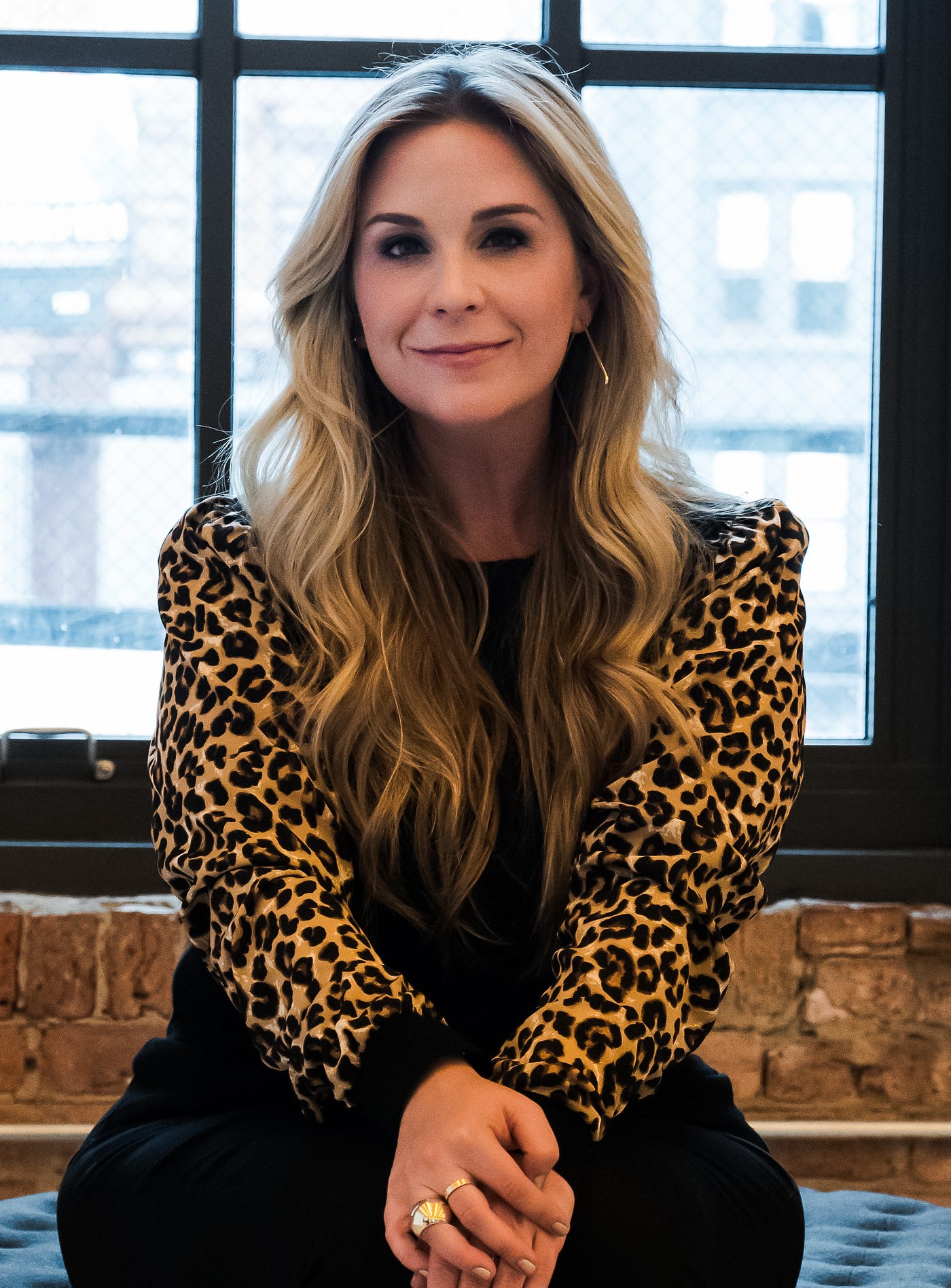
As a part of our series about “Why We Need More Women Founders”, I had the pleasure of interviewing Filipa Canelas.
Filipa Canelas is a productivity expert, course creator, and the author of "Around is Forward: The Productivity Cycle Behind Extraordinary Results". With her online courses, Filipa has taught more than 40,000 leaders, students, and entrepreneurs to improve their performance while enjoying the process.
www.filipacanelas.com.
Thank you so much for doing this with us! Before we dig in, our readers would like to get to know you a bit more. Can you tell us a bit about your “backstory”? What led you to this particular career path?
Well, my backstory begins earlier than I could ever imagine.
[First Attempt] The first attempt, at 12-13 years old, was a Youtube Channel about makeup and fashion, started alongside my best friend, Margarida. We got about 1,000 subscribers and a couple of partnerships. This gave me a hint of how much I love to create content.
[Second Attempt] Right after the end of the Youtube Channel, I crossed paths with online courses’ platforms. I had this brilliant idea of creating a course teaching “How to DIY your own makeup”. And I mean, real DIY’s – creating your own lipstick, eyeshadows and so on. This was the start of my career as an online course creator.
At 14 years old, I read a book by Kimberly Palmer, “The Economy of You”. In this book, the author presents different ideas and case studies for microbusinesses. I became fascinated by the possibilities and immediately decided the following: “I’m creating my version of a micro business”. Since then, I’ve never stopped.
[Third Attempt] During 2013-2015, Portugal faced a severe economic crisis, and my 14-year-old-self saw an opportunity. I created a Facebook page called “Vendas da Crise” (Crisis Sales’), in which I re-sold eBay products for a margin… drop shipping, in short. I made a couple of hundred bucks, enough to finance my most common expense – books.
[Fourth Attempt] The possibility of working for myself in my pyjamas spiked my interest back in 2015. I learned the art of SEO (search engine optimization) and started offering some freelance services on Fiverr at 15 years old. It felt good to take ownership of my path.
[Fifth Attempt] At 16 years old, I published an e-book on Amazon helping students succeed with my best hacks for thriving in school… don’t ask me if it was any good. This e-book fueled my writing passion, resulting in my book “Around is Forward” 5 years later.
[Sixth and best Attempt] I finally gained enough momentum and was established as a blogger and course creator.
Interestingly, all the previous failed attempts were stepping stones for everything I accomplished. No experience was ever a waste of time.
Can you share the most interesting story that happened to you since you began leading your company?
When I started creating online content regularly, I received several messages of people calling me “teacher”. It was hilarious to be called that way when I was still in school!
Can you share a story about the funniest mistake you made when you were first starting? Can you tell us what lesson you learned from that?
When creating my first online course, there was a problem – I was still 13 years old. I thought nobody would ever take me seriously and consider buying my course. How did I overcome the issue? I literally faked the pitch of my voice to make it sound older and professional, and hid my face during the recordings. I can’t describe how terrible it sounded… but I was able to sell two courses!
Sometimes you must go through some cringe moments to get where you want to be.
None of us are able to achieve success without some help along the way. Is there a particular person who you are grateful towards who helped get you to where you are? Can you share a story about that?
My parents were the biggest supporters of my journey. To be honest, I don’t even know how they coped with my weird requests.
With my dropshipping facebook business, my father shared his bank account details to receive the scarce payments. And my mother lent me some money so I could buy bulk SSD cards and re-sell them… I did not pay her interest.
Ok, thank you for that. Let’s now jump to the primary focus of our interview. According to this EY report, only about 20 percent of funded companies have women founders. This reflects great historical progress, but it also shows that more work still has to be done to empower women to create companies. In your opinion and experience what is currently holding back women from founding companies?
It is never just about one single factor. The gender funding gap is a combination of factors that usually hold women from starting their businesses. From lack of confidence, to doing more unpaid work than men, to less representation in the founding world.
I’ve certainly have experienced a lack of confidence during multiple periods of the journey. Both in my ability to achieve ambitious goals and in my ability to establish myself as a real entrepreneur.
Can you help articulate a few things that can be done as individuals, as a society, or by the government, to help overcome those obstacles?
Like multiple factors can hold back women, there are also numerous ways to overcome each and one of the existing obstacles.
As individuals, we can do something: believing in ourselves, despite how things turn out. Not all days will feel good, but our inner strength will help us move forward. As a society, we must be more supportive of women founders – recognizing the existing challenges, addressing them and assisting women in filling the deserved roles.
This might be intuitive to you as a woman founder but I think it will be helpful to spell this out. Can you share a few reasons why more women should become founders?
It is a fantastic opportunity to create your own version of reality. You get to decide the why, the how and the what. You get to choose whom to work with. You get to give as much as you want. I can’t think of anything more exciting.
What are the “myths” that you would like to dispel about being a founder? Can you explain what you mean?
You must be tough and insensible: The role of a founder is usually associated with power, toughness and insensitivity. But I don’t believe it to be true. What you need is to notice, feel, care and help. As Glennon Doyle said: “The opposite of sensitive is insensitive, and that’s no badge of honor.”
You must be greedy: This is far from the truth. Money is just a resource, and there is so much more to that. You can support so many causes while being a founder. You should, actually.
Is everyone cut out to be a founder? In your opinion, which specific traits increase the likelihood that a person will be a successful founder and what type of person should perhaps seek a “regular job” as an employee? Can you explain what you mean?
You must be comfortable with uncertainty. There is never a well-established ladder to climb up as a founder. You might perform exceptionally well, do everything you have planned, and still get nowhere. If you’re not ok with it, perhaps you should seek out another path.
Ok super. Here is the main question of our interview. Based on your opinion and experience, what are the “Five Things You Need To Thrive and Succeed as a Woman Founder?” (Please share a story or example for each.)
1. Put yourself out there: You might have the most incredible product or service. But if nobody is aware of its existence, it is not of much help. You must be willing to share your product, story, and personality. Luck plays a role you can’t predict. The best way to increase your chances of getting a lucky shot is by throwing many shots.
2. Get up: Literally and metaphorically. Get up, literally, and get to work on your most ambitious projects. Get up, metaphorically, because you will likely face obstacles that will knock you off. Get up.
3. Respect yourself: I’ve had moments in which I felt down, physically and mentally. And you know what did not help? Continuing to push past my limits. If there is one thing you need as a founder and entrepreneur, it is respecting yourself, setting boundaries and taking time to recharge.
4. Have grit: Grit is the combination of passion and perseverance. And you have no idea of what you can achieve when these two join forces. In fact, Angela Duckworth found that grit predicted success, even when controlling for talent or IQ. This idea is stuck with me forever: passion + perseverance > talent.
5. Be prepared: You will make a ton of mistakes… be prepared. You will succeed beyond your imagination… be prepared. Be prepared for both scenarios as they’re likely to happen.
How have you used your success to make the world a better place?
I’ve always been a person of causes, something I’ve learned with my mother’s example. From food collection and distribution to monetary donations and the representation of Portugal as the Ambassador of WAVE (a European NGO whose goal is to eliminate violence against women and children). There is always a way to help, and I don’t back off.
You are a person of great influence. If you could inspire a movement that would bring the most amount of good for the greatest number of people, what would that be? You never know what your idea can trigger.
I aspire to fund a social enterprise supporting people in need through educative programs, e.g. teaching skills that increase the chances of breaking the poverty cycle. It is heart-breaking how millions still die due to poverty. I believe education could contribute to ending this harsh reality.
We are very blessed that some very prominent names in Business, VC funding, Sports, and Entertainment read this column. Is there a person in the world, or in the US with whom you would love to have a private breakfast or lunch with, and why? He or she might just see this if we tag them.
I can’t hide my admiration for Melinda Gates. After reading her soulful book “The Moment of Lift” and getting to know the fantastic work of the Gates Foundation, my appreciation never stopped growing. Melinda got inspired to create a charity institution after visiting Africa in 1993. She founded Pivotal Ventures, supporting women in the male-dominant tech industry. She is a wholehearted human being.
Thank you for these fantastic insights. We greatly appreciate the time you spent on this.