A bad attitude in a lead position hurts the team, especially in a small setting. The relationship started to deteriorate because of discipline and productivity issues along with lack of efficient follow-up from my end.
(If you are unable to download it, please click File-Download, or click here)
Please answer all the questions, and leave the questions formatted as they are in the document. We may schedule a follow-up call or skype to round things out.
INTERVIEW QUESTIONS:
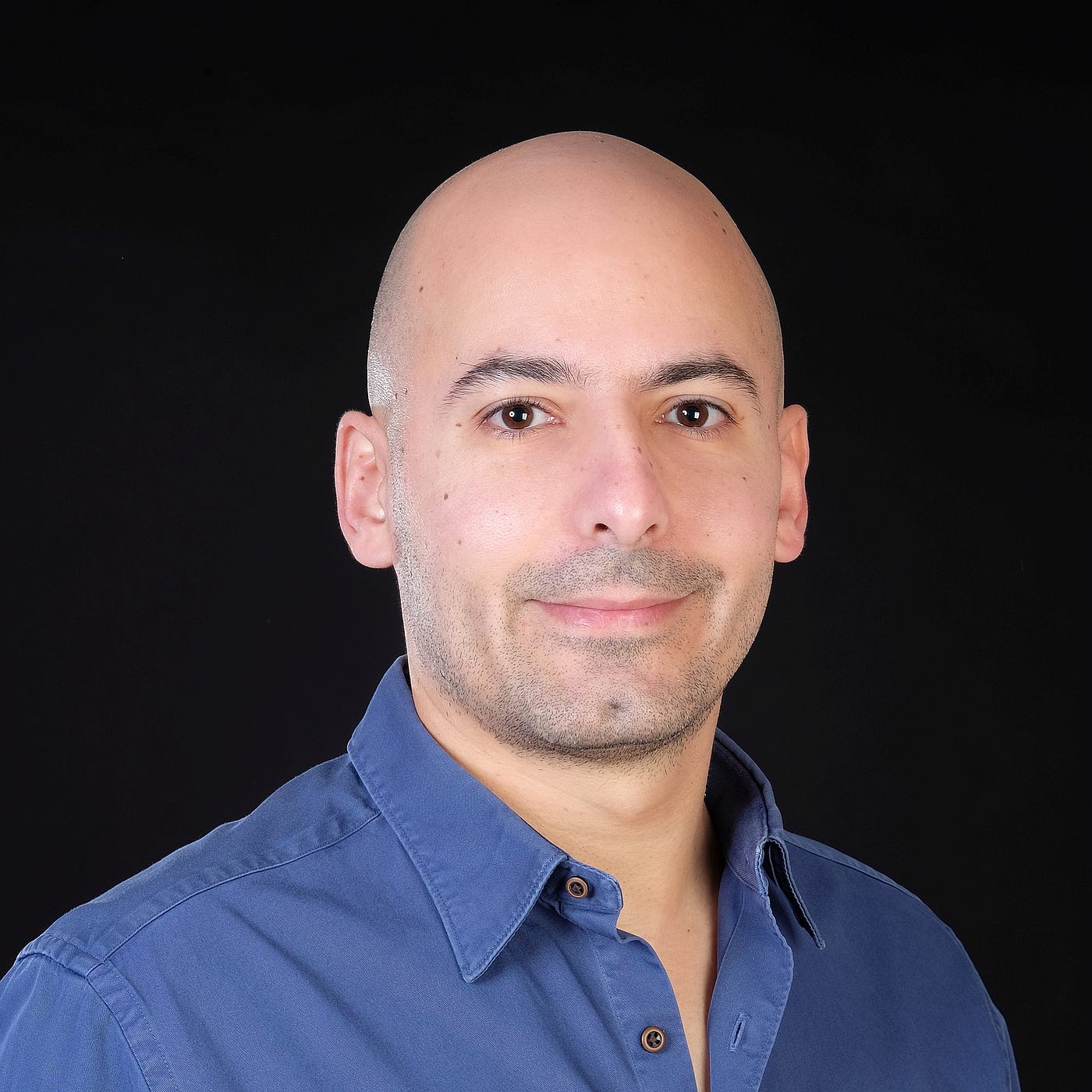
When a company is looking to grow, the choice of who to hire can sometimes be an almost existential question. The right hire can dramatically grow a company, while the wrong hire can be very harmful to morale and growth. How can you know you are hiring the right person? What are the red flags that should warn you away from hiring someone? In this interview series, we are talking to business leaders who can share insights and stories from their experience about "How To Hire The Right Person". As a part of this series I had the distinct pleasure of interviewing Fadi Boulos.
Fadi Boulos, Ph.D., is the founder and CEO of Supportful, a software engineering consulting firm. He is on a mission to reduce the brain drain in his native Lebanon by providing international tech companies with remote talent. Fadi has lived in France and the UK, working for small, mid-sized, and billion-dollar companies; he’s a lifelong learner and a happy father of 4 children.
Thank you for joining us in this interview series. Our readers would love to “get to know you” a bit better. Can you tell us a bit about your ‘backstory’?
After completing my computer engineering studies, I pursued a Ph.D. and was destined for an academic journey in life. I didn’t feel though that I was fulfilled enough, so I worked in software engineering for a couple of companies.
In 2013, I decided that I had to come back to my home country, Lebanon. I’ve always believed that young people who’ve lived abroad should contribute to advancing society in their native countries. I worked in business positions in digital agencies until the economic crisis hit Lebanon in 2019. Labeled by the World Bank as possibly the worst crisis in the last 150 years, I started wondering what could be done to help alleviate its impact. The brain drain that was happening was just too big.
I decided in 2021 to build a talent hub that would provide remote job opportunities to young Lebanese talents and hence, help keep them in the country. Supportful was born.
You’ve had a remarkable career journey. Can you highlight a key decision in your career that helped you get to where you are today?
Quitting my previous well-paid and stable job and going all in on Supportful was the best decision in my career. I had never thought I would create my own company, maybe because I’m purpose driven, and I hadn’t found that purpose yet. Now I have: creating a talent hub and a great workplace that software engineers would love to be part of. By doing so, I contribute to reducing the brain drain affecting Lebanon.
What’s the most impactful initiative you’ve led that you’re particularly proud of?
My company Supportful is an impactful initiative by itself. It’s aligned with my values of transparency, personal growth, and sustainability.
Our all-remote approach allows team members to work from their hometowns and consequently, helps them contribute to local economies’ development. We have also put in place a training program tailored to each person’s career journey. This program keeps employees on a growth path.
And most importantly, we adopt a fully transparent approach when dealing with our customers and with our team members.
How about a mistake you’ve made and the lesson you took away?
I’ve made several mistakes throughout my career, and I’d like to highlight a particular one that is relevant to the “right hire” topic.
A decade ago, I was asked to make my first hire. The company I worked for had a small team, the lead software engineer had resigned, and we needed to hire a replacement fast.
I received a few resumes from HR and scheduled the most relevant profiles for an interview. One of them was technically competent and immediately available. He was the only one to comply with both criteria.
What I underestimated was his cultural fit, despite receiving a warning about his sometimes inappropriate behavior from a previous colleague of his. Overwhelmed by the need to act fast, I discarded the warning and proceeded to hiring him.
The decision proved to be wrong. A bad attitude in a lead position hurts the team, especially in a small setting. The relationship started to deteriorate because of discipline and productivity issues along with lack of efficient follow-up from my end. This impacted the whole company and eventually its future.
The lesson I drew from that experience was to never take a decision under the pressure of a deadline. Whether in business or in personal life, I now take the time to analyze the context and understand the full picture before making any commitments.
How has mentorship played a role in your career, whether receiving mentorship or offering it to others?
I haven’t had a personal mentor so far, but I’d love to have one. I believe though that I have had indirect mentorship through my readings. When I read about someone’s success or when I read a self-development book, I consider as if I was being mentored. I learn and try to apply the methods that worked for others. I sometimes yield great outcome!
Another source of indirect mentorship is my random conversations with experienced people. Whether at a live event, at a webinar, or at an informal gathering, I appreciate the advice received and aim to make good use of it.
On the other hand, mentoring others yields the rewarding feeling of helping others, and most importantly makes me reflect on my future. I see in my mentees the version of myself years ago, and I say to myself that there are probably people currently looking at me the same way. This drives me to keep pushing forward.
Mentoring others has also helped me incorporate relevant guidance in my one-on-ones with teammates. When you see things from someone else’s perspective, your horizons widen, and you can provide guidance that stretches beyond day-to-day work.
Developing your leadership style takes time and practice. Who do you model your leadership style after? What are some key character traits you try to emulate?
I try to be genuine in my leadership, but I was obviously inspired by my readings and by prominent successful people.
I admire Warren Buffett’s wisdom, humility, and philanthropy. His character inspires me to be patient and to make calculated decisions away from emotions. Further, pledging to give away 95% of your wealth that was earned through hard work and sweat cannot but inspire me to give back at every opportunity I have.
Steve Jobs’ passion was unparalleled. When I think of how much he embraced what he was doing and how successful he was at every company he led, I’m inclined to lead with passion to inspire others to always grow. Having a clear vision for the future of the company I’m heading and working relentlessly to accomplish it is also something I modeled after Steve Jobs.
Thank you for sharing that with us. Let’s change paths a little bit. The pandemic forced many companies to adapt. Implementing remote onboarding and professional development - in addition to maintaining culture - challenged organizations. Can you share with us the challenges you have faced, with remote onboarding and hiring?
How have your internal processes evolved as a result?
We were born during the pandemic, so remote-first was the only option. While remote hiring can be sometimes challenging, we designed all processes to be remote-friendly. However, we faced some challenges, especially in a country where power and internet outages were sporadically happening. We had to make sure that the newly hired person had an alternative power supply. Through close follow-up and suggesting solutions backed by financial support, we were able to overcome these challenges.
We have embraced the all-remote model, and our processes are now perfectly adapted to that. Today’s workplace management tools offer everything you need to lead a remote organization. On the processes side, we have devised regular one-on-ones to maintain contact and a 2-way communication channel. We also have an open-door policy that allows any team member to reach out to the management team at any time.
We believe in the workplace being an environment for positive social connections. We hold at least two social events every year where all the team gathers around the table. We also go hiking sometimes in the beautiful nature of Lebanon.
In addition, we hold our annual offsite event where we get to learn, to bond, and to have fun.
With the Great Resignation/Reconsideration in full swing, many job seekers are reevaluating their priorities in selecting a role and an employer. How do you think this will influence companies’ approaches to hiring, talent management, and continuous learning?
Job seekers are increasingly looking for a purpose-driven career. A pre-pandemic study by Bates College and Gallup had already shown that 80% of college graduates affirm the importance of finding purpose in their work. Imagine where that percentage is after the Great Resignation!
Companies should clearly highlight the non-commercial purpose of their mission if they want to attract the best talent. They should also adopt purpose-driven communication with their employees to stay consistent with their public message.
I’m a firm believer in the 3-dimensional talent management approach: reward, fulfill, and grow. Employees should be fairly rewarded financially. Employers should make the workplace an environment for employee fulfillment, where every person feels they’re working in line with their values and natural motivations.
Finally, and most importantly, managers should provide growth opportunities for their team members. There’s nothing more valuable to a company than a team that is constantly on a growth path!
Super, thank you for sharing all of that. Next, let’s turn to the main focus of our discussion about hiring the right person. As you know, hiring can be very time consuming and difficult. Can you share 5 techniques that you use to identify the talent that would be best suited for the job you want to fill? Please share an example for each idea.
When we’re hiring for a position, we search for the best candidate, not for an exact match. We do so by looking at the following 5 criteria:
Technical knowledge: it’s important that the candidate is well rounded in software engineering. They do not need to know the details of every technology stack out there, but they should have foundational software engineering knowledge.
Communication skills: there’s no job in the world that does not require communicating with others. When interviewing a candidate, we focus on how they articulate their ideas and if they can convey the message in simple sentences. For non-native English speakers, we assess their fluency in English.
Learning aptitude: no candidate is expected to exactly match the position requirements. An often-overlooked skill is the ability to learn – and this is what we try to identify in a candidate. We ask questions about what they learned in their previous roles and how much personal effort they made to that effect. More importantly, did they show the desire to learn for the sake of getting that new position?
Knowledge production: while good candidates do their work well, excellent candidates produce knowledge outside of their position realm. This can take the form of technical articles on Medium, LinkedIn, their personal blog, or it can be contribution to prominent open-source projects. Sharing is a sign of abundance.
Passion: you can tell if someone is passionate about a topic by just listening to them talking about it. Some other signs that you could watch for include strong opinions on subject matters, a long commitment to a specific technology or work aspect, and – surprisingly – a career shift. People who shift career signal a late awareness to a topic of interest and a strong will to pursue their ambition.
In contrast, what are a few red flags that should warn you away from hiring someone?
I’m generally turned off by dishonesty and by people on the defensive.
When a candidate lies or distorts reality during an interview, it’s a red flag to me. I prefer a person being open about a weakness they have or an error they made rather than lying about it. Lying now is a sign of potential bigger lies once in position.
Candidates who feel attacked when they can’t find a good answer to a question signal to their interviewer a lack of self-confidence or a collaboration weakness. It is inevitable for one’s ideas to be challenged in a team, and not being open about this could be detrimental to the collective team spirit.
Because of your role, you are a person of significant influence. If you could inspire a movement that would bring the most amount of good to the most people, what would that be? You never know what your ideas can trigger.
I believe that little acts can make a big impact. Imagine if all people committed to doing one daily act of kindness towards people in their surroundings. It could be done online with a social media contact, in their small or extended family, on the street with a stranger, or at work with a colleague. Spreading kindness in a chain can only make the world a better place.
This was truly meaningful! Thank you so much for your time and for sharing your expertise!