Now, three years and 80 hours of 6K footage later, I’ve learned that focus is a flow-state; you have to jump in to get caught up in the current but if you’re doing what you’re passionate about, you’ll keep finding your way.
As a part of our series about “Filmmakers Making A Social Impact” I had the pleasure of interviewing Evie Joy.
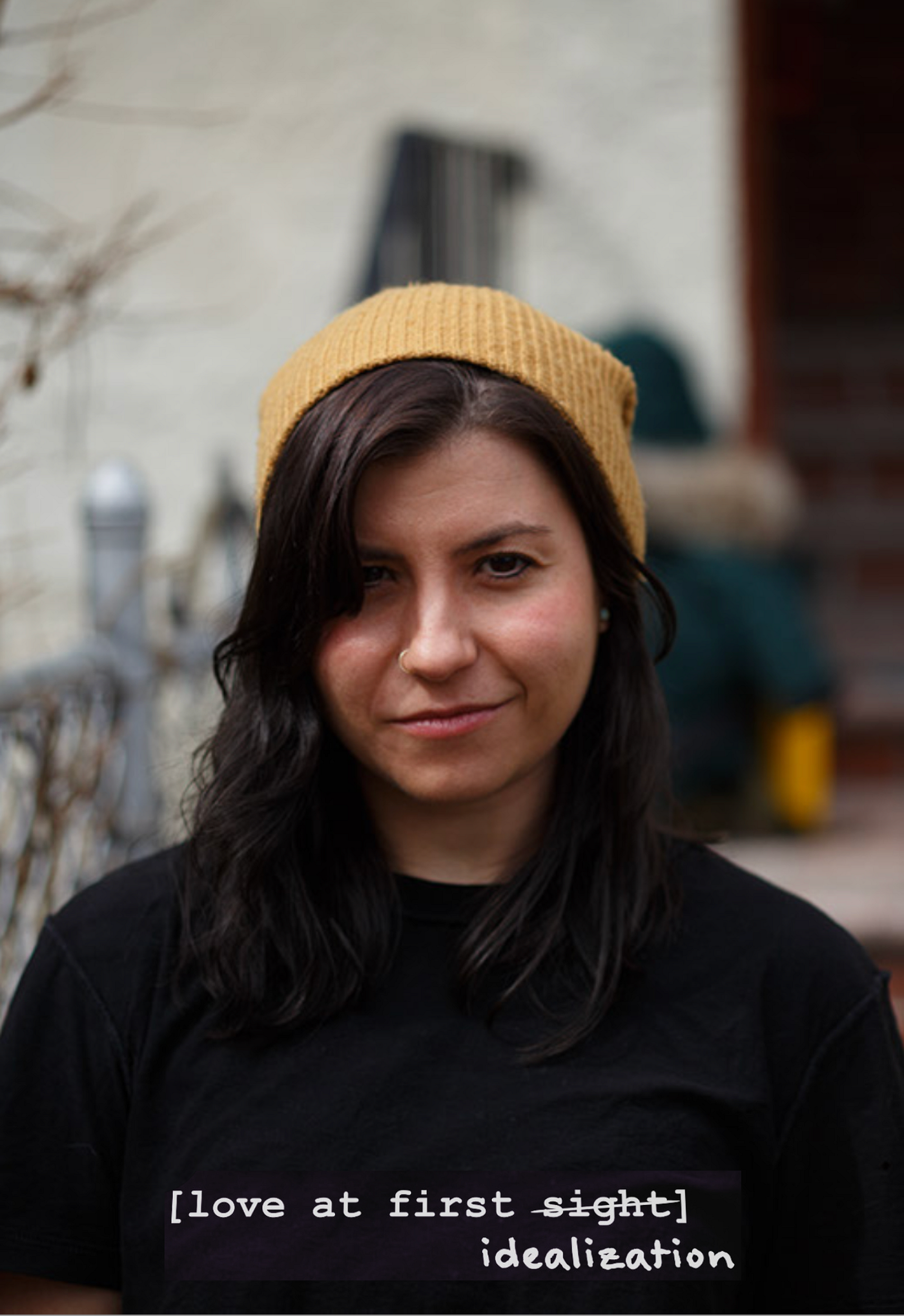
Evie Joy is a Manhattan lyricist and activist specializing in love songs of every genre, from comedy to ballad. A 2020 recipient of the New York Women’s Fund Grant, Joy was recognized by PopDust for writing “a canticle of female empowerment”. Her music has been featured in Season 2 of the television show, “Temptation Island” and her songs have won her the City Artist Corps Grant, a fellowship with Johnny Mercer, and awards in the New England Songwriting Competition, Mid-Atlantic Song Contest, and the Great American Song Contest.
Thank you so much for doing this interview with us! Before we dive in, our readers would love to get to know you a bit. Can you share your “backstory” that brought you to this career?
Mychildhood was tinted by a car accident that killed my sister on a summer vacation to Disney World. This accident left me with the understanding that love was inextricably bound to loss and I developed paralyzing abandonment anxiety paired with a contradictory aversion to intimacy. However, music and prose freed me from life’s darker edges and I was, ironically enough, hypnotized by Disney’s perfect and perplexing “happy-ever-after”s that retained their color. These fairytales were able to suspend time and offered me a real escape, inspiring poems and stories; my algorithms to the riddle of love.
Ever since, I’ve written love songs of all genres as a melodic and cathartic navigation through the challenges of romance. All my songs deal with different sides of romance, from comedy songs about having a forbidden affair with a priest to folk ballads about using art to re-conceptualize pain and heal your heart after a breakup where you lost part of yourself.
Three years ago, I won a grant for my music with the New York Women’s Fund and the New York Foundation of the Arts. This grant set me off on a journey to understand love better, and as I’d always wanted to travel the world hearing people’s love stories, I used the grant to begin that journey. While the funding ended up being applied to four new music videos (Happy Ever Also (1/4) was released December 2022 and the rest will be released throughout 2023), I am continuing to produce this docuseries, which will empower people to define love for themselves. Featuring 39 couples, scientists, philosophers, gender and relationship experts across 14 countries, this thought-provoking series showcases real-life examples paired with scientific support and strategy for navigating the challenges of romantic love today. I’ve now invested $50,000 and have 80 hours of 6K footage. I recently released a kickstarter to raise awareness and funding in the community and am also working on securing grants to embark on the post-production stage of the series.
I am still performing around the country, writing songs, and will release the remaining three music videos this year. My most recent full-length album was released at the end of last year, “The B-Side of Love”; which is an album of comedy love songs that discuss the other side of romance.
It has been said that our mistakes can be our greatest teachers. Can you share a story about the funniest mistake you made when you were first starting? Can you tell us what lesson you learned from that?
I didn’t start. Have you ever seen that episode of BoJack Horseman where he literally does everything to prevent himself from beginning his novel and even makes messes to clean up, all the while yelling, “Why can’t I write?!” That was me. I was overwhelmed by the fact that I wasn’t a film director and had only ever produced music videos, and although I had a grant to begin, I felt paralyzed by the grandiosity of what I had promised and had no clue how to even start. Where could I possibly find enough couples who would be willing to let me interview them and moreover, what had I gotten myself into. I’d always been severely ADHD and OCD and because of my difficulty focusing and perfectionistic tendencies, I often felt anxious, depressed, and flooded by time in relation to goals. Editing a documentary by myself when I had no experience felt like an impossible task.
Now, three years and 80 hours of 6K footage later, I’ve learned that focus is a flow-state; you have to jump in to get caught up in the current but if you’re doing what you’re passionate about, you’ll keep finding your way (even though we worry we won’t be able to keep it up). We often become overwhelmed by the big-picture so we have to focus on breaking it down, taking it piece by piece, and figuring it out as we go. Structure and routine also help when you’re embarking on a big project alone, and making sure I woke up early enough to get my goals done prior to the distractions of the day, was crucial for me. Weed has also been instrumental in allowing me to sit for long hours and maintain my focus (I was never big on ADHD medication as the OCD in conjunction makes me feel trapped in my body; almost like PTSD).
Perhaps most importantly, I had to remember to keep reaching out and connecting to others, despite my nervousness to do so; we learn the most from other people and when we’re depressed and isolated, we need to turn our attention outward and ask for help.
Who are some of the most interesting people you have interacted with? What was that like? Do you have any stories?
Since I started this journey feeling like I sucked at love, I went out seeking couples and experts who inspired me and luckily I found many, read their books, and had conversations that have changed my life. The first person I interviewed was Michael Austin, who was falsely imprisoned for murder for 27 years before the love of his life got him out of jail. It was significant that I met him at the very start, because he taught me the importance of self-love. Michael knows a lot about self-love after all the time he’s spent in solitude and when you meet him, he certainly has an almost monk-like way of carrying himself and speaking. Since meeting, he’s called me on multiple occasions and reminded me of what’s really important in life. His attitude rescued him from the injustice he faced, and he has changed the lives of everyone he’s come into contact with. Because of Michael, I know we cannot love another adequately without understanding and truly loving ourselves; he’s taught me a lot about what love really looks like. There are 38 other stories: of couples married nine times, families with nine children, partners who transitioned mid-marriage and had a child after, relationship scientists busting age-old myths, neuroscientists studying gender in the brain, and so many more, but you’re going to have to see the docuseries to hear their stories of guidance for your own lifelong journey in love!

Which people in history inspire you the most? Why?
Bell Hooks wrote incredible books on love that demonstrate an interdependency partnership model in relationships and culture. She’s been a huge influence for me and a lot of the couples and experts on love that I’ve interviewed.
I can’t imagine how she overcame the disadvantages in equity she experienced throughout her life, but still graduated from Stanford University, taught at numerous colleges, including Oberlin, University of Southern California, and Yale, and wrote numerous revolutionary books addressing the intersectionality of race, capitalism, and gender. Her views on connection and consciousness incorporate her theological beliefs on Buddhism and Christianity and her views on feminism address the need to involve men in the dialogue, acknowledging how both men and women are subjected to the same patriarchal structures and limitations. While she passed in December 2021, her ideas are life changing and will live on providing us with necessary guidance in the coming years (and are especially important now).
Also, he’s still around, but I’m obsessed with Bill Murray’s sense of humor and how he moves through the world (ie. Crashing a random baseball game or eating a fry from someone’s plate at a restaurant and telling the meal’s owner, “they’ll never believe you”). Who wouldn’t want this life? Bill Murray’s so silly; he brings humor to every day in such a wonderfully carefree way and reminds me to have more fun in life. I’m jealous of how easily he can connect with strangers everywhere and make them laugh; what an awesome way to spend a day.
And I’ll talk about Steve Martin a little later on here in his own section :)
Let’s now shift to the main focus of our interview, how are you using your success to bring goodness to the world? Can you share with us the meaningful or exciting social impact causes you are working on right now?
I’m currently directing a series titled “Rewriting Romance” that empowers people to define love for themselves. Featuring 39 couples, scientists, philosophers, gender and relationship experts across 14 countries, this thought-provoking series showcases real-life examples paired with scientific support and strategy for navigating the challenges of romantic love today.
Today, love is also a skill and it can be worse to be with the wrong partner than no one at all. True love is more accessible than ever before, and we now have scientific facts, strategy for improvement, and techniques for cultivating fulfilling relationships. The mystery will never completely go away, but we can navigate it better.
It’s strange that we’re not taught much about this mysterious, gloriously addictive, maddening phenomenon that takes over our brain and alters the course of our life forever. According to love philosopher Carrie Jenkins, “that’s a disaster.” You can’t look for it; it’ll find you (like Santa). Just let yourself fall “head over heels” into this noun, wait — also verb, that begins with a state of drug-like obsession / idealization and morphs eventually into becoming “as one” for eternity.
Love is terrifying.
Anyone who’s ever been in a bad breakup knows love can be damaging but many people grew up witnessing an abusive parent or had parents in a toxic marriage. Simultaneously, the Disney ideal fantasized being rescued or rescuing yet never showed the division of household chores after the credits rolled .. when married life set in for the newlyweds. Subconsciously the stories of love that surrounded us in our formative years can become the high we keep chasing.
Rewriting Romance is an attempt to broaden the narrative and find different kinds of love that can thrive if we look outside the box of previous stories.
We’re in a romantic love revolution. Our expectations for our partners have never been loftier, but at the same time we’re no longer bound by financial tethers or traditional gender roles, resulting in confusion over who ‘should’ be doing what. How can we know what to expect from or how to approach each other when the models in media don’t give us enough options to see how our lifestyle could be if we made love our own and stopped taking it for granted?
We are hardwired for love and connection and simultaneously experiencing a pandemic of loneliness and record-surpassing levels of suicide, with relationship breakups being one of the main causes. According to relationship scientist Dr. Gary Lewandowski (feat. in the series), “There is nothing more important in life than our relationships … we can’t just leave it up to fate.” Love is hard and can have dangerous consequences and the media has lacked a variety of healthy models for partnerships; we deserve better. Luckily science and psychology have advanced to a point where we have answers for anyone to access true love and cultivate better relationships and this will, without a doubt, improve our world.
There are so many options and no one recipe for romance. Love is something we must all define for ourselves, and we all have the power to find and build true love. A relationship may have left you broken, hopeless, or like you lost parts of yourself. I know because it happened to me. You may even wonder if you’ll ever love again, but that fear fades when you see the couple that met in their late 60s and thought the love they have now was passing them by.It’s never too late.
My goal is for this docuseries to help everyone feel less alone & more capable of connection, and I’m looking for a community of people who see the need for this solution, and who want to bring this series to more people. Through the shared strategy of relationship scientists, philosophy professors, neuroscientists, sociologists, and economists of human behavior we can get to the bottom of this, so love can lift us higher. Maybe your ideal image for love wasn’t in your family or on tv. But it should be because love is us, and we make it what it is.
Many of us have ideas, dreams, and passions, but never manifest it. But you did. Was there an “Aha Moment” that made you decide that you were actually going to step up and take action for this cause? What was that final trigger?
In 2020, after a particularly bad breakup and several failed relationships before that, I decided I needed to understand more about love because my risks on romance had ended poorly and overall, been self-destructive life-disruptors. I started realizing that there seemed to be certain patterns in my relationships that were reminiscent of a certain “caretaking” persona or codependency that I had also seen in my mother. In my mother’s case, she had been a perfect helicopter mom and housewife, who made home-cooked meals and helped with homework and went above and beyond to ensure everyone’s needs were met but her own. My father was the typical workaholic provider who was emotionally absent, stressed, or frustrated. My parents had fought a lot and I had always sought out relationships with those who needed me in general, but were ultimately emotionally absent as well. My relationships were toxic replays of the past and I realized the only way to escape this pattern was to learn my way out; knowledge empowers us to transform our perspective, which enables us to transform our reality. I won the New York Women’s Fund grant for a proposition I made to film a docuseries, but the idea began with the impetus to discover why women tended to fall into codependent patterns in relationships. I intended to show a variety of relationship models, with love science and an original score so that others could have multiple role models to choose from for greater consciousness in romantic love and more relationship success overall.
Can you tell us a story about a particular individual who was impacted or helped by your cause?
I have a few friends and followers who secretly email or DM me to tell me how they’ve been expressing themselves more freely and loving in ways they didn’t feel capable of when they were younger and these inspire me.
My cause has always been to increase equality and mutuality between the sexes/genders through informative art, and to bridge the communication divide between generations with greater understanding (I do know this is kind of marketing suicide according to many though). One of my works, “The Right, A Pro-Choice Anthem” was aimed at providing a concise portrayal of facts so women could raise their voices in solidarity and was featured in thousands of videos and marches for the Women’s movement in response to recent developments.
This docuseries is intended to help the individual advocate for their own conscious choices in love and I can’t wait until people can see the footage. So far, my friends and preview audiences who have seen samples have said that they think more about love now because of it, which I think is a huge step in the right direction! I can also say with honest surprise that the couples I’ve met with have told me after our interview that they really enjoyed it; for many of them it also felt very cathartic. I hope I can do the film justice, it’s a mammoth concept, but I know I’m more of a vessel for the message to speak through the footage if I can keep remembering to get out of the way.
Are there three things that individuals, society or the government can do to support you in this effort?
- You could support the Kickstarter and be among the first to get updates and see samples of the docuseries as it comes to fruition!
- We could focus more on an interdependency paradigm in all our relationships. Our culture prides itself on a self-reliant mentality, which seems to be a part of the ‘American Dream’. Learning from heroes in American history, we’re taught that domination is strength, and that if we just work hard enough and prioritize ourselves and our immediate circle, we can have more control, influence and money. Unfortunately, we’re much less community oriented than other countries and cultures and a lot of our relational issues in our personal dynamics are affected by this paradigm of power. If we consciously tried to incorporate an interdependency partnership model into all of our relationships we would be focusing on the value of each individual’s independent and unique strengths contributing to a stronger collective that benefits everyone more, and our personal self-esteem and relationships to each other would improve greatly. There’s a lot more to it than that, but this, and adding Bell Hooks as required reading, would be a great start!
- We could think about love as a skill we can all improve at rather than a mystery we can’t understand. Some worry that learning too much about romance takes away from the magic, but we can only get better at a skill by learning our personal definition for it, discovering more about ourselves, and practicing strategies and tactics to improve how we do it! As Dr. Gary Lewandowski, Relationship Scientist, says, “There is nothing more important in life than our relationships… we can’t just leave it up to fate”.
What are your “5 things I wish someone told me when I first started” and why? Please share a story or example for each.
- Don’t beat yourself up over delays and failure. Ie. Documentaries take years to accomplish because of the sheer volume of footage you have to work through, and I am continually reminded to have patience with myself and not to get overwhelmed. On the path to realizing a challenging goal, you will fail a lot and experience many setbacks but as long as you’re really trying, then failing means you’re on the right track, and it’s part of the price we pay for worthy aspirations.
- Just ask. I’m terrified of asking people for help or emailing them to interview but I had to get used to the fact that you’ll have to ask A LOT of people, and if it’s something that interests them and you make them feel valued and respected, they aren’t as unlikely (as I imagined they were), to say no. In the beginning I was paralyzed for a long time because I didn’t want to reach out to people; I HATE doing that and am extremely private though no one thinks I would be by my outward persona. I had to ask A LOT of people for help but it gets easier as you go and you should have a rejection expectation of at least 30%
- Work and pain are non-negotiable in life. Find the things that are worth working for, and accept the struggle. Find your dharma, or what gives you purpose in life, and the work and pain have meaning. Every night and every morning, visualize yourself as the person fulfilled in that purpose and as the individual you want to be, and keep that image and reminders of it in sight when the work is overwhelming and the pain is troublesome. You can do this; you’re already successful just by doing it.
- You need to schedule the tasks that help you get ahead in your goals, and you’ll make progress faster if you schedule them before the rest of the day gets in the way (if you can manage it). Our brains are capable of a limited number of decisions during the day, which is why Steve Jobs always wore the same thing; to have one less decision. By waking up early, I subconsciously tell myself that I’m prioritizing my goals. Also, a good routine/reward system can really help ie. If you’re neurodivergent, working alongside others who are also working (like a coffeeshop or library) can be extremely conducive to work ethic and help you feel less alone, more focused, and less hopeless in achieving your goals. Every morning at 7:30 am I drag myself out of bed, grab a (sinfully delicious) toaster waffle, and head to my favorite cafe to get my daily iced oat-milk cappuccino and write. I’m not a morning person, but this little routine makes me excited when I hear the alarm, and it legit took me 30 years to figure that out.
- Start learning on Davinci Resolve because it’s an awesome software, and most of its features are free. Once you learn on a paid software, it’s harder to switch over mid-workflow. I learned on Adobe Premiere, and while I love the functionality, it’s $30 a month and Davinci is arguably a better software in the opinion of many filmmakers.
If you could tell other young people one thing about why they should consider making a positive impact on our environment or society, like you, what would you tell them?
Operating through the lens of conscious loving and authentic living heals the world. When we show up authentically and give our love away (however that looks for each individual), we encourage others to do so as well improving the world AND our own lives. Also, in the moments when we show up for others, in an act of unconditional love and giving, we’re able to forget our sadness and transform our reality. Giving back literally betters our mood and makes life better for everyone involved. Sometimes we may feel uncomfortable when we’re making the most important choices in life, but this is how our intuition speaks through us. By getting to know ourselves and our true passions, and then allowing these to shine through us, we color our world and make it a better place for everyone.
We are very blessed that many other Social Impact Heroes read this column. Is there a person in the world, or in the US, whom you would like to collaborate with, and why? He or she might see this. :-)
I would love to meet Steve Martin as his story of perseverance in the arts, conceptual acts, skill variety, and work-ethic have always inspired me; I highly recommend his memoir, “Born Standing Up: A Comic’s Life” if you haven’t read it.
Steve Martin began his career with trying to fill up even five minutes of stage-time doing stand-up comedy around Los Angeles and used to fill the time with prop stunts, magic tricks, banjo-riffs, and poetry in acts that were largely conceptual. He was unconventional on stage and sometimes even brought people outside of the venues mid-show. He told himself he’d quit the biz if he didn’t “make it” by 30 years old, but was written up in the paper shortly around the age of 30 and so he continued on, and was incredibly famous a short time later, where he was then able to move on to other career ventures in writing, acting, directing, and banjo-playing :). His sense of humor and timing are outstanding. Also, the fact that he and I share an inclination toward introversion and performance anxiety, though our outward-facing persona may reflect the opposite, has encouraged me to share more of myself and given me strength and tenacity for some time.
Thank you Steve Martin for teaching the importance of just starting with what you know and riffing from there, believing in yourself all the while, and putting in the continued effort over time.
Can you please give us your favorite “Life Lesson Quote”? Can you share how that was relevant to you in your life?
“Whenever you feel jealous, choose instead to feel inspired.” — Roos, Amsterdam. This is something one of the couples told me after an interview and I found it helps in keeping our attitude on one of openness and curiosity, our perspective on what we can learn, and our focus in flow. Sometimes we may feel insecure in our work and try to compare ourselves to others, thinking there’s only one path to success. If we allow ourselves to fall into envy or overwhelm (in how we compare to others), we may forget that we’re on a path to our own self-actualization, all of life is work, and we will improve and reach our goals in our own time, along our own unique journey. Stay curious, seek inspiration, and learn the art of waiting; we can’t always have all the answers, but we can keep asking better questions.
How can our readers follow you online?
The current website for the project is RewriteRomance.com. My personal musical website is www.EvieJoyMusic.com. I post frequent updates to my instagram (instagram.com/eviejoymusic) my Facebook (facebook.com/eviejoymusic) and my Youtube (YouTube.com/eviejoymusic)
This was great, thank you so much for sharing your story and doing this with us. We wish you continued success!