My parents realized that I needed lessons, and I was fortunate to have a great teacher, Jimmy Scott, who was a prominent musician on L.A.’s blues circuit.
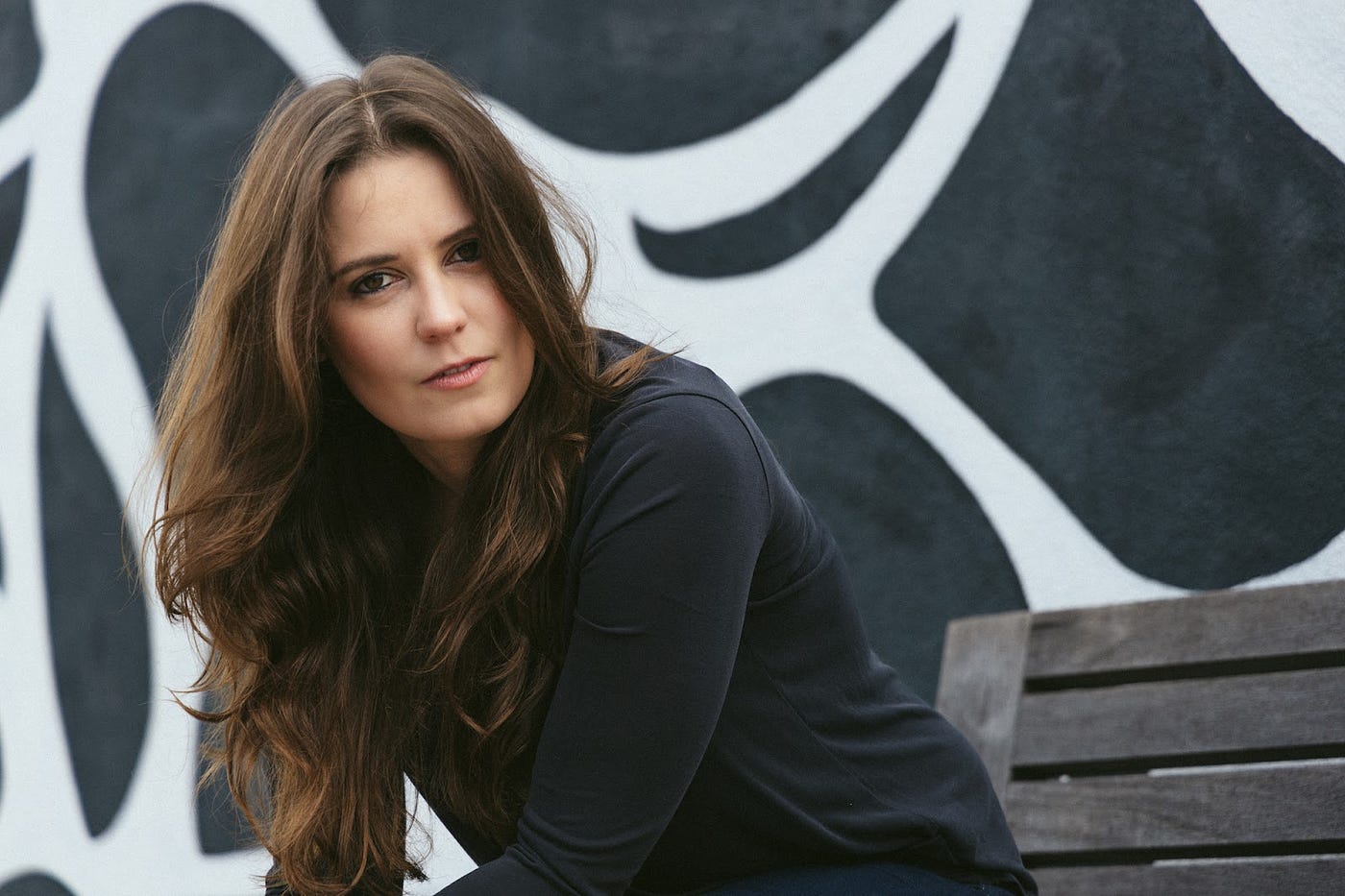
I had the distinct pleasure to talk with Angela Petrilli.
“Red River” — the dark, moody, slide-anchored epic that opens Angela Petrilli’s debut solo EP The Voices — draws inspiration from ancient Greek classics The Odyssey and The Iliad; given the trials, tribulations and loss Petrilli endured on the winding journey to this redemptive new set of songs, it’s an apt metaphor.
Back in 2019, Petrilli was one half of Los Angeles Americana duo Roses & Cigarettes, along with her bandmate, songwriting partner and best friend, Jenny Pagliaro. They’d already generated considerable buzz on the L.A. scene, opening for the likes of Jim Lauderdale, Luther Dickinson, The Record Company, Marc Broussard and Amanda Shires, and their impressive third album Echoes & Silence — recorded in the midst of Pagliaro’s treatment for Stage 4 breast cancer — seemed poised for a breakthrough. There was a tour in the works, and on March 25th of that year Rolling Stone named Roses & Cigarettes’ new single “Fast As I Can” one of its 10 Best Country Songs of the Week, writer Robert Crawford praising it as “an ode to living, laced with jangling guitars and bright harmonies.” But in a heartbreaking and tragic turn of events, Pagliaro — who had been fighting off cancer for years — passed away the very next day. She was just 35.
For Petrilli, losing her closest friend and collaborator, and the band they’d both worked so hard to build — right at the doorstep of success — was the most difficult experience of her life. “I didn’t pick up the guitar for at least a month or two after Jenny died,” she says. “I just couldn’t do it. It was really hard to listen to or play music. I needed time. I needed to get some perspective, to say goodbye to that part of my life that was gone, and also to figure out what my life was going to look like — and sound like — going forward.”
So for the better part of a year, the grieving Petrilli left behind L.A. and set out across the world. She traveled to Nashville, New York, Paris and Italy, eventually making it as far as Australia. Along the way, she spent a lot of time on the ocean, where she was able to find some peace and clarity. As she began to heal, she could feel her muse calling once again. “I really started to miss playing music,” Petrilli says.
Finally back in L.A. after a long sabbatical, she reached out to some musician friends and booked a bar gig under the name The Petrilli Players. The idea was to shake off the cobwebs, play some covers and have a good time. “We did the show, and it was so much fun,” Petrilli says. “It became clear to me how much I still needed to do this.”
With a reinvigorated sense of purpose, and a band of simpatico players — Brett Grossman on bass, Stephen Haaker on drums, Matt Lomeo on harmonica & backing vocals, Bobby Victor on keys, and Vic Vanacore III on percussion — Petrilli was inspired to start writing again. After several months playing shows around Los Angeles (including opening spots for Billy Bob Thornton & the Boxmasters, The Immediate Family, and a performance at Joe Bonamassa’s 3rd Annual Stream-a-thon concert), the new songs felt studio-ready, and Petrilli booked a session at Hollywood’s legendary Sunset Sound.
“There’s so much history at Sunset,” Petrilli says. “It was important to me to be in the same room where The Rolling Stones, Led Zeppelin, The Doors, Janis Joplin, Van Halen and Ray LaMontagne all made records. Walking in, you feel that mojo — that foundation that’s been set by the musicians who came before you. While we were there making The Voices, we felt like we were another brick in that foundation.”
Working at peak efficiency with well-rehearsed material, Petrilli & the Players tracked live at Sunset Sound, cutting five songs in one day. Bassist Grossman and drummer Haaker co-produced the EP with Petrilli, with Geoff Neal engineering. “I knew going in that it would be a good mix of people,” Petrilli says. “Some of them I’ve known 10 or more years, and everybody has a very similar mindset. They’re all fantastic musicians, team players, and the communication between us was flawless. I feel like we really captured the band’s onstage energy.”
Petrilli knocked out all of her guitar parts at Sunset Sound, using her 2013 Gibson Custom Shop R9 1959 reissue Les Paul, a 2012 Custom Shop 1958 reissue Les Paul Junior (a gift from a generous fan), a 1998 American Deluxe Strat with Fishman Fluence pickups, and a Fender Brown Derby resonator. For amps, she went through a Mesa Boogie Fillmore 25 for dirty tones, a Fender Vibroverb with a JBL E130 speaker for clean, and a Supro for the more washy tremolo textures.
The following day, sessions resumed at The Vanguard in North Hollywood, with Vanacore adding additional percussion. A few weeks later, Lomeo, Jessica Mahon & Phoebe Crenshaw laid down backing vocals. The finishing touches — including Petrilli’s lead vocals and some inspired sax lines from veteran musician Paulie Cerra — were recorded at Grossman’s studio, Cosmic Voyager.
The Voices represents significant musical growth for Petrilli — at once, it’s her debut as a solo artist, band leader and lead vocalist. The EP begins with an ominous intensity as if to herald her arrival, droning organ seeping out like blood over the languid yet insistent drum beat of “Red River.” The song’s haunting slide riff finds Petrilli channeling Robert Johnson via Jimmy Page, tracing a ghostly line from the Mississippi Delta to late-’60s London to Sunset Sound, while her vocals rise up from the ocean depths like a siren possessed.
The EP’s title track is another gorgeously meandering launch pad for the band’s live sets, the album version ebbing and flowing like an open-ended “Dark Star”-esque Grateful Dead jam, but delivered with a gritty soulfulness worthy of The Black Crowes. As its name implies, “The Voices” is a musical and philosophical conversation, illustrated by the animated call-and-response between Petrilli’s ripping guitar leads and Lomeo’s wailing blues harp.
“With this EP, I really wanted to write from perspectives that weren’t necessarily my own,” Petrilli says. “Things I’ve observed with friends or watched on the news. ‘The Voices’ comes from having that conflicting internal conversation with the optimistic side of the ego versus the side that’s always worried the world is ending, that everything is bad. We all have that conversation with the little demon and angel on each shoulder.”
The horn-anchored “High Roller” and instrumental showpiece “Slapjack” are hard-grooving modern updates on Meters-style New Orleans funk filtered through Petrilli’s native SoCal breeziness. Throughout both, she delivers the kind of slippery double-stop guitar hooks that would make Stax legend Steve Cropper proud.
Bringing The Voices home is “Ghost Inside a Frame,” a sighing, heartfelt, and emotionally potent nod to Petrilli’s beloved Roses & Cigarettes bandmate. “Right after Jenny died,” she says, “I had a conversation with my Mom, who also lost a close friend at a young age. She said the weirdest part is when you look back at pictures — you change, but they look the same. I thought, ‘What a beautiful and interesting perspective for a song.’ I wrote the idea in my notebook, and tried coming back to it many times, but nothing clicked. I’d write something and think it was too cheesy, or I wouldn’t connect with it. I refused to force it, though. I don’t like to force things.”
Angela, it’s a delight and an honor to meet you. Our readers would love to learn about your origin story. Can you share with us the story of your childhood and how you grew up?
Sure, I grew up in Los Angeles in a family that appreciated music. My mother played the guitar, while my father was a big music lover who attended many iconic shows in L.A. He’s a big fan of blues and singer-songwriters such as Stevie Ray Vaughn, Sheryl Crow, and Patty Griffin. On the other hand, my mom, who is from Detroit, exposed us to a lot of Bob Seger, Led Zeppelin, Aerosmith, and The Eagles.
Music was always playing in the house when I was a kid. I remember being around four years old, seeing my mom play the guitar, and thinking to myself, “I can do that.” It felt as natural as breathing to me.
However, it wasn’t until I was eight or nine years old that I asked my parents if I could learn how to play the guitar. They were supportive, and my mom showed me a few chords. She emphasized that I needed to learn how to play notes and scales. As a kid, I was a natural with the guitar.
My parents realized that I needed lessons, and I was fortunate to have a great teacher, Jimmy Scott, who was a prominent musician on L.A.’s blues circuit. I took lessons from him for ten years, and we still keep in touch to this day. So, that’s a little bit about my backstory.
Could you tell us more about how you got started as a professional musician and joined your first band? We’d love to hear how your career began.
Sure, I started by cutting my teeth as a teenager with my guitar teacher, Jimmy Scott. He would bring me to blues jams and open mic events where we could put into practice what we learned in our lessons. Sometimes I did well, and other times I didn’t, but on the car ride home, Jimmy would always ask me what I could do better and how I could improve. These experiences, playing with different groups of people and never knowing what songs we would play really helped me hone my craft and be critical of myself. It was a humbling experience, but Jimmy instilled a confidence in me to try new things and not be afraid to fail because every experience was a learning opportunity. That’s how I got my start, playing in bars and using my failures as a chance to learn.
With your extensive experience in the music industry, you must have a lot of fascinating stories to share. Could you tell our readers one or two of the most interesting stories that have happened in your career?
For me, meeting Norman Harris and the whole crew at Norman’s Rare Guitars has been an incredibly beautiful experience. Not only have I been surrounded by all these incredible instruments, but also I’ve had the opportunity to speak with Norm, who is a legend in the industry. My favorite moments there are when the shop is closing down and people are leaving. It’s during those chats with Norm on the couch when he shares stories about back in the day and the things he did. Those are really special moments to me. We’re all sitting around on that famous couch, listening to Norm’s stories, and meeting people from all around the world. The shop has become an epicenter in Los Angeles for musicians, music appreciators, and guitar players. It’s a really beautiful community that Norm and his crew have built there, and I’m happy to be a part of it. So, that’s something that’s really great and very special to me.
I have been very fortunate to meet many incredible musicians and colleagues who are extremely inspiring to me. I believe that mentors are essential, but sometimes we forget that our colleagues can also be our mentors. I am grateful to have such a wonderful musical community here in LA. It’s fantastic because we can bounce ideas off each other. Last week, a group of friends and I went to see another friend play, and one of my friends suggested that we come up with song ideas, buzzwords, and have a chat around a table with some beers and burgers to talk about music. It’s about creating a strong community of people who can celebrate each other’s successes, and I think that’s incredibly important.
It’s been said that sometimes our mistakes can be our greatest teachers. Do you have a story about a mistake that you made when you first started and the lesson that you learned from it?
It’s a silly story, but I’ll tell you. I was playing with my previous band, Roses and Cigarettes, and we had a show on the main stage at Hotel Cafe in Hollywood. It was going to be a full band show and everything, and I went to plug in, but my pedal board stopped working, and I couldn’t figure it out. Our sound guy, who happened to be a friend of ours, was there, and we were all like, ‘Oh my God, what just happened? The pedal board is not working.’ So I had to pivot and figure out a way. At that time, I was so mad and frustrated because it was completely out of my control. However, I learned to be more patient and to really think on my feet. I went back to those days when I was 16 and playing in bars, cutting my teeth. I said to myself, ‘Okay, just take a deep breath, and this is going to sound great.’ It ended up being a great show, but I remember having PTSD for a while with stuff not working. I was extra careful and made sure everything was working correctly. The technology stuff always made me nervous, but I learned not to sweat the small stuff when that happens. It was something that was completely out of my control, but you pivot and do your job.
Every industry evolves and seeks improvements. What changes are you happy about seeing in the music industry over the past few years? And what would you like to see change moving forward?
That’s a really good question. Changes that I’ve seen that I think are wonderful: Social media has its positives and negatives, but it can bring people together. Through social media, I’ve met some of my dearest friends and colleagues. People send messages like, “I watched your video and thought you were great.” I love sending messages like that, and it’s cool to connect with people that way. You may not have ever met, but you can comment on a video and say, ‘Hey, I really love what you’re doing, keep it up. I think you’re great.’ It’s a beautiful thing where we can inspire one another. I find it really cool.
Things that could change: I’m not a big believer in being competitive. I think we all have a story to tell and a unique perspective on life. As musicians, we come from different parts and have our own definitions of success. Being open to different walks of life and celebrating our individual definitions of success is a beautiful thing. So, we should honor and celebrate our own definitions of success in music.
You have so much impressive work. Can you share with our readers the exciting products you’re working on now, any new albums or releases, and where you see yourself in the near future?
Sure, I have a new EP called The Voices coming out. We recorded it this summer, in August 2022. Most of it was recorded at Sunset Sound in Hollywood, in Studio 2, which was really fun. The EP is five songs and will be released on May 5th, 2023. Two singles are already out: “The Voices” and “Red River,” and I have another single coming out on April 21st called “Ghost Inside a Frame.” We’re really looking forward to seeing where this EP takes me.
It just feels like a release, like I needed to get these songs out of my body. I wrote these songs for myself and I got to play with my friends to make it happen. I got to work with so many musicians and colleagues who inspire me, and it was a beautiful project. I’m really thankful that we got to do it.
I would love to travel with it and hear it on the radio or TV. I am open to whatever the universe wants to bring my way regarding this EP, but I am incredibly proud of it and all of the musicians and artists who were on it. They made it extra special for me, and I couldn’t have done it without them.
It’s probably a difficult question, but which other artists would you compare yourself to? Who do you think you would be most similar to if you lived in the 80s?
I’m going to answer this question a bit differently. I’ll say that the musicians who really inspire me, and who I look up to in terms of songwriting include Paul Simon — he’s one of my favorite songwriters ever. Bonnie Raitt is another person who’s a huge inspiration to me as a singer and a player. I also love people like Tedeschi Trucks — I just think they’re amazing. And as far as guitar players go, Lindsey Buckingham and Jimmy Page are some of my favorites. Warren Haynes is also a favorite of mine. And then, as a songwriter, Jason Isbell is a big, big inspiration to me.
So, I would say that I’m really inspired by all of these people, and I carry them in my heart as I write my own music. But the most important thing is to sound like yourself and to be authentic to your own voice. It’s important to tip your hat to those who inspire you, but your music and your art is ultimately about you. It’s really important to hone in on your authenticity, and to figure out what story you want to tell and how you want to tell it. I think that’s really important. So, for me, it’s about being authentic to my own voice while also taking in inspiration from the artists I admire.
Do most of your songs have a story in them?
Yes, I would say on this EP, even the instrumentals that don’t have any words tell a story. I really wanted to write from perspectives that maybe weren’t necessarily my own. But there’s always gonna be a piece of you and your perspective in all of these songs. The voice or the storyteller may not be me, but the story could be mine, you know? That was the case with our latest single, “Red River.” I’m a big fan of reading. I’m constantly reading books — I’m reading three different books right now. And I always loved the Iliad and the Odyssey in high school. I remember reading it and just loving the story and the visualization that Homer put into these words. The imagery was just great.
I had picked up my guitar one day, and it was in an open tuning. I grabbed my slide, and the words “red river” kept going through my head. It felt like there was a story there. I don’t know what it was, but I knew I wanted to dig into it. I was trying to write, but it didn’t really feel like me. And then came the line, “Red river, send me to my hallowed grave.” Whoa, ok. A little dark, but where can I go with this? Immediately I thought of ancient soldiers rowing ships in the Odyssey. And that was my jumping off point. From there, I knew where it was gonna go. I was telling the story of this soldier who had fought in a war and was trying to go home. They were thinking about all the bad things they’d done, all the bad things that happened during the war, and how hard life is. I wanted to tell that story. I’m inspired by those stories, and that literature is just so lush and wonderful. And it turned into this cool, swampy, bluesy thing. It was something I hadn’t expected. It was a really fun songwriting process for me — stepping into the shoes of someone else and telling a story that way was great.
But other songs on the new EP were a bit more personal. “Ghost Inside a Frame,” even though it’s not sung from my perspective, I have felt a lot of those feelings in losing someone. Grief is something that’s universal. If we haven’t dealt with it already, we will. It’s something all of us are gonna feel at some point in our lives. So with this song, it’s from the perspective of the ghost. But I felt those things, and it’s a very, very honest song. It definitely came from a very personal place, but because grief is something we all deal with, I think the song is very universal too.
It sounds like your creative process is more about receiving than creating, right? Like you feel inspired, rather than just starting from scratch?
That’s how a lot of the songs came to be, just through observation. I try to be open to ideas flowing through me and not judge them. I’m not someone who likes to edit very much, as long as the story is there and it’s saying what I want it to say. Sure, I’ll tweak a verb or a tense, but I like to be open to the process. I find that things that are forced, sound forced. When I write, I try to be very authentic, whether it’s from my perspective or telling a story through someone else’s eyes. Being empathetic leads to interesting lyrics and storytelling for me. That’s how my journey was through the songwriting of this EP.
This is our signature question that we ask in all of our interviews. Let’s say a person is just starting out and they ask, “Angela, you’ve had so much success. What are the five things I need to know to succeed in the music industry?” What would you say?
Write the songs you want to write. Don’t write songs that you think will be popular or that you think others will like. Write what you like. Be your own person and speak with your own voice. Write the music you want to write because that will bring you the most joy. Don’t worry about anybody else’s opinion. If someone else likes your music, that’s great, but write the music for you.
I would say finding your tribe is incredibly important. Finding that group of people who will celebrate your successes and be with you in the trenches. Those are the people you want to grow your story and career with. Sometimes it takes time to find them, so be particular. Finding your tribe is vital.
Making time to be grateful and quiet is really important. It’s a gift to be able to make music with a wooden box that has strings on it; not everyone can do that. So making time to feel grateful is all about perspective. I’m a big believer in taking time to be quiet as well. It’s important to listen to that inner voice and create space for stillness. I feel like it helps to set a trajectory, and it’s a nice break from the busy world we live in. Taking five or ten minutes to listen to your breath, follow your breath, and take deep breaths is massively important.
Attend as many music events as possible and meet as many musicians as you can. Challenge yourself to play in genres and listen to music styles that you may not be comfortable with. Learning different styles of music can help us find our own voice. For instance, you may not be a big fan of country music, but when you listen to some of the players, like Jerry Reed and Vince Gill, you’ll hear some really great playing. You may be surprised to find out that you enjoy it and think, “I never knew you could play a guitar like that!” You might even find yourself drawn to slides or riffs or voicing chords in a certain way, which will influence your own music. All of this can happen because you were open-minded and listened to something that you didn’t think you would like, but ended up falling in love with it.
Last one, failure is not a thing. It’s a learning experience. There’s no such thing as a mistake, and there’s no such thing as failure. I truly believe that if something is not meant for you, there are a few possible answers. It’s either “yes, this is meant for you,” “yes, but not yet,” or “no, because I have something greater planned.” I really believe that. I’ve experienced many instances in my life where I thought something was going to work out, and then something happened, and I realized it didn’t. But the universe always leaves doors and windows open for you to walk through. It’s all about remembering that the universe gives you those three answers for everything in life: “yes,” “yes, but not yet,” and “no, because I have something better.”
This is our penultimate question. Angela, because of the platform you built and your amazing work, you’re a person of enormous influence. If you could spread an idea or inspire movements that would bring the most amount of good to the most amount of people, what would that be? Because you never know what your idea can inspire.
Meditation. I meditate every day. It has absolutely changed my life. Make the time to be quiet and talk to that inner voice.
This is our final question. This is what we call our matchmaker question, and sometimes it works. Is there a person in the world or the US with whom you would like to collaborate, have a power lunch, have a coffee or have a beer with, because we could tag them and maybe we could connect to them?
Oh gosh, there are so many people. I’d love to have tea with Paul Simon. That would be pretty special. I’d love to have tea with Paul Simon in a cute little cafe in Manhattan. I would love to just talk about life and his process. Yeah, it would be Paul Simon.
Angela, how can our readers continue to follow your work? How can they buy your new EP? How can they follow your work online?
You can go to my website, angelapetrillimusic.com, or Instagram, Facebook & YouTube at @angelapetrillimusic. You can follow my band, Angela Petrilli & the Players, on Spotify and everywhere you stream music. That’s where you can find me, and you can check out my show at Norman’s Rare Guitars, it’s called Petrilli Picks.
And if you’re a guitar player wanting to learn songs, you can go to my YouTube channel and check out the Riff Rundown, where I run down a lesson live every week.
Well, Angela, it’s really been an honor and delight to have this conversation. You’re extremely thoughtful, and I wish you only success.
Thank you very much for having me. This was great.
It was a profound and brilliant interview. I’m excited to share it with you and our readers.