I had the pleasure of talking with Sam Drysdale, a musician who has learned to measure certain successes without a chart position attached.
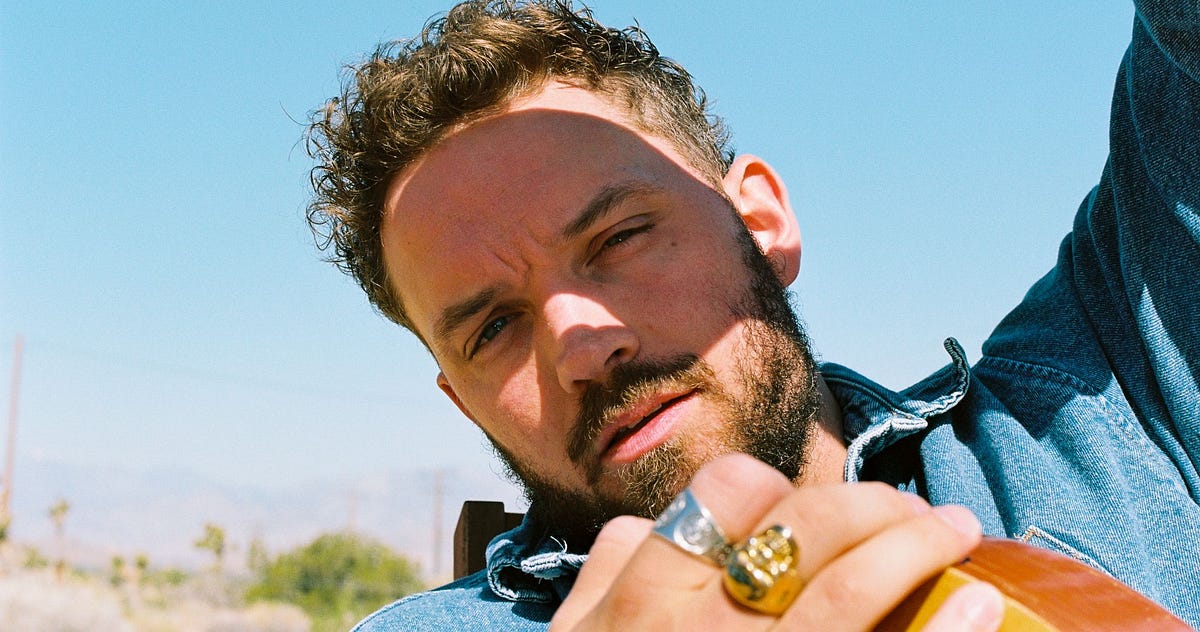
I had the pleasure of talking with Sam Drysdale, a musician who has learned to measure certain successes without a chart position attached.
I had the pleasure of talking with Sam Drysdale, a musician who has learned to measure certain successes without a chart position attached. One of his proudest recent accomplishments involved five days traveling around Los Angeles with two friends, shooting a music video for his song “A Place.” Working with Helder Matias and Rod Hezi, Drysdale brought an idea from his imagination to the screen with a crew of just three people. The finished video looked exactly as he had envisioned it. “That very rarely happens in the arts world,” he admits.
For Drysdale, the satisfaction was about more than making a video. It was another small victory in a career increasingly defined by his determination to do things himself. The Toronto-based singer-songwriter has spent years learning to navigate an industry that regularly tells independent musicians what they cannot do. Along the way, he has become his own project manager, content creator, and occasional videographer. The irony is that mastering the business of being Sam Drysdale sometimes leaves him less time to practice the music that made him want a career in the first place.
His latest project, Purgatory Cove, was released on October 23, 2026, and reflects a similar contradiction. It is an album about withdrawing from the world to understand a painful relationship, made by a musician whose career depends on putting increasingly personal parts of himself before an audience.
Growing up in Puslinch, Ontario, about an hour outside Toronto, Drysdale had every reason to become a musician. His mother was a touring performer who later worked in radio. His father, a robotics engineer, built guitars and played in a band. Music was everywhere in the house, though young Sam wanted little to do with it. That changed around 16, when he began exploring his father’s collection of Neil Young and Pink Floyd records. John Mayer and Death Cab for Cutie followed, and he became fascinated by musicians who could build an entire song around a guitar and a voice.
He eventually moved to Los Angeles to study independent artistry at Musicians Institute. At the time, he wasn’t convinced the education would be particularly useful. A decade of making music changed his opinion. Learning to operate without a record label’s machinery turned out to be remarkably practical preparation for the career he would build.
There were early signs of ambition. He remembers organizing his first major performance at Toronto’s Mod Club, now known as the Axis Club, while still in his twenties. He remains proud of having pulled it off, though his assessment of the musical performance is considerably less flattering. “I’m sure I wasn’t very good that night,” he says.
“You get almost all nos in this industry,” he says. Rejection pushed him toward developing skills that made him less dependent on other people’s approval.
The approach began producing wider recognition. His 2024 song “Only The Strong Survive,” written with his mother in mind, surpassed 10 million global streams and received a 2025 Folk Music Ontario Song of the Year nomination. “Cold Water” subsequently brought him Canadian radio attention. In April 2026, he signed with ONErpm Nashville, an important development for an artist who had spent much of his career handling his own business.
Yet the music bringing Drysdale this attention was increasingly stripped of the pop production he had once embraced. His return to folk-oriented songwriting coincided with a more deliberate examination of his values, relationships, and sense of identity. He had come to believe that finding an authentic artistic voice required first understanding the person behind it.
That thinking runs through Purgatory Cove. Drysdale and producer John Fellner converted his mother’s cabin in Northern Ontario into a recording studio. The cabin sits on a small inlet called Purgatory Cove, which gave the album its title. But the location became something more substantial than a geographical reference.
The record emerged from roughly three years of processing heartbreak, solitude, and change. Drysdale describes its emotional setting as a metaphorical camping trip, a retreat from ordinary life following a relationship that had brought him profound love and considerable pain. The album follows the attempt to make sense of both, without pretending that understanding arrives quickly.
Its final advance single, “Love You into Loving Me,” captures the particular sadness of believing that enough devotion can change another person’s feelings. Drysdale conceived it as a response to Bonnie Raitt’s “I Can’t Make You Love Me,” imagining the youthful conviction that precedes the older song’s painful recognition. What sounds superficially hopeful becomes a portrait of someone refusing to acknowledge what is already happening.
Such contradictions interest him more than easy resolutions. Asked what connects his songs, Drysdale returns to the meaning of love, which he has increasingly come to associate with sacrifice. “Love is mostly defined by sacrifice,” he says, extending the idea beyond romance to relationships with one’s craft and ambitions.
He is equally outspoken about the importance of lyrics in an industry increasingly shaped by artificial intelligence. He calls them “the last battleground for real good human involvement in music,” arguing for songwriting that rewards close attention and repeated listening. He wants listeners to work through his words rather than understand every line immediately.
There is a revealing contrast between this philosophical approach and the way Drysdale restores order to his everyday life. A dedicated gym-goer, he appreciates weightlifting precisely because progress can be measured. A weight lifted this week can become a slightly heavier one next week. Music offers no comparable guarantee. Rehearsals, administrative work, rejection, creativity, and audience response refuse to obey such predictable rules.
Perhaps that is why his most interesting ambition extends beyond musical success. When asked what idea he would like to spread, Drysdale advocates something considerably less fashionable than certainty: the willingness to admit ignorance. He wishes more people were comfortable saying, “I’d like to learn more. I don’t know.”
For a musician who has spent years teaching himself how to control nearly every aspect of his career, it is a revealing admission. Drysdale has learned how to make more things happen on his own terms. His newest music, however, concerns the experiences that no amount of effort can fully control, particularly whom we love, what we lose, and how long it takes to understand either.
Yitzi Weiner: Sam Drysdale, it’s such an honor to meet you. Before we dive in and talk about your amazing work and your album, readers would love to learn about Sam Drysdale’s personal origin story. Can you share with us a story of your childhood, how you grew up, and particularly the seeds of all the amazing creativity and ingenuity that has come since then?
Sam Drysdale: I grew up in a town called Puslinch, Ontario, which is just an hour outside of Toronto, Ontario. And I grew up with two musical parents. My mom was a touring musician and then a radio DJ. My dad is a robotics engineer, but he builds guitars and plays in a band for fun. So I always grew up with music in the household. I actually was not interested in music at all as a kid. I had no interest in pursuing music. And then when I was about 16, I started listening to a lot of my dad’s old records, a lot of Neil Young, Pink Floyd, and then I got into some of the more modern singer-songwriters. John Mayer was the big one that really grabbed me as a kid, and I listened to a lot of him and Death Cab for Cutie, and just anyone that played guitar and sang, I was listening to. I went to music college in Los Angeles for the independent artist program, and I’ve been writing and singing songs ever since.
Yitzi Weiner: Amazing. I’m sure you have some amazing stories from your successful career and I’m sure this is difficult to single out. Can you share two stories that stand out in your mind from your career?
Sam Drysdale: A lot of the moments from my career that make me the most proud are the little things we’ve built as an independent artist. I went to college for independent artistry, which was essentially a crash course in navigating the music business without the help of a label and learning to do everything on your own. At the time, I never really thought that degree would matter all that much, but looking back, that’s exactly what I’ve spent the last 10 years doing — pursuing this dream as somebody who likes to do everything themselves.
One of my favorite recent memories was shooting a music video for “A Place,” a song off the album. I wrote and produced the video alongside two close friends, Helder Matias and Rod Hezi. We spent five days traveling around Los Angeles filming, and it came together exactly how I’d imagined it. That very rarely happens in the arts, where an idea starts in your head, somewhere up in the clouds, and you have to do the work to bring it down to ground level. The finished video was exactly what I’d envisioned, and I’m really proud of what the three of us created. I think it looks like it had a much bigger budget than it actually did.
Another moment I’m really proud of, looking back, is my very first show. I put on a pretty big show at a legendary Toronto venue called the Mod Club. I was around 24 at the time, and even looking back now, I’m proud of what I was able to pull together. That was a big accomplishment for me.
Those are two moments that immediately come to mind.
Yitzi Weiner: There’s a saying that “no” is not rejection, but redirection. Do you have a story like that where you got a “no” to an opportunity or to a gig that led to an even better opportunity?
Sam Drysdale: As an independent artist, you get nos all the time. I used to have a deal with a major label that I wouldn’t say went poorly, but it didn’t go as well as I had hoped it would go. And I would say that was a no that then turned into the opportunity for me to really pursue independent music in a way that I never thought I would. So I would say that’s a big one.
You get almost all nos in this industry. Most people are saying no to you most of the time. So the biggest thing that’s come from people saying no to me is I’ve learned how to do a lot of things myself, which has turned out to be pretty valuable.
Yitzi Weiner: That’s a great answer. What’s been the most challenging project or role you’ve taken on so far and why?
Sam Drysdale: The most challenging for me, particularly, has now become managing all of the different facets of this industry. I shoot a lot of my own music videos now. I bought a camera this year, and I shoot everything myself. Learning how to manage the content side of music and then all of the administrative stuff that goes along with the boring parts of music that nobody wants to hear about, that’s been really challenging.
And then even today, I was just in a rehearsal, and I realized now that I’m overseeing everything from a project management standpoint in my career; it’s been hard to spend as much time as I’d like focusing on the live show and playing with the band and prioritizing making sure things sound great. It’s been hard for me to find my feet in the live arena. And I love playing live, but it’s been very hard there.
Yitzi Weiner: Great answer. Let’s talk about your latest album. Tell us all about it, Sam. And tell us why, in your unbiased opinion, our readers have to listen to it.
Sam Drysdale:
The new album is called Purgatory Cove, and the title has two meanings. The first is where it was inspired. I made most of this record at my mom’s cabin, which my producer John Fellner and I converted into a studio. It’s located on Purgatory Cove, a small inlet of water north of Toronto.
The second meaning is that the whole album is about escaping your life after heartbreak, seeking solitude, reflecting, and going through a season of change, learning, and hopefully refining. To me, Purgatory Cove embodies that. It’s like going on this metaphorical camping trip for years of my life, getting over someone who caused me a lot of pain but also gave me profound love and taught me great lessons, and coming back as somebody new. In my mind, Purgatory Cove is where I went for those three years while I was working on getting over this person and moving on.
As for why you should listen to this album, I think it’s a really complete project. Right now, with the dawn of AI in the music industry, I think lyrics are the last battleground for real human involvement in music. ChatGPT hasn’t figured out lyrics yet, and great lyrics are still one of the stamps of real songwriting. I’m really proud of the lyrics on this album. Some might not make sense on the first listen, but I’ve always liked songs where you have to get your shovel out and dig a little before you realize the gold that’s in them. I think this album has a lot of that.
If you’re somebody who likes listening to full bodies of work, especially more than once, I think this is a good album for you. I think it’ll age well, and I really hope it does.
Yitzi Weiner: That’s amazing. If you could take all of your music, all of the lyrics, all the melodies, all the album covers, put it in a blender, and mix it up, what would the message be from that mixture?
Sam Drysdale: I’m going to take my body of work post-transition into the folk singer-songwriter world, because, at first, there was a brief period of time where I was putting more poppy music With that in mind, I think a lot of my music has to do with the exploration of what real love is and what it really means.
hat I’ve started to learn as I’ve gotten older is that love is mostly defined by how much you are willing to sacrifice to protect love. Whether that be love for somebody or a love for your craft or whatever it is, sacrifice will end up dictating the density of that love. And to me, that is what a lot of my music embodies: me having spent all this time trying to figure out what real love is. What does it mean? Why do we use it in so many different applications? And that’s the best I’ve been able to come up with so far as a — we’ll call me an adult, I guess.
Yitzi Weiner: Okay, amazing. So this is our signature question. You’ve been blessed with a lot of success now, and you must have learned a lot from your experiences. Looking back all the way to the beginning when you first started, can you share five things that you’ve learned over the years that someone starting out today can really benefit from?
Sam Drysdale:
Yitzi Weiner: This is our final aspirational question. Sam, because of your amazing work and the platform that you built, you’re a person of enormous influence. If you could spread an idea or inspire a movement that will bring the most amount of good to the most amount of people, what would that be? Because you never know what your idea can inspire.
Sam Drysdale: You know what? I’d have to think about this a little more to give a really proper answer, but I think if more of us were willing to admit that we don’t know as much as we think we do, the world would be a better place. A lot of people have caused violence and problems in this world by thinking they know a lot more than they actually do, simply because it makes them comfortable to think that.
I don’t think a lot of us really know what’s best for the person next to us, despite the fact that we’re all a lot more similar than we sometimes acknowledge. If more people were willing to simply say, “I don’t know,” or “Can you tell me more about your opinion?” I think that would go a long way, especially with the state of the world these days.
So yeah, I think people being more comfortable saying, “I’d like to learn more. I don’t know,” could make a real difference.
Yitzi Weiner: That’s brilliant. Amazing. Sam, how can the readers purchase the album? How can they listen to your music in general? How can the readers support you in any possible way?
Sam Drysdale: You can purchase my album through my website at samdrysdalemusic.store or find it on Spotify, Apple Music, Amazon Music, or wherever you prefer to listen! You can also follow me on Instagram and TikTok at @samdrysdalemusic to keep up with everything we’ve got going on. And if you really want to come show some love, come find me at a show! That’s all we can really ask for, and I appreciate every bit of support.
Yitzi Weiner: Sam, it’s been an honor to meet you. I wish you continued success, good health and blessings, and I’d love to do this again next year.
Sam Drysdale: Absolutely. Hey, appreciate you, man. Thank you so much for having me.

Editor and journalist at Authority Magazine, sharing in-depth executive interviews, leadership insights, and empowering stories from world-class founders and creators.

Exclusive, curated interviews with the leaders and changemakers shaping tomorrow. Leadership lessons, industry deep dives, and executive profiles.