I came out to my family and friends earlier in my life, but it took 17 years for me to understand that hiding who I was in my professional life impacted my ability to express myself and be the leader I wanted to be.
As part of our series about the “Five Things You Need To Be A Highly Effective Leader During Turbulent Times”, we had the pleasure of interviewing Ester Banque.
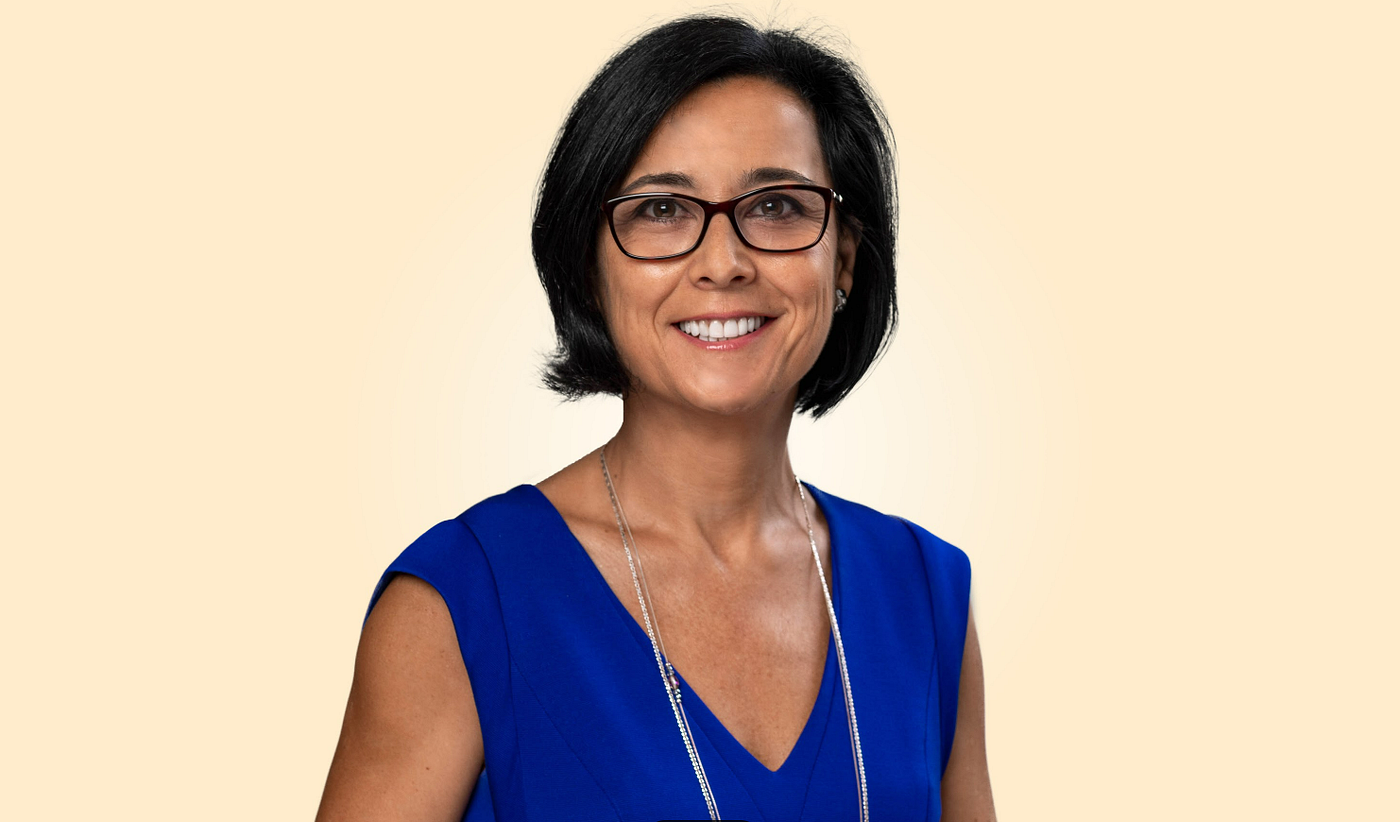
For Ester Banque, “Be a Change Agent” has been her guiding principle throughout her 30+ years of experience in the pharmaceutical industry, resulting in record-breaking team performances, award-winning launches and a track record of prolific talent development. A successful senior executive with a portfolio of accomplishments in geographies spanning the globe, Ester has delivered significant innovation while remaining patient-centric, ensuring the broadest possible access to critically needed treatments. Grounded in the belief that success is a shared effort, she is passionate about building, empowering and leading high-performing organizations ― making a difference for patients while achieving unprecedented business results. In her current role as SVP, General Manager U.S. Hematology, Ester oversees a broad portfolio of established and new therapies, including cell therapy, for malignant and non-malignant hematologic diseases.
Thank you so much for your time! I know that you are a very busy person. Our readers would love to “get to know you” a bit better. Can you tell us a bit about your ‘backstory’ and how you got started?
Iwas born in Barcelona, Spain and grew up with a very loving and supportive family. From being the only girl at my school who played soccer to being the first member of my family to ever graduate university ― from early on I have always followed a different path. In school I studied chemistry and went on to pursue a career in healthcare, both predominantly male fields at the time. As a gay woman navigating a conventional society, pushing traditional norms became a familiar part of both my personal and professional worlds. Despite the challenges I faced, my career journey was always driven by a purpose to help others and make a better world ― and pursuing leadership roles in the healthcare industry allowed me to do that.
It has been said that our mistakes can be our greatest teachers. Can you share a story about the funniest mistake you made when you were first starting? Can you tell us what lesson you learned from that?
Though I don’t consider this a mistake, one thing I would do differently if I had the chance, is come out sooner in my career. I came out to my family and friends earlier in my life, but it took 17 years for me to understand that hiding who I was in my professional life impacted my ability to express myself and be the leader I wanted to be. I was afraid this part of who I am would limit my opportunities and affect my career growth, and that I would be excluded or judged. Now I know how much that burden of hiding weighed me down. Since then, my career and the professional opportunities I’ve been able to pursue have only expanded with the freedom and happiness I’ve enjoyed by being my authentic self.
None of us are able to achieve success without some help along the way. Is there a particular person who you are grateful towards who helped get you to where you are? Can you share a story?
My father encouraged my sister and I to pursue our dreams. He supported my passions for science and football and inspired me to pursue these two very male-dominated areas in my youth. When I came out to my family about 30 years ago, at a time when being gay was very taboo in Spain, my father accepted me and told me he loved me unconditionally. He told me he was proud of who I am and encouraged me to be myself. He was a wise, visionary and compassionate man, and he will always be my hero.
I have also been incredibly fortunate to find inspiring role models throughout my career, including Christi Shaw, Susanne Schaffert and Chris Boerner, who gave me some of the most significant opportunities in my career.
Extensive research suggests that “purpose-driven businesses” are more successful in many areas. When your organization started, what was its vision, what was its purpose?
We have a vision of transforming patients’ lives through science at Bristol Myers Squibb. This includes improving health equity across the globe ― from diagnosis and access to care through increased education to designing more inclusive clinical trials with diverse patient populations. Patients are our purpose. It’s what motivates us every day. Regardless of the challenges in front of us, delivering medicines to patients is our burning platform.
Thank you for all that. Let’s now turn to the main focus of our discussion. Can you share with our readers a story from your own experience about how you lead your team during uncertain or difficult times?
Launching five new brands during a global pandemic was incredibly challenging and required us to be more resourceful, flexible and creative in how we worked together. I was so impressed by the resilience of my team. Leading through such transformation requires team building, fostering an environment of innovation and finding opportunity in challenges. Remembering our purpose ― patients ― is what guided and energized us to keep moving forward through such an uncertain time.
Did you ever consider giving up? Where did you get the motivation to continue through your challenges? What sustains your drive?
The early days of my career were both exciting and scary. I loved the feeling of being challenged and had a rigor for science ― but I wasn’t always confident that a commercial role was right for me. After studying chemistry at university, I began working as a sales rep at hospitals. Back then, I hadn’t learned the skills needed for a role like this. Stopping doctors in the corridor, without knowing who they were and what they do, was intimidating. The first few months were intense, and at times I really questioned if this was the path I wanted to pursue. But I started understanding the direct impact I could make by helping to bring therapies to patients, and that really put everything into perspective for me.
I’m an author and I believe that books have the power to change lives. Do you have a book in your life that impacted you and inspired you to be an effective leader? Can you share a story?
“Letting Go” by David R. Hawkins is a book that really made me reflect on being intentional and maintaining an open and positive mindset, which has been critical to my leadership perspective. It discusses how our thoughts impact our emotions and our energy, which ultimately affects our bodies. It reminds me that shifting from a negative to a positive mindset can not only improve our thinking, but also our feelings and actions. This is very helpful to keep in mind when we can’t control certain situations or circumstances around us ― we can at least control how we feel and react.
What would you say is the most critical role of a leader during challenging times?
As a change agent in healthcare leading and transforming businesses across 90 countries over the last 30 years, I face challenges all the time and have learned many things. There are 3 key learnings I always keep in mind:
- Reduce complexity by being clear about the purpose and what we are solving for
- Help your team to stay positive no matter how difficult the challenge is and ask for help if needed
- Create an environment where the team feels safe to share, to empty their cup when things get tough and emotions arise, that they feel supported and that we are all in this together.
When the future seems so uncertain, what is the best way to boost morale? What can a leader do to inspire, motivate and engage their team?
You can be a fierce and driven leader, but to inspire and motivate others, you also need to have heart. I learned this from my own experience. Forty years ago in Spain, I started my career in quite a male-dominated environment, and I would mimic the style of leadership I saw around me. I wanted to show that I had the brains and drive to be successful in business. But after spending years on my own personal development, I realized my leadership style was missing a key piece of myself, and that means in order to be an effective leader it takes more than brains ― it takes having an even bigger heart.
When it comes to encouraging my own teams, I try to lead and guide with empathy. The work we do can be emotional, and I believe it takes guts. Fostering a culture where we can express ourselves authentically is critical, especially in an industry, and world, undergoing such rapid and transformational change. To me, success is a shared effort, so I always try to be an intentional, people-first leader and cultivate an inclusive work culture.
What is the best way to communicate difficult news to one’s team and customers?
I believe leaders must be role models in fostering a culture where everyone feels safe and valued. Showing vulnerability and being compassionate are key attributes of authentic and caring leaders. Sometimes people wrongly mistake kindness for weakness, but the most effective and successful leaders create an environment of safety, trust and authenticity. They know compassion is a critical piece, especially when it comes to delivering bad news or embracing challenges. In order to weather the storm together, we need to be caring, compassionate and committed to building trust.
How can a leader make plans when the future is so unpredictable?
In leadership and in life, I believe our mindset drives everything ― ourselves, our world, and our ability to make an impact. I try to focus on the things I can control, especially when it comes to overcoming challenges in the workplace. Having an open mindset in these situations helps with working together and thinking creatively to find solutions to the things in our control. This is something I’ve learned and actively worked on in my career over the years, and also in my personal journey. It’s hard to resist the fight-or-flight mode when facing a challenge, but being intentional about your mindset can help ensure you and your team remain open, curious, collaborative and committed to learning.
Is there a “number one principle” that can help guide a company through the ups and downs of turbulent times?
At BMS, we firmly believe in empowering an inclusive workforce, and this belief remains constant in challenging times. In these situations, I actually think it’s important for organizations to lean on and support their people even more. They say a company is only as good as its people, so it’s important to make sure individuals and teams feel valued, cared for, and empowered to come to work each day so we can be successful together.
Can you share 3 or 4 of the most common mistakes you have seen other businesses make during difficult times? What should one keep in mind to avoid that?
When companies undergo changes, some successfully weather while others unfortunately perish during transformational times. Here are some of the learnings I’ve experienced or observed:
- Not realizing or anticipating significant market changes that would affect their core business. This is common in longstanding companies or industries that have been stable for some time. They simply become complacent.
- When presented with a crisis, failing companies tend to focus on the short-term and do not think strategically about the mid- to long-term. They become reactive, losing their way and ultimately their purpose while fighting to stay afloat.
- Some companies continue operating in the same way, with the same organizational design and capabilities, failing to integrate new technologies despite experiencing market transformation. These companies very quickly lose competitiveness and become obsolete.
Here is the primary question of our discussion. Based on your experience and success, what are the five most important things a business leader should do to lead effectively during uncertain and turbulent times? Please share a story or an example for each.
- See opportunities where others see challenges: In my previous role, I headed our Intercontinental Region for BMS, which includes 70 countries across five continents. Working to accelerate patient access to treatments in such diverse markets involves navigating the many complexities of each country’s healthcare system. My team and I saw the potential of these markets and developed a strategy to grow a business fostered by innovation that once was mature and declining. The turnaround was not only positive for BMS business but, most importantly, helped patients around many countries have access to our innovative medicines.
- Never compromise on values: Leading teams in many different countries has helped me understand what it takes to build a strong team and organization. Talent is important, and I look for people who are not only smart, but eager and capable. I also believe experience should be varied ― a mix of more tenured and less tenured members may bring different elements based on their experience. But one thing that will always be critical for team building is sharing values of integrity, honesty and trust. I look for people who have a strong sense of purpose, are willing to work together, and have a positive mindset.
- Lead with the brain and the heart: I believe a strong leader is a blended leader. You can be driven, accomplished and able to make hard decisions for your team, but it is essential to also be kind, show compassion and make others feel valued and supported. I’ve found that this helps foster a sense of shared purpose, which can make everyone feel empowered to bring new ideas, build connections and improve overall performance.
- Simplify complexity: The ability to simplify challenges, problems and even complex solutions is a critical leadership trait. One that becomes more relevant the further you climb up the ladder and the more responsibility you have. Simplifying complexity for others helps everyone stay focused on the mission, the job that needs to get done. It helps you earn trust, too. But simplifying complexity for yourself, as a leader, is equally important. It will help you make the important and difficult decisions with confidence and conviction, and improve your ability to communicate goals, objectives, and “the why” to others more effectively.
- Foster an “above the line” mindset for yourself and your teams: Mindset drives our entire world. When you are faced with challenges, you operate either in a “below-the-line” mindset, which is a defensive, fight-or-flight mentality — not conducive to leading people — or you choose to bring people together, think creatively, “above-the-line.” Strong leaders must possess an above-the-line attitude in their roles and cultivate the same mindset in their people in order to sustain a successful organization.
Can you please give us your favorite “Life Lesson Quote”? Can you share how that was relevant to you in your life?
“Be the change you wish to see in the world” — Mahatma Gandhi. This famous quote resonates with me both personally and professionally. Being a woman, Hispanic and gay, there have been many times in my life when I felt frustrated after trying to fit in. Eventually I realized life is not about fitting in ― it’s about pushing limits and changing the status quo so the world can be a more inclusive and diverse place.
One thing I’m very passionate about is helping people become the best they can be. I see the potential in others and get so much joy out of guiding them and seeing them blossom. I think because of my experiences, feeling so different and sometimes like an outsider, I’ve grown this passion for helping people and making sure they have equal opportunities. This includes my team members and also the patients for which we work every day to deliver accessible medicines.
How can our readers further follow your work?
I regularly share my thoughts on LinkedIn.
Thank you so much for sharing these important insights. We wish you continued success and good health!