While working in Thailand, I encountered a supply chain issue that caused me considerable stress. However, I quickly realized that losing my composure and becoming impatient only led to the amusement of my Thai colleagues.
Female Disruptors: Emma Charles of Bristol Myers Squibb On The Three Things You Need To Shake Up Your Industry
INTERVIEW QUESTIONS:
As a part of our series about women who are shaking things up in their industry, we had the pleasure of interviewing Emma Charles, Senior Vice President Intercontinental Markets, Bristol Myers Squibb
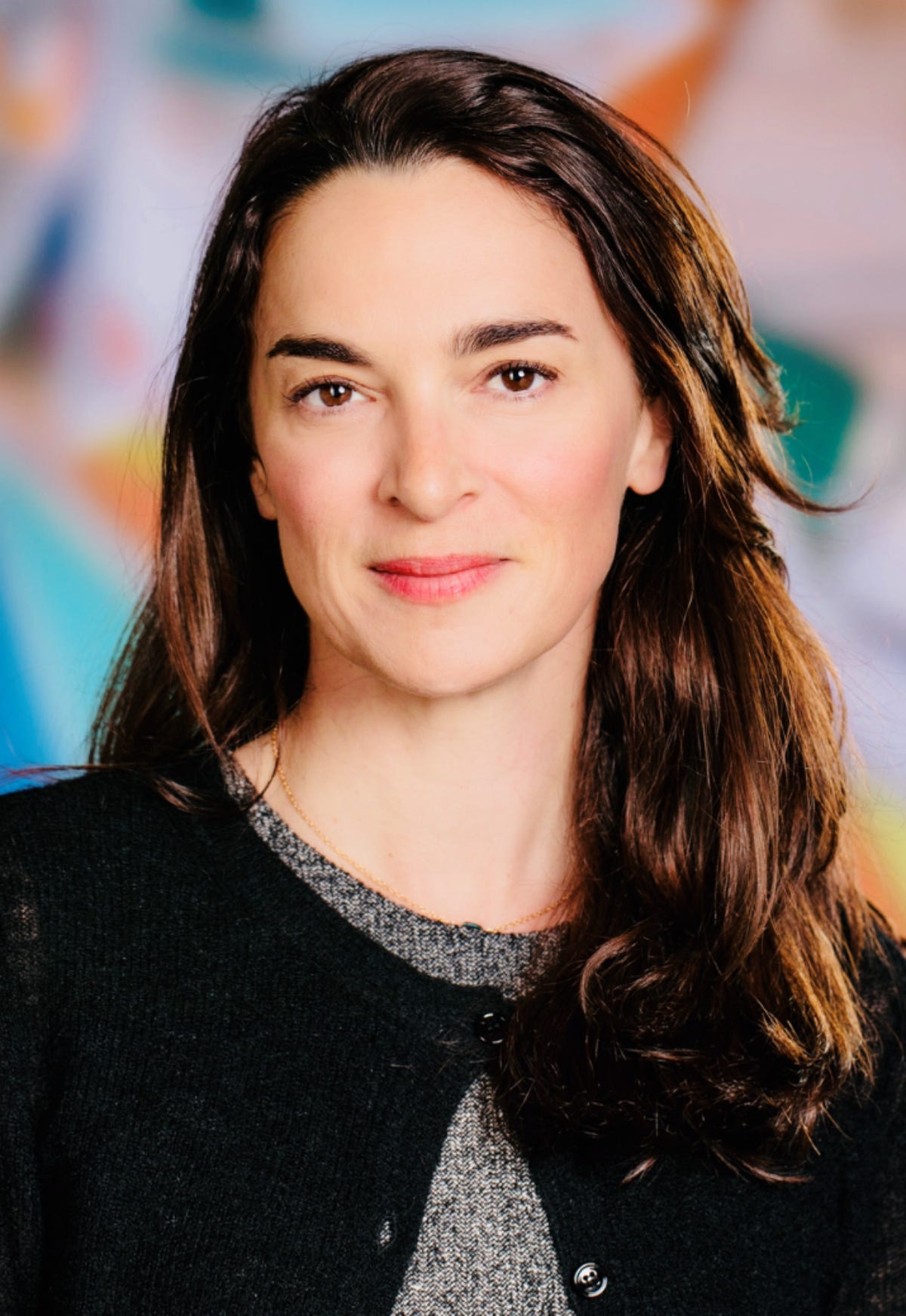
Emma Charles is Senior Vice President of Intercontinental Markets at Bristol Myers Squibb. In this role, Emma oversees a diverse region, with responsibilities for 70+ markets across the world, including China, Asia, Australia, Central & Eastern Europe, Latin America, Brazil and the Middle East. Prior to becoming SVP of Intercon, Emma was Vice President, General Manager & Board Member of BMS Italy for over six years.
Emma is passionate about accelerating and expanding access of innovative medicines to patients and about fostering employee engagement that thrives on diversity, inclusion and a strong speak-up culture. Her biopharma career spans more than 25 years across commercial, corporate strategy and business development operations.
Thank you so much for doing this with us! Before we dig in, our readers would like to get to know you a bit more. Can you tell us a bit about your “backstory”? What led you to this particular career path?
I was born and raised in the French Basque Country, near the border of Spain. I spent my early childhood in Tunisia where our family moved, because my father was an engineer working with the Tunisian government. This exposure to a culture and environment different from my own greatly influenced my perspective on life.
Immediately after graduating from a French leading Business School in Paris, I accepted a position with a large vaccine manufacturer that took me hundreds of miles from my home to Southeast Asia. Settling in Bangkok, Thailand, I embraced my role as the marketing lead for the region, immersing myself in the energy and unique charm it had to offer.
The five years spent in Bangkok were nothing short of amazing. As I navigated the intricacies of the job, I gained invaluable leadership experience that shaped my professional growth. Beyond the confines of the office, I had the pleasure of exploring the remarkable diversity of Southeast Asia, and learned to speak Thai, which further deepened my connection with the community and enhanced my overall experience.
Fast forwarding a couple of decades of exciting roles within the pharmaceutical industry, I now serve as Senior Vice President of Intercontinental Markets at Bristol Myers Squibb (BMS). In this role, I have the privilege of overseeing a remarkably diverse region comprising 65+ markets across six continents.
As my career evolved, I have come to cherish the profound impact that each of my experiences has had on my personal and professional growth. This realization fuels my passion for encouraging others to explore opportunities far and wide, to immerse themselves in different cultures, and acquire a comprehensive understanding of how our industry can address unmet medical needs. Even if there isn’t an opportunity to work internationally, cultivating a global mindset that values openness, inclusivity, and integrity.
By nurturing a collective shift towards this mindset, we can bridge gaps that divide us and work cohesively to extend the boundaries of science. This unified approach is crucial in our mission to enhance patients' lives worldwide, empowering them to live longer, healthier lives.
Can you tell our readers what it is about the work you’re doing that’s disruptive?
Leading a diverse region of so many different markets means that I am always conscious of the individual challenges each market brings. This makes my work disruptive in nature. Each market has its own healthcare and political environments which brings their own needs and challenges when dealing with access to medicines. My mission is centered around understanding these challenges and working to increase access around the globe for patients.
Currently, our focus lies on improving health equity and expanding access to our medicines in underserved communities. We are also making substantial efforts towards increasing our clinical diversity by expanding our clinical trials to new countries.
To achieve this, it is essential to establish effective communication and engagement with health authorities. We strive to ensure that they recognize our medicines' value and understand the purpose behind our efforts to provide them.
Can you share a story about the funniest mistake you made when you were first starting? Can you tell us what lesson you learned from that?
Throughout my career, I have had the opportunity to live in different countries and immerse myself in diverse cultures. These experiences allowed me to spend time observing new environments, learning new languages, meeting new people, and figuring out how to function and be accepted in new workplaces.
One important lesson I learned early in my career was the varying approaches to crises across different cultures. While working in Thailand, I encountered a supply chain issue that caused me considerable stress. However, I quickly realized that losing my composure and becoming impatient only led to the amusement of my Thai colleagues. I discovered that in many Asian cultures, maintaining a calm and composed demeanor is essential to maintaining control of a situation and one’s credibility. In fact, this is a good lesson in all circumstances. This experience taught me the significance of remaining level-headed and composed when situations are challenging.
These experiences underscored the importance of cultural intelligence for successful global leadership. Understanding and respecting the cultural nuances of diverse regions is essential for risk management, business strategies, and ensuring patient access. Embracing this mindset fosters entrepreneurial agility and prepares leaders to adapt to any situation. Additionally, cultivating empathy by putting ourselves in others’ shoes allows us to prioritize the needs of patients and ensure their well-being remains at the forefront of our work.
I’m grateful for all these personal and professional experiences because they gave me an opportunity to develop a global mindset that I believe is an important leadership quality.
We all need a little help along the journey. Who have been some of your mentors? Can you share a story about how they made an impact?
In today's parlance, being disruptive is usually a positive adjective. But is disrupting always good? When do we say the converse, that a system or structure has ‘withstood the test of time’? Can you articulate to our readers when disrupting an industry is positive, and when disrupting an industry is ‘not so positive’?
Can you share some examples of what you mean?
Can you share 3 of the best words of advice you’ve gotten along your journey? Please give a story or example for each.
Be comfortable outside your comfort zone: Throughout my career, I made several moves that, to an outside observer, may have seemed sweeping and even unpredictable. I was fortunate that I was able to look at all of these changes positively. Change can often be seen as negative and may be accompanied by self-doubt. It may even raise questions that could have sounded like, “What if I don’t have the skills?” or “What if I can’t adapt to a new country and learn the language?” But just consider the different outlook and positive mindset when those questions are turned around: “What if I can learn the skills?” “What if I can speak the language?” “What if I do have the competencies that this position/role/company needs?” I have found that asking myself: “What if?”, is a powerful tool that leads to positive and innovative thinking, and I have used it consistently throughout my career. It’s now part of my DNA.
Don’t think of your professional career as an elevator: A career is not a vertical pathway. Look at your professional pathway as a spiral, and not like an elevator. You can move sideways, and you can build your experience. The more experience you have, the more confident you will be because you’ve done things you didn’t think you would be able to.
Be vulnerable and open to sharing your own challenges: Too many leaders think they need to take themselves so seriously and act in a certain way. Being open to exposing your own insecurities is often the best way to connect with and inspire people. You can still lead your team and drive to a certain objective, but you don’t have to know (or act like you know) every detail or situation. Being open to learning from the smart people around you is important.
We are sure you aren’t done. How are you going to shake things up next?
Right now, I'm trying to meet with as many colleagues from across my portfolio as possible. I've been to South America, Asia and the Middle East so far, but again, it all ladders into growing our footprint. Many countries are willing to share their experiences and it's so important that we connect in-person as many places suffered from not being visited or connected during COVID.
In your opinion, what are the biggest challenges faced by ‘women disruptors’ that aren’t typically faced by their male counterparts?
A mentor once pointed out to me the pressures associated with women to be perfect, trained, educated, more so than men in the workplace. This unfortunate dynamic can lead to women being more hesitant in applying for careers and promotions because they think they don’t have the required skillset - even if they’re missing just the smallest of portions in experience. This dynamic tends to be less prevalent with males in the workplace, who can be more comfortable pursuing an opportunity - even if they are less qualified.
It is important to inspire women that when there’s an opportunity you are interested in – go for it and go until the end, don’t stop yourself from applying if you don’t think you have the right skills. Go for it and once you have it, there will be resources and mentors available for you to figure it out! I took this advice when applying for new opportunities in my career. I have pursued roles that are traditionally male dominated in addition to accepting jobs where I needed to learn a new language. While there were plenty of challenges, I remained inspired and am grateful for each stop in my career.
Do you have a book/podcast/talk that’s had a deep impact on your thinking? Can you share a story with us?
I am currently reading the biography of Steve Jobs and I really enjoy the story behind the innovation and the journey to improve technology and customers’ needs. It is telling such a revolutionary story that has impacted our daily lives today. The most impressive part is the visionary power to imagine a future world.
You are a person of great influence. If you could inspire a movement that would bring the most amount of good to the most amount of people, what would that be? You never know what your idea can trigger.
Increasing access to healthcare. By doing our part to help improve local healthcare infrastructures across the world, we can create and support an environment where medical practices can deliver the most innovative treatments to patients from all walks of life.
Can you please give us your favorite "Life Lesson Quote"? Can you share how that was relevant to you in your life?
“Carpe Diem” – be grateful at all times and enjoy the moment, the present.
How can our readers follow you online?
LinkedIn: https://www.linkedin.com/in/emma-charles-3260b48/
This was very inspiring. Thank you so much for joining us!