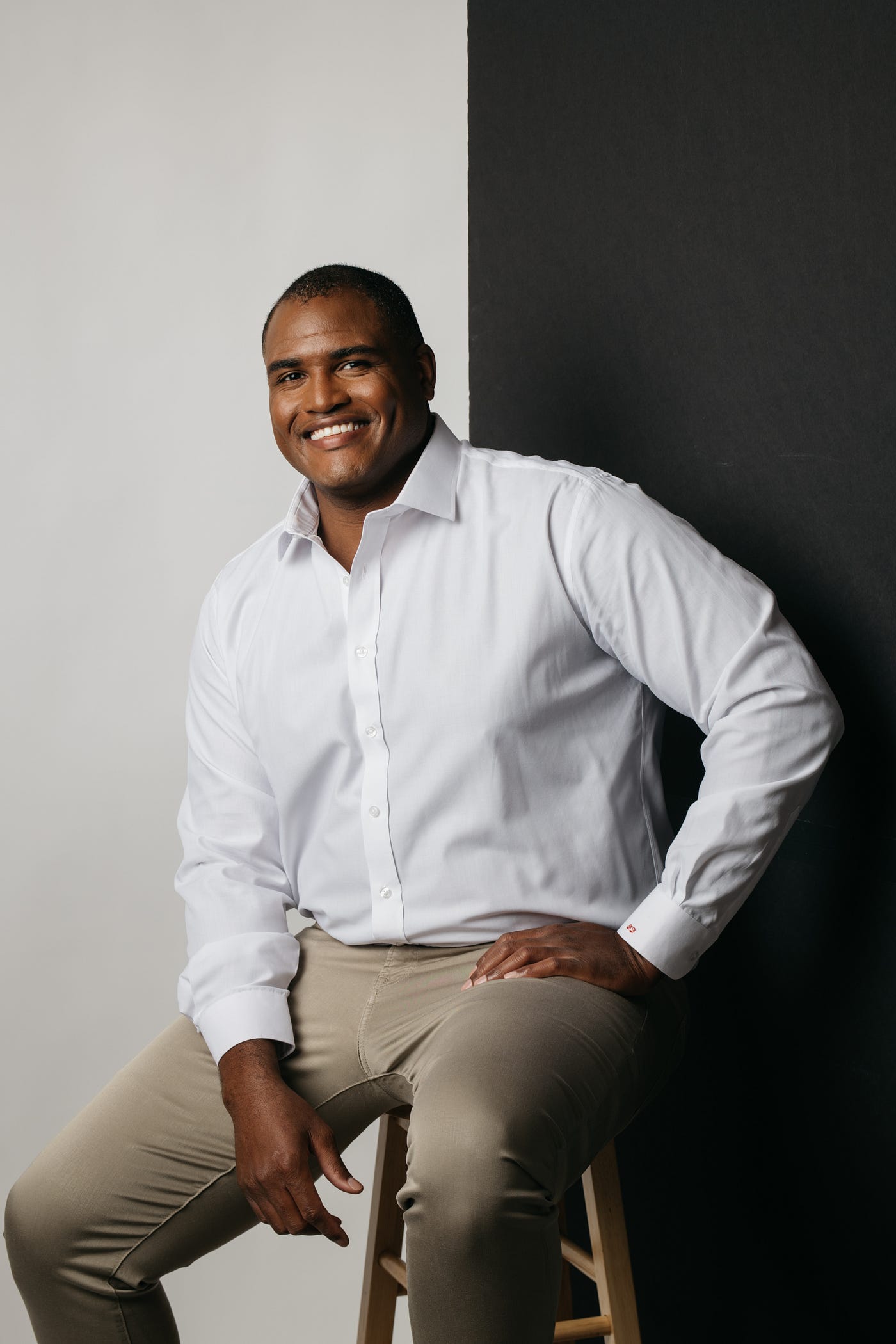
My most important decision to date was dropping my ego. The sooner you can do this the better. It allowed me to admit that I didn’t always know best and that there are people with skills I don’t have and that I don’t have to stick by every decision I make.
Business
Elliot Wise: Dropping Your Ego Is the Single Greatest Prerequisite for Scaling a Business
Serial entrepreneur Elliot Wise shares vital lessons on overcoming imposter syndrome, de-commoditizing services, and strategically scaling startups into enterprise-grade businesses.

Startups usually start with a small cohort of close colleagues. But what happens when you add a bunch of new people into this close cohort? How do you maintain the company culture? In addition, what is needed to successfully scale a business to increase market share or to increase offerings? How can a small startup grow successfully to a midsize and then large company? To address these questions, we are talking to successful business leaders who can share stories and insights from their experiences about the “5 Things You Need To Know To Successfully Scale Your Business”. As a part of this series, we had the distinct pleasure of interviewing Elliot Wise.
Elliot Wise is a highly successful serial entrepreneur and sought-after growth specialist and mentor.
Thank you for joining us in this interview series. Our readers would love to “get to know you” a bit better. Can you tell us a bit about your ‘backstory’?
Unashamedly, I was and still am a huge geek. Growing up, I was obsessed with new tech and spent countless hours in my bedroom, learning different coding languages to create online content. The creative freedom that the internet allowed for was mind-blowing!
Thankfully, it paid off and aged 13 I started my very first business — E-Wise Webs and landed my first paying customer (thanks Dad). Over the next few years, I spent nearly all my spare time developing and managing websites for other people’s businesses. Aged 16, I partnered up with a previous marketing client and together, we set up an online lighting retailer. This quickly grew to the point where I could be pretty hands-off, and I began to spend my time and money financing various small start-ups of my own. Growing ideas into fully realised businesses was and still is exhilarating.
Today I am still running my humble web-design company… But I now also have a marketing agency, my own HMO and property portfolio, an aesthetics clinic (with my wife), business skills mentoring service and a virtual assistant outsourcing company.
You’ve had a remarkable career journey. Can you highlight a key decision in your career that helped you get to where you are today?
My most important decision to date was dropping my ego. The sooner you can do this the better. It allowed me to admit that I didn’t always know best and that there are people with skills I don’t have and that I don’t have to stick by every decision I make.
What’s the most impactful initiative you’ve led that you’re particularly proud of?
Limitless Mentoring, without a doubt. The impact it has had on people we have worked still blows my mind every day. How many people have been told “you’ve changed my life”? Myself, and now my team of mentors, have heard this hundreds of times — and it never gets old. It’s an unbelievable feeling.
Sometimes our mistakes can be our greatest teachers. Can you share a mistake you’ve made and the lesson you took away from it?
My first 7-figure company was the lighting retailer I mentioned earlier. Being young and naïve to the ways of, let’s say, the more nefarious side of business — I placed too much trust in my business partner at the time, and it all ended badly.
For me, the real take-home was that while I wasn’t physically responsible for the actions that led to the failure of that business, I had to take ownership of the fact that I let it get to that point through inattention.
How has mentorship played a role in your career, whether receiving mentorship or offering it to others?
Every day we speak to people who are under-confident and overworking in jobs they hate for peanuts. But with the right guidance and mentoring — we see these same people running their own businesses doing the thing they love, usually within 8–12 weeks.
If that’s not demonstrative of the power of mentoring, I don’t know what is.
Developing your leadership style takes time and practice. Who do you model your leadership style after? What are some key character traits you try to emulate?
Honestly, I have never modelled myself after anyone in particular. I think anyone that tries too hard to emulate someone else will fail. Yes, it’s important to grow and look to role models and mentors to you help you do this. But if you’re trying too hard to be someone else it will always shine through to your audience.
Thank you for sharing that with us. Let’s talk about scaling a business from a small startup to a midsize and then large company. Based on your experience, can you share with our readers the “5 Things You Need To Know To Successfully Scale Your Business”? Please give a story or example for each.
- Be mentally fortified before you start — you need to believe you can be successful. It wasn’t until my first 7 figure company was run into the ground from a dishonest business partner and my naivety to the business world that I realised I could be successful. I didn’t realise how much imposter syndrome I had running the company until it went under, and I was genuinely worried it was down to luck. When you have imposter syndrome you won’t take risks that will enable growth! But, after building back a marketing agency and website design company to a larger size in a fraction of the time, I actually had the confidence to scale businesses.
- Identify if your business is a good vessel for the scale and size you are aiming for! I’m very aware that my mentoring service is not the vessel to take me to my goal of having a £100 million/year business. I’ve accepted it’s a passion project, so I am not immediately focused on scaling it. On the other hand, I believe that my virtual assistant outsourcing company can be that vessel, so I am aggressively pushing to scale that instead.
- Learn how to create and market unique offers which de-commoditise your service. This will allow you to sell based on value not price. Amazon has already won the race to the bottom for price, so make your service or product exceptional, create an offer that only an idiot would say no to and sell it at a premium price. For example, Limitless Mentoring offers a service level above and beyond any competitor (that we know of) to ensure that we get the “life-changing” results we do. We also guarantee our clients success within a certain amount of time or work for free until they get the results. Why would anyone consider paying for another service if we can guarantee something this good.
- Learn When, How and Who to Hire! The quickest and easiest way to do this is by starting with low ROI tasks. If you jump in at the hiring deep end, mistakes made by poor hiring decisions could end up costing your business a fortune and kill growth. For example. In my outsourcing start-up (WV Virtual) we first hired customer service VAs, then a Client Relations Manager, then a dedicated VA Manager, then a sales team, then a COO.
- Learn to walk in the hiring world before you can run. Hold onto great staff! It’s hard enough to find good staff, so once you’ve got them — keep hold of them. Yes, it can be hard to offer the financial incentives when you’re an SME, so instead offer your staff something else. I make sure that I build teams and communities within my businesses. It’s much harder to want to leave a team than it is to leave “just another job”. For example, across my businesses we have; Monday morning huddles to keep everyone positive and motivated, we share client wins across the company with all staff so everyone can see the impact they’re having, we put incentive structures in place (EG wage reviews based on performance) and all our company directors get to know the staff on a 1–1 level. Build in systems like these to create a community not just a workforce.
Can you share a few of the mistakes that companies make when they try to scale a business? What would you suggest to address those errors?
- Most companies fire too slowly! Expectations need to be set, the hiring process needs to be aggressive, and there needs to be very low tolerance for underperforming staff. When you build a strong community and teams that work together you can focus on growth and development for everyone. Underperforming or hard-to-manage staff take resources from the development of the rest of the team. Don’t allow this to happen.
- Not enough focus on sales! A lot of companies spend way too much time on low ROI tasks (branding, websites, admin etc.). Until acquisition is cracked, there should be tremendous amounts of time spent scaling and training your sales team.
- Internal systems are poor! Every single process in a business should be mapped out so that if someone new came in for the day they would know exactly what to do. This requires a huge amount of time spent as the company grows documenting this and training on this but will pay dividends as the company starts to grow!
Scaling includes bringing new people into the organization. How can a company preserve its company culture and ethos when new people are brought in?
The best way I have found to do this is to ensure you’re hiring people who believe in your company values. It’s far easier to find someone in line with your culture and ethos than trying to force someone into it. So be picky — it’ll pay in the long run.
Many times, a key aspect of scaling your business is scaling your team’s knowledge and internal procedures. What tools or techniques have helped your teams be successful at scaling internally?
If you couldn’t tell by now, I’m all about mentoring. So, it’ll come as no surprise to hear that I think allocating existing experienced staff as mentors for newer employees is by far the best way to go.
In addition to this one thing we encourage is open and honest criticism. Now, this won’t work for everyone, but with the teams in my businesses, we’ve built a culture of continuous improvement. So, everyone works together to critique and offer help and guidance on how to improve. A perfect example of this is that we encourage our sales teams to record and share sales calls with each other. Since they’ve started doing this their performance has gone through the roof. It helps to have thick skin, but sometimes a bad day for the ego is a good day for the soul.
What software or tools do you recommend to help onboard new hires?
The biggest recommendation would be using Monday for task-based work lists. We’ve found it to be a great tool for step-by-step guidance. It’s a very simple way of breaking down something that seems overwhelming into lots of manageable steps to work through one at a time. Seeing progress in real-time by just ticking things off a list is an amazing motivator too.
Because of your role, you are a person of significant influence. If you could inspire a movement that would bring the most amount of good to the most people, what would that be? You never know what your ideas can trigger.
The movement that I will inspire one day (note the positive wording there) will be the shift in mindset away from believing you need to follow a traditional academic path in order to achieve success. Going through the usual academic process just saddles teenagers with hideous amounts of debt to end up in jobs that most ultimately detest. For a fraction of the cost, you could find a mentor in an area of interest you love and build a business or career doing something you love, and this is achievable from a very early age.
How can our readers further follow your work online?
Drop me a follow over on Instagram @wiseelliot, Youtube or find me over on LinkedIn.
This was truly meaningful! Thank you so much for your time and for sharing your expertise!
AM
Written by
Authority Magazine Editorial Staff
Editorial Desk · Authority MagazineThe Authority Magazine Editorial Desk produces, verifies, and edits long-form primary-source interviews with executives, innovators, clinicians, creators, and social impact leaders across Business, Tech, Pop Culture, Wellness, and Social Impact.

Published inAuthority MagazineTop Lessons, Top Authorities · 42K Followers
Exclusive, curated interviews with the leaders and changemakers shaping tomorrow. Leadership lessons, industry deep dives, and executive profiles.