When you’re told all the time that you’re not going to make it and what you’re doing is not going to be useful to anyone, it can be discouraging. However, when you persist all the way to the end regardless of what people think, you build up resilience and a stubborn nature.
Business
Andrei Povaliaev: Intuition and Relentless Stubbornness Trump Conventional Business Advice Every Time
From living out of a car to launching a successful gig driver workspace, Muver CPO and co-founder Andrei Povaliaev shares how resilience and self-trust build lasting enterprise value.
Startups have such a glamorous reputation. Companies like Facebook, Instagram, Youtube, Uber, and Airbnb once started as scrappy startups with huge dreams and huge obstacles.
Yet we of course know that most startups don’t end up as success stories. What does a founder or a founding team need to know to create a highly successful startup?
In this series, called “Five Things You Need To Create A Highly Successful Startup” we are talking to experienced and successful founders and business leaders who can share stories from their experience about what it takes to create a highly successful startup.
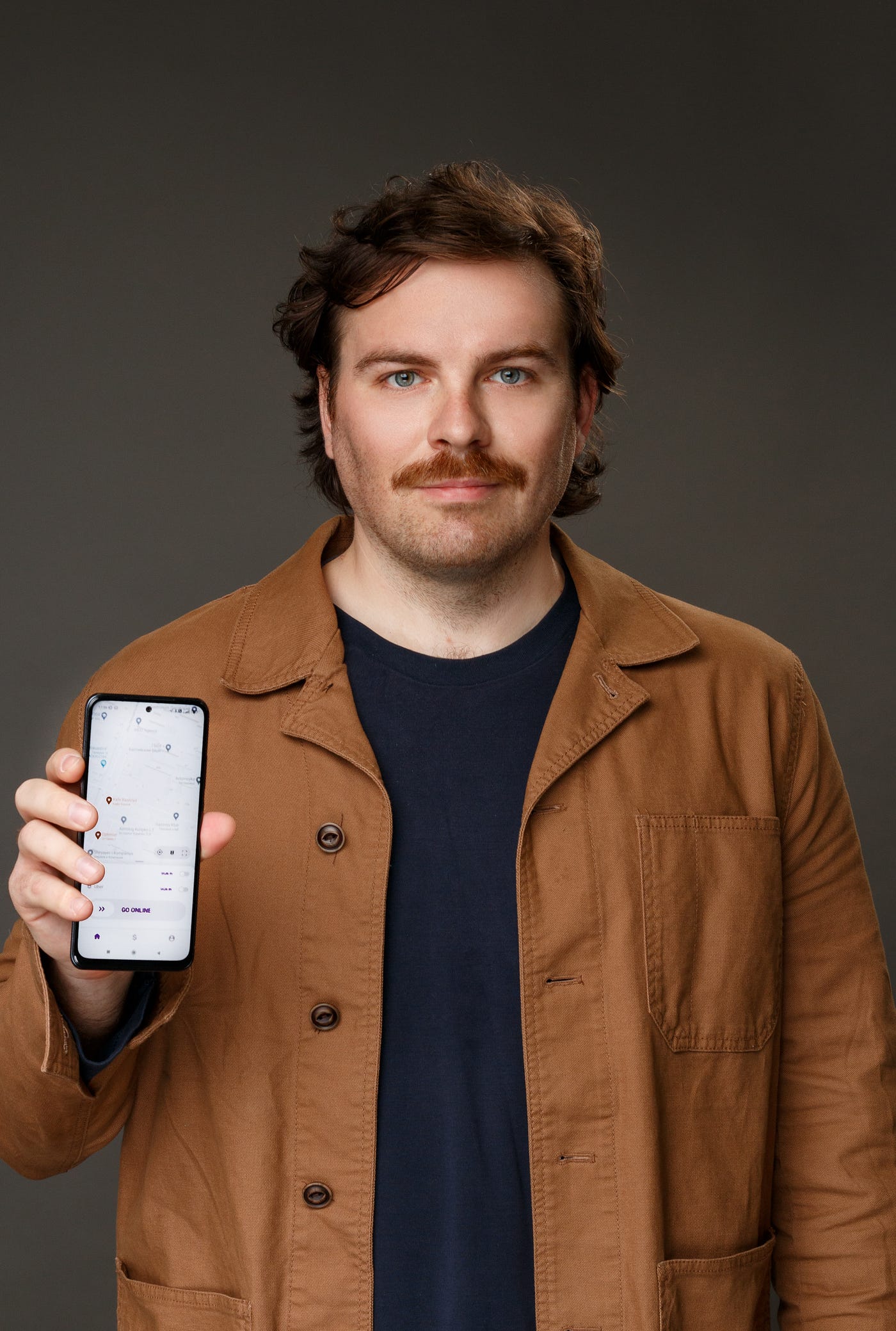
I had the pleasure of interviewing Andrei Povaliaev, CPO and co-founder at Muver.
After receiving a Bachelor’s degree at the Russian University of Humanities and working for a year as an entrepreneur in the fashion industry, Andrei switched to the taxi industry. He became a taxi fleet co-founder at SMART CITY LLC.
As a co-founder, Andrei was at the helm of a fleet of over 100 taxi cabs, seamlessly managing day-to-day operations while innovating newer and better business workflows. He also spent time building valuable collaborative partnerships with other entrepreneurs and lease companies to expand and improve the business. In addition, Andrei chose to direct the dispatch and car services to ensure the fleet was operating at peak performance.
After gaining valuable experience on both sides of transportation services, Andrei decided that it was time to shake up the industry with something better. This idea led him to become the CPO and co-founder of the Muver app, a gig driver workspace. At Muver, Andrei headed up the mobile app development and was responsible for successfully launching into the U.S. market. He also managed testing and analytics, contributing expert market analysis and valuable insights for the company’s development strategy.
Andrei is constantly looking for ways to enhance the user experience with interesting new features, and he works closely with Muver’s developers and testing team to create a better, smarter app for gig workers.
Currently, Muver has raised a total of $1.1M in funding over one Pre-seed round. Andrei’s favorite book is Robert Kiyosaki’s Rich Dad Poor Dad, and he is most inspired by the entrepreneurial story of Ferruccio Lamborghini. Andrei also enjoys listening to The Joe Rogan Experience podcast.
Thank you so much for joining us in this interview series! Before we dive in, our readers would love to “get to know you” a bit better. Can you tell us a bit about your ‘backstory’ and how you got started?
It all started eight years ago when I couldn’t find the job I wanted, so I resigned myself to being an Uber driver. After a month at Uber, I knew I could build a better ridesharing model for passengers and drivers. I decided to take the plunge and try it; I sold my favorite BMW and invested the money in creating my own business for drivers. I invited my friends to a partnership, and, a few months later, our company became Uber’s largest partner. We leveraged that success to first open our taxi company, then later expanded to include an advanced platform for dispatch services. Eventually, we came around to the idea of creating a unique “super app” that made completing ridesharing and delivery gigs easier and more profitable for drivers.
What was the “Aha Moment” that led to the idea for your current company? Can you share that story with us?
For me, Muver didn’t come from a single “eureka!” moment. Ultimately, it was a culmination of all of my experiences from the day I decided to be an Uber driver until the day our taxi fleet was thriving.
From my earliest Uber days, it was always in the back of my mind that I could make an impactful change in the gig driving industry, but it wasn’t until I had experience in all aspects of the industry that I had the inspiration for Muver.
Was there somebody in your life who inspired or helped you to start your journey with your business? Can you share a story with us?
My father had a great influence on me. His passion, his will to win, and his desire for success inspired me from childhood and made me want to be as passionate and unstoppable as he was. I always hoped to make him proud by becoming even more successful and determined to leave the world better than I found it.
What do you think makes your company stand out? Can you share a story?
In my opinion, being surrounded by partners and team members who share my zest for life, love for innovation and sense of fairness in business is invaluable and rare to find in companies. We are all passionate about creating something great, and we always find pleasure in the process, even when it’s challenging. I think all of these things are key components to why Muver is different.
How have you used your success to bring goodness to the world?
Even before I saw success with my first startup, I felt a strong drive to help anyone who needed it. I believe in sharing what you have, whether it’s wealth, influence, experience or simply a listening ear.
With so much success under my belt, I’m incredibly fortunate now to have so many more resources to amplify my natural inclination to make the world a better place. For me, success is a tool that I try to leverage daily to bring small and large acts of kindness to those who need it.
You are a successful business leader. Which three character traits do you think were most instrumental to your success? Can you please share a story or example for each?
I think that the most important character trait is stubbornness (or persistence, to put it in a better light). When you’re told all the time that you’re not going to make it and what you’re doing is not going to be useful to anyone, it can be discouraging. However, when you persist all the way to the end regardless of what people think, you build up resilience and a stubborn nature. That’s what happened in my case.
Stubbornness doesn’t mean inflexibility, though. I’m persistent when needed, but I’m always willing to listen to others and change my mind when the situation warrants it. I think that’s just as important in a successful leader.
Often leaders are asked to share the best advice they received. But let’s reverse the question. Can you share a story about advice you’ve received that you now wish you never followed?
I may be in the minority here, but I’ve actually made it a rule to not follow the advice of others. I’m willing to listen to different perspectives, but ultimately, I rely on my own intuition and experience. People often mean well, but I think entrepreneurs need to learn how to trust themselves if they want to be truly successful.
Can you tell us a story about the hard times that you faced when you first started your journey?
There were several periods like this on the road to the dream and success.
There were two situations in particular that made for a rough start. The first instance was when I found myself homeless for awhile. I had to spend my nights in a car, piecing together whatever I could to make money.
The second was when I couldn’t get a job in the industry I wanted, so I had to spend upwards of 12 hours a day behind the wheel of a taxi just to survive. Back then, I daydreamed of having just the simple luxury of watching a movie in a comfortable bed. At times, it felt like even that was impossible because I had to spend all of my time making deliveries and trips to pay the bills. I never stopped believing in myself and the American dream, though, and my rough start helped me get where I am today.
Where did you get the drive to continue even though things were so hard? What strategies or techniques did you use to help overcome those challenges?
I’ve always had a simple motto: “Keep moving forward without stopping!”
My drive was the belief that the dark times won’t last forever. After a dark time comes a light one; after night comes day. I had faith that things would change for the better, but I knew I couldn’t stop working or trying to move forward. Doing nothing is a sure path to achieving nothing, so I just kept moving forward.
The journey of an entrepreneur is never easy, and is filled with challenges, failures, setbacks, as well as joys, thrills and celebrations. Can you share a few ideas or stories from your experience about how to successfully ride the emotional highs & lows of being a founder?
I think it depends on the individual. There are people who have strict control of their emotions, so it is often easier for them to handle such situations. In my case, this ”emotional rollercoaster” was more difficult.
It can be hard to control my emotions, but I’ve been trying to be cool in the face of irritations lately. Even if it’s something that gets to me, I know it’s temporary and usually a consequence of lack of sleep or some other stressor. The most important thing I’ve learned to do is to switch to another situation, and if any uncontrollable situation has arisen, it will resolve itself after a while. You just have to wait.
Let’s imagine that a young founder comes to you and asks for your advice about whether venture capital or bootstrapping is best for them? What would you advise them? Can you kindly share a few things a founder should look at to determine if fundraising or bootstrapping is the right choice?
I would advise a young founder to earn their own money to start their business, and, most importantly, to gather a smart team of people who are willing to invest their personal funds in the project as well. If you can get proof of concept, then you can start thinking about attracting investors. For a start, angel investments are a good option. It is necessary to assemble a pipe of angels, preferably those who actively invest in similar projects, and impress them with a short teaser about the project. Various accelerators and pitch sessions for angels also work well.
Ok super. Here is the main question of our interview. Many startups are not successful, and some are very successful. From your experience or perspective, what are the main factors that distinguish successful startups from unsuccessful ones? What are your “Five Things You Need To Create A Highly Successful Startup”? If you can, please share a story or an example for each.
So many factors influence the success of the project, but these are the top five for me:
- A well-rounded team. The first, and perhaps one of the most essential, is the team. Founders should be on the same page. Their talents should lie in different spheres, and they should all have a broad vision and some experience in various markets.
- An on-trend product. The second is whether your product is on trend. If the market and people need what you do, it will certainly contribute to your success.
- An understanding that you can’t reinvent the wheel. The third is related to the second: If you create something you think is new, and people have never used something similar or done what you suggest in another way, traditional or archaic, then most likely, you have come up with some nonsense. You have to understand at the very beginning that what you do improves, transforms or creates a new working model for what already exists or what people already use. If your honest belief is that you’ve improved on an existing idea, then your idea is likely to succeed.
- A resilient, agile mindset. The fourth is the ability to deal quickly with force majeure situations and stay afloat regardless of shocks. You must be able to keep your cool and pivot to optimizing workflows or perhaps even moving to a different model of work to keep the business going.
- The drive for improvement. Finally, highly successful startups have the desire to constantly improve, develop, build and expand their projects. If you can’t sleep without finishing a task and 24 hours a day are not enough for you to enthusiastically solve any product problems, it’s a good sign you’re on the road to success.
What are the most common mistakes you have seen CEOs & founders make when they start a business? What can be done to avoid those errors?
Put all of the terms of your partnership in writing, no matter what. Include responsibilities, tasks, processes, conditions of exit from business, etc. Even if you’re partnering with friends, drawing up clear terms prevents confusion, frustration or soured relationships down the road.
Startup founders often work extremely long hours and it’s easy to burn the candle at both ends. What would you recommend to founders about how to best take care of their physical and mental wellness when starting a company?
I am lucky; my partners are my friends. We have a great time together so that our psychological state after stress is manageable. I would recommend surrounding yourself with people who pull their weight and support each other.
You are a person of great influence. If you could start a movement that would bring the most amount of good to the most amount of people, what would that be? You never know what your idea can trigger. :-)
I think this question looks somewhat utopian. In fact, I believe that every man is the blacksmith of his happiness and well-being. My team and I are already doing good for the people who work in rideshare and delivery, and I think it’s having a ripple effect on many more people. We help them make more money and drive more safely while working. Honestly, I’ve had this dream since I was a kid — to do something useful for people, which in turn, would help me to earn the money I need.
We are blessed that some very prominent names in Business, VC funding, Sports, and Entertainment read this column. Is there a person in the world, or in the US with whom you would love to have a private breakfast or lunch, and why? He or she might just see this if we tag them.
I would be happy to talk to many famous people, but most of them are not related to business. The most interesting person I would like to have dinner with is my favorite actor, Christoph Waltz.
How can our readers further follow your work online?
https://instagram.com/muver_app
This was very inspiring. Thank you so much for the time you spent with this. We wish you continued success and good health!
Thank you!
AM
Written by
Authority Magazine Editorial Staff
Editorial Desk · Authority MagazineThe Authority Magazine Editorial Desk produces, verifies, and edits long-form primary-source interviews with executives, innovators, clinicians, creators, and social impact leaders across Business, Tech, Pop Culture, Wellness, and Social Impact.

Published inAuthority MagazineTop Lessons, Top Authorities · 42K Followers
Exclusive, curated interviews with the leaders and changemakers shaping tomorrow. Leadership lessons, industry deep dives, and executive profiles.