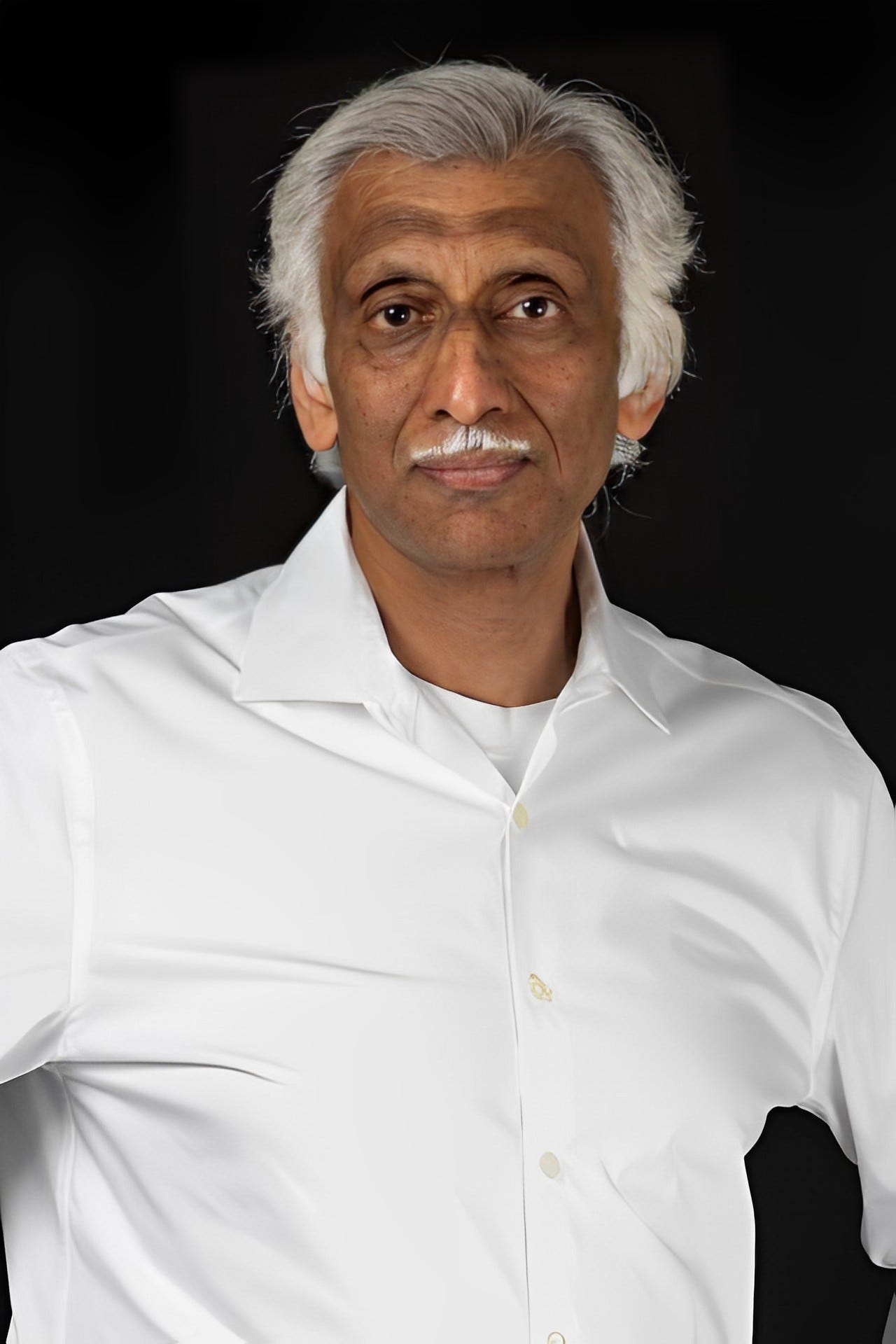
We may not have come up with the idea of a digital family office if we hadn’t learned about family offices and financial superpowers from the successful people who came before us.
Business
Caesar Sengupta of Arta Finance: How Leveraging AI and Machine Learning Can Democratize Access to Elite Financial Strategies
The CEO and Co-Founder of Arta Finance shares how his team is using artificial intelligence to bring the financial superpowers of the ultra-wealthy to everyday investors.
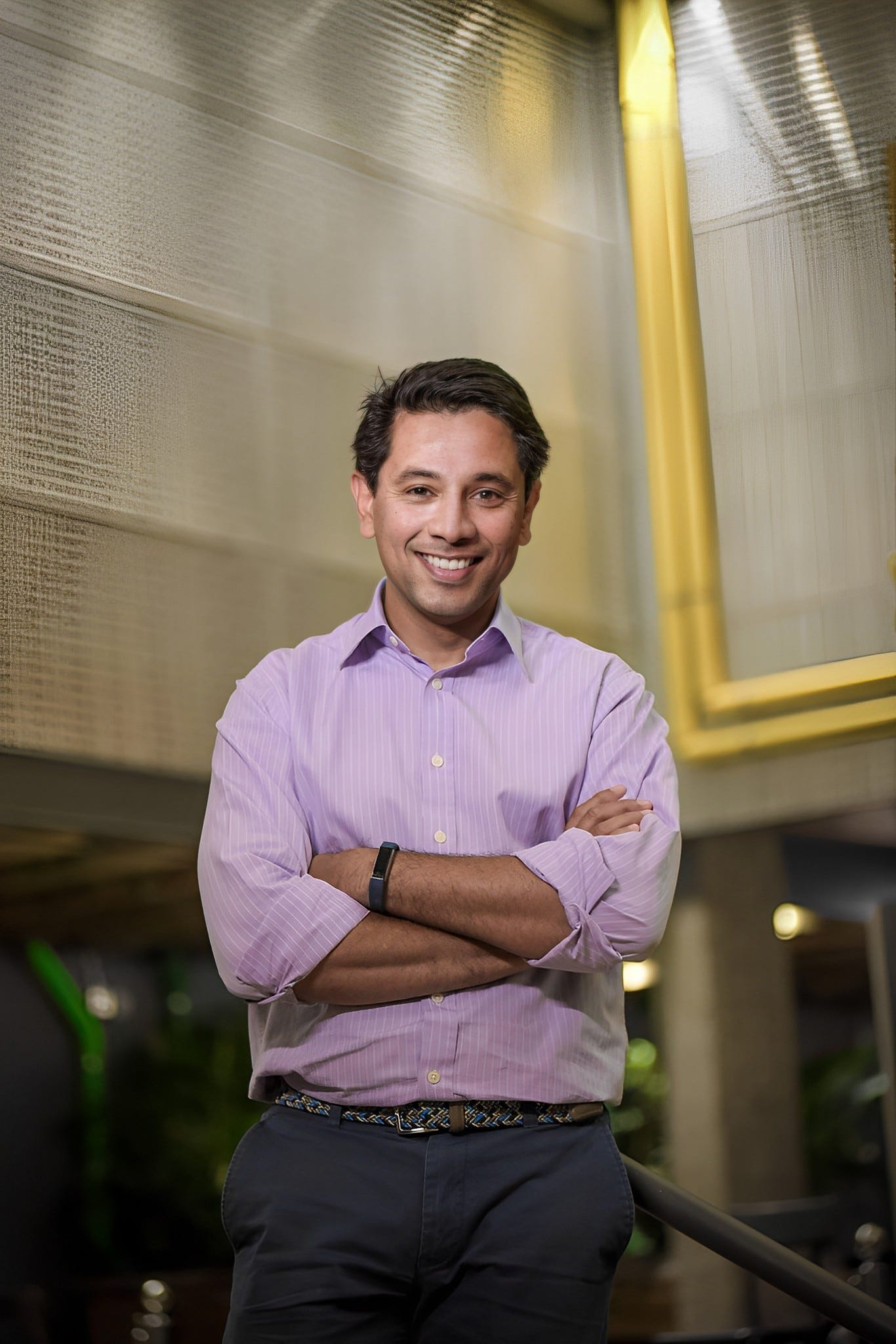
As part of our series about the future of Artificial Intelligence, I had the pleasure of interviewing Caesar Sengupta.
Caesar Sengupta is CEO and Co-Founder of Arta Finance, the digital family office for the world that uses technology to unlock the financial superpowers of the ultra-wealthy. For over two decades, Arta Finance Co-Founder and CEO Caesar Sengupta has followed his passion in using technology to bring access. Most recently, Sengupta served as Google’s Vice President and General Manager of Payments & the Next Billion Users initiative, leading products like Google Pay, which went from 0 to 175M+ users in ~5 years. He also built other hit products like Files and Camera Go, and he helped start and led the development of Chromebooks.
Thank you so much for joining us in this interview series! Can you share with us the ‘backstory” of how you decided to pursue this career path in AI?
Arta was started by a few folks who worked together for a long time at Google. As we became closer over time, we had conversations that ranged well beyond daily work stuff, to topics like retirement, investing, how to set goals, and so forth. We were just coming up in our careers at that time, but as we looked towards the more senior executives, some of whom had been at Google from the beginning, we realized that the ultra-rich (which included many of these people we had been looking towards!) have financial superpowers that we just weren’t aware of. These superpowers revolved around access to opportunities, personalized solutions and connections to a community of folks who shared similar aspirations. The thought occurred to us whether we could bring those superpowers to many more people — including us — through technology.
When AI and technology hit an inflection point over the last year or so, we decided to take the leap. We created Arta to bring those superpowers to others using AI and technology. Bottom line, we believe that a kick-ass financial strategy shouldn’t be the monopoly of the very-rich. It’s time that the same wealth-generating technology and financial opportunities were made available to more people.
What lessons can others learn from your story?
One life lesson is to surround yourself with people you look up to. We may not have come up with the idea of a digital family office if we hadn’t learned about family offices and financial superpowers from the successful people who came before us.
Another lesson is to think in terms of problems. I’m proud of the team we’ve built at Arta and I know we can build products and solutions better than anyone. But the key is to home in on fundamental, widespread problems. Like having too many of your financial eggs in one basket. Or not having full visibility across the many aspects of your financial life. These are pain points that so many people feel. We want to understand the problems deeply and build insightful, compelling solutions for them.
Can you tell our readers about the most interesting projects you are working on now?
We are still at the very early stages of this very exciting journey with Arta. Right now we are focused on AI-Managed Portfolios (AMPs), which we believe are a huge step-change innovation for investing. Historically people have had to make a hard choice between personalization, performance & costs. But Artificial Intelligence and Machine Learning (AI & ML) applied to decades of proven investment research have finally made it possible for everyone to get personalization and performance at passive investment-like costs. Our AMP portfolios are crafted individually for each member by taking into account their risk profiles, sectors or geos they want more or less exposure to, plus any social impact preferences. Our users can trust that their investments are built and managed with care from models trained on extensive financial data sets and a systematic approach to risk management that uses both automated and human expertise. AMPs respond thoughtfully to volatile markets where traditional methods may not always be successful — all leading towards superior risk-adjusted performance under a broad range of market conditions. Our members have said it’s almost as if they have their own personalized hedge fund, but at a fraction of the cost!
None of us are able to achieve success without some help along the way. Is there a particular person who you are grateful towards who helped get you to where you are? Can you share a story about that?
When I finished Business School at Wharton, I thought that I’d end up at a bank or consulting. I was about to take an offer with a bank. But in the summer I went to my friend’s wedding and happened to spend 30 minutes with a gentleman (name withheld), a professor and a partner in a VC. He took an interest in what I was going to do post graduation, and encouraged me to explore the world beyond banking and consulting. He did something very generous. He introduced me to five different people, some engineers and some in VCs. Those conversations steered me back towards joining tech, and led me to reconsider talking to Google. And so that’s how I started a 15 year career at Google and met my ‘work family’, as well as many of the Arta founding team. I found people who I wanted to work with for the rest of my life, and help shape products like Chromebooks, Chrome OS, and Google Pay. It just goes to show that random, chance encounters can have an outsized impact on your life, many decades on.
What are the 5 things that most excite you about the AI industry? Why?
- Potential to supercharge human intelligence.
- Potential to increase productivity across industries.
- Potential to free humans from repetitive, boring work.
- Potential to equalize access to exclusive services.
- Potential to create products and services that are currently not possible.
What are the 5 things that concern you about the AI industry? Why?
- AI depends on data — that is clean, trustworthy and reliable.
- Over-hype: AI has a ton of potential but it will take time to understand this and to realize it.
- Premature or reactive regulation: A lot of people are over-worried about the dangers of AI and are calling for more regulation. Like with all technologies, regulation in AI needs to be smart and very well thought out otherwise it will stifle one of the biggest innovations in human society. Countries also need to harmonize regulations if and when they come about.
- Access to fundamental AI technologies: Powerful fundamental technologies or systems in the hands of only a few companies would be a bad outcome. More funding needs to go into open source and open AI research.
- Access to AI and improvements through AI need to be available to many and not restricted to a select few privileged people who can pay for it.
As you know, there is an ongoing debate between prominent scientists, (personified as a debate between Elon Musk and Mark Zuckerberg,) about whether advanced AI has the future potential to pose a danger to humanity. What is your position about this?
There’s a phenomenon where the threat of something looms so large that it obscures the reality of its true form. The concerns about AI are various, but they usually boil down to the existential threat — that AI machines will replace humans. The true benefit of AI and ML to humanity is only just starting to unfold — we’re at the very beginning of what could be accomplished. But yet, the narrative of AI’s danger is far disproportionate to what good has already been delivered by it. What we build with AI today is in danger of being rejected because of the fear of what A.I. could possibly do in the future. It’s like saying we shouldn’t develop space travel because we might run into aliens who wipe us out. Instead, we should develop space travel *and* also prepare to deal with the unexpected. I have faith that humanity will rise to the challenge of shaping AI to be a force for good. AI today is still a human enhancer and we believe (like many others in the AI space) that AI is very far becoming a “Terminator” like threat to humanity. So the only practical thing we can do is judge today’s AI innovations by their benefits, and reward those that do.
What can be done to prevent such concerns from materializing? And what can be done to assure the public that there is nothing to be concerned about?
I put my bets on something pretty simple to say, but hard to do: make good products that people want. The more broadly available AI’s advances are to everyone, the more familiar the technology becomes and the more use cases are spawned.
How have you used your success to bring goodness to the world? Can you share a story?
A number of us on the Arta team have spent our careers leveraging technology to bring greater access to more people. This ranges from projects like Chromebooks which made personal computing available at much lower cost thereby making it possible for thousands of schools to deploy 1:1 computing to millions of students, to Google Pay which has hundreds of millions of users globally and helped countries like India move from cash to digital payments. Now with Arta, this group has taken on the mission to use technology to make the financial superpowers of the ultra-rich available to millions more.
As you know, there are not that many women in your industry. Can you advise what is needed to engage more women into the AI industry?
In both finance and tech, estimates put industry-wide female participation at just over a quarter of all roles. AI has a similarly discouraging gender gap. And even more discouraging, at the intersection of these two industries in fintech, estimates show women representing 14% of all roles. As a fintech, Arta is determined to do better. At Arta we have built a robust culture in part through hiring, coaching, and supporting female talent. I’ve been in tech long enough to understand that there is no one silver bullet to getting more women into the industry, but throughout my career I’ve been lucky enough to be part of teams where the benefits of diverse decision-making and product development have had outsized impact — so I’ll never let up on trying to improve the balance.
You are a person of great influence. If you could start a movement that would bring the most amount of good to the most amount of people, what would that be? You never know what your idea can trigger. :-)
I believe I am doing it right now with Arta. Money and finances are a really important part of every person’s life but sadly the world of finances is inequitable, opaque and weirdly cumbersome. I believe technology and especially AI can be used to make the financial superpowers, the opportunities, the knowledge and the experts, that are currently only available to the ultra wealthy, accessible to all. There is no reason why someone with a few hundred dollars should not have access to the same financial techniques that someone with a hundred million dollars has to create a better financial future for themselves. This is what we have set out to do with Arta.
How can our readers further follow your work online?
Find me on twitter @caesars or on LinkedIn. I’d love to hear from you — especially if you’re interested in Arta!
Thank you so much for joining us. This was very inspirational, and we wish you continued success in your important work.
About The Interviewer: David Leichner is a veteran of the Israeli high-tech industry with significant experience in the areas of cyber and security, enterprise software and communications. At Cybellum, a leading provider of Product Security Lifecycle Management, David is responsible for creating and executing the marketing strategy and managing the global marketing team that forms the foundation for Cybellum’s product and market penetration. Prior to Cybellum, David was CMO at SQream and VP Sales and Marketing at endpoint protection vendor, Cynet. David is a member of the Board of Trustees of the Jerusalem Technology College. He holds a BA in Information Systems Management and an MBA in International Business from the City University of New York.
DL
Written by
David Leichner
Editor & Journalist · Authority MagazineDavid Leichner is a senior columnist at Authority Magazine covering Tech and Business, conducting primary-source Q&A interviews with founders, executives, and industry leaders.

Published inAuthority MagazineTop Lessons, Top Authorities · 42K Followers
Exclusive, curated interviews with the leaders and changemakers shaping tomorrow. Leadership lessons, industry deep dives, and executive profiles.