I was thinking, “What do these people do?” My dad would say, “Well, he owns Ira Olds Toyota, he owns the dealership.
Business
Kevin Trudeau: How Mastering Self-Development and Media Pivots Generated Millions in Infomercial Sales
The prolific entrepreneur and bestselling author shares his journey from a blue-collar childhood to building a massive media empire, and why he views every challenge as a gift.

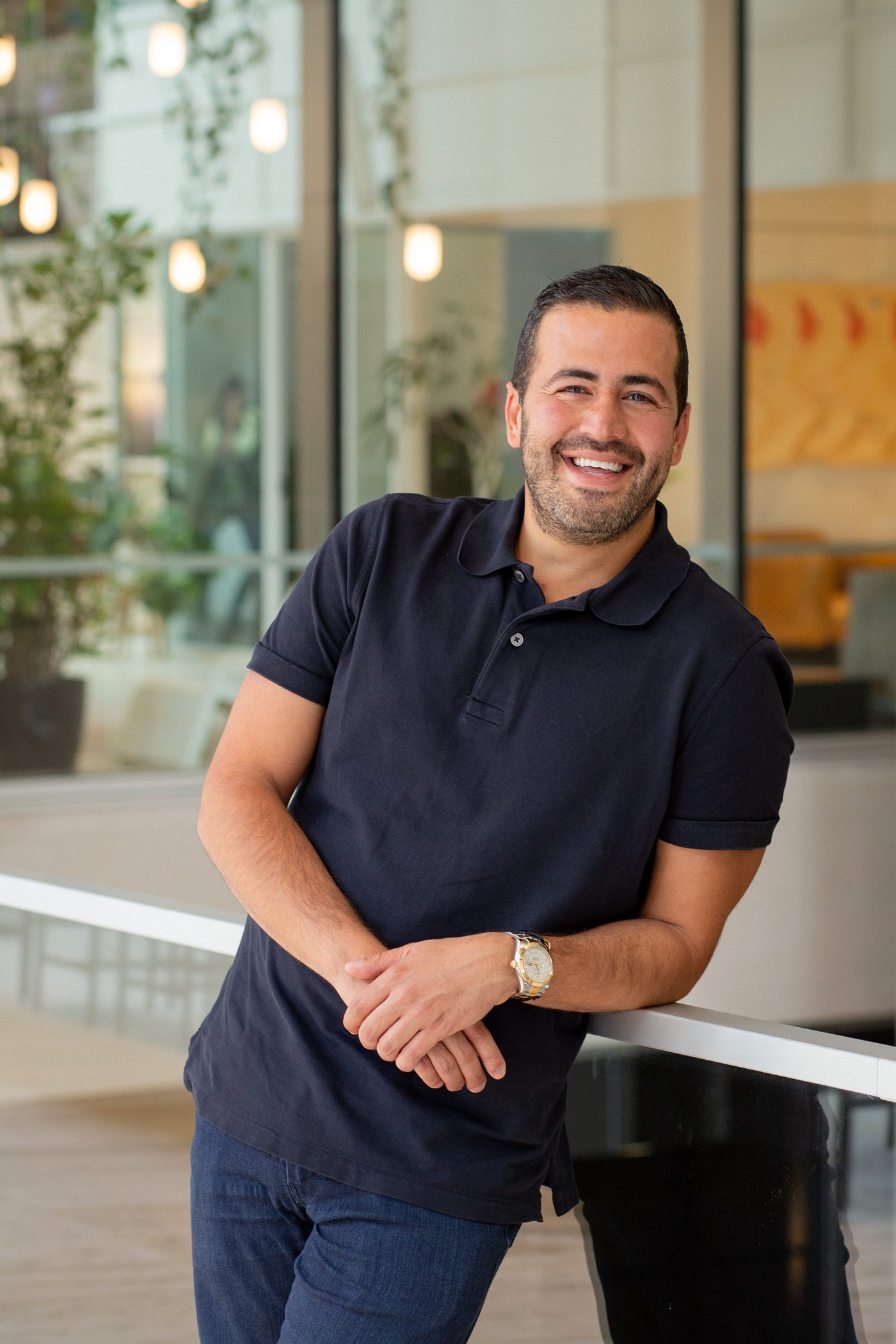
We had the pleasure of talking with Kevin Trudeau. A lot of people know his face from late-night television, pitching everything from memory courses to alternative health cures. Depending on who you ask, he is either a visionary entrepreneur who cracked the code to infinite wealth, or the most prolific infomercial salesman in modern American history who spent nearly a decade in federal prison. But sitting down with him today, you wouldn’t sense an ounce of bitterness.
“A lot of people know me today and know of me, and they have some impression, most of which is not accurate,” Trudeau told me. His origin story starts far from the billions he generated. He grew up in Lynn, Massachusetts, a gritty, blue-collar town. His father was a welder. Life was good, but money was tight. It wasn’t until a young Trudeau drove through a wealthy neighborhood and saw the massive houses of business owners that the gears started turning. “I learned very early on that if you wanted to become financially successful, you had to be in a business of your own,” Trudeau explained. “You couldn’t get rich working for somebody else.”
That realization turned him into a teenage entrepreneur. He ran a snow-shoveling business and a paper route, eventually realizing that true wealth meant getting others to do the heavy lifting. A copy of a book called “The Magic of Thinking Big” kept him up all night and sent him down the rabbit hole of personal development, setting the stage for his future.
By the early 1980s, Trudeau was the top car salesman for a Ford and Lincoln Mercury dealership on the East Coast. When his boss refused to give him a brand-new demo car, offering him excuses instead, Trudeau walked out. “I said, ‘You can give me a car. You could give me your car, if you wanted to. I’m the number one salesman, and I’m making you a ton of money,’” he recalled. A week later, he finessed his way into a finance manager role at a rival dealership, demanding a massive twelve percent commission on the money he generated. He made a fortune in his first month.
But Trudeau’s real gold rush came from television. He started a memory training business and decided he wanted to make one hundred thousand dollars a week. He claims he put this desire out to the universe. While eating a corned beef and pastrami sandwich at the Carnegie Deli in New York, he bumped into blackjack infomercial star Bobby Singer. The very same day, another infomercial giant reached out with the exact same pitch. Trudeau signed a deal, shot a show in one day, and raked in hundreds of millions in sales over the next few years. “My first weekly royalty check was two hundred and fifty-six thousand dollars,” he said.
That success sparked an empire, but it also painted a massive target on his back. By 2004, the Federal Trade Commission banned him from selling physical products on television after years of disputes. Trudeau simply pivoted to publishing. His book “Natural Cures ‘They’ Don’t Want You to Know About” spent twenty-six weeks on the New York Times bestseller list. Still, the government pursued him relentlessly, culminating in a 2014 criminal contempt conviction and a harsh ten-year federal prison sentence.
Yet, Trudeau refuses to play the victim about his time behind bars or his FTC fines. “Very early on in my life, I never looked at things as adversity,” he insisted. “Other people would call a situation a disaster, and I would say, ‘No, it’s not. This is a gift I just got from the universe.’” When asked about the hardships that cost him his freedom, he added, “I can honestly say I haven’t had any real adversity to overcome; all I’ve had is the universe giving me wonderful gifts with treasures inside them.”
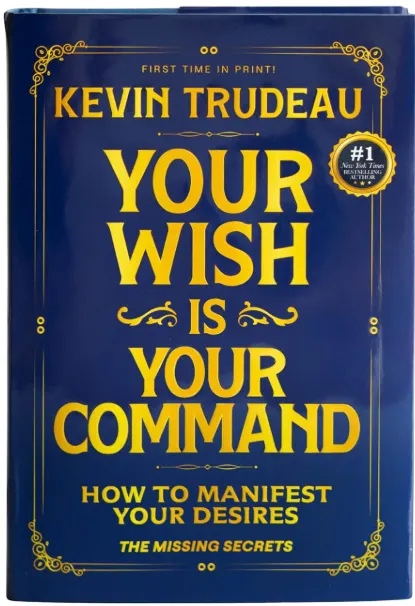
Today, Trudeau is pushing his latest release, “Your Wish is Your Command,” a book promising the missing secrets to the Law of Attraction. He is quick to point out why most people fail at manifesting their dreams. “They say, ‘I want more money.’ Stop right there; you’ve already failed to follow the recipe,” he noted, explaining that goals must be highly specific, yet reasonable enough to actually believe in. More importantly, he says, you have to let go of the desperation. “When you surrender and say, ‘This is what I want, but if it never happens, it’s okay,’ and you still feel good, that is when the windows of heaven open up.”
While his extensive clashes with the federal government may invite natural skepticism, his absolute poise in person is undeniably impressive. He attributes his longevity and peace of mind to a very simple daily philosophy. “The secret of life and negotiation is you have to care, but not that much,” Trudeau said with a smile. “If I had to name the number one best thing you can do for your health, longevity, and mental state, it is this: care, but not that much.” Whether he is a misunderstood guru or just the ultimate salesman, Kevin Trudeau is still talking, still selling, and still completely unfazed by the noise.
Yitzi: Kevin Trudeau, it’s so nice to meet you. Before we dive in and talk about your work, our readers would love to learn about Kevin Trudeau’s personal origin story. Can you share with us the story of your childhood, how you grew up, and the seeds of all the work that has come since then?
Kevin: Well, I appreciate that. A lot of people know me today and know of me, and they have some impression, most of which is not accurate, which is common when people are in the public eye. I grew up in Lynn, Massachusetts, a blue-collar community. My dad was a welder and my mom was a full-time housewife and homemaker. I had a normal, happy childhood. We didn’t have any money, but we didn’t know we didn’t have any money. Everything was good and happy. One thing that was interesting is everybody in my community, all the dads of my friends, were workers. They were the plumber, the postman, the fireman, the bricklayer. They were all union workers. We all lived a good life, and we didn’t know anything better. But I remember when I was young, we drove through a very rich area of town. We passed some of the temples and synagogues, and there were all these huge houses. I was thinking, “What do these people do?” My dad would say, “Well, he owns Ira Olds Toyota, he owns the dealership. That’s Ira Rosenberg. And that guy owns this big restaurant chain, and that guy owns this, and this guy owns that.” The one common denominator is they were all business owners, and my dad was not. I learned very early on that if you wanted to become financially successful, you had to be in a business of your own. You had to be your own boss. You couldn’t get rich working for somebody else, with rare exceptions, obviously. I became very entrepreneurial very early in my life. At that time, what could you do as a kid? You could shovel snow, and you could be in the snow-shoveling business. Or rake leaves in the fall. Or you could get a paper route. I was a paperboy. We did all these little jobs, and they were all businesses. I was my own boss. I had to handle everything: the financing, the sales, the product delivery, the whole thing. Then, when I read Tom Sawyer and he got other people to paint the fence, I said, “Wait a minute.” Huckleberry Finn, right? I realized I needed to get other people to deliver the newspapers. I would pay them a little, take the majority, and now they were doing the work for me. That is how businesses start. That was really what my career was, understanding that concept. I think the major thing that occurred was when I was exposed to a positive thinking book. A guy gave me a book called The Possible Dream, which was the story of Rich DeVos, Jay Van Andel, and Amway Corporation. It talked about how these two guys started this little business that became a billion-dollar company. That inspired me. My second positive thinking book was The Magic of Thinking Big. The first chapter is, “Believe you can succeed and you will.” The second chapter was, “Cure yourself of excusitis, the failure disease.” I stayed up all night long reading that book. It was the start that got me into personal development, working on myself, learning, knowing that I didn’t know what I didn’t know, setting goals, dreaming big dreams, and ultimately believing that if they can do it, I can do it too.
Yitzi: You probably have some incredible stories from your successful and varied career. I’m sure this is difficult to single out, but can you share with our readers one or two stories that most stand out in your mind from your career or your life?
Kevin: Yes, I’ll give you one specific story. I was in the memory training business. I started a company called the American Memory Institute, which became the largest memory training school in the world. We taught people all around the world how to improve their memory so they could remember names and faces, remember things to do, and give speeches without notes. It was very effective for business people and salespeople. We also helped students get better grades with less study time, so parents used to buy this for their kids. The kids could get straight A’s with less study time, have improved self-confidence and self-esteem, go to college, and do very well. I was in that business, and we were teaching live seminars. At the time, I was really working on learning how to manifest my goals. I wanted to create the life I wanted and visualize my desires, which is what Arnold Schwarzenegger talked about in his Netflix docuseries — how he visualized what he wanted and felt as if he actually had it. These are techniques taught in Think and Grow Rich by Napoleon Hill and a whole bunch of other books. I was studying all that, and I thought, “I’m going to do this.” I asked myself what I wanted. I decided I wanted $100,000 a week. This was back in the 1980s. I wanted $100,000 a week deposited into my bank accounts without me having to work for it. That way, I could be really cool, travel around the world, drive Ferraris, date women, and do all these great things. I could be like James Bond; it would be fun and cool. I put that out into the universe. When I read those books, they said not to think about the “how.” Just think about what you want and let the universe figure out the “how” for you. I put that out into the universe, and I did this every day for several weeks. I was in New York City at the Carnegie Deli, having lunch. I had a Danny Rose sandwich, half corned beef, half pastrami on rye. I was sitting there eating my sandwich, and right across from me, at the same table, was a guy I recognized from television named Bobby Singer. Even though it wasn’t a kosher restaurant, he was still there, eating a sandwich. I said, “Hey Bobby, I’ve seen you on TV. I bought your course.” He had a course called the Bobby Singer Method for Blackjack; he was a blackjack expert selling it via TV infomercials. I told him I bought his course on television and that it was a great course. He asked what I did, and I told him. He said, “You should be on TV selling that as a home-study course. You should be selling the memory improvement system as a home-study course on TV infomercials.” I said, “Oh no, it won’t work on TV. People on TV won’t buy it. I have to actually go to salespeople and business professionals. It’s really not a mass-marketable product.” He replied, “No, it will absolutely sell. I’ll put up all the money and pay you a royalty.” I told him I didn’t want him to waste his money and that it wasn’t going to work. He insisted, “No, I want to do this. Let’s exchange business cards, and I’m going to send you a contract and an advance.” I thought this guy was nutty. I went back to the Plaza Hotel where I was staying. Back then, you had to pick up the phone, call your home phone number, and punch in a code to listen to your messages on your answering machine. I listened to my messages, and there was one from Dr. DeWarty. He said, “Kevin, this is Dr. DeWarty. I’m in Lake Tahoe, and I bumped into another buddy of yours, Ed Beckley.” Ed Beckley was on TV infomercials selling a real estate course on how to buy real estate with little or no money down. He had made hundreds of millions of dollars. Dr. DeWarty said, “I told Ed about your memory business, and he said you should be on TV selling this as a home-study course.” This all happened on the same day. I called him back and said that was the goofiest thing because another guy had said the exact same thing earlier that day. I told them they were both crazy and it wasn’t going to work. Ed told me it would work and that he was going to send me a contract and an advance. Two days later, I received a Federal Express package. This was when Federal Express was called Federal Express, not FedEx. Nobody got a Federal Express unless you were a big somebody. I opened the envelope, and there was an advance check and a contract from Ed Beckley. I didn’t know anything about it, but I signed the thing. I called him up, and since there were no fax machines, I had to make a copy on the copy machine, sign it, and send it back to him. A week later, I received a contract and an advance check in the regular mail from Bobby Singer. I called Bobby and told him he should have used Federal Express because I had already signed the deal with Ed Beckley. He was disappointed. I did the infomercial in 1989. Over the first 18 months, we did $180 million in sales, and over the next couple of years, over $450 million in sales. My first weekly royalty check was $256,000. I got what I had asked for. I had money coming in; I shot the show for one day and did nothing for the next three years. Every week, I would get a check deposited into my bank account. It was exactly what I put out into the universe with faith, belief, and all the other ingredients of the manifesting algorithm. That is when it really hit home that this absolutely works.
Yitzi: That’s an amazing story, and you’re an incredible storyteller. There’s a saying that “no” is not rejection but redirection. Do you have a story like that where you got a “no” to an opportunity, but it led to an unexpected better opportunity, success, or blessing?
Kevin: Well, there’s another way of saying it. When a person says no, all they’re saying is they don’t know enough. I was in the automobile business back in the early 1980s. I was the number one salesman for Ford and Lincoln Mercury on the East Coast. I went to the dealership and told the manager that since I was the number one salesman, I wanted a better demo car. Back then, if you were a salesman, you got a nice car to drive. I said, “Listen, I’m the number one salesman here, and I’m driving a used 1979 Monte Carlo. I want a new car. I want a nice new Mercury. I’m not asking for a Lincoln, but I don’t want this old ’79 Malibu.” The manager said they couldn’t do it at that time because they didn’t have enough cars on the floor plan, giving me one excuse after another. I told him none of that was true. I said, “You can give me a car. You could give me your car, if you wanted to. I’m the number one salesman, and I’m making you a ton of money. Give me your demo, and you take my ’79 Monte Carlo.” He said he couldn’t do that, so I quit. I didn’t know what I was going to do, but I went home. In that industry, everybody knows everybody, and the gossip and rumor mill moves pretty quickly. About a week later, I received a phone call from Joe Sullivan, who owned Sullivan Neponset Lincoln Mercury in Dorchester, Massachusetts. He said, “Kevin, I heard you quit the dealership.” I told him I did. He asked if I wanted a job there. I immediately asked what type of demo car I would get to drive. He said I could have any car on the lot. However, he told me he wasn’t offering me a sales job; he wanted me to be the finance manager. I didn’t know anything about being a finance manager, having never done it before. He asked if I thought I could handle it. I told him, “Of course I can handle it. I’m an expert in that,” even though I knew nothing about finance. He told me to come in the next week to start. I said we needed to negotiate our deal first. I went in, and he showed me the office. They didn’t have a finance manager, so the office was basically full of cobwebs. I told him, “If I go in here and make you money on finance, I want a 12% commission of all the money I make you. Right now, you’re making zero. Anything I make you, is found money. You could pay me 50% and still be way ahead of the game, but I’m only asking for 12%.” The industry standard back then was about 3% for a finance guy. He agreed immediately and had me sign the deal. I called up a buddy of mine in finance and asked for a crash course on how to be a finance manager, which he gave me that week. I went in, cleaned up the office, and told every customer who came in that while they could go to their bank or credit union, it was easier and more convenient to finance the car with us. Practically every single person who came in financed their car with us. Joe Sullivan made a fortune, but I also made a fortune. I made three times as much money in that first month in the new opportunity than I did at the other dealership. When one door closes, another door will open. I learned that you need to create a void in order for something new to come in. In order for new growth to happen in a forest, there has to be a forest fire. Smokey Bear used to say, “Only you can prevent forest fires.” But 98% of all forest fires are caused by lightning. How can you prevent lightning? You need forest fires to wipe out the old foliage and underbrush so that fresh growth can occur. That happens in life, and I learned very early that it’s okay if there’s a disaster or if something collapses or fails. You need to clear the old out before something new comes in. Most people don’t want to give up what they have until they get something new. John D. Rockefeller said it best: “You have to be willing to give up something good in order to get something great.”
Yitzi: You reminded me that there’s a saying that the greatest university is adversity. In your experience, what has hardship taught you that success never could?
Kevin: I read a saying in Napoleon Hill’s book Think and Grow Rich: “In every adversity is the seed of an equivalent or greater benefit.” When I read other works, such as by John D. Rockefeller or The Art of Money Getting by P.T. Barnum from the 1800s, they talk about adversity as your greatest gift because there is always a treasure inside it. All you have to do is find it. John D. Rockefeller said every home run he hit in business came because of adversity; that is where he found the treasure. Anytime something bad happened, he knew there was a treasure in it. People forget that when the government broke up Standard Oil, everybody laughed and said they finally got John D. What they didn’t realize is that after the breakup, because of the stock he held with all the other companies, his net worth tripled. He understood that principle, and so did Henry Ford. They understood that in every adversity there is a greater benefit, and you just have to find the treasure. Very early on in my life, I never looked at things as adversity. Other people would call a situation a disaster, and I would say, “No, it’s not. This is a gift I just got from the universe.” People would ask how I was dealing with adversity, and I would tell them I was not dealing with adversity; I was dealing with being presented with a gift. I can honestly say I haven’t had any real adversity to overcome; all I’ve had is the universe giving me wonderful gifts with treasures inside them.
Yitzi: You’ve spoken and written about the idea of the Law of Attraction. How do you answer someone who says, “I’m constantly trying to manifest my dreams all the time. I think about it all the time, but it doesn’t work”? What are they not doing right when they try to plug into it?
Kevin: Back in the early 1970s, I was taught a 40-point algorithm for manifesting. Back then, we didn’t use the word “manifesting” or “create.” We talked about setting a goal and achieving it. It was a 40-point algorithm to hit your objective, reach your target, and get what you want in life. Today, we use phrases like “how to create the reality you desire” and “how to manifest your desires.” There is a recipe. If you don’t follow the recipe, you won’t get the result. End of story. Anyone who says they are trying to use the Law of Attraction and it isn’t working simply isn’t following the recipe. W. Clement Stone, a billionaire who started Combined Insurance, co-authored a book with Napoleon Hill called Success Through a Positive Mental Attitude. In it, he talks about this formula and calls it the success system that never fails. The only thing that fails is a person not applying it properly. I will give you a couple of common mistakes people make when they try to manifest. First, they think about what they want. That sounds good. They say, “I want more money.” Stop right there; you’ve already failed to follow the recipe. You can’t just want more money. The recipe is to clearly define exactly what you want. “More money” is too vague. In order to hit a target, you must have a specific target. If you are at a shooting range trying to hit the target, it’s specific: it’s the bullseye. If you get into a car, you know the exact address of the restaurant you’re going to. You can only get somewhere if you know where you are going. People tell me all the time they want to make more money. When I ask how much, they say, “Enough.” They will never make more money because they aren’t specific. Here is the next mistake people make. Somebody says, “I want to make a million dollars a month.” They will never get that either because they know they aren’t going to hit it. It’s too unrealistic, and they have massive doubts. They are living in a delusionary fantasy world. Gordon Ramsay said it best: “You have to have a dream, but you can’t live in a dream world.” If you set your goal too big, you will never hit it. You have to have a specific target in the sweet spot — something big enough to excite you, but small enough that you know you can actually achieve it. It must be reasonable. Even Napoleon Hill said that. Another error people make is focusing on how they will feel in the future. Let’s say someone writes down, “I want to make $100,000 a year,” and they currently make $70,000. That is a reasonable goal. It’s written down, and it’s not a fantasy. But it’s not manifesting. I ask them, “How do you feel when you think about it?” They say it makes them anxious. Then I ask how they think they will feel when they get it. They say, “If I could make $100,000, I would feel so much better and more secure.” That is exactly why it will never happen. You can’t attain your goal while feeling bad now. You have to feel good now. You have to feel now exactly as you would if you were already in possession of your goal. If a person feels bad now, they are putting a vibration of lack out into the universe. It is a vibration of fear, and they are actually repelling success from coming into their life. I will give you a bonus rule. Let’s say you lost your keys and you are searching for them. You are stressed, focused, and determined to find them. You know that if you find the keys, you will feel better. You are already breaking the rule. Finally, you give up. You surrender. You say, “I’m not going to find my keys or my wallet. They are gone.” You resign yourself to the fact that you will never find them, and you walk away. Two hours later, when you least expect it, you remember where you put the keys and find them. People always say, “It happened when I least expected it.” Why? Because you implemented a magical ingredient of the 40-point manifesting algorithm: releasing attachment to the outcome. When you surrender and say, “This is what I want, but if it never happens, it’s okay,” and you still feel good, that is when the windows of heaven open up and the blessings come out. Look at the biblical story of Job. He had wealth, a great family, and friends. Then everything was taken away, and his body was covered in boils. The scripture says he stated, “What I feared most has come upon me.” What we think about, we get. When he surrendered to God and said it was okay and that he would still worship Him, that is when everything came back a hundredfold. He released his attachment to a particular outcome and maintained his relationship with the Almighty, which meant he felt good.
Yitzi: Let’s talk about you a little bit. Please share any exciting new things you are working on. Do you have any new projects or initiatives? We would love to hear about them?
Kevin: As you may or may not know, I am the author of six books. Together, they have sold close to 100 million copies worldwide. My biggest book was called Natural Cures “They” Don’t Want You to Know About, which was number one on the New York Times bestseller list for 26 weeks in a row and sold close to 50 million copies. The year it came out, it was the number one best-selling book in America in any genre. I sold it exclusively in hardcover the entire time, and I was the publisher because nobody else would publish it. I have a brand new book coming out. It is the first book I have written and published in the last 15 years, called Your Wish is Your Command: How to Manifest Your Desires. This book is unique because it comes from a place of actual knowing. If you look at 50 books on the Law of Attraction, manifesting, or how to become successful, and you look at the authors, you often find a different reality. I know most of them. One guy went bankrupt three times, was living in his mother-in-law’s basement, and decided he was going to write a book on how to get rich because he knew how to sell it. He sold a million copies and got rich, but the concepts in the book didn’t actually work. Many of these books are written by people who know about success but don’t really know success. Their business is selling books and seminars on success. I had real businesses before I ever gave a lecture on how to become successful. I had three TV networks in Europe, and my businesses have done close to $25 billion in revenue in today’s money. I was involved with mining operations and a host of companies around the world. This book comes from firsthand experience. When you spend time with highly successful people — like being in a room with 35 guys whose collective net worth is over a trillion dollars — you realize they don’t read positive thinking books; they just know how to be successful. What real successful people say and what the books say are often different. The books give “sound good” advice instead of real advice. People come up to me and say they sit home for four hours every night visualizing wealth, but they don’t make any money. When I ask if they are doing any work, they say the universe is supposed to manifest it for them. That is not how it works! The universe presents situations, conditions, people, circumstances, and events to make your dream come true, but you still have to put forth the action. Even in the Bible, it says in Proverbs that it is God who gives you the power to gain wealth, but you have to do the work. You cannot be slothful. When you put forth inspired effort, it doesn’t feel like work because the journey is the reward. We love the act of creating, not just attaining things. If you take your child to the beach, they say, “I want to build a sandcastle.” They don’t say, “Daddy, get some engineers to build me a sandcastle while I watch.” It’s the act of creating that we enjoy and find fulfilling. In life, we have to get into a zone where we are doing what is joyful to us, so it doesn’t feel like work. Your Wish is Your Command provides the real system and steps. If you follow the recipe, it is the success system that never fails. I am getting great responses from all over the world. People are telling me it contains missing pieces of the puzzle that they have never heard other success gurus talk about.
Yitzi: Kevin, your audience often looks to you for answers. Where do you go when you are the one searching for answers?
Kevin: Years ago, I had a mentor. I used to go to my mentor when I had a perplexing question. I would ask what he thought, and he would almost invariably answer: “Look within.” Then he would ask me what I thought. He asked me questions rather than giving me an answer. I was taught very early on to seek within for answers. Yes, you get counsel and advice, but most people don’t understand that even when you talk to a lawyer or a doctor, you are just getting their opinion. If you go to three different lawyers, you will get three different answers. Even on the Supreme Court, the most brilliant legal minds in the world disagree. In life, very few things are absolute facts; most are just people’s opinions. A fellow once told me, “The wise man learns from the fool, but the fool can’t even learn from the wise man.” We have to learn from everyone. We must listen to everyone, be compassionate and understanding of everyone’s thoughts, and never invalidate them. I see the political left and right arguing all the time. I have friends on both sides. When we get together, it is beautiful to have two completely different opinions and engage in a spirited, intellectual debate with love and compassion. Each person understands where the other is coming from, even if they disagree. You don’t have to hate anybody. You can love everyone, break bread, and enjoy each other’s company despite having different viewpoints.
Yitzi: This is our signature question. Kevin, you have been blessed with a lot of success, and you must have learned a lot from your experiences. Looking back all the way to the beginning when you started your first business, can you share five things you have learned over the years that would have been nice to know when you first started?
Kevin: I was very blessed because I actually learned some of these hard lessons very early on. The first thing is that it is not what you get in life; it’s who you become that is important. That was critical. The next thing is that if, on your deathbed, you can count on one hand the number of best friends you have, you will be lucky. True friendship is incredibly important. The third lesson — which took me a little bit of time to learn — was said best by Gandhi: “Be the change you want to see in the world.” It also ties into the Serenity Prayer: asking for the wisdom to accept the things I cannot change, the courage to change the things I can, and the wisdom to know the difference. A guy once told me, “Every time you point the finger at somebody else, there are three fingers pointing directly at you.” It is never about the other person; it’s always about you. Change yourself and work on yourself. The fourth lesson is that successful people are always too busy doing what the other guys are still talking about. You must have a “do it now” attitude. Absolutely do it now. The last one, number five, is the hardest because we live in a world of negativity. We are surrounded by people who want to steal our dreams. Remember, you become just like the five people you spend the most time with, and your income is the average of your five best friends. Since we are surrounded by people who subconsciously or consciously don’t want us to be successful, the lesson is: never let anyone steal your dreams.
Yitzi: Can you share some of the self-care routines you practice to help your body, mind, and heart thrive?
Kevin: I have a little training program where people come and live with me for 24 hours as a fly on the wall. They observe me, and afterward, we talk and they ask questions. I give them a running commentary throughout the day. The one thing people are consistently blown away by is how stress-free I am all day long. I have multiple companies, deal with multiple CEOs, make phone calls around the world, write books, and work on nutritional formulations for World’s Best Nutritionals and Organics. I have a full plate, but they see me 100% relaxed. Herb Cohen, a great negotiator from Chicago who wrote You Can Negotiate Anything, used to say, “The secret of life and negotiation is you have to care, but not that much.” That is the secret of living! My top personal care routine is to care, but not that much. I smile, relax, and take life very lightly. Not taking things too seriously is the one common denominator among people who live to be 100 years old. They let things go. I met a 92-year-old lawyer at the Golden Door Spa in California. He was in great shape, still working part-time, and his mind was sharp as a tack. I asked him if he was married, and he said he had been married to one woman his whole life, but she was suddenly hit by a bus seven years prior while they were holding hands and walking in New York City. Despite this tragedy, he smiled and talked about how wonderful their marriage was. He told me he grieved intensely for seven solid days — wailing and crying to let it out — but then he chose to move on. Taking life lightly is critical. As for other routines, I drink plenty of pure reverse osmosis water from glass bottles to stay away from microplastics. I stay very hydrated. I don’t drink sodas, but I do drink coffee made with filtered water. I don’t exercise like a maniac anymore, but I walk, use a mini rebounder, use a vibration plate, stretch, do yoga, and focus on my breathing. I make sure to go to bed before 10:00 PM and wake up around 6:00 AM. According to Ayurvedic medicine, this allows the body to release human growth hormone between 10:00 PM and 2:00 AM. I sleep in complete darkness with a black silk eye mask so melatonin is released. I also sleep with the window open in a cool room, which provides fresh air and is great for your health. I eat clean, healthy, mostly organic food without processing. But if I had to name the number one best thing you can do for your health, longevity, and mental state, it is this: care, but not that much.
Yitzi: Kevin, this is our final aspirational question. Because of your work and the platform you’ve built, it’s not an exaggeration to say that you are a person of enormous influence. If you could spread an idea or inspire a movement that would bring the most amount of good to the most amount of people, what would that be? You never know what your idea can inspire.
Kevin: It is interesting because there are a lot of people trying to motivate, inspire, and change others for the better. A guy told me years ago, “Kevin, don’t try to make a pig sing. You waste your time and annoy the pig.” So, I never try to change anybody; I try to change myself. If somebody asks me a question, that’s fine. I would simply tell people to stop trying to change others and work on themselves. Work on becoming a better you. If you want better kids, a better marriage, a better community, or a better government, you have to be a better you. If you want things in your life to change, you have to change things in your life, and it all starts with you.
Yitzi: Kevin, how can our readers purchase your new book? How can they get involved with any of your programs or support your work in any way?
Kevin: There is an easy place to go where everything is available and clearly outlined: Kevintrudeau.com. The Your Wish is Your Command book is there, along with information on World’s Best Nutritionals and Organics, my coaching, and all our different offerings. We don’t push anything on anyone. We just tell people that if it resonates, they should embrace it, and if it helps, embrace more.
Yitzi: Amazing. Kevin, it has been a true delight to talk to you. I learned a lot. I wish you continued success and good health, and I hope we can do this again next year.
Kevin: I hope so as well. Have an amazing day, my friend.
AM
Written by
Authority Magazine Editorial Staff
Editorial Desk · Authority MagazineThe Authority Magazine Editorial Desk produces, verifies, and edits long-form primary-source interviews with executives, innovators, clinicians, creators, and social impact leaders across Business, Tech, Pop Culture, Wellness, and Social Impact.

Published inAuthority MagazineTop Lessons, Top Authorities · 42K Followers
Exclusive, curated interviews with the leaders and changemakers shaping tomorrow. Leadership lessons, industry deep dives, and executive profiles.