Poetry is often not for the reader – it is a form of self-care or therapy or self-expression for the writer. I know I personally have used poetry in dark times to go out looking for myself.
QUOTE “A poem is a process set in motion by a compulsion to sing in the teeth of death.” – NYT Op-ed
Poetry is growing in popularity and millions of people spanning the globe have a renewed passion for embracing the creativity, beauty, and art of poetry. Poetry has the power to heal and we make sense of the world through the human expression of writing and reading. Are you wondering: What does it take to become a successful poet? What is the best medium and venue to release your poetry? What are some techniques to improve or sharpen your skills? In this interview series about how to write powerful and evocative poetry, we are interviewing people who have a love for poetry and want to share their insights, and we will speak with emerging poets who want to learn more about poetry either to improve their own skills or learn how to read and interpret better. Here, we will also meet rising and successful poets who want to share their work or broaden their audience, as well as poetry and literature instructors.
As a part of this series, I had the pleasure of interviewing Elizabeth Adan.
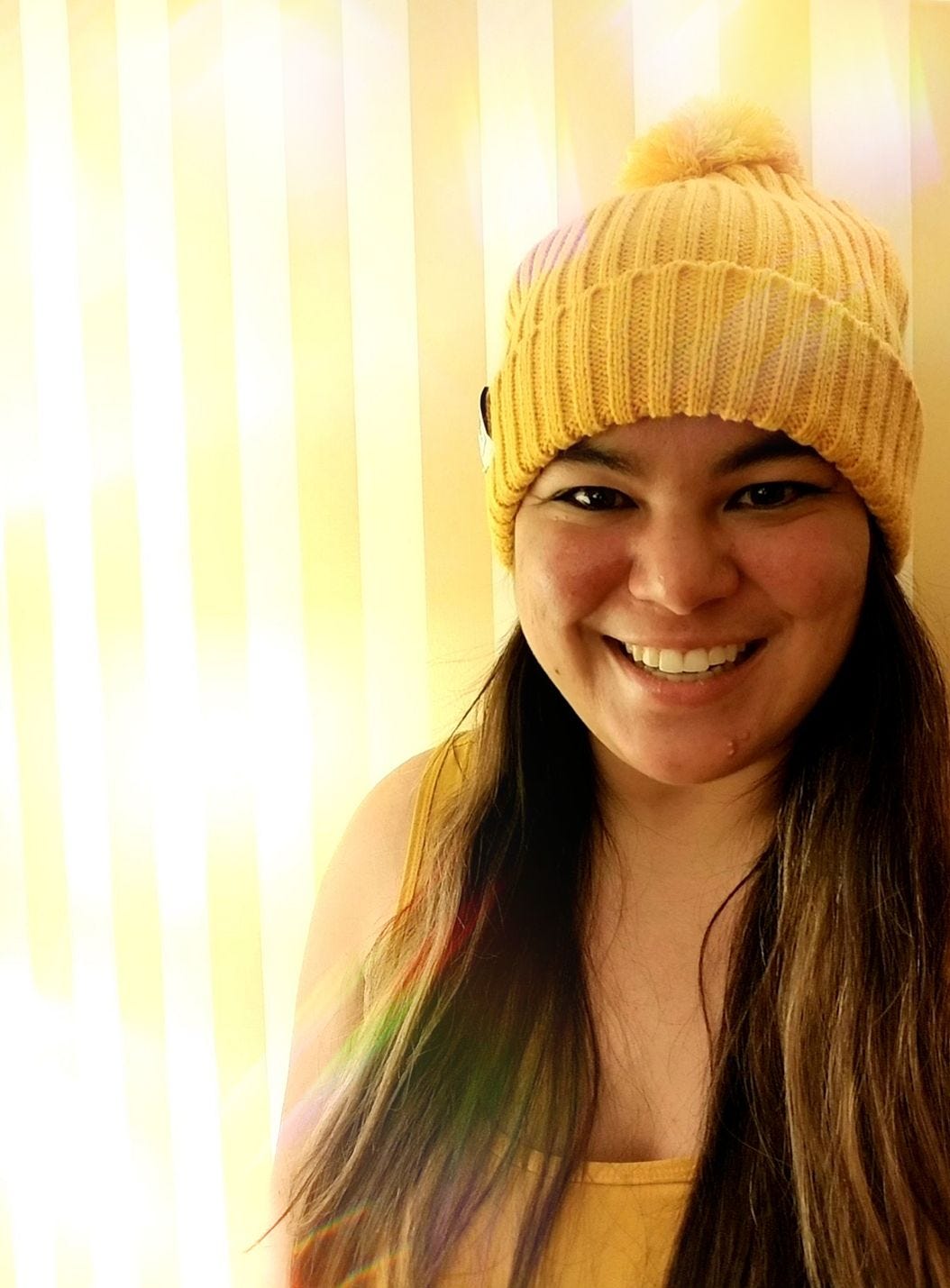
Elizabeth Adan is a lifelong writer with 11 published poetry titles and features in more than 20 literary magazines, anthologies and websites. Her alliterative, lyrical writing takes on topics ranging from sustainability, nature, love, and community responsibility, where she prioritizes open-ended metaphors and free verse language. A Pacific Northwest native, you’ll find her in the great outdoors, soaking up as much inspiration and natural color as possible. Follow Elizabeth on Instagram and YouTube @elizabethreadsandwrites or at www.ElizabethAdan.com.
Thank you so much for joining us in this interview series! Before we dive into the main focus of our interview, our readers would love to “get to know you” a bit better. Can you share a story about what first drew you to poetry?
I have always been in love with words! I was a talker as a young child, and really enjoyed expressing myself through words and writing. I began writing poetry when I was a kid, and I even still have some of my old journals today. Oh wow how far I’ve come! I knew from a young age that reading was one of my favorite activities, and I figured, hey, if other people can be writers and authors, so can I! It’s brought me so much joy to keep exploring creative expression.
Can you tell us a bit about the interesting or exciting projects you are working on or wish to create? What are your goals for these projects?
I have a series of self-published poetry books that explore themes of nature and human connection, as well as love both for other humans and for the land. I am really proud of this work, especially at a time in humanity when the climate is of so much importance. I would love to get my work into the hands of more readers and see what thoughts the poems spark in them – hopefully the poems will help inspire at least one other person to move more lightly on the land and gain a newfound respect for the plants and animals around us.
Wonderful. Let’s now shift to the main focus of our interview. Let’s begin with a basic definition so that all of us are on the same page. What is your definition of poetry? Can you please share with us what poetry means to you?
I think poetry is defined within the eyes of the writer and the reader. While there are absolutely technical rules and schools of thought to different types of poetry – metered poetry or rhyming verses for example – I have always gravitated more toward free verse poetry. I think everything in our world holds deeper meaning and can be quite poetic – even things like road signs or maps have the skeleton of a poem – if you listen closely in a coffeeshop, a stranger’s conversation can have the tinkling music of poetic verse, with the clings and dings of cups and the whistle of the espresso machine providing its musical backdrop. So, at its heart, poetry is really any written word that transforms above its original meaning, and moves the emotions of the reader (and the writer) in some small, profound way.
What can writing poetry teach us about ourselves?
Writing poetry can teach us a lot about ourselves. First, it can teach us that we can accomplish our goals. If you’re looking to write based on a prompt or assignment, like in school or in a writing competition, accomplishing this can help you gain confidence. Also, poetry can teach us that we can express ourselves in new and unexpected ways. There are many emotions we encounter in life that don’t fit into neatly wrapped packages and names. Poetry is a great way to explore a single thought, emotion, memory, or encounter, and help us put words and imagery to complex situations.
Who are your favorite poets? Is it their style, the content or something else that resonates with you?
Some of my favorite classic poets are Pablo Neruda, Charles Bukowski, and Emily Dickinson.
Although I am only reading his English translations and not his native Spanish, Neruda has woven together simple words into some of the most beautiful and moving thoughts. The first time I read Tonight I Can Write (The Saddest Lines), I was floored. Each time I re-read it, there is a new angle to explore and it retains its spellbinding nature.
Bukowski has always inspired me with his frank, honest, and un-dressed up nature of his work. Although it is often irreverent, it is moving in its ability to find meaning in the mundane. A lot of his work takes place in his home or looking through his window. He has inspired me to write down my thoughts on paper in a stream of consciousness style, no matter how ugly or unpolished, and reading it is a great way to break writer’s block.
Dickinson is obviously a classic. I have always loved the line, “I am out with lanterns, looking for myself.” I feel that encompasses what poetry is, and what it does for the writer. Poetry is often not for the reader – it is a form of self-care or therapy or self-expression for the writer. I know I personally have used poetry in dark times to “go out looking for myself.”
If you could ask your favourite poet a question, what would it be?
I would love to ask all writers what their own favorite piece is out of all the work they’ve created. It is always interesting to see what the own writer is most proud of, and I want to hear about what they were thinking when they created it.
Poetry can be transformational. Is there a particular poem that spoke to you and changed your life or altered a perspective you held in some way? Can you share the story?
I love this poem by Rumi:
Quietness
Inside this new love, die.
Your way begins on the other side.
Become the sky.
Take an axe to the prison wall.
Escape.
Walk out like someone suddenly born into color.
Do it now.
You’re covered with thick cloud.
Slide out the side. Die,
and be quiet. Quietness is the surest sign
that you’ve died.
Your old life was a frantic running
from silence.
The speechless full moon
comes out now.
-(The Essential Rumi, translated by Coleman Barks)
I find this poem so moving because it inspires me to take control of my dreams and transform, as many times as it takes to fulfill my life’s purpose. It is a beautiful piece that motivates me to continue to grow and change.
Today's world needs so much healing. Can you help articulate how poetry can help us heal?
I completely agree that poetry is a balm for healing our selves and our souls. I actually wrote an entire poetry book during the coronavirus lockdown, Invisible Enemies, as a way to help understand what was going on, and to document how our world changed during that frightening time. I found that poetry has a way of bringing people together as well. It has a very strong community aspect. I have performed poetry readings locally for this poem that I wrote for this coronavirus lockdown book, which I would love to share here to showcase the healing theme:
we are strong
I go breathing, outstretched
to get the onions
and slice the garlic
on the plate, granular
even diced lines on edge
and facing all toward mecca, as silk
I was fishing
and also trembling
caught on the line
as the dial tone
repeats, repeats
your call has been disconnected
beast and bear
and bribery aside,
we settle our debts
here the apologies flower
like lovers
enfolded into lilacs
and no day is ever too late
we welcome our friends
and neighbors
and we welcome the sky
as open as freckled forgiveness
as open as apples in orchards
as they fall from the branch
into outstretched arms
branches cry into our baskets:
too heavy to hold
too heavy to hold
we answer with full arms:
we are strong
We’d like to learn more about your poetry and writing. How would you describe yourself as a poet? Can you please share a specific passage that you think exemplifies your style or main message?
I think of myself as a rather unconventional poet. If you’re looking for traditional poetry that follows a script or a metered tempo, that doesn’t describe my work. I am a free verse writer – sometimes my poems are a few sentences, sometimes they fill the entire book. Sometimes they are accompanied by artwork. I would describe myself as a thinker, a seeker of magic, a seeker, and a finder. I stand in my mind and see a new path to go down, and I follow it, running, with reckless abandon. I wake in the night with words in my head and I write them down before I forget. In the morning, I am surprised, as they are words I never would have come up with during waking hours. I feel that poetry comes from a higher power and my poems are merely using me as their conduit. I am a steward of words; I do not own them. I am taking complex, difficult, or ugly emotions, and I am polishing them. I bring them tea. I give them a bath with scented soaps. I lotion them with love. We sit together under a blanket by the fire, the words and me. They are loved, and they love me back.
What do you hope to achieve with your poetry?
I write to heal myself. I have achieved that goal time and time again. Hopefully, I can help heal someone else too. We will never not be in need of healing. We will never not be in need of poetry.
In your opinion and from your experience, what are 3 things everyone can learn from poetry?
1. How to prevail. As the quote at the top of this article shares, poetry is the “compulsion to sing in the teeth of death.” I find this fascinating and accurate. Poetry is what your mind creates in fight or flight. I have found that my best work comes during times of stress and sadness. I feel the emotions deep within myself and the words come first. Words guide us back to ourselves and into our bodies, back into the present when we’re up in the clouds, and back up to the clouds when we’re stuck in the present, and on and on. We will always find our way back to our metaphorical home with poems.
2. How to connect. Reading poetry written by others is emotionally moving. In that moment, you are connected with the writer and share their feelings. When you encounter a friend who has also read and enjoyed the poem, you’re connected to them as well. That shared experience is such a crucial part of the tapestry of humanity.
3. How to transform. There is a transformative nature of poetry that other forms of written language lack. When in a poem, a lion is not just a lion. If it’s chasing you, it can be a metaphor for society, or a harsh boss, or financial troubles. If you are the lion, it could also be a metaphor that you are strong, you are a leader, you are resilient. You can find yourself in the words, but you can also hide in the words. Poetry is a thick patch of grass and you’re just looking at streaks of sunlight coming through as the wind rustles the leaves. The full picture comes into focus when in context with other poems.
Based on your own experience and success, what are the “five things a poet needs to know to create beautiful and evocative poetry?” If you can, please share a story or example for each.
1. Spelling, grammar, punctuation. Make sure you have a strong handle on written language as readers will shy away from text that’s misspelled, poorly formatted, or hard to read. That said…
2. It’s okay to break the rules. To paraphrase Pablo Picasso, you need to know all the rules in order to break them. Take a class on the basics of poetry and its structure. Fit yourself within its framework. Then, break all the rules you learned and transform your work into something new. Evocative poetry comes from truth and your authentic work will always be the best – not necessarily work that follows all of the rules in a rigid fashion.
3. Know your own worth. Don’t second guess yourself. YOUR WORK IS GOOD. Even if it’s not mass appeal, there is definitely someone who reads your work and resonates it. There is someone out there who sees you publish something and says, “Wow, that’s impressive. They published something. Good job for them.” Good job for you! Don’t let the comments of others bring you down. You are enough and your work is absolutely good enough too.
4. When it’s time to start over. Not all work is going to be your best work. Don’t be afraid to use your eraser, press the backspace key, and start over. The first draft is never the best, and it’s okay to take time and edit, and re-write, accordingly.
5. How you fit into the world around you - both the natural world and the social human world. Personally, I think poetry is really about getting to the heart of this question. Where do I fit in? To answer this, put yourself in as many different experiences and situations as possible to embrace a new perspective. Take a different street home from work. Go to the grocery store on a different day of the week. How do these familiar spaces change over time and depending on who is in them? Be a constant seeker and document your findings.
If you were to encourage others to write poetry, what would you tell them?
Go for it! Do not worry about “getting it right.” Your only objective should be to scratch the itch inside your soul. Focus on a stream of consciousness. Pick a time of day when you feel most inspired - for some it’s sunrise, or lunchtime, or during your morning commute on the bus to pass the time – for me it’s nighttime when my family has gone to sleep – and put on a vibey playlist. Just put words on paper and don’t worry about how they sound. Keep going and read it back later. You will make a lot of mistakes and have a lot of first drafts that never see the light of day, but the important part is to fulfill that creative need.
How would you finish these three sentences:
Poetry teaches…you to think outside the box and embrace a new perspective. The open-ended interpretation of poetry is what really excites me. I like hearing what others think after we read the same piece. It’s amazing the different points of view!
Poetry heals by… transcending barriers. Poetry has such a staying power in our human culture because it does not bind you to a place, time, or demographic. Words are accessible to all, especially with modern translation, and it’s a meaningful way to maintain connection with others.
To be a poet, you need to…have thick skin and not worry about what others think of your work. I write poetry for me, to heal myself, to express my creativity. I have been floored and honored by the people who “get it” and understand what I’m doing with my work. But many people, especially online, will tell you that your work isn’t good, and it’s important to remember that those comments don’t matter. They have nothing to do with your worth or talent. The only one you need to impress or be accountable to is yourself.
We are very blessed that some of the biggest names in Entertainment , Business, VC funding, and Sports read this column. Is there a person in the world, or in the US, with whom you would love to have a private breakfast or lunch, and why? He or she might just see this, especially if we both tag them :-)
While not a poetry writer, I would love to talk with Emily Henry, who writes bestselling contemporary romance novels. I have been diving into new genres in my reading time and her books have been really entertaining and fun. I read Beach Read this summer and just started Book Lovers. I like how many of her main characters are writers themselves, so it’s easy to feel relatable!
How can our readers further follow your work online?
You can explore all my books on my website: https://elizabethadan.com/published-author/
Order them on Amazon: https://www.amazon.com/stores/Elizabeth-Adan/author/B08NH77PFS
Signed copies sold on Etsy: https://www.etsy.com/shop/edgeofelizabeth?ref=seller-platform-mcnav§ion_id=41890227
Follow me on Instagram and on YouTube: @ElizabethReadsAndWrites
Thank you for these excellent insights, and we greatly appreciate the time you spent. We wish you continued success.
Thank you so much! Happy reading and writing!