911 and two-way radios are important parts of everyday Police and Fire operations, but they were never designed to handle the speed and volume of information coming in during a mass attack.
As a part of this series, I had the pleasure of interviewing Edward McGovern.
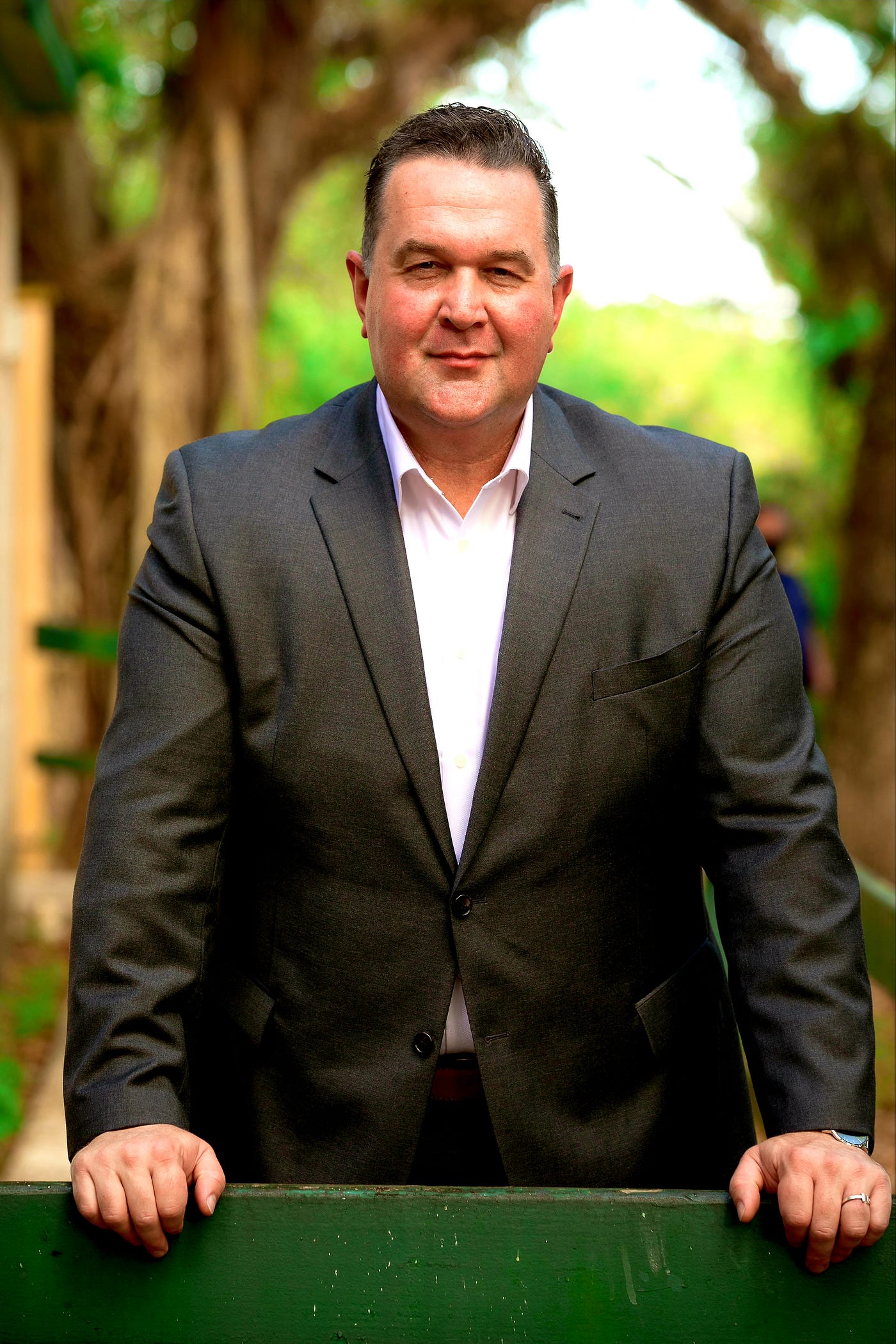
Edward McGovern is the founder & CEO of CERA Software, Inc. and the creator of CERA-Critical Event Response Applications. He is a retired Law Enforcement Major and tactical commander from South Florida.
Thank you so much for joining us in this interview series! Before we dive in, our readers would love to “get to know you” a bit better. Can you tell us a bit about your ‘backstory’ and how you got started?
My entire previous career was spent in Law Enforcement in South Florida. I retired after 22 years as the Major of Investigations & Support Services with the Hallandale Beach Police Department. I responded to the Fort Lauderdale Hollywood International Airport attack in 2017, and then responded to the Marjory Stoneman Douglas High School attack a year later in 2018. Two different types of mass shootings, but they had a common denominator: failed responder communications. It was these two events that pushed me to leave Law Enforcement and try to solve the challenges we face using technology.
Can you share the most interesting story that happened to you since you began your career?
By far, having my company accepted to the Alan B. Levan | NSU Broward Center of Innovation has been a game changer for us. I liked to tell people I knew just enough about technology to be dangerous, but not coming from the tech space was a huge learning curve for me. It was pure chance that I had a mutual colleague that knew Dr. John Wensveen, the Leader of the Innovation Center and CIO of Nova Southeastern University. Levan Center is not only one of the largest Innovation Centers in the country, they push emerging technology while they focus on startups throughout the stages of success: Ideate, Incubate, Accelerate and Post-Accelerate. Now I am immersed in tech from cyber-security to e-commerce and studying what we can apply to public safety.
Can you please give us your favorite "Life Lesson Quote"? Can you share how that was relevant to you in your life?
Funny, it is a movie quote, but applies so well to life. From the movie “National Treasure,” “If something is wrong, those who have the ability to take action, have the responsibility to take action.” It was why I became a cop, and it is a core tenet of our company’s goal. Our mission statement is: We Have A Moral Obligation To Save Lives. That means saving lives is our benchmark for success. Company leaders today need to be purpose-driven, doing more than just chasing revenue. Our society looks toward this type of change as a success model.
None of us are able to achieve success without some help along the way. Is there a particular person who you are grateful towards who helped get you to where you are? Can you share a story about that?
We are in such a unique space, it is difficult to narrow down to one person because so many have been instrumental in CERA transforming from idea to market. Our CTO Lee Johnson and VP Armando Rojas stand out as the first two for which I am grateful, on our technology side. Without them, CERA would not even be on the market. Our Chiefs and First Responders who helped innovate, and most importantly, our families from Marjory Stoneman Douglas who have supported our mission. They are so inspirational and are the reason why I will never quit.
How have you used your success to bring goodness to the world?
If you talk to any survivor of a school attack, or to families who lost a loved one, you understand my life mission. MSD was the focal point where so many lives had their course trajectories horribly changed forever. Mine was minor in comparison. I walked away from a successful career to take up a cause, and carry the weight of our failures as motivation. Goodness comes in preventing more children and families from having their life courses torn apart by tragedy.
Ok wonderful. Let’s now shift to the main focus of our interview. Can you tell us about the cutting edge communication tech that you are working on? How do you think that will help people?
There are two sides to Emergency Communications, reporting and responding. After MSD, a lot of changes happened to improve reporting. Alyssa’s Law, mandating panic alarms in schools, caused numerous companies to jump into the market with panic systems. While they are extremely effective, I knew from my experience that response had to change too, or panic systems would fail. 911 and two-way radios are important parts of everyday Police and Fire operations, but they were never designed to handle the speed and volume of information coming in during a mass attack. At best, you may have one call-taker for every ten 911 calls. Multiply that by 100 calls and you will be 10-15 minutes in. The MSD attack took 5 minutes. Then pushing the information to Police and Fire has to go one message at a time on two-way radios. That’s the reason for “Communication Failure” we see in every after-action report. CERA was designed to leverage technology not only to rapidly push information to First Responders, but aggregate and deliver in a way that speeds them up through simplicity and priority. Many of the time-consuming tasks we need to do manually are completed instantly by CERA, plus we give responders the ability for Unified Command, managing multi-agency responses and assets on a visual platform. Every facet of CERA is designed to shave seconds off, which leads to minutes. That correlates directly to survivability.
How do you think this might change the world?
We are going to change how we respond everywhere, to anything. CERA today is just the start of what we have planned in our innovation pipeline. What I know uniquely from my experience is that Law Enforcement is changing in a big demographic; in the next few years all of our First Responders will be Digital Natives, growing up immersed in technology. They understand technology, AI and machine learning. What they don’t understand is something like a police radio, which may only have a 15 mile working radius, a giant antenna, old knobs, switches and dials. They don’t understand not having a visual perspective, or not having guided assistance to a location because they’ve grown up on Google Maps or Waze. We need to start moving to their level. They are super-intelligent, but their brains are mapped differently due to technology.
Keeping “Black Mirror” in mind can you see any potential drawbacks about this technology that people should think more deeply about?
The drawback of kids accessing their devices during school comes to mind, both as a real distraction and a perceived distraction. Many of the schools we visit are built like fortresses, you have zero cell signal and not great WiFi. There has never been a push to change that because schools didn’t want kids on their phones. The two counter-arguments for that are 1. We know they use their phones anyway, as we see from all the video footage from within a school or targeted attack. 2. No accessibility to phone calls was one of the big failures at MSD. People were trying to call out to 911 and couldn’t. Some classes had a landline, but it was positioned right in the line of fire, so no one could get to it. When we weigh the inconvenience of distraction against life-or-death decisions, to us there’s no hesitation to move toward technology.
Was there a “tipping point” that led you to this breakthrough? Can you tell us that story?
I actually started my company four months before MSD, after the Ft. Lauderdale Airport incident. I was trying to create a simple command post application. Everything galvanized into becoming a disruptor to public safety communication after MSD. One of the reasons I have MSD families speak to our team periodically is to remind them of the seriousness of what we are doing. MSD without a doubt was my “tipping point.” I knew what we needed and had to get us there.
What do you need to lead this technology to widespread adoption?
#1 is funding. I self-funded the majority of this company with my life savings and police retirement. But we are on the cusp of acceleration. We need funding to expand and grow at the rate we onboard new clients. So I’m in dedicated fundraising mode right now. #2 is the center Hub: Police and Fire. We need them to connect the spokes, which are schools, religious facilities, malls, stadiums…anywhere where there is what we call a “soft target” threat. We need the buy-in from public safety. Everyone we show it to loves it. We’ve tailored training to make it very easy and less burdensome to personnel constraints. We also built it for everyday use for PDs and FDs, to make it cost-effective and keep CERA fresh in their minds when an attack hits. But the process can get slowed by bureaucracy and large companies who we might disrupt who have big bank accounts to keep a tight grip on their position. Public safety and politicians have to advocate for us.
The pandemic has changed so many things about the way we behave. One of them of course, is how we work and how we communicate in our work. How do you think your innovation might be able to address the new needs that have arisen as a result of the pandemic?
I think the fact that so many people had to become tech proficient is a benefit to us. There were always holdouts who resisted technology. The pandemic put everyone through a crash course in tech use. For schools, businesses, or someone’s personal life, technology meant survival. So it is now second nature. That makes innovation and “go-to-market” a lot easier for us. Now people are using apps for restaurant service, eCommerce, learning, doctor visits, even food and pharmacy delivery. It is our way of life right now. It’s an event that altered the landscape forever.
Fantastic. Here is the main question of our interview. What are your "5 Things I Wish Someone Told Me Before I Started" and why? (Please share a story or example for each.)
Starting your own tech company is more stressful than being a cop! I say that not to dissuade anyone, because my decision would not have been different, I just would’ve had less surprises. I was once having breakfast with Jeanine Suah from Brex and a group of Tech Founders, and telling them all my “heart attack” situations I was running into. They all laughed at me, and basically said, “You’ll get used to it, and by the way, there are more coming.”
Don’t be afraid to get out of your comfort zone. I would’ve left law enforcement even earlier if I had that push. It’s a scary thing to try something new and stake your future in it. But if you muster the courage to do it, the rewards are exponential.
Embrace Failure: I thought I already had this mindset. I used to always use failing as a learning lesson. But when someone would tell me CERA won’t work, or I get turned down for funding, I would take it hard. It takes a lot more mental toughness when your career is this “baby” you’ve created and nurtured for years. You feel so dejected when someone turns their back or says this won’t work. It took awhile to learn to just brush them off and keep pushing forward.
How much time you think you need to be successful… It’s that x 3. I started CERA as a company in 2017, that alone took forever to get to our first proof of concept in 2019. When I retired from Police in November 2020, I mapped myself out to have enough money to live 6 months until the company got rolling. Here I am now launching in January 2022. I wished I had better prepared. So many things slow the process that are completely out of your control; pandemics, issues in your market that change their focus, stock markets, someone who was on board with you, then retires and now you have to start fresh…there are so many unforeseen obstacles. Avoid a lot of pressure by using the “T x 3” rule. If you get it going early you’re set, if you hit roadblocks, you’re prepared and not scrambling.
Chase it! Nothing worth doing comes easy, or it would’ve already been done. You have to be doing what others are unwilling to do. If it means leaving your cushy job for the unknown? Go. Getting up at 3 a.m.? Get up. Work Sundays and miss the game? Do it. Those sacrifices are the difference between people who just dream of something and people who take it and make it happen. Having someone drive that home from the onset would’ve avoided some procrastination, missed opportunities, etc.
You are a person of great influence. If you could inspire a movement that would bring the most amount of good to the most amount of people, what would that be? You never know what your idea can trigger. :-)
Without a doubt, a Movement of Kindness. We have gotten away from treating people with respect and dignity, lending a helping hand, making sure our next generation has it better than we do, even I struggle to avoid that mentality. We’ve become selfish and cruel in some aspects of our society. Ironically, that’s one of the negative side effects of technology; it allows for anonymous malice. Kindness is selfless, cruelty is selfish. When people ask me what I would do if I made millions from CERA, they think I’m going to be buying a private jet or a yacht, but I already have my plan in motion. My wife and I have a non-profit organization to help kids in need, families, and my personal passion: Survivors and Families of victims of school violence, starting with MSD. I owe that. Many of them are in need of services for PTSD, some have started scholarship charities in their children’s names and need help. We need to lift up everyone around us and stop tearing each other down. That’s a movement I am down for, 100%.
How can our readers further follow your work online?
The best way to see our progress is to follow us on LinkedIn and Facebook. Please visit our pages:
https://www.linkedin.com/company/ceraapp/
https://www.facebook.com/ceraapp
Thank you so much for the time you spent doing this interview. This was very inspirational, and we wish you continued success.