I always thought of my ideas as lumps of granite that I needed to shape into the sculpture that would become the final product. I don’t know if I even believe in a “final product.
Tech
Miles Bowles: How Embracing Creative Problem Solving and Iterative Feedback Built a Health Tech Enterprise
The Hyduro founder discusses overcoming early dyslexia, navigating pandemic uncertainties, and building data-driven wellness tools to solve chronic under-hydration.
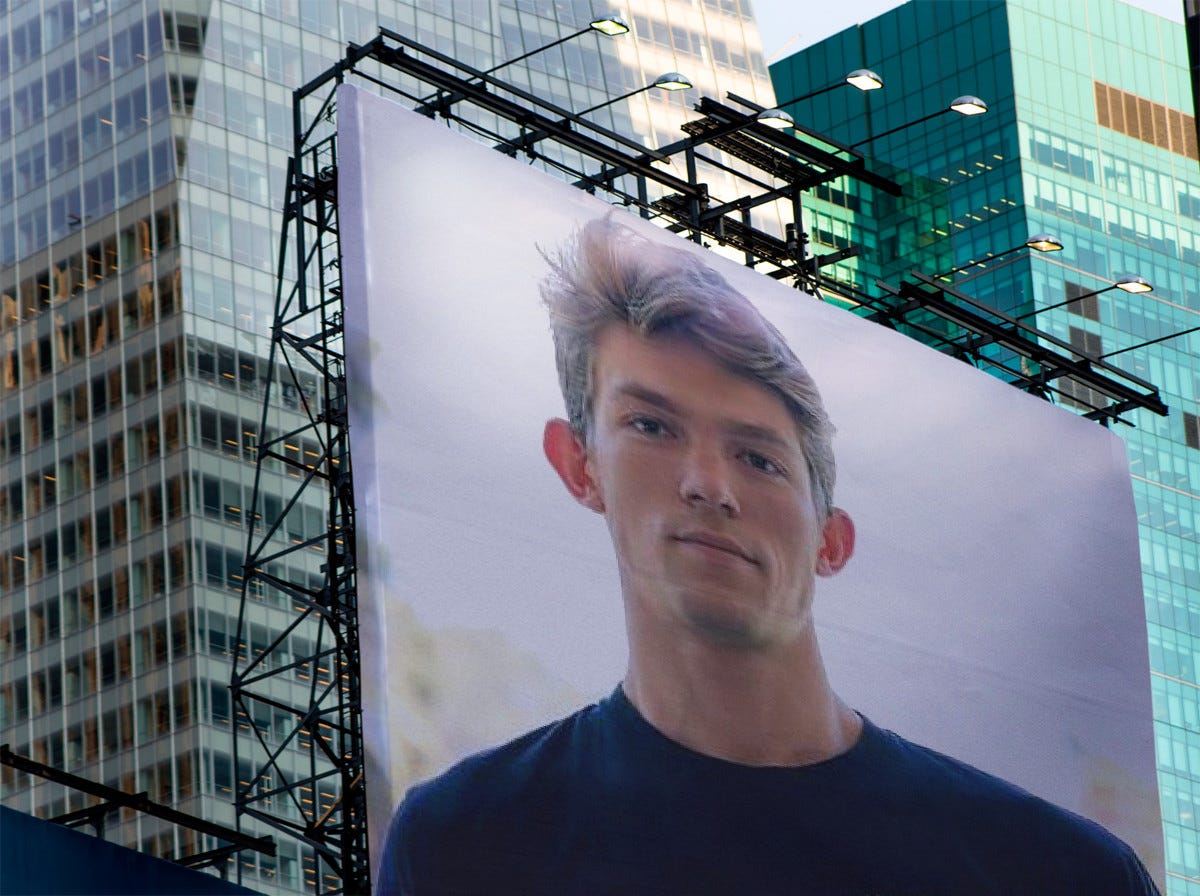
In recent years, Big Tech has gotten a bad rep. But of course many tech companies are doing important work making monumental positive changes to society, health, and the environment. To highlight these, we started a new interview series about “Technology Making An Important Positive Social Impact”. We are interviewing leaders of tech companies who are creating or have created a tech product that is helping to make a positive change in people’s lives or the environment. As a part of this series, I had the pleasure of interviewing Miles Bowles.
Miles Bowles is the Founder and Chief Product Officer at Hyduro, Inc., where he leads product development with a hands-on approach. In this role, he serves as the spokesperson for the brand, overseeing day to day operations as well as ongoing product and app lifecycle management and engineering. Bowles is passionate about enabling people to take their personal health into their own hands by creating data-driven products that empower people to live lives to the fullest potential.
Thank you so much for joining us in this interview series. Before we dive in, our readers would love to learn a bit more about you. Can you tell us a bit about your childhood backstory and how you grew up?
I grew up on a farm in Woodside, California with goats, horses, ducks, chickens, a pig and a llama named “The Dolly Llama.” I struggled with dyslexia when I was younger, which forced me to develop my creative problem-solving abilities and work extra hard to keep up with the other students. Fortunately, I was eventually able to overcome this setback. My father was involved in the early electronics boom, which meant I always had various tech objects available. I loved building and experimenting with spare parts and not much has changed since then.
Can you share the most interesting story that happened to you since you began your career?
2020 was a wild year. Right after coming back from setting up manufacturing in China, COVID-19 struck the world. Our business was in a critical period, and the effects of the pandemic hit us hard. As our company struggled to make up for the circumstances, I was hit with another unexpected development: I was going to be a father. This could not have come at a more challenging time. But as entrepreneurship often requires, I hunkered down, set my focus and made it work — albeit without much sleep. And now, in one month, I will be celebrating my daughter’s first birthday.
None of us are able to achieve success without some help along the way. Is there a particular person who you are grateful towards who helped get you to where you are? Can you share a story about that?
My father Mark Bowles is a career entrepreneur. Growing up, I rode passenger side through the many ups and downs inherent to the world of start-ups. On multiple occasions my dad was forced to sell our house and college funds to keep the dream alive. Watching him work so hard and sacrifice so much to make his vision a reality always left me with a sense of awe and deep respect for his craft. For this reason, I owe much of where I have come to his influence.
Here is a fun story to illustrate one of the moments where he encouraged me to follow in his footsteps. In middle school, I started a band with some friends. We took it very seriously, booking shows and selling merchandise to buy more equipment. At one point, we decided we wanted to record our own album. My dad gave us the idea to develop a formal business plan and pitch that we could take to the band parents to raise funding to cover the cost of recording and CD’s. We were able to raise the money, and sure enough, because of good planning, we were able to pay back the money we raised in full and made quite a bit extra to spare.
Another pivotal influence that led me to entrepreneurship came after graduating high school. I got an internship with a start-up company called Edico Genome, which was sold a few years later to Illumina for $100M. I was the first and only intern at that time and got to absorb knowledge and skills from brilliant people. This was when I fell in love with engineering and software development. After getting a taste of the magic that takes place at an early days start-up, I knew without a shadow of a doubt that entrepreneurship was going to be my life.
Can you please give us your favorite “Life Lesson Quote”? Can you share how that was relevant to you in your life?
“It is not the load that breaks you down. It’s the way you carry it.” — Lou Holtz
This quote is meaningful to me because I have found that often times the secret to success lies in the way we frame things. Entrepreneurship can more often than not be a challenging endeavor. Pay is lacking, hours are long and the emotional toll is incredibly high. It is easy to become discouraged if your frame for success is not set right. My protection from the ever-present thought of failure was that I was focused on growth as my metric for success. I constantly remind myself that my hard work cannot be wasted if I make a point to learn and get better with everything I do.
You are a successful business leader. Which three character traits do you think were most instrumental to your success? Can you please share a story or example for each?
- Passion: When people describe start-ups, they often share a story where a great idea just struck them out of nowhere, and then they decided to turn it into a business. For me, it was the opposite. I knew far before I had any worthy ideas that I wanted to follow the path of entrepreneurship. I spent years actively searching for an idea that I was passionate enough about to commit everything to. After trashing countless “good” ideas, I finally came across one that sparked true passion. And I knew that the only way to get the idea out of my head was to see it become a reality. That is when I dropped out of college to devote myself to following my vision.
- Openness: One of the key things that has allowed me to get so far with Hyduro was the willingness to let my idea evolve. I always thought of my ideas as lumps of granite that I needed to shape into the sculpture that would become the final product. I don’t know if I even believe in a “final product.” I think that in order to be successful as an entrepreneur, you need to always maintain a vision of how you can make whatever it is that you are focused on even better. The flip side to this is that you need to be comfortable with being wrong. If you’re like me, you will be wrong all the time. I spent three years developing several completely different versions of our product before arriving at what we have now. The secret weapon is to find a vision that is compelling enough that others help you to find the right path forward but it only works if you are open to feedback.
- Grit: The path is often long and hard. I personally spent five years without pay living at my parents’ house to bring my vision to life. You can be sure that there were many times that I second-guessed myself and my decisions. I forced myself to stick to it and see it through, and I believe this may be the single thing that prevents most people from realizing their own visions.
Ok super. Let’s now shift to the main part of our discussion about the tech tools that you are helping to create that can make a positive impact on our wellness. To begin, which particular problems are you aiming to solve?
Approximately 75% of the US population is chronically under-hydrated. Most people are aware of this problem, but like working out and eating a good diet, it is not that simple to just change your habits and behavior. Unfortunately, living in a constant state of dehydration has many adverse effects on day-to-day health but, more importantly your long-term health. There is a lot of new evidence that ties chronic dehydration to degenerative diseases like Alzheimer’s and dementia.
How do you think your technology can address this?
Our mission is to utilize the cognitive training tools that technology has developed over the last few decades and leverage them towards helping people train healthier habits. In other words, we want to use technology to make being healthy more fun. The PÜL SmatCap system tracks, integrates and trains healthy habits in real-time using cognitive science and AI.
First, PÜL helps you understand your baseline intake requirement — this is the minimum amount of fluid you need to stay hydrated through the day. Then, PÜL integrates with other trackers and wearables to update your baseline with data like workouts and weather — the factors that are harder to keep track of on your own. Then as you go about your day, PÜL manages your hydration in the background showing you via light feedback whether you are on track or behind.
The real-time aspect of this system is essential because developing new habits works best in the moment. As you drink from the PÜL SmartCap, you see your progress update in real-time, either pushing you to drink just a little more if you need it or letting you know that you have had enough. PÜL also lets you view your trends to see how your habits are improving. This is important to us as we believe that the future of health is one where you prevent health issues from occurring instead of reacting to them once they have occurred.
Can you tell us the backstory about what inspired you to originally feel passionate about this cause?
It all started because I am a surfer, and I wanted a way to stay hydrated. As I dug deeper into the world of hydration, I realized that the need for a hydration solution went much deeper than just surfing. I built all types of wacky hydration-related inventions: wearable hydration systems, pressurized hydration systems, motorized hydration systems, smart hydration systems and so on. All of this work resulted in a multitude of patents and product concepts. Ultimately testing, research and consumer feedback got us to where we are with the product now. But perhaps we will come back to some of the earlier concepts in the future — I still think they are pretty cool.
How do you think this might change the world?
We aim to provide tools to replace our current model of reactive healthcare with a more preventative system of healthcare. We want to promote healthy habits that keep people out of the healthcare system and give people the tools to flag and address issues far before they become severe enough to land them in the doctor’s office or hospital. Everyone can benefit from better hydration, and we aim to make that easier for people.
Keeping “Black Mirror” and the “Law of Unintended Consequences” in mind, can you see any potential drawbacks about this technology that people should think more deeply about?
I think the potential for unintended consequences, if there is any, is what could happen with the infrastructure of our current healthcare system. If our product and other related wellness products are successful in helping people stay healthier and visit the doctor less, I think some radical changes will need to occur with the current health care system, and it is hard to foresee what consequences might occur from that.
Here is the main question for our discussion. Based on your experience and success, can you please share “Five things you need to know to successfully create technology that can make a positive social impact”? (Please share a story or an example, for each.)
- Aim big. Big problems are daunting, but they carry the most energy. The market and people around you will be excited to help shoulder the load with you. If everyone can see clearly how what you’re doing matters, then the job of convincing people to get on board with you is much easier. Also, if your mission is a big one, that can help you stick with it through the tough times when you want to throw in the towel.
- Gain awareness. The first stage with any start-up a lot of research. Why hasn’t your problem been solved already? What has already been tried? Why didn’t it work? You are setting out in new territory, and you need to become a world-class expert in the topic of your business. If you aren’t willing to be the expert, then you likely are not the right person to see the idea through.
- Don’t be afraid to share your idea. I think most people that get struck with an idea are afraid to share it in the beginning because they fear that either their idea will get stolen or get laughed at — I know I was. This is generally flawed thinking though, as feedback from others is one of the most essential tools you have, and it is unavoidable if you are going to succeed. Everyone loves to critique ideas, and you should use this to your advantage. But keep in mind that feedback is not criticism, and you should not let it discourage you but instead use it as a compass to lead you in the right direction. As for the concern of someone stealing your idea, this happens far less than you think. Don’t be stupid, protect your secret sauce, but don’t be so secretive that you lose out on help from others. If your only protection is to keep your idea hidden from everyone, then you’re destined for failure.
- Don’t be afraid of the pivot. Hyduro started as a wearable for surfers, then runners, and then we pivoted to a smart wearable with a pump, a smart cap with a pump, and finally, a smart cap with deep hydration and habit training algorithms. We surely would have failed if we were too stubborn to follow the signs and feedback we received. More important than a detailed vision is a clear mission. Our mission was to make hydration better. It took a few failed attempts to find the best starting point, but because our mission was clear, we didn’t get hung up on the details, and we were able to pivot when needed.
- Engineer your exit. This is something I learned from my father Mark Bowles. A significant factor in start-ups is timing, and this can be tricky and feel mostly up to chance. But, there is an excellent tool for putting yourself in the right place at the right time, and that is planning your exit. Now, this does not necessarily mean planning to sell your company, but rather understanding the players in your industry and maximizing the things that would make your company most appealing for acquisition. This is an essential exercise because big companies have a much better sense of where the market is going. If you can strategically position your company on the train tracks in front of the market, you are bound to increase your odds of being met with optimal timing.
If you could tell other young people one thing about why they should consider making a positive impact on our environment or society, like you, what would you tell them?
Aim big, start small. The bigger your mission, the better, but you can only take it on one step at a time. Just like with hydration, consistently taking small sips throughout the day is better than trying to chug your whole bottle all at once.
Is there a person in the world, or in the US with whom you would like to have a private breakfast or lunch, and why? He or she might just see this, especially if we tag them. :-)
Probably Elon Musk. He is involved in so many interesting projects that I would love to gain deeper insight into.
How can our readers further follow your work online?
Follow along at www.pulhydration.com or following us @pulhydration on social media.
Thank you so much for joining us. This was very inspirational, and we wish you continued success in your important work.
LK
Written by
Luke Kervin, Co-Founder of Tebra
Columnist & ContributorAuthority Magazine Columnist & Contributor

Published inAuthority MagazineTop Lessons, Top Authorities · 42K Followers
Exclusive, curated interviews with the leaders and changemakers shaping tomorrow. Leadership lessons, industry deep dives, and executive profiles.