Early on during the pandemic, on the heels of our Covid solution collaboration with the Icelandic government which had generated global media interest, we began to receive a lot of emails from potential partners and people curious about what we did.
Wellness
Dr. Tryggvi Thorgeirsson: The Digital Therapeutics Blueprint That Drives Large-Scale Chronic Disease Management
The co-founder and CEO of Sidekick Health explains how combining clinical science with smart technology enables patients to conquer chronic illnesses.
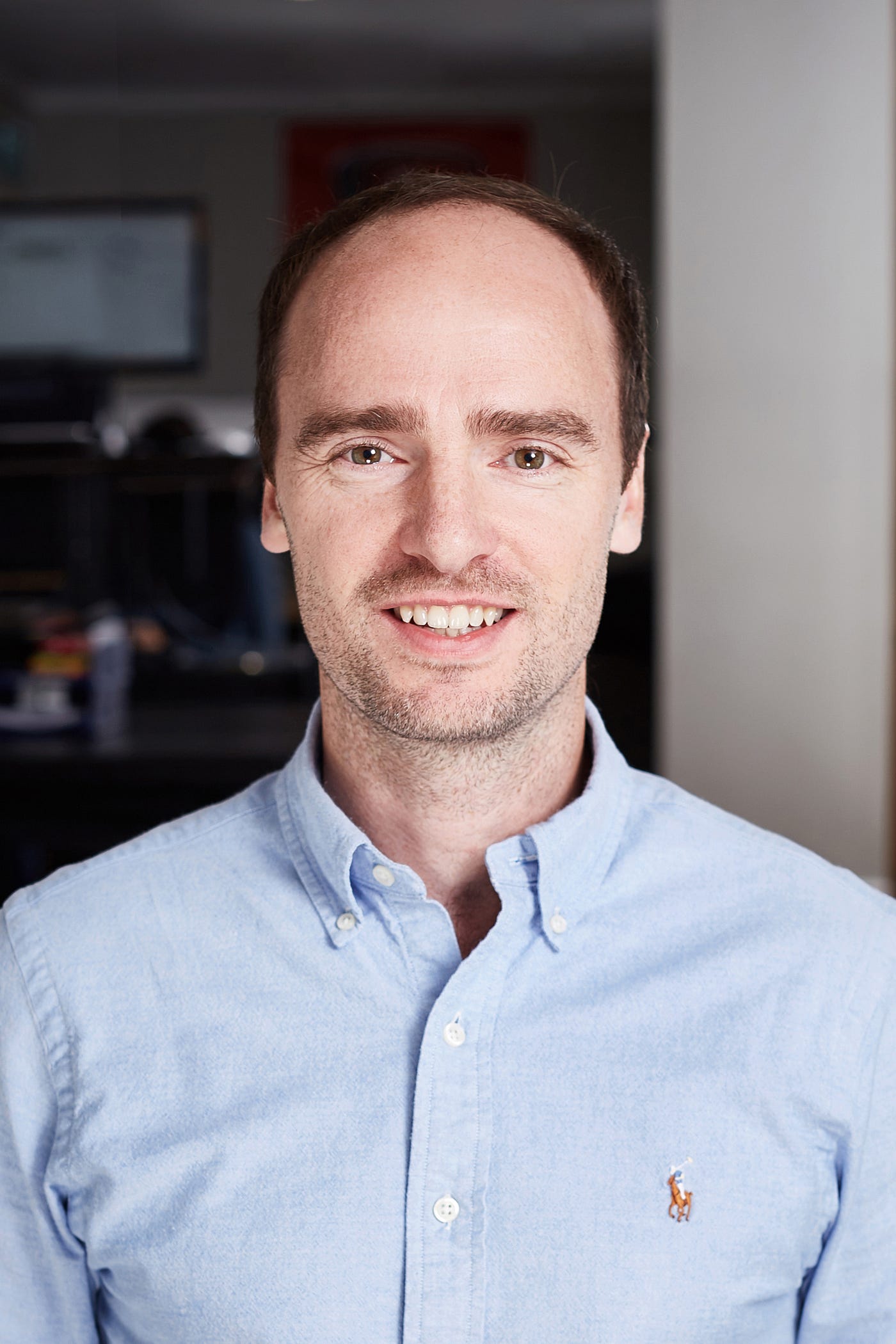
As part of my series about healthcare leaders, I had the pleasure of interviewing Dr. Tryggvi Thorgeirsson, CEO and co-founder of Sidekick Health, the digital therapeutics (DTx) innovator delivering clinical treatments through technology to people with chronic illnesses, to improve care and health outcomes.
Tryggvi is an experienced physician and researcher with a background in engineering. He is also currently a guest lecturer at Harvard and previously at MIT on topics including data-driven health and the application of behavioral economics to lifestyle interventions. He is also the chairman of Iceland’s Technology Innovation Fund and advises the country’s government on innovation strategy and implementation.
Thank you so much for joining us in this interview series! What is your “backstory”?
My story begins when I, along with Dr. Sam Oddsson, a friend and a former medical school classmate realized early in our medical careers that we are dealing with a tsunami of lifestyle-related illnesses, causing unnecessary suffering, disability, and premature deaths.
We saw so much preventable suffering, often with a devastating impact not only on the patients themselves but also on their families. It was obvious to us that we didn’t have the tools or the infrastructure to effectively help our patients tackle the roots of their disease. In the current brick-and-mortar setting, doctors’ choices are too often limited to prescribing drugs, briefly talking about the importance of improving lifestyle, and scheduling another short follow-up appointment in 12 months.
This short and episodic care, while often resource-intensive, doesn’t sufficiently move the needle, because for effective lifestyle interventions you need to have hundreds of interactions with the patient and constant monitoring and feedback to achieve a lasting impact. I felt we must be able to do better, so I put my stethoscope aside and went to Harvard to study how to use behavioral science to engage patients and prevent chronic illnesses and their often catastrophic effects.
At the same time, smart technology was starting to spread, opening up unprecedented access to deliver healthcare into people’s everyday lives.
This all came together when we launched our digital therapeutics platform, Sidekick Health, which was founded in 2014. Sidekick combines clinical and behavioral sciences with technology to improve health at scale, in a much more efficient manner than has been possible up to this point.
Today, Sidekick enables sufferers of chronic illnesses such as heart disease, cancer, and diabetes to receive personalized support at every stage of their treatment journey via our digital platform, enabling them to make long-lasting changes to their behavior, helping them to better adhere to medical treatment and, ultimately, improve their health.
Can you share an interesting story that happened to you since you started your career?
There is a patient I think of frequently. It was a young woman who lived in the countryside and had recently been diagnosed with a serious heart condition. Due to her remote location, and limited access to a clinic during the pandemic, it was essential that her care team could remotely monitor and support her.
Through the Sidekick platform, she was able to complete short daily symptom checks and interact remotely with her care team when needed.
One day, upon reviewing her Sidekick inputs, her nurse spotted that she had all the symptoms of an oncoming heart attack. She was flown directly to the hospital for immediate admission to the cardiology unit where the condition was luckily reversed, but without the platform and her vigilant care team, she probably would not have made it.
To me, this story is a strong reminder of what is at stake and how we need to keep pushing the boundaries of technology to provide the absolute best care for our patients.
Can you share a story about the funniest mistake you made when you were first starting? Can you tell us what lesson you learned from that?
As a doctor or an entrepreneur (or in my case, both), people are always giving you grand pieces of advice, but there are some things that nobody thinks to tell you because they’re considered small and unimportant. One of those is to make sure you check your spam folder!
Early on during the pandemic, on the heels of our Covid solution collaboration with the Icelandic government which had generated global media interest, we began to receive a lot of emails from potential partners and people curious about what we did.
As we sifted through these, it never occurred to us to check our spam folder. When we did finally check, an email was sitting there — about to be permanently deleted — from one of the top-three health insurers in the US, which has now become one of our biggest partners to date. The relationship came so close to disappearing into the ether, had we not stumbled across it in that spam folder. Now, we make sure we check it every day, as we never know what might be sitting there waiting for us.
Are you working on any new or exciting projects now?
One of the things I’m most excited about is our expansion into the US, as we are getting ready to scale up our offering to large numbers of people battling chronic conditions, in collaboration with a large and exciting partner. It’s an important step on our journey to improve the health of millions of people around the globe.
I am also really excited about some of the projects we are working on with our global pharma partners, where we are co-developing a completely new generation of therapies that combine traditional medications with digital treatments. This type of therapy allows us to support people with chronic illnesses much more holistically — another important step towards realizing the vision that Sam and I had when we founded Sidekick eight years ago.
None of us are able to achieve success without some help along the way. Is there a particular person who you are grateful towards who helped get you to where you are? Can you share a story about that?
I am grateful for my teacher and mentor, Harvard professor and researcher, Dr. Ichiro Kawachi. Dr. Kawachi is one of the leading minds in the field, and it was co-authoring our publication on behavioral economics for lifestyle interventions with him that triggered what became the foundations for Sidekick. His knowledge and insights on social determinants of health and behavioral economics helped spark the principles that drive the social, behavioral, and lifestyle-change engine in Sidekick today.
I remember when I first reached out to him as a young junior doctor, how I mulled over the email for several days, pondering every word together with my wife before sending it. Luckily, the message got through and sparked a relationship that transformed my career.
Is there a particular book that made an impact on you? Can you share a story?
I read somewhere that “history teaches us that man learns nothing from history,” a quote attributed to the philosopher Hegel.
I’ve thought about that a lot, and I am determined not to make that mistake. At Sidekick, we read as much as we can, often using audiobooks while commuting or running, allowing us to draw on experience and knowledge from autobiographies and relevant business books.
A recent book that has had a considerable impact on my colleagues and me is Working Backwards: Insights, Stories, and Secrets from Inside Amazon, by Colin Bryar and Bill Carr, two long-serving former Amazon executives. There are so many things from the ‘Amazon way’ that are relevant across most businesses, including having a long-term focus, obsessing over customers and working backwards from their pain points to develop innovative solutions, as well as making sure we stay curious, experimental, and brave enough to take calculated risks and learn fast if we fail.
As we enter a new exciting growth phase at Sidekick, my mind is on how to best build empowered leadership teams, solidify our innovation principles, and create scalable models that allow for multidirectional growth. Working Backwards is a timely read, and has many valuable insights on how a global business can scale and flourish.
How have you used your success to bring goodness to the world?
Sidekick is founded for one reason only, to improve the health of humanity at scale. Everything we do is focused on understanding the needs of people battling chronic diseases, and working on ways to relieve their burdens — improving their health and wellbeing, and adding quality years to their lives. That’s what drives us forward, relentlessly, every day.
Additionally, early on, when we began to incorporate behavioral psychology principles and integrate gamification strategies into our program development, this sparked the idea of bringing altruistic rewards into the user experience. Within Sidekick, this means that when users take significant steps towards goals in their treatment, they earn water points, which are then converted into real-life donations of clean water that is provided to families in need through our partners like Charity Water. Users can also earn vaccinations for children, or plant trees in rainforests, allowing them to do good by doing well in their program.
Can you please give us your favorite “Life Lesson Quote”? Can you share a story about how that was relevant to you in your own life?
I read a lot of autobiographies, often of people facing great challenges and doing remarkable things. One that stands out is Winston Churchill, especially for his immense grit and power of will.
He is frequently quoted as saying “never, never, never give up,” which is actually an abbreviated version of the full quote:
“Never give in, never give in, never, never, never, never — in nothing, great or small, large or petty — never give in except to convictions of honour and good sense.”
This quote was especially relevant for me in the first half of 2018, which was a challenging time for us when revenue growth was slower than anticipated and funds were drying up. Luckily, the team kept pushing forward, and just a few months later, in the summer of 2018, things started to turn around rapidly and we signed significant commercial deals with Pfizer and later Bayer, and later that year raised a funding round that allowed us to scale up our operations and spark the growth trajectory that we are now on.
Can you share your top three “lifestyle tweaks” that will help people feel great?
Take a mindful moment, focus on the present and breathe more intentionally.
Find opportunities to be physically active throughout the day. It’s not always about the big run or intense workout, but about introducing more movement into day-to-day activities, whether it’s taking the stairs or taking the dog for a longer walk.
Challenge yourself, be curious, try new things, continue to learn, show gratitude, and view yourself as part of something bigger.
What are your “5 Things I Wish Someone Told Me Before I Started” and why? (Please share a story or example for each.)
- Think like an investor: I view myself as a physician entrepreneur, innovating to improve patient care. As such, I’ve come to deeply respect the relationship between entrepreneurs and investors — a relationship that really drives so much of the innovation around us. So, it’s essential for entrepreneurs to understand from the get-go how investors will look at your business and your plans, and make sure that you are not just focussing on your team and product (which can be tempting for many of us), but also on honing your commercial strategy, distribution channels, competitive advantage, and all the other crucial aspects of growing a successful business, ultimately creating value for customers and shareholders alike.
- Don’t overestimate the rational side of decision-making: Everyone knows more or less what lifestyle changes we need to make to improve our health and wellbeing. But knowing is not enough, and it turns out that about 80% of our decision-making is not guided by information and reason, but by emotion and impulses. Knowing that, and the systematic biases that can create, helps us design interventions that can significantly improve people’s health and well-being, at scale.
- Sharpen your focus: When you’re building a product that you’re passionate about, it can be tempting to try to apply it to too many verticals, too fast. In our case, we’ve had to be very methodological and pace ourselves when choosing our focus — for example, whether to distribute our treatments through collaboration with pharma partners, health insurers, providers, employers, or direct to consumers. You have to concentrate your efforts, bringing a critical mass to bear, to break through. Then, you can land and expand and explore new verticals as you grow.
- Patience makes perfect: I once read somewhere that “overnight success takes around 10 years.” After becoming an entrepreneur, I learned the true meaning of this: Creating a new product and company in a new market takes longer and is harder than you might expect beforehand. You must be prepared, and excited, to make that journey if you want to realize your vision as an entrepreneur.
- Mastering balance: Because building a company is a long haul, you have to do your best to find the right balance between your work and personal life. Mission-driven companies often mean a passion that can overtake some of the other aspects of life that are just as important. This is not always easy to put into practice, and I’m still learning!
If you could start a movement that would bring the most amount of wellness to the most amount of people, what would that be?
Coincidentally, this is exactly what our goal at Sidekick has been from the beginning — providing the greatest amount of wellness to the greatest number of people, using the devices they have in their pockets as the vehicle.
Our vision is to lead a movement that shifts the focus of healthcare upstream towards preventative measures — preventing fires rather than putting them out. We know that 80% of healthcare costs come from lifestyle-related chronic illnesses, and it’s so wrong that we spend only 2–3% of healthcare costs on preventing these illnesses, and all the rest reacting to them.
To do that at scale, we need to shift a greater part of healthcare out of brick-and-mortar institutions and into people’s everyday lives, using technology, just as the banking industry has done for the majority of our banking needs. Health technology and digital therapeutics can help us do this. We’re still just scratching the surface of the incredible value that this will unlock — both in terms of quality years added to people’s lives around the globe, and the improved use of our healthcare resources.
We are very blessed that some of the biggest names in Business, VC funding, Sports, and Entertainment read this column. Is there a person in the world, or in the US with whom you would love to have a private breakfast or lunch, and why? He or she might just see this if we tag them :-)
I would love to sit down with Gail K. Boudreaux, President and CEO of Anthem Inc. She has a remarkable career and is one of the most influential people in healthcare. There are many things I’d love to hear her thoughts on, especially on building inclusive and diverse leadership teams, and on the enormous digital transformation in healthcare that lies ahead.
Additionally, a lunch with Jeff Bezos would be high on the wish list, seeing if I could pick up one or two new insights on effectively identifying customer pain points and working backwards to solve them, as well as on leadership and innovation, that I haven’t read about from him and his team already.
What is the best way our readers can follow you online?
On my Linkedin account, and on Sidekick’s online digital health magazine, The Sidebar.
Thank you so much for these insights! This was so inspiring!
LK
Written by
Luke Kervin, Co-Founder of Tebra
Columnist & ContributorAuthority Magazine Columnist & Contributor

Published inAuthority MagazineTop Lessons, Top Authorities · 42K Followers
Exclusive, curated interviews with the leaders and changemakers shaping tomorrow. Leadership lessons, industry deep dives, and executive profiles.