I convinced myself that I was just a quiet person; things would always be this way, and there was nothing I could do about it.
In a world that often rewards outspokenness and social networking, introverts can sometimes feel sidelined or overlooked. The workplace, educational institutions, and even social settings can often seem engineered to suit the strengths of extroverts, leaving introverts searching for a space to flourish.
However, introversion comes with its own set of unique strengths — deep thinking, the ability to focus, empathy, and keen observational skills — that are invaluable but often underestimated. The question then becomes: how can introverts not only survive but also thrive and succeed in environments that seem skewed towards extroversion? In this interview series, we are talking to introverts, business leaders, psychologists, authors, career coaches, organizational leaders, and other experts in the field who can talk about “How Introverts Can Thrive & Succeed In A Society That Seems To Favor Extroverts”. As part of this series, we had the pleasure of interviewing Dr. Mike Bechtle.
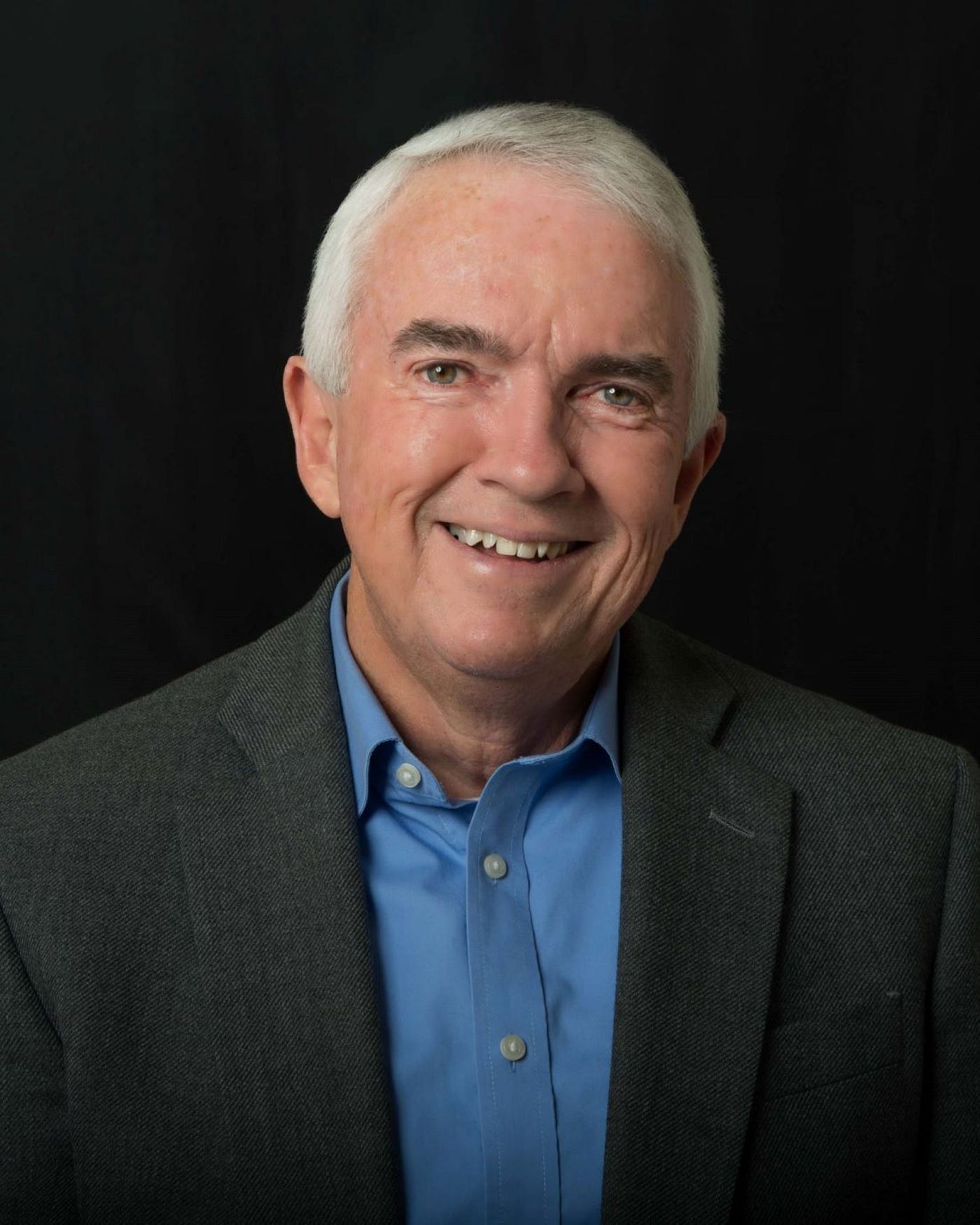
Dr. Mike Bechtle is an author and speaker who spent 34 years as a corporate consultant for FranklinCovey Co., leading over 3000 seminars on personal effectiveness, productivity and communication — from Fortune 100 companies to small business owners. A “practicing” introvert, he has written 9 books from that perspective — including the best-selling People Can’t Drive You Crazy If You Don’t Give Them the Keys, as well as The People Pleaser’s Guide to Loving Others Without Losing Yourself and his newest book, The Introvert’s Guide to Success in the Workplace: Becoming Confident in a Culture of Extroverted Expectations. His popular blog and other resources are available at https://mikebechtle.com.
Thank you so much for your time! I know that you are a very busy person. Our readers would love to “get to know you” a bit better. Can you tell us your “Origin Story”? Can you tell us the story of how you grew up?
One of my earliest memories is hearing my kindergarten teacher tell my parents, “Nothing will ever become of your son. He’s too shy.”
I don’t have a lot of early memories of school, but that one stuck. I’m sure the conversation continued, but I don’t remember hearing it. All I recall is my five-year-old’s interpretation of what I heard:
- If you’re going to succeed in life, you can’t be shy.
- I wasn’t sure what “shy” meant, but it didn’t sound good. It implied that there was something wrong with me that needed to be fixed.
- It couldn’t be fixed. It sounded permanent.
- It sounded like a defect that would make my entire life “less than.”
I didn’t know any better, so I wasn’t really suffering; I just figured I wasn’t in the same league as other kids. They were the “winners” — outgoing and friendly and warm, hanging out with others who were the same. I would hang out with the “losers” — the quieter kids and the misfits. It wasn’t because I was drawn to them but because that’s where I felt I belonged.
After all, a professional (my teacher) had declared my position, so it must be accurate.
I convinced myself that I was just a quiet person; things would always be this way, and there was nothing I could do about it. It also meant I would never be successful because I couldn’t be noisier. I saw all the outgoing kids in my school — their success in friendships, in opportunities, and in life — and knew that couldn’t be me.
I was stuck, and it didn’t seem fair. I wanted to change, but I knew that I couldn’t — and I had proof: the words of my teacher.
By the time I hit high school I had learned a few coping skills to survive. I was still quiet on the inside, but I made a few friends. The popular kids seemed to be the outgoing ones, and I was more reflective. When I found myself in conversations with them, I always struggled to think of quick responses. They would say something, and I had to pause to put my words in order. I could always come up with the perfect, clever response — about 30 seconds after they had walked away.
I knew that before I entered the adult world, I needed to figure this out. I sensed that it wouldn’t work to just pretend I was an extrovert because it wasn’t who I was — and keeping up that image all the time would be exhausting. I knew the solution was to figure out who I was created to be with my unique temperament and gifts, celebrate it, and capitalize on it. So, I focused on that challenge and tried a bunch of different solutions.
And it worked.
That’s where my journey started.
Can you tell us a bit about what you do professionally, and what brought you to this specific career path?
Well, simply stated — I write books and speak about them. My very first job was working in a morgue at a county hospital in Arizona. For a 17-year-old, that was the coolest job ever. I didn’t realize at the time how well it prepared me for a career in speaking to groups of people who seemed dead or unresponsive.
My earliest professional jobs included curriculum writing, church ministry and being a professor at a university in Southern California. Pretty much everything I did was in front of groups, which seems like it wouldn’t fit being an introvert. But I realized that being in front of the group was much easier than being a participant. If I was in the audience, I never knew what was going to happen. I might get called on and not respond well, and I’d feel embarrassed. When I’m leading the session, I’m in control of what happens — which provides a lot of confidence. In fact, one survey showed that a large percentage of professional speakers are introverts for that reason.
While working on my doctorate at Arizona State, I discovered the world of Adult Education. That led me to investigate the whole field of corporate speaking and training, and I found my niche. I spent the next 34 years working with every imaginable type of group, helping them learn the skills needed to be effective in life and work. I learned how to interact comfortably in any situation, without having to become anything other than who I was as an introvert.
I got into writing when I realized that introverts often prefer writing than talking. Extroverts are just the opposite — they prefer talking to writing because they think faster, while introverts think deeper. If someone leaves me a voicemail, I always want to send an email in response. That’s because with an email, I have a chance to make corrections and say things differently. On the phone, I can’t.
I realized that most people assumed that it was better to be an extrovert than an introvert — and that if you wanted to succeed in life, you needed to become more extroverted. To me, that was like telling a turtle they needed to hire an eagle to teach them how to fly.
I wasn’t an eagle. If I tried to become one, it would be an exercise in futility. I needed to become a world-class turtle and excel — exactly the way I was made.
Combine those two things — my experience in front of groups and my journey to become a thriving introvert, I realized that other people could benefit. There weren’t many people telling introverts that they could actually become wildly confident and successful through their uniqueness, I knew I was on a mission to provide those resources.
Thank you for all that. Let’s now turn to the main focus of our discussion about Thriving As An Introvert. In order to make sure that we are all on the same page, let’s begin with a simple definition. What does “Introvert” mean to you?
An introvert isn’t a wanna-be, second-string extrovert who hasn’t arrived yet, and they don’t need to be healed. An introvert is someone who thrives in quieter, low-stimulation environments, while extroverts prefer the opposite. While extroverts are great at talking, introverts excel at listening and thinking.
Introverts specialize naturally in deep thinking, keen observing, focused listening and strategic planning. They’re the ones who might not talk up in meetings, but they usually have the most valuable input. A wise leader will find ways to draw out those ideas to make sure the right decisions are made.
Without introverts, plans will often fail for lack of depth. Without extroverts, plans will often fail for lack of action.
Can you help articulate a few of the challenges that come with being an introvert?
- We can’t focus well in noisy environments. (Which is why we turn down the car stereo when we’re trying to find an address.)
- We take longer to make decisions because we have to process the options first. (We’re the last one to order at a restaurant.)
- We use up energy in group settings and need alone time to recharge.
- Our managers tell us to “become more outgoing” if we want to advance in the company.
- People might think we’re aloof or arrogant because we’re not as verbally engaged as others.
- It feels like an extrovert world — but there are about the same number of introverts as extroverts.
- We feel inferior to the outgoing people around us, and begin to believe we’ll never make the contribution that others make.
- Some people might be hesitant to connect with introverts because they think it takes more time and work than connecting with extroverts. (The opposite is usually true.)
I’m sure that being an introvert also gives you certain advantages. Can you tell us a few advantages that introverts have?
As introverts, we have unique skills that we bring to any organization, especially focused around deep thinking and strategy. We’re keen observers of the dynamics of a group and bring substance to any endeavor.
We have fewer friendships, but they’re much deeper — and much more loyal. Relationships are built on high trust. One introvert said, “Just understand that if you’re in our lives, you matter to us. We don’t let just anyone in.”
Introverts are usually excellent at communication when they can put their thoughts in writing. They might not be the best on a debate team, but they’re the ones who can provide the research for someone else to win the debate.
We’re highly creative because we think so much. We have a rich inner world flooded with ideas that help craft the best solutions. We don’t understand the value of brainstorming sessions because it’s happening in our heads all the time anyway.
We’re quiet on the outside but noisy in our heads.
Put us in a quiet environment and we’ll get exponentially more accomplished.
What are the “myths” that you would like to dispel about being an introvert? Can you explain what you mean?
Introverts are unfriendly and don’t like other people. We like people just as much as extroverts do — just in smaller doses. Our strength is to reflect on ideas before sharing our thoughts, not to jump in with whatever pops into our heads. We listen well, then process alone.
Introverts can’t be leaders. Most managers and leaders (up to 96%) are extroverts, but that doesn’t mean they’re more effective. Extroverted leaders work well with more passive employees who need direction, while introverts do great leading proactive employees, “validating their ideas and listening carefully to ideas from below.” (Adam Grant)
Introverts can’t be good at certain roles like sales, top management or public speaking. When I encounter a high-energy salesperson, my defenses go up. I don’t mind them being friendly, but my first thought is, “They’re pretending to like me so I’ll buy from them.” They think an extroverted, friendly approach will convince me to buy when the opposite is usually true. An introvert can use their own unique personality to succeed in any role if they’re willing to work on crafting their skills. It’s always best to pick a role for the energy it gives you, not for the money.
Introverts aren’t good at networking. We’ll fail if we try to network like extroverts. Our strength is in building real, genuine relationships with people, not just crafted techniques. It’s something introverts specialize in, which can make us the best possible networkers — while being true to ourselves in the process.
Do you have any role models who are also introverts? What have you learned from them that can help introverts navigate the challenges and benefits of introversion?
There are a ton of possibilities — Lincoln, Gandhi, Einstein, Spielberg, Rowling, etc. But for me, it’s Susan Cain. She gave a TED talk in 2012 called “The Power of Introverts” — which is still in the Top 10 list years later. She used her own unique introverted strengths to help other introverts recognize the value of what they have to contribute. Through her best-selling book Quiet, millions of introverts have been able to give up comparison and step up to the plate as world-class contributors in any situation.
She showed us that we’re “enough.” And that we can be “more than” when we capitalize on our uniqueness.
Here is the primary question of our discussion. Based on your experience and success, what are the “Five Things Introverts Need To Thrive & Succeed In A Society That Seems To Favor Extroverts”?
1 . Learn to speak “Extrovert.”
My son is in the restaurant business. He wanted to learn Spanish so he could communicate with his Mexican kitchen workers, but also wanted to understand how they think and what their culture is like. So, he moved to Mexico for a time where he took immersion Spanish classes, then stayed and worked among them for a while. He became fluent over time, and now has a great relationship with his team because he knows their language and understands their world.
As introverts, it might feel like we’re living in a foreign country. Our daily life in society is an exercise in cross-cultural communication. We don’t speak extrovert, and extroverts don’t speak introvert. It would be easy to complain that people don’t see the value that introverts bring to the world, and they need to wake up and recognize it — but that’s pretty much out of our control. It’s easier if we take the initiative to learn their language and strive to understand their culture, care about them and respect them for exactly who they are without irritation.
We’ll never become extroverts. But the more we learn to communicate with them, the easier it will be to thrive in their world.
2 . Challenge your self-talk. Most of us introverts feel like we’ll always be limited in what we can do because we’re not as outgoing as other people. It’s like we’re on a mission to survive, not to thrive. It’s a victim mentality, and we stop reaching out for the things we’re passionate about. It becomes our default setting, and we settle for an “OK” life and give up hope of ever adding much value to others. We feel like we’re in the minor leagues, but just don’t have what it takes to get in to the major leagues.
The key is to become proactive, which is the opposite of being reactive. We don’t have to just react to what happens around us; we take action to change the things we have control of and learn to accept and adapt to the things we don’t have control of. It’s like the old Serenity Prayer: “God, grant me the serenity to accept the things I cannot change, the courage to change the things I can, and the wisdom to know the difference.”
Our temperament doesn’t change, but our skills can grow. That’s why we need to challenge our self-talk and choose a mindset of constant growth and skill development.
3 . Move from comparison to contribution. There are just as many introverts in society as extroverts. But since extroverts are the ones doing most of the talking, it feels like we’re in the minority. We’re just not as obvious because we think more than we talk (we’re fluent in “silence”).
When we compare ourselves with the success of others, we might feel like we need to become more like them to have our own success. But copying someone else robs the world of the unique contribution that only we can bring. Our greatest contribution comes from becoming the best possible version of ourselves — so that’s where we need to focus our energy.
4 . Capitalize on curiosity. Have you ever had a long conversation with someone where they did all the talking and you did all the listening — and later they tell someone else what a great conversationalist you are? Listening is an introvert’s default setting and our superpower — our strongest resource for building trust in relationships.
It also makes conversation easier. We don’t need a ton of topics to talk about; we just use our curiosity to ask good questions, then genuinely listen to their responses. Then we use follow-up questions to go deeper, based on what they just said. We don’t just play ping-pong with our ideas, tossing them back and forth; we stay curious and go on a treasure hunt.
Assume that every person you talk to knows something you don’t — and make it your job to find out what that is. Ask clarifying questions and make fewer statements in every conversation. It’s a great way to connect with others in way that’s comfortable for you and engaging for them.
5 . Live in your strengths. Don’t invest energy wishing for the strengths of others. Determine what unique strengths you actually have, then make a list. Consider things like:
- I’m a good listener.
- I’m a deep thinker.
- I’m a natural observer.
- I’m careful and precise in what I say.
- I’m sensitive to non-verbal cues in others.
- I take relationships seriously.
Post it where you can remind yourself often of who you really are. Every day, find a way to grow in one or more of those areas, and over time you’ll be able to thrive in an extrovert-scented world.
How should an introvert navigate social relationships and networking, activities that are often touted as extroverts’ forte? Do you have any advice for introverts in these areas?
To an introvert, going to a networking event feels like swimming with piranha. The chance of getting eaten alive feels high, so why would we want to do that? Well, we have to redefine networking. There’s no value in meeting a bunch of people we don’t know so we can impress each other and trade business cards; it’s to build real relationships with real people. That’s something introverts specialize in.
So don’t feel like you have to meet everyone in the room. Just pick one or two people to connect with and have a deeper conversation. Look for those standing by themselves, because they’re probably introverts. They’ll be relieved that you took the first step. If it’s a work event, look for people you don’t know who might be in a different area. You’ll have a lot more to talk about, because you’re exploring new territory.
What are some practical tips you can offer to introverts who want to succeed in the workplace, which is often geared towards extroverted behaviors?
Based on all the other things we’ve talked about, the key is to be completely yourself. That can be tough when the whole environment seems to be built around extroverts: an open-concept work area where you can’t get the privacy you need, performance evaluations that tell you to be more outgoing if you want to advance, and to speak up more in meetings. In other words, they’re saying, “If you want to succeed, become an extrovert.”
Look for ways to accomplish the goal by creatively tapping into your own uniqueness. For instance, you don’t have to be constantly talking and interacting during a meeting. If you make one contribution in each meeting that adds value, you’ll be seen as a contributor. The easiest way is to listen carefully, then ask a thoughtful question. That gives others something to talk about, and you’ll get a reputation for bringing up questions that take discussions in a new direction.
If you’re on a virtual call and want to say something valuable, be the first to speak up. Usually we let others go first, then squeeze in our comments when we can — which can be uncomfortable. Go quickly and go first, and you set the tone for others — and you’re seen as taking initiative.
If an agenda is sent out before meetings, read through it to see what you might bring up that adds value. Most people won’t look at the agenda, so you’ll have a chance to prepare your comments.
Have you noticed any specific ways that being an introvert affects mental health or overall well-being? Any tips for introverts to maintain good mental health?
The key for an introvert is to manage their energy. Both extroverts and introverts have the same amount of time and have to choose what to do with that time. But energy is the big variable.
We all use energy in social settings, in the same way a car uses fuel to travel. Both temperaments have to refuel. But extroverts refuel their energy tank when they’re around other people, while introverts refuel by spending time alone.
If introverts don’t intentionally find ways to pull away from others to recharge, they’ll run out of gas. If they run out of gas, it doesn’t matter if they’re a Volkswagen or a Lamborghini — they’re not going anywhere.
Most people build their calendar based on their availability. If there’s open time, they fill it with whatever others want from them, thinking, “Well, I guess I’m free, so I need to say yes.” A better way to decide is to base it on how much energy will be needed, and if you’ll have it at that time.
So, plan your week before the week begins, adding appointments with yourself so you don’t fill your time with other people’s demands. When someone says, “I need to connect tomorrow morning a 9:00,” but you’ve already made an appointment with yourself, you can simply say, “I already have a commitment then, but I’ve got 30 minutes at 11:00. Would that work for you?” You don’t need to explain or justify the reason; just say you can’t make it.
In your opinion, are societal views on introversion changing? If so, how do you think this impacts introverts positively or negatively? Can you please explain what you mean?
I think they are changing in a positive way, but there’s a lot of inertia and presumption to overcome. This kind of mindset change happens in a slow-cooker, not a microwave. Most extroverts still believe that introverts would be happier if they could become more outgoing, and they wouldn’t want to be like them. As a result, introverts feel the pressure to perform like extroverts, but it doesn’t make their life any easier. That’s not who they are, and no one has told them it’s OK to be themselves — unless they’ve been exposed to some of the mindset-changing ideas about the power of introverts.
Can you please give us your favorite “Life Lesson Quote”? Can you share how that was relevant to you in your life?
Susan Cain said, “There’s zero correlation between being the best talker and having the best ideas.” That was a game-changer for me because it summarized succinctly the difference between introverts and extroverts, and showed how much both are needed. If we all understood that, it could change everything.
You are a person of great influence. If you could start a movement that would bring the most amount of good to the most amount of people, what would that be? You never know what your idea can trigger. :-)
Introverts tend to be intimidated by extroverts who think fast and respond quickly. It feels tough to compete when your strength is reflection and processing. If every introvert built a genuine relationship with one extrovert — becoming actual friends — the door opens for both to learn from them and truly appreciate the value each other brings.
I’d call the movement, “Take an Extrovert to Lunch.” An extrovert is always open to a conversation, but the introvert would need to initiate this. It would be with an agenda the introvert provides, which would be to intentionally explore what it’s like to live in the other person’s skin. They could both share their possible misconceptions about the other temperament, then hear the other person’s explanation.
It wouldn’t be a one-time thing, but a regular experience of cross-cultural communication. If the motives are genuine (to understand instead of convince), it builds trust and respect. They’ll both carry that understanding into their other relationships, which will influence others by example.
How can our readers further follow your work online?
I write a bi-weekly newsletter/blog on my website (link in my bio above), as well as links to all my books, courses and speaking opportunities. Put my name in on Amazon and all my books will show up, too.
Thank you so much for sharing these important insights. We wish you continued success and good health!
Thanks for the opportunity!