When I was in my teens and twenties, I did a lot of extra work just to make money. And the rule of getting continuous extra work is not to bother the stars of the film in any way.
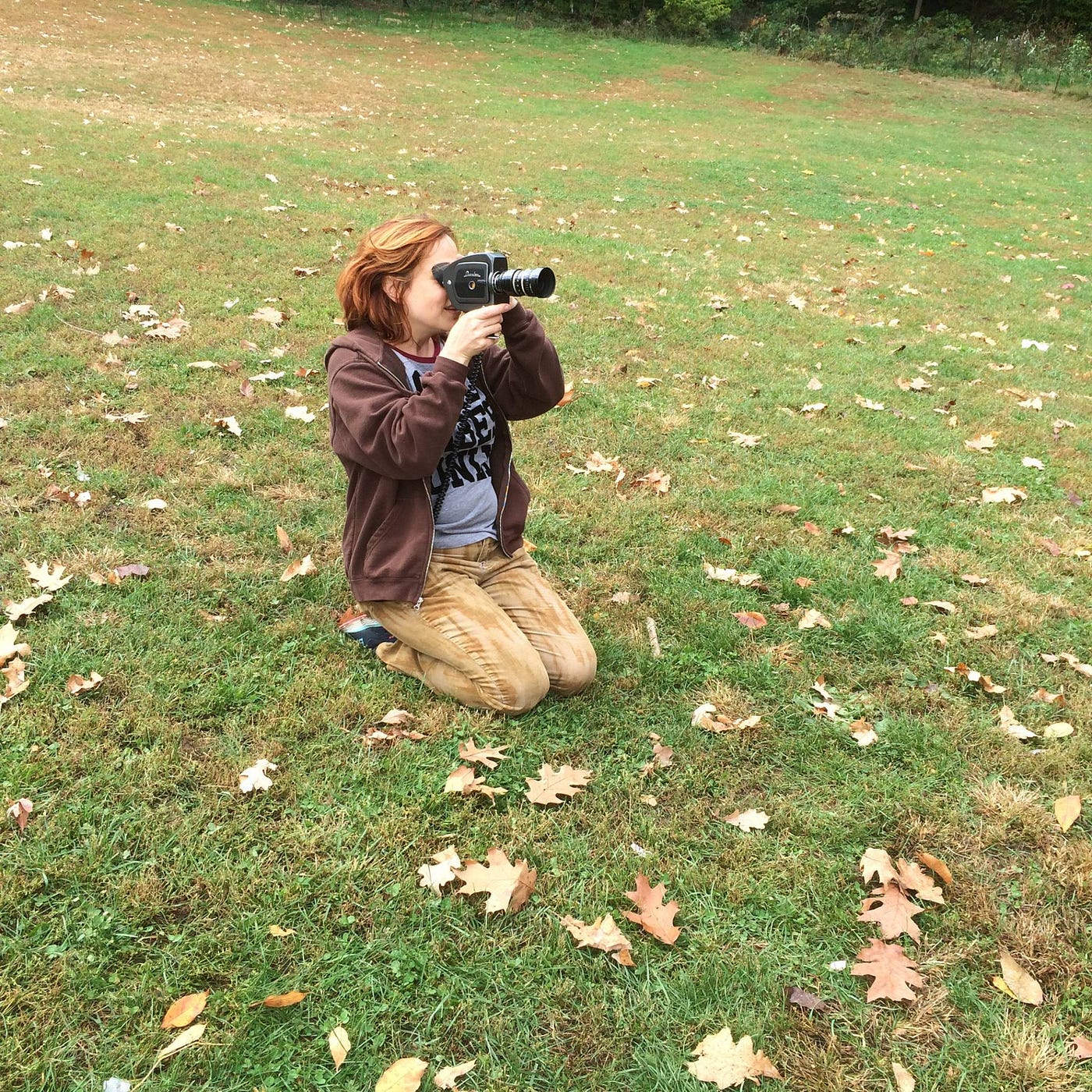
As a part of our series about “Filmmakers Making A Social Impact” I had the pleasure of interviewing Shari Berman.
Shari is an award-winning filmmaker, and her features include MY LIFE AS ABRAHAM LINCOLN, SUGAR!, and DETENTION 101. She edits all her films and began editing as a small child by cutting puzzle pieces to make them fit as she thought best, creating some very strange pictures. Shari knew even then that she was on to something and has embarked on a life of making one weird picture after the next.
Thank you so much for doing this interview with us! Before we dive in, our readers would love to get to know you a bit. Can you share your “backstory” that brought you to this career?
Igrew up in grew up in Co-op City in the Bronx and went to LaGuardia High School for the Arts (the “Fame” school), studied outside the school with Jack Romano, and later studied Theatre Arts in college. Throughout my high school and college years, I discovered that I was the person people would turn to if they didn’t understand what a director was asking of them. Jack would explain something to the class, and then the class would all turn and look at me with hope in their eyes. Jack would say, “Shari, please explain to them what I want here,” in his very heavy Cuban accent. At college, the same thing happened with a visiting director. He would attempt to explain things to the cast, they would turn to me, and he would say “Shari, please explain.” And after college that continued in other productions.
I realized that I should be directing, but I also realized there was no money to support myself in the theatre, though I did have this fabulous idea to do Chekhov in an experimental theatre style. An actor friend talked me out of it and said, “Get a camera.” So, I did. I had no training. I just bought an inexpensive prosumer camera, and a couple of lav microphones, and made my first film, a mockumentary.
I decided I would emulate John Cassavetes and made a film that was improvised by the actors. It was quite clever in that each actor got a bio that told them what they thought of everyone else, but no one was allowed to look at anyone else’s information. This made for some real-life awkward moments. I had a general arc planned out in my head of the beginning, middle, and end. Then, I shot over 50 hours of footage that was pretty much all unique, as I didn’t want the actors repeating scenes. Then, I pieced it together, going from my camera to a separate used digital tape player I bought from B&H. I didn’t know anything about editing software, so this seemed to be the easiest and most affordable solution. Then I took my two- and half-hour film to an editor who, by the end of working with me, asked me why I didn’t just edit myself. I think I frustrated him because I kept coming up with ideas of how to move the clips around and make things work better and kind of just used him as a technician. I realized then I was onto something, and this is where I belonged.
It has been said that our mistakes can be our greatest teachers. Can you share a story about the funniest mistake you made when you were first starting? Can you tell us what lesson you learned from that?
Well, as said earlier, I just jumped in with no formal training, and software was not as advanced as it is now, where you could fix lighting errors in post or mask them with looks or other crazy stuff you can easily do now if you are creative and able to think outside the box. So, I worked for a couple of years on this planned feature film (that I thought was going to launch me and “my actors” into great careers. It had style, it had wonderful actors, it had humor…it lacked technique. I thought I was all “Dogma style” and would be heavily respected by people who would recognize that I was the next John Cassavetes. Then I realized three things: (1) it was under an hour in the end and was too long to be a short and too short to be a feature, (2) it was entertaining to watch but really was bad filmmaking, and (3) no one wanted the next John Cassavetes. I still love the film, and it played several festivals. And later, after I made my actual first feature, I added in another character who anchors the story by commenting on it and turned it into a full feature timing-wise, just to do it.
Who are some of the most interesting people you have interacted with? What was that like? Do you have any stories?
Some of the most interesting people I have interacted with are not particularly famous. SUGAR! starred Tony Award winner Alice Ripley and SAG Award winner Robert Clohessy with the wonderful Kathryn Danielle Hirsch in a major supporting role. All three are wonderful and incredibly talented actors. But the film also starred June Millington and Sheila Earley. Both women are highly respected as musicians. June was a member of the original all-girls band “Fanny,” and Sheila is a jazz drummer who played with the Duke Ellington Legacy band. It was so interesting to direct musicians in a film. They are not actors and made it incredibly clear that they were not actorsSheila would ask me to give her line readings, and June would say, “You can cut any of my lines.” In the end, I think they both came across as great in the film. And they were such a joy to work with.
A small side story. When I was in my teens and twenties, I did a lot of extra work just to make money. And the rule of getting continuous extra work is not to bother the stars of the film in any way. One time, I was working on The Devil’s Advocate, and I was placed next to Al Pacino. It’s just me and Al Pacino, and he steps on my foot. He realizes, and he apologizes to me. And I respond immediately, “Oh that’s okay. No worries.” Inside, I was thinking: Please don’t let anyone see me talking to him, I just need a paycheck and don’t want to make trouble. He saw the terror on my face, I’m guessing, and said, “I stepped on your foot. That’s not okay, and I am apologizing, and you deserve an apology.” And I just said, “Thank you.” and I smiled, and then he smiled. It was a nice human moment.
Which people in history inspire you the most? Why?
It’s not so much people who inspire me in my work but the work they create and the achievements they accomplish. Celebrity worshipping and people who speak of people they never met influencing their lives in a personal way kind of frightens me. People worship people they don’t know and later find out they are nothing like they imagined. They are worshipping someone they created in their mind.
What inspires me are the works of other filmmakers and the achievements of people who fight for people’s rights. The films that inspire me the most are films by Guy Maddin, Frederico Fellini, and Charles Chaplin. Each of these filmmakers created work with a unique style and made a statement about the world. They tackled social issues and personal issues and did it with a sense of humor. None of them were trying to be like anyone else. They are incredibly authentic filmmakers
Let’s now shift to the main focus of our interview, how are you using your success to bring goodness to the world? Can you share with us the meaningful or exciting social impact causes you are working on right now?
I firmly believe that we are here on this planet to help others and make the world a better place. Over the years, people have supported me in my filmmaking efforts, whether through emotional support or mentorship, and I pay that forward by supporting others. I have my own Vlog on YouTube called Indie Inclinations. Through that channel, I share all my thoughts and views and honest knowledge of the indie film world with other filmmakers. This channel offers information for people who are green to the industry and support for people who have been doing it for a long time. The independent film world is not easy. Having made numerous feature films, I can say that I have had my fair share of ups and downs. There are days when you think, “It is impossible to keep going.”, “Why am I doing this?” and “I should probably find a nice, padded cell to lock myself away in. Perhaps my dark editing room will suffice.” And when those days happen, it is so important that there are people out there cheering you on and keeping you going.
Through my work, I have always focused on the unfairness of the system. We are taught fairness and equality in kindergarten, and when we all step out of our little bubbles of childhood, we discover it’s a lie. The world is not fair. Society is unequal. I believe in fighting for equality and fairness. I believe in being honest in my work about our world, and I like to think I offer hope that we can do better. My next feature will be A GHOST IN THE ATTIC, which is a tween film that deals with systemic racism in the United States but does it with a quirky sense of humor in a world that is realistic but off-beat. I wrote this script because, for a long time, I was volunteering in a school district as a choreographer for their musicals, and I asked a 12-year-old if she enjoyed a film she saw that weekend. She replied that it was fun, and she enjoyed it, but it didn’t have a realistic ending. This really threw me for a loop. When I was young, I didn’t think happy, perfect endings were not realistic. Children nowadays are exposed to parts of the world I never was at their age, and they are confused as to why the films they watch do not reflect the world they inhabit. So, I wrote this script, which centers on a Jewish girl who had to have a foot amputated, an Arab Muslim girl who lives in a mostly white town, and the ghost of a ten-year-old who died in the Holocaust to say “I hear you. I see what you are facing.” And to also say, “We can do better as a society.” I think narrative films with a sense of humor are a great way to reach people and teach people, quietly without banging things over their heads or being preachy. Film and all art are the great teachers.
Many of us have ideas, dreams, and passions, but never manifest it. But you did. Was there an “Aha Moment” that made you decide that you were actually going to step up and take action for this cause? What was that final trigger?
Independent films take so much time and effort to make that I feel it is not worth doing if you do not have something important to say. What gets me going is getting so upset about something going on in the world that I get mad, like REALLY mad. Angry, in fact. And, I think to myself, “I’m mad as hell, and I’m not going to take it anymoreAnd then the script just comes pouring out of me.
To give you an example, during the pandemic, we all watched as all the ugliness of society came at us. The racism, the police brutality, the white classism, the blue-collar vs. white-collar…the general lack of humanity built into our world to keep us divided. I watched the news obsessively. I looked for positives.. I cried. I stared at a wall and then I got mad.
And so, I wrote Detention 101 in one day. It was like this force was churning inside me, and it would not let up…it just kept pushing me and pushing me. The script is raw. It is a stream of consciousness. It is all my personal feelings about white classism, racism, my guilt, my hopelessness, my naïve moments, and my broken soul all of which I mock greatly. I hope that people see this film, and all my films, and know “You are not alone.” “We are all equally broken but can care and mend one another.” And, above all, LAUGH at our ridiculousness. I’m here with you for you to laugh with me and at me. We are all here on this planet together.
Can you tell us a story about a particular individual who was impacted or helped by your cause?
By talking about unfairness and inequality in my films and on panels, I have seen first-hand the impact it has. When SUGAR! was on the festival circuit, I encountered one woman after another who said, “Thank you. I have been feeling so useless. I have been feeling like my time is up though I am still here. And that film has reminded me that it’s all in my hands.” One woman came up to me after I spoke on a panel, and she said, “Do you like my haircut?” She had this cute bob, and though I was surprised by the question, I answered honestly, “Yes, I love it. It really shows you off.” And she said, “I was inspired to cut my hair off because of your film. I have been wanting to find a new style, and I have been afraid.” This woman was not just talking about hair. She was talking about her life. She was talking about the fact that her child was grown, and she was looking at herself in the mirror and thinking, “Who am I?” and “Who do I want to be?” I am hoping that the moment of taking the bold step of chopping her hair off started her on the road to embracing her own evolution and doing the things she wants to do in her life.
After releasing DETENTION 101, I received comments from people indicating that they were relieved they weren’t the only person sitting conflicted about the world, their impact in it, and feeling a bit paralyzed by everything happening around them. And that this film helped them to start talking. Talking is keyWe need to listen to each other and really hear each other. We don’t have to all agree but we need to feel safe expressing how we feel.
Are there three things that individuals, society or the government can do to support you in this effort?
My films are all about the lack of fairness and equality in the world. To support me specifically in this effort, would be to watch and share my films, subscribe to my FREE YouTube channel (Indie Inclinations), and invite me into your worlds, podcasts, etc., to talk about these things. I think the government can start treating its constituents like humans. I think society needs to take a deep breath and reset. I think that individuals can lead with kindness. That’s the most important thing to supporting these efforts, lead with kindness. REALLY do unto others as they would do unto you. And if anyone wins the lottery and wants to fund A GHOST IN THE ATTIC, I promise to do a great job.
What are your “5 things I wish someone told me when I first started” and why?
1. Be authentic. Don’t write about a cause to be with the in thing. Write about what makes you angry and what you care about, and don’t try to do what is trending in the industry. You will come off as fake and inauthentic and be unhappy with what you make.
2. Don’t count on grants. Do not think because your film has a cause, you will have private investors flocking to you. This is a sad joke and false hope. Focus on the work. Focus on using the resources you have. Focus on following your heart and your passion.
3. Art is not about cash. If you want to be wealthy, be a banker, a lawyer, or a CEO of a large corporation. Yes, you should get paid for your work, but if you want to be famous or wealthy, there are much easier ways to do this.
4. Don’t be too cautious. Don’t be afraid of being provocative and personal. Someone told me years ago the worst advice, “Keep in mind what people like and what they want to hear.” That is just propaganda. You impact people the most when you are personal, authentic, and lead with kindness.
5. Be prepared for nay-sayers. I’ve been told to “drop dead” because I spoke on issues people disagreed with. People are in pain, and they are angry, and they need to let that out. Feel bad for them and take it with a grain of salt. Remember, you are making them think; this is just how they handle it.
If you could tell other young people one thing about why they should consider making a positive impact on our environment or society, like you, what would you tell them?
Listen, it takes forever and a day to make a film. What are you going to do? Spend years cobbling together money to make the next stupid horror film or some empty piece of entertainment. Really? That’s a waste. You are here to help people; you need to care about something. Do something with the film or else you will look back and think, well that was years of my life wasted, not to mention my retirement money. If you do not have a cause or issue that comes to mind for you, dig deep. Take a class to learn about yourself. Go to therapy. FACE YOURSELF. And once you do and once you embrace your faults, your brokenness, and your wonderful uniqueness, you will know exactly what you need to make films about, or create dance about or paint about, or volunteer on behalf of. It’s in you. Let it out. YOU WILL LOVE YOURSELF FOR IT. It will give you a purpose. So, when the bad days happen, you can look and see you have made an impact, and you have so much more of an impact to make. You will be able to keep going with a smile on your face as the world throws curveballs at you, and you maneuver like a superhero to avoid getting smacked.
We are very blessed that many other Social Impact Heroes read this column. Is there a person in the world, or in the US, whom you would like to collaborate with, and why? He or she might see this. :-)
I would love to collaborate with Susan Sarandon. I admire her tenacity, her fearlessness, and her strength to stand up for what is right even when she is treated poorly for it. And yes, she’s an incredibly talented actor. From what she speaks about, the actions she takes, the lengths to which she is willing to go, and the criticism she takes for it, I believe I could learn so much from her and create great films with her.
I also would love to collaborate somehow with Marianne Williamson. She inspires me. She is brilliant, caring, and roots for the underdog. I feel we have similar views of the world and the ability to help the people of the world fix the injustices within it.
Can you please give us your favorite “Life Lesson Quote”? Can you share how that was relevant to you in your life?
When I was in middle school, I was bullied, and I was called weirdo. I told my mom, and she said, “Stop acting weird.” I told a friend, and she said, “That’s terrible. Those girls are so mean.” I told my Great Aunt Phyllis, and she said, “Embrace the weird.” and walked away, looking back at me, and nodding her head, raising an eyebrow to ensure I got the message. It was the best thing anyone could have said. Why feel bad for who you are? Why apologize for your style? Embrace it. 200%. It was very freeing because someone finally basically said to me, nothing is wrong with you. You be you. Forget about what other people think. Weirdness became my religion.
How can our readers follow you online?
Anyone who wants to join the weird revolution can find me on:
- YouTube: @IndieInclinations
- Instagram: @shariaberman
- Facebook: @ShariBermanFilms
- TikTok: @shari_indieinc
THANK YOU!
This was great, thank you so much for sharing your story and doing this with us. We wish you continued success!