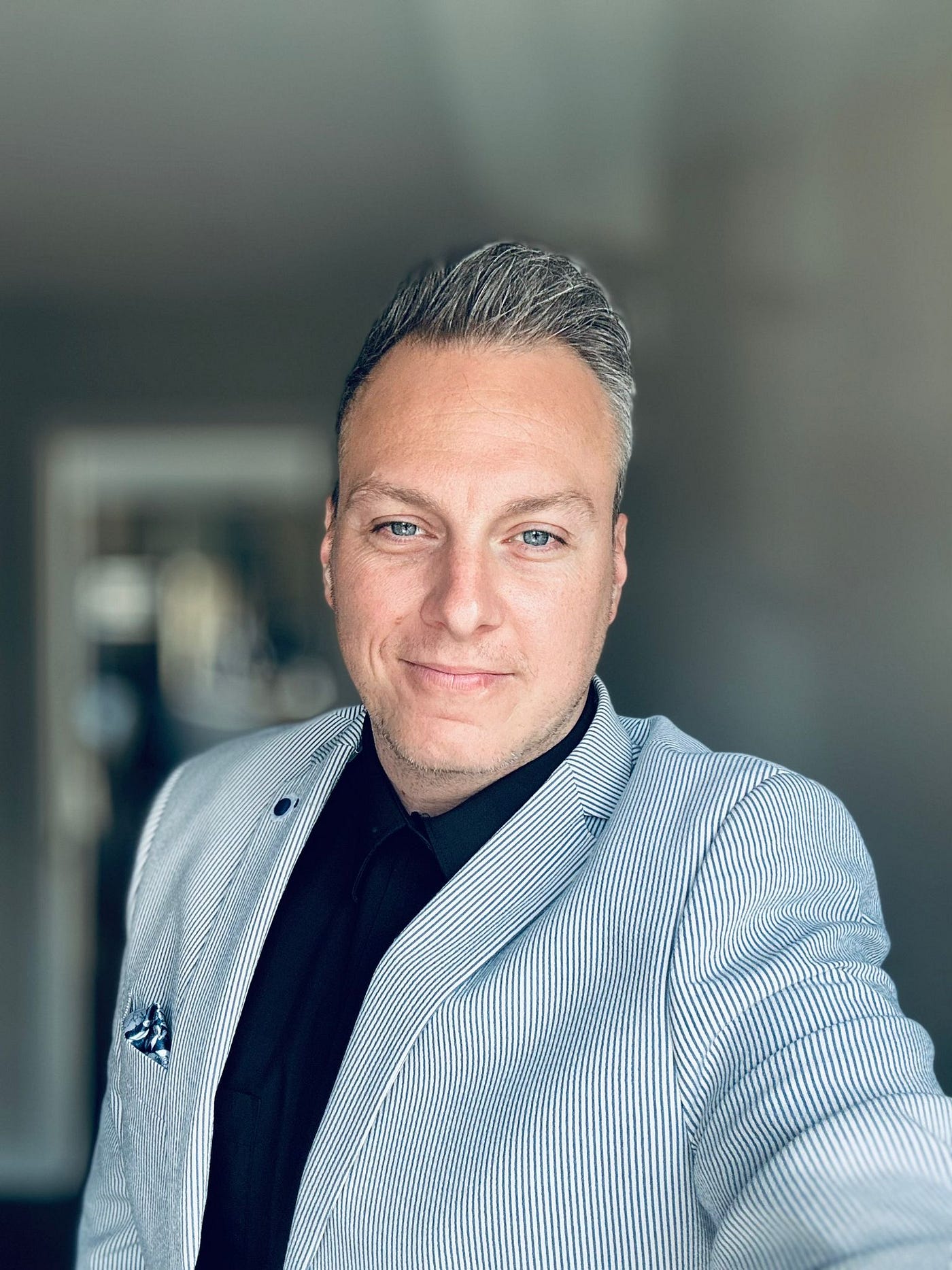
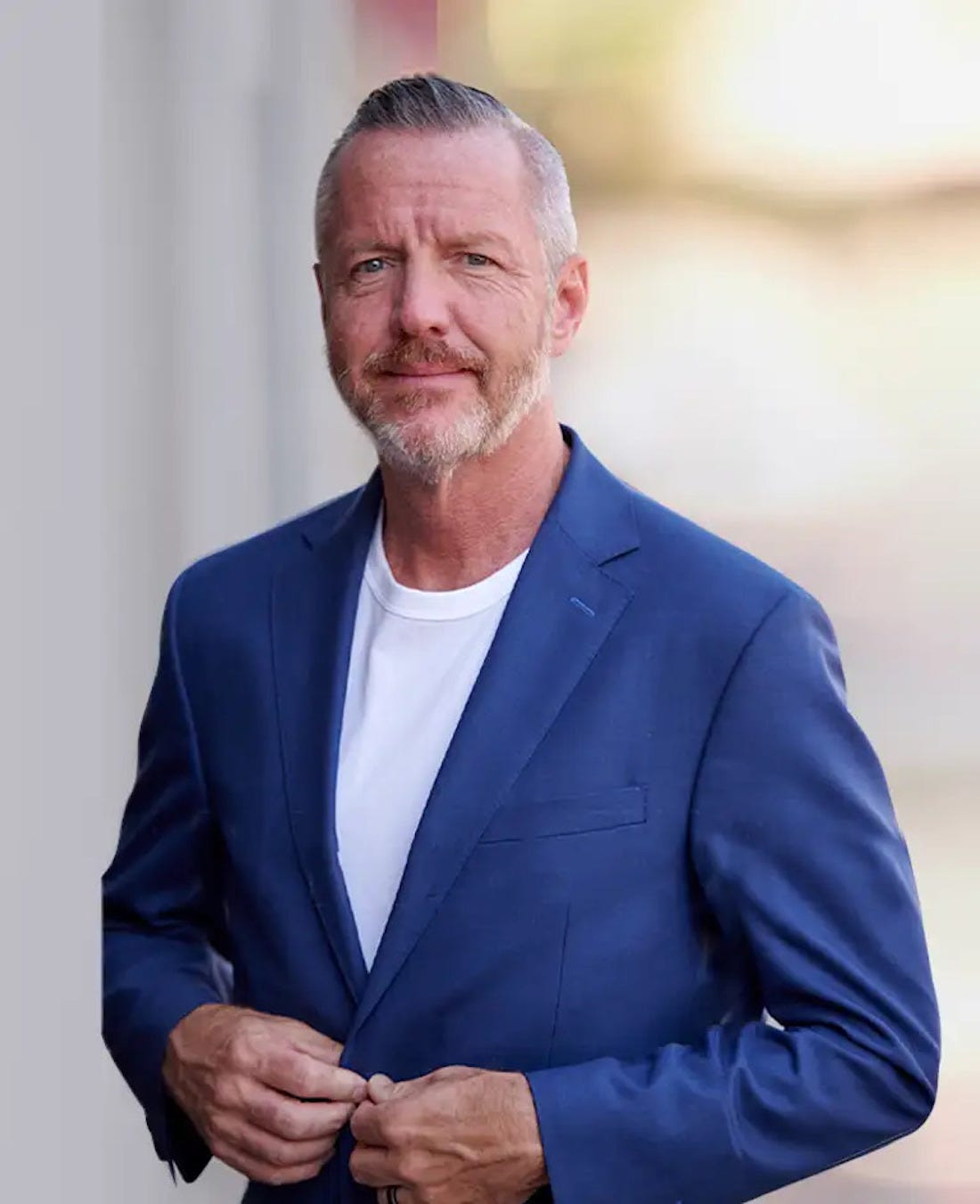
I always introduce myself as a classically trained economist who is really a frustrated anthropologist. That means I care more about why people make their decisions than about yield curves and interest rates.
As a part of our series called ‘Five Things I Wish Someone Told Me Before I Became A CEO’ we had the pleasure of interviewing Don Barden. Don was recently named one of the Top 30 Most “Transformational leaders in North America” by John Maxwell. An Atlanta native, he is a successful entrepreneur, speaker, author of The Perfect Plan, and classically trained economist who’s an internationally recognized leadership and decision-making expert. Don founded The Perfect Plan Companies, a consulting firm and book, based on his doctoral research study that has unlocked a proven method that transforms areas of frustration into transformation. www.donbarden.com
Thank you so much for joining us in this interview series! Before we dig in, our readers would like to get to know you a bit more. Can you tell us a bit about your “backstory”? What led you to this particular career path?
I am so honored to be engaging with your readers today. I am always grateful for the effort you put into sharing and inspiring people with Authority Magazine and Buzzfeed — wow, you and your team are amazing.
I always introduce myself as a classically trained economist who is really a frustrated anthropologist. That means I care more about why people make their decisions than about yield curves and interest rates. We can talk about that stuff all day, but it is boring. People are fascinating and are more fun to study. The human experience and where we are heading are more interesting than yesterday’s news.
I was born in Atlanta and grew up in the small rural suburb of Smyrna. Like everyone on the planet, my life has taken its unique path, and I love it. My career has been a combination of Jason Bourne and Forrest Gump — but more on the Forrest Gump side of things. I spent 25 years working for Wall Street-based firms, which has allowed me to travel and explore the world. At last count, I have been around the world over seven times, and that’s amazing when I consider that as a child, I never thought I would leave Smyrna, Georgia.
I spent time in Europe as a young man — specifically in West Germany, where the people I met were terrific. I was there during the Cold War, and the real challenge was that they did not believe in a better tomorrow — all they knew was today. So, they made every day the best they could. I grew so much over there that it still affects my life today. I am forever grateful for my life but also aware that others might not have it so well. Because of this, I have committed my life to serving others. As a CEO, I serve our team and our customers; as a Professor, I serve my students; and as a consultant, I serve everyone I meet. In the end, that’s what life is about, helping others.
I like to challenge people to think deeply about their beliefs and how they can consistently achieve maximum results with a pathway to cultural change. I have this unique ability to break down barriers and build a motivated force of empowered team talent. I also believe in a simple truth, if you want to get to heaven, there is only one way — to help someone else get there first.
I am the CEO and owner of The Perfect Plan Companies, diversified into Business and Technology Consulting, Portfolio Management, and Leadership Training. My books are published in over 39 countries, and I have been privileged to employ over 5,0000 people in the last few years. I was humbled and honored recently when John Maxwell named me one of North America’s 30 Most Transformational Leaders. It was John who motivated and inspired me almost 30 years ago to start my mission. It was amazing to be recognized by him and to know it all came full circle. I have been honored to serve as a Trustee and the past Chairman of the Summit Counseling Center in Johns Creek, Georgia, a multidiscipline family and personal counselling center that serves over 20,000 clinical hours per year. Additionally, I have lectured at Oxford University in the U.K., and the US Army Rangers Leadership and Personal Development Program at Fort Benning in Columbus, Georgia.
I began my career in the late 1980s when I realized I have a unique ability to be accepted anywhere I go — not because I am special but because I never judge anyone. When someone knows you are there to serve and not judge, the doors open, and the universe allows you to meet and help others. I run to work every day, hoping to meet and help someone. It is not always work-related, and it might not be evident at first, but I approach every day with gratitude and look forward to the times ahead.
Can you share the most interesting story that happened to you since you began leading your company?
Wow, what a great question. The honest answer is simple; the most exciting thing that happens is new every day. People are interesting, and they are coming to you as a leader for one reason alone — to help make their life better. People want a shortcut, not in the wrong way, but to transition your past experiences and learnings in a way that accelerates their needs of today. It’s why we have the school systems we do. Think about it; we teach kids what we know so they don’t have to go out and reinvent their lives every day. Leaders do the same thing, we teach to inspire and affect someone’s life for a better tomorrow. That alone is interesting enough, but I know it will not satisfy the question, so…
The most interesting thing that comes to mind happened in 1996 when I realized I was worried about all the wrong things. When I first met John Maxwell, he led me through a thought process that changed my life. John told me that one of the most challenging things people do is get themselves too close to the wall or the obstacle preventing them from moving ahead. Even though it is right before you, people want to know how to solve the wrong problem. We tend to throw up “Hail Mary” prayers and ask for help to get on the other side of the problem when we never bother to ask what the problem is. So, John taught me the art of recognizing and acknowledging the situation, no matter how good or bad. So instead of seeking a solution, sometimes it’s best to understand the problem.
That was one of the greatest shortcuts anyone’s ever taught — don’t be so worried about your future when you’ve been so fortunate in the past. You see things differently if you understand that an obstacle that derails you is an opportunity. As a leader, if you keep your head about you and understand what’s in front of you, you can walk around the wall, jump over the wall, or break down the wall. Then and only then do you get to see the success that lies in the future. Which, by the way, is where happiness lives, on the other side of the wall.
Can you share a story about the funniest mistake you made when you first started? Can you tell us what lesson you learned from that?
Well, it wasn’t that funny then, but it was a mistake. I was so committed to serving others that I thought everyone wanted to be served. That’s not the case. Everyone has a story and is fighting something — but that does not mean they want your help. One day I was trying my best to help someone, and an older wise Yoda-like person stepped into my life. I told them how frustrated I was, and he gave me the best advice: “You cannot expect anyone to do anything for you if they are not willing to do anything for themselves.” That tiny bit of advice hit me hard, and I smile every time I think about it. It is universal and so truthful.
None of us can achieve success without some help along the way. Is there a particular person who you are grateful for who helped get you to where you are? Can you share a story about that?
No question about it — Dan Sullivan of Strategic Coach.
Dan is one of the world’s greatest thinkers and teaches CEOs and business owners about their thinking processes. I read his books for years before becoming one of his students. I have attended his classes in Toronto for over ten years, which changed my life.
My two favorite concepts are based on his lectures. First, “Your eyes only see, and your ears only hear what your mind is looking for.” In other words, you will find what you are looking for, so make sure it is what you want. It was similar to John Maxwell’s advice years before when I realized there is no need to worry about the future — what you see as an obstacle is an opportunity if you see it correctly.
The other concept from Dan is “Who, Not How.” The idea is based on the fact that CEOs do not need to know how to do everything in their organization. They need to know who knows how to do things and let them do it. When a person becomes the “who” that can get things done, they become your hero. Everyone needs more heroes, so seek them for who they are and get out of their way.
Leadership often entails making difficult decisions or hard choices between two apparently good paths. Can you share a story with us about a hard decision or choice you had to make as a leader?
Again, great leaders thrive when they rest upon the shoulders of other leaders. There is so much we can learn from each other that it improves our lives. If we can commit to serving others, decisions become more manageable, but we all need a process. Andy Stanley once said that the most significant question to ask yourself when faced with a decision is not to look for a good decision but seek a wise decision. To do so, you ask yourself:
“In light of my past experiences, current circumstances, and future hopes and dreams…what is the wise thing to do?”
This simple question has driven me countless times when I face difficulties because it not only navigates the situation but seeks harmony. All three scenarios (past, present, and future) must be affirmative. Two out of three does not work — only pure harmony knowing that your past experiences, current situation, and future hopes and dreams support the decision can bring happiness. It works.
Ok, thank you for that. Let’s now jump to the primary focus of our interview. Most of our readers — in fact, most people — think they have a pretty good idea of what a CEO or executive does. But in just a few words, can you explain what an executive does that is different from the responsibilities of the other leaders?
A CEO’s (or any senior executive’s) job is to be the steward of the organization. This means they recognize that it is a limited amount of time to advance the company’s mission and serve as many people as possible. Many people mistakenly think the CEO is focused on the balance sheet and income statement; while that is undoubtedly an integral part of the job, it’s based on the foundation of being a steward. A steward, in many cases, reports to a different authority. Often, it’s shareholders or boards of directors, and in some cases, it’s their own family. Still, in the end, a CEO realizes that their primary job is to care for the company as it progresses toward its ultimate mission.
Another mistake is thinking that a CEO is the company’s only servant leader. All steward leaders are servants, but not all servants are steward leaders. A CEO’s role is to be the steward leader who is set to serve the other leaders. Therefore, a CEO must run to work every day with the anticipation of what they can do in a short time to guide and steward the company, the team, their customers, and its stakeholders to a better tomorrow.
Another area in which the CEO spends a lot of time and energy is protecting the brand. The first job of every CEO is to be the steward and the caretaker of the brand. Nothing is more important than reputation and delivery of the core compass of the organization. The second role of a CEO is to choose their successor. A CEO knows from day one who the probable CEO’s replacement is and begins building a team of people who can become the next steward at any given time. While most people see only the role of leadership, great CEOs know their role is to steward and prepare for the future. Sometimes that is harder than the outside world can ever imagine.
What are the “myths” that you would like to dispel about being a CEO or executive? Can you explain what you mean?
While Hollywood likes to talk about CEOs as ruthless, I find this the opposite. I’ve never met a top-performing CEO that didn’t care deeply about every single one of their employees and their mission. Most CEOs stay awake at night worrying about minor things. In many cases, these are things that affect their employees’ lives. The most incredible honor for any CEO is to provide jobs and impact the livelihood of the families on their team. This is never taken lightly.
The media loves to pick on a few hyper-performing CEOs who have gone bad, but the reality is that almost all CEOs care more than the mythology created by the media. A point worth noting is understanding that most CEOs come from humble backgrounds. They worked their way up just like everyone else. They know what it’s like to stare at the ceiling in the middle of the night and worry about mortgages and car payments. In the end, they realize what life is like for their team and do everything possible to serve them.
Great CEOs do care. They understand the role of a steward and a servant. Most great CEOs put their teams above all else, including their customers. They know that customers only exist if the team is well cared for, so the focus is where it should be, serving those who serve others.
What is the most striking difference between your actual job and how you thought the job would be?
The honest answer is that no one knows what the job is like until you’re there. The best news is that whatever you think it will be like, you’re mistaken. The truth is that the job, the role, and the responsibility are better than anything you could have imagined. Coming to work every day knowing that you are a steward of a great organization full of people driven toward doing the right thing is not only an honor but also a privilege.
Words can never express the true meaning of what it feels like to be on the job. There are good days and bad days. There are highs and lows, but nothing compares to knowing that you provide the highest level of trust to your team and customers. To serve others is the greatest job in the world, and no imagination will ever prepare you for reality.
Do you think everyone is cut out to be an executive? In your opinion, which specific traits increase the likelihood that a person will be a successful executive, and what type of person should avoid aspiring to be an executive? Can you explain what you mean?
Leaders are not born; they are made. Everyone has it in them to be a leader or a corporate executive as long as it aligns with their hopes and dreams. There’s never judgment to those who honestly pass on the role — it is their life to live. The reality is that years of experience prepare you for when you are called, and if you choose to accept the role, you will be ready.
One of my favorite sayings revolves around fear and courage living in harmony. The type of person necessary to lead is a person who’s willing to commit to serving others. They were also ready to be courageous even in the most fearful moments.
“Fear is what happens when you wet your pants; courage is what you do when wearing wet pants.”
It doesn’t mean you have to be a hero, but it means that your commitment encourages or supersedes your personal needs. Once you have mastered these two traits, you commit to increasing your capabilities. A CEO’s role is never ending when it comes to learning and fine-tuning your skills. Executives at every level must choose a life of constant learning. This means you surround yourself with mentors and the opportunity to grow. One of the best traits of any leader is to recognize that you never want to be the smartest person in a room, but you do want to be in a room where everyone is getting smarter. That means you have to be able to check your ego.
When you acquire commitment, courage, and capability, you can have enough confidence to reset and start over again. These are not necessarily traits wired into your genetics but a product of your experience and desire to serve others. Everyone has it inside of them if the path becomes available. When the path provides you with the good fortune to serve other people, you find that luck favors the prepared, and that is not an accident.
What advice would you give to other business leaders to help create a fantastic work culture? Can you share a story or an example?
The best leaders commit to providing the best possible place and space for teams to collaborate. They support them with a process to ensure the right fit for the right people in the right job.
When you commit to excellence, foster a creative culture, value open communication, and encourage new ideas, and innovation, people feel safe, secure and part of something exciting.
Culture reflects why the company does what it does, and strong work cultures never shy away from having their teams ask, ‘Why?’.
In our organization, everyone has permission to question things, and we encourage them to do so. Our commitment to a culture of creativity is what separates us from others. Everyone on our team has permission to ask, “why?”. The biggest “Why?” question is always, “why do we do it this way?”
By asking the ultimate question, we are forced to look deep inside ourselves and come up with creative solutions to solve problems most people never know they have. The internal drive to better ourselves is always the fuel for the best culture, and culture is usually a reflection of leadership.
How have you used your success to make the world a better place?
As I mentioned earlier, the only way to get to heaven is to help someone else get there first. I don’t want to insult doctoral issues around religion, but if we commit to serving others along the way, I am 100% sure things will work out for everyone involved. One of our fundamental tenets at The Perfect Plan is to give forward without expecting anything in return. We do this through community and charitable giving that has nothing to do with our business or customers. Don’t get me wrong — we participate in customer events, and we buy as many Girl Scout Cookies as possible, but in the end, that’s an act of giving back — we prefer to give forward.
Our objective was to provide for the moms and dads in the military, who were doing very, very tough jobs serving this great nation and the world. It began as most things do by asking what we can do to help make their tomorrow better than their today. When we realized that it would be helpful to serve their children, we began the scholarship program. To date, we have provided over 150 scholarships to children of United States Army Rangers Special Forces Units. It has been a fantastic experience to see these kids grow.
We have also provided access for over 1,000 teenagers to receive mental health care treatment. This is done with honor and without judgment. It began a few years ago when we realized how important it was to help support young people as they figure out how to navigate the world. Not everyone has an environment that supports them and provides capabilities, so we decided to do something about it.
We also support KultureCity and its efforts to assist and aid families of autistic children and those affected with sensory needs, to create sensory inclusive spaces and provide sensory awareness training. We’ve had the opportunity to work with some great organizations and open minds to creative ideas that allow families to enjoy concerts, sporting events, and other extracurricular activities that they might have felt unable to in the past.
These actions have nothing to do with our core business but have everything to do with serving other people. When woven into our culture and expectations, it motivates and inspires the team to do more and attracts other like-minded people who want to do the same. Again, culture drives everything, and the more control we have over creating the ability to serve others, the better it is for everyone.
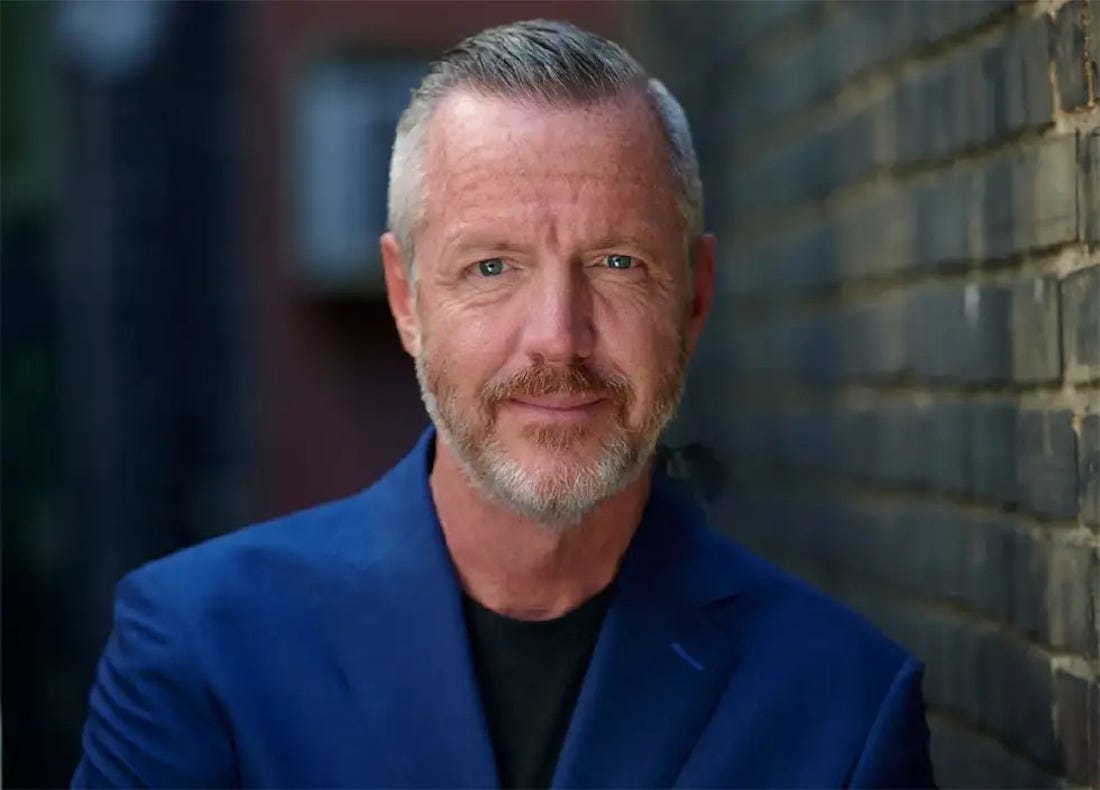
Fantastic. Here is the primary question of our interview. What are your “Five Things I Wish Someone Told Me Before I Became A CEO” and why? (Please share a story or example for each.)
Well, your question deserves a semester’s worth of attention for each answer, but here you go…
1. Every CEO has an immediate responsibility on their first day in the role to:
a. Commit to protecting the brand at all costs.
b. Immediately begin to choose their probable successor.
2. Not everyone is on the same team. Your inner circle might be only 4 or 5 people — keep it tight and allow them to do their jobs.
3. The primary role of a CEO is to build a team of “Who, not How,” i.e., The CEO does not need to know “how” to do everything — they need to hire the “who” that does know how to do things.
4. There is a difference between a Steward Leader and a Servant Leader — You are a steward. All stewards are servants, but all servants are not stewards.
5. In the end, you must be the company’s best salesperson. To do so, you need to know the 4c’s: Commitment, Courage, Capabilities, and Confidence. You must commit to the future and must have the courage to fulfill your mission. You always seek the capabilities to make it happen; then (and only then) can you be confident.
You are a person of great influence. If you could inspire a movement that would bring the most amount of good for the greatest number of people, what would that be? You never know what your idea can trigger.
That’s an excellent question because we just began a campaign that will significantly impact Ontario, Canada. I’ve been travelling there for years, and we’ve acquired a few customers that are amazing people. They inspired us to look deeper and expand our presence in the market. Knowing our culture and who we were, we wanted to create a mission that motivated and inspired not only ourselves but our clients. It didn’t take long before we could come up with something special.
Most business owners, especially small businesses, work hard because they believe that they can affect the lives of others. So, the question became simple, how do we help them help more people? Our consulting business works with small medical and dental practices that are privately owned and want to serve people.
One of our fundamental tenets is that “money does not make you happy, but it sure affects everything that does make you happy.” That’s not bad; it’s just the truth, so we decided to incorporate that into a campaign that can help and serve more people.
So, we are committed to helping 1,000 small business owners increase their personal income from their business to exceed $1 million per year…but with one small caveat.
We speak to these business owners and ask them if they would be happy to make $1,000,000 a year. We’ve yet to discover anyone who said no. We then asked them if they would be satisfied with $1,100,000 annually. Again, everyone says yes, so this is what we do. We promise our customers that we will do everything in our power to help give them the capabilities to increase their personal income to $1,100,000 a year, as long as they promise to give away $100,000 of it.
This seems simple, and they still make the $1,000,000, but something magical happens. We did the math, and if we have 1,000 clients giving away $100,000 apiece, that creates over $100 million in charitable contributions to the area. We don’t care if it goes to a charity, a church, or if they walk down the street handing out $100 bills, all we care about is creating a community of givers. We want 1,000 people serving as many people as possible and making as big of an impact as possible.
The campaign recently launched and has already begun to exceed all of our expectations. Why? Because it was never about us but about the giver. Everyone wants to give, but they need to learn how, so we help them get there. Our conclusion is that there is no downside to giving away $100 million in a community. That has to be good.
Can you please give us your favorite “Life Lesson Quote”? Can you share how that was relevant to you in your life?
Dan Sullivan summed it up best in his theory “Multiplication by subtraction.”
Simply put, it means that there are times in your life that to increase your capabilities, you will have to subtract things from your life. This might mean a job change, a client who doesn’t fit anymore, or certain friends and the people you hang out with. Either way, it’s tough at the time, but in the end, you realize that most things in life are seasonal. I have learned that at the end of your days, you will have a few select people who have been with you all along. Those relationships are a blessing. The other people who came and went in your life are also a blessing but were never intended to be long-term.
A follow-up lesson is tied to the enlightenment that occurs when you realize your role as a leader. In life, and as a leader, you will plant seeds for trees that you will never be able to enjoy the shade…but others will. That’s ok as well.
We are very blessed that some very prominent names in Business, VC funding, Sports, and Entertainment read this column. Is there a person in the world, or in the US with whom you would love to have a private breakfast or lunch with, and why? He or she might just see this if we tag them
Wow — There are so many. One past stand-out occurred when I had the honor of meeting Stan Lee years ago over breakfast, which made my bucket list. I have had the privilege of meeting so many great people worldwide. From leaders we all know, to my favorite people — those we do not know. I get to go to work every day knowing I will meet new people and make friends. It is a privilege I will never forget.
Is there one more? Yep, Condoleezza Rice. I am working on a new book for release next year entitled “Here Come the Girls,” it focuses on the role of women in global leadership. I would love to meet her and hear her thoughts. I also understand she is an NCAA College Football fan (US), so we can discuss my beloved Georgia Bulldawgs ☺ (Go Dawgs!)
Thank you for these fantastic insights. We greatly appreciate the time you spent on this.
About the Interviewer: Douglas E. Noll, JD, MA was born nearly blind, crippled with club feet, partially deaf, and left-handed. He overcame all of these obstacles to become a successful civil trial lawyer. In 2000, he abandoned his law practice to become a peacemaker. His calling is to serve humanity, and he executes his calling at many levels. He is an award-winning author, teacher, and trainer. He is a highly experienced mediator. Doug’s work carries him from international work to helping people resolve deep interpersonal and ideological conflicts. Doug teaches his innovative de-escalation skill that calms any angry person in 90 seconds or less. With Laurel Kaufer, Doug founded Prison of Peace in 2009. The Prison of Peace project trains life and long terms incarcerated people to be powerful peacemakers and mediators. He has been deeply moved by inmates who have learned and applied deep, empathic listening skills, leadership skills, and problem-solving skills to reduce violence in their prison communities. Their dedication to learning, improving, and serving their communities motivates him to expand the principles of Prison of Peace so that every human wanting to learn the skills of peace may do so. Doug’s awards include California Lawyer Magazine Lawyer of the Year, Best Lawyers in America Lawyer of the Year, Purpose Prize Fellow, International Academy of Mediators Syd Leezak Award of Excellence, National Academy of Distinguished Neutrals Neutral of the Year. His four books have won a number of awards and commendations. Doug’s podcast, Listen With Leaders, is now accepting guests. Click on this link to learn more and apply.