When I started neurofeedback treatment, I was depressed, had severe chronic insomnia, and suffered from five different intractable and disabling chronic pain conditions.
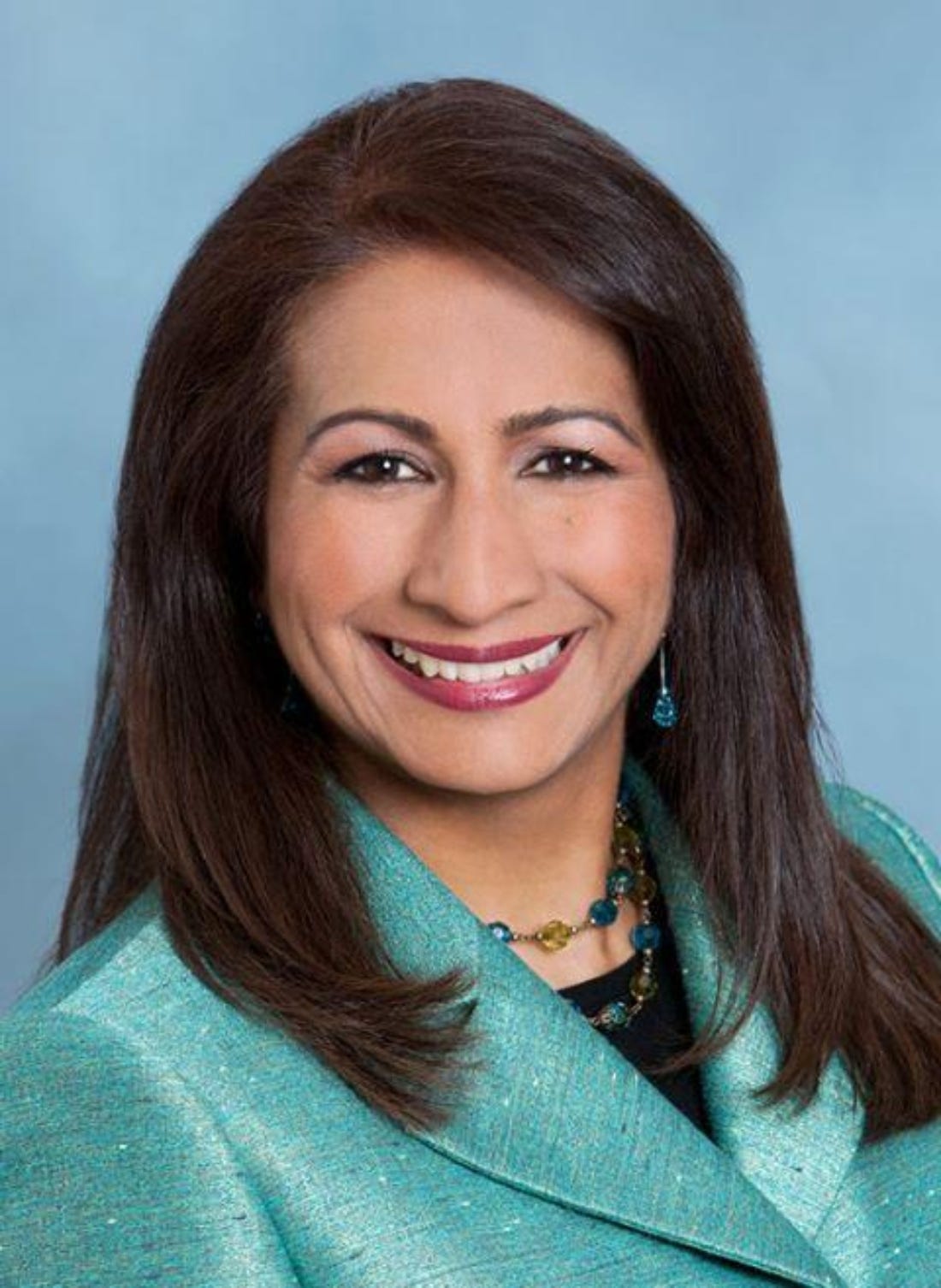
Divya Kakaiya Ph.D, M.S. (Psychopharm) PSY 14052
Founder and CEO of Healthy Within
Clinical Psychologist, Neuroscientist/Neurofeedback Practitioner, Educational Consultant
Fellow - AAPB Association for Applied Psychophysiology and Biofeedback
Thank you so much for doing this with us! Before we dig in, our readers would like to get to know you a bit. Can you tell us a bit about how you grew up?
I was one of the lucky ones who grew up in Nairobi Kenya, one of the most beautiful cities in Africa. I was raised in an extended multigeneration, Indian home where there was a lot of love and a strong emphasis on education and giving back. I came to the United States at a young age of 20 and consider myself very tricultural - Indian, African and American! The environment I was raised in was the 60's in a country that was very much on the cutting edge of growth and development. Our community was very cosmopolitan and obviously I grew up without the internet or social media. Some of my favorite memories were taking 2 buses to go to central Nairobi where we had the library. We were allowed to rent 2 books per week and those books were golden! By the way, I was around 10 years old when I used to go all by myself to the Central Library! A very different era then.
You are currently leading an initiative that is helping to promote mental wellness. Can you tell us a bit more specifically about what you are trying to address?
My passion resides in non medication ways to make the brain healthier. The treatment is called neurofeedback and we utilize it to rewire the brain pathways that are no in optimum state. We address all brain conditions such as Depression, Anxiety, Parkinsons, Epilepsy, Tics, Obsessive Compulsive Disorder, ADHD, Dyslexia, Concussions, Traumatic Brain Injuries, Migraines, Pain conditions, Fibromyalgia, Tourettes, Alcoholism, Eating Disorders, Gaming and video compulsions, Pornography addictions,
Can you tell us the backstory about what inspired you to originally feel passionate about this cause?
My son was in 6th grade, he has inattentive ADHD and I did not want to put him on meds. Ran into a colleague who was raving about NFB and I took my son to her for a whole year before I added it to my clinic. I am now only a neurofeedback center. I conduct very little psychotherapy.
Here are my YouTube video clips:
Many of us have ideas, dreams, and passions, but never manifest them. They don't get up and just do it. But you did. Was there an “Aha Moment” that made you decide that you were actually going to step up and do it? What was that final trigger?
My aha moment had come to me very early in life, probably when I was about 13 when I knew deep in my heart that I cared very deeply about humanity and justice for all. Living in a third world country and seeing some of the inefficiencies and the injustices made me want to make my community a better place. I had developed a deep interest in psychology and I had a cousin who really nurtured my interest by bringing me lots of books on psychology. At one point I thought I would go into medicine and decided I didn't want to be a pill pusher. I had a deep desire to live with empathy, compassion and giving back to others. A very significant event in our family was the way my cousin who was gay was treated by his side of the family. We are all very loving towards him and he felt a sense of utter acceptance in our home. Keep in mind this is a conservative Indian family living in Kenya, a country where being gay is still illegal:(
His untimely demise and the suicide of a patient when I was in graduate school, were two pivotal events that made me want to work with addictions and the brain at a much more deeper level.
My passion was to help people and I am proud to say that over the last 4 decades of working with people at all levels of suffering has created a depth of love and compassion for suffering that I never thought I would cultivate in me. It is not unusual for my patients to say to me that they have never met a Psychologist who is as real, present and authentic as I am.
Can you share the most interesting story that happened to you since you began leading your company or organization?
Gosh, coming up with one interesting story would be a challenge since each and every single day I have incredible stories of patients who are getting better when they have completely given up hope prior to coming to our center. About 70% of folks who come to us for neurofeedback have tried all sorts of therapies and once their brains are rewired for more optimum functioning they improve dramatically in the quality of their lives.
Here is a personal statement that warms my heart everytime I read it:
When I started neurofeedback treatment, I was depressed, had severe chronic insomnia, and suffered from five different intractable and disabling chronic pain conditions (hence the depression and insomnia). My psychotherapist referred me to Dr. Kakaiya for a trial of neurofeedback. I was skeptical at first because it didn't seem like I was doing anything. However, within a few sessions, my sleep and mood improved dramatically. Within weeks of starting neurofeedback treatment, I was no longer depressed and was able to discontinue psychotherapy. Although I still have disabling pain and fatigue during the day, my fibromyalgia, low back pain, interstitial cystitis, neuropathy, and headaches all became more manageable. Because my symptoms were so severe, we started with multiple sessions each week. However, as I improved, we were able to space the sessions out more and more, and eventually I only came in for treatment every two or three weeks, then once a month. More recently, I've had just one or two treatments in the past several years, as "boosters" when I was having a particularly severe flare of my symptoms.
What I like best about neurofeedback is the lack of side effects of treatment and the persistence of its effects. I have tried many many medications and modalities for my various conditions, and have been able to tolerate very few medications because the side effects were worse than the conditions for which I was taking the medications. Modalities such as acupuncture and massage helped me relax in the moment, but didn't provide long-lasting relief. I joke that I'm Dr. Kakaiya's poster child for success, as the improvement of my symptoms with neurofeedback was nothing short of a miracle. The medications I tried for insomnia were either ineffective or they caused hallucinations or increased my daytime fatigue to the point I was not functional. The medications for depression worsened my interstitial cystitis and caused other side effects that were not tolerable, and I wasn't able to even get to a dosage that could have potentially improved my depression. Neurofeedback gave me the results I wanted without any of the side effects. That is huge. Because neurofeedback is so non-invasive and gentle, I wish that it was used as a first line of treatment rather than a last resort.
Here is one more story that speaks to what we do here at Healthy Within:
Dr K is one of the brightest minds and caring souls I’ve had the great fortune to meet. She was referred to me by a friend whose child had struggled with an eating disorder. My child has ADD and suffers from anxiety with OCD tendencies. Before meeting Dr K, we had tried every medication that was safe to prescribe and every known form of therapy (Dialectical Behavior Therapy, Cognitive Behavior Therapy, Hypnosis, Somatic Experiential Therapy, Mindfulness Therapy, Exposure Therapy, EMDR, Yoga). I didn’t know much about Neurofeedback before we started and, honestly, didn’t understand the difference between that and Biofeedback. Dr K took the time to explain the process and even used a diagram of the brain to show the exact spots she would be stimulating during the course of treatment. On top of that, her wit and humor were refreshing. She’s the kind of person I would like to be friends with.
Dr K treated my daughter for one year. It was surprising how quickly we saw results. Unlike most therapies that continue ad infinitum, Neurofeedback has a beginning, middle and end so you can trust the practitioner isn’t using your child’s illness to pay for their children’s education or vacation home. We were fortunate that our health insurance covered the treatment but, to be perfectly honest, I would have paid out of pocket. Parents are supposed to help solve their children’s problems. But when a child struggles with mental health issues, the solution is out of our hands. I am grateful to this day for Dr K’s treatment.
Whether you’re looking for a treatment that doesn’t involve medication or have tried conventional therapies without success, you are in good hands with Dr K. There are rare individuals who leave an indelible positive imprint on your life. For us, that person is Dr K.
None of us can be successful without some help along the way. Did you have mentors or cheerleaders who helped you to succeed? Can you tell us a story about their influence?
My most important mentor and cheerleader was my mom. She epitomizes brilliance combined with ultimate love and compassion. My mom was one of the brightest people I knew. She did not have much education and yet she was so learned about the world and had one of the most expansive minds. She dedicated herself to raising all her children and taught us to develop meticulousness and a work ethic that knows no bounds. I owe all my success to the way she taught me that there did not need to be any barriers in my life. She taught me that I could accomplish whatever I wanted to and nothing would be able to get in my way if I had drive, hard work and kindness along the way.There are so many stories I can tell about her influence for all of us. In Indian households, we have extended families where we were about 19 cousins that were being raised single handedly by my mom. My mom lived apart from my dad for 19 years while we all went to the good schools in Nairobi. My dad would come on the weekends and took immense pride in hearing how we were all doing with our academics the week prior. My mother instilled in me curiosity and a love for learning that burns through my veins even today!
According to Mental Health America's report, over 44 million Americans have a mental health condition. Yet there's still a stigma about mental illness. Can you share a few reasons you think this is so?
We need to be taught to think of mental health conditions as brain health conditions. The sigma arises because we think we have control over our brain health challenges. We all are aware that stigma arises from lack of knowledge and awareness and we really need to think of brain health conditions in the same vein as cancer or heart issues. If we have symptoms, we tend to do all kinds of tests such as mammograms, ultrasound, lab work, MRI’s etc. However with brain health conditions the psychiatrists are usually playing “pin the donkey's tail” with random trials of various drugs. Instead we need to do functional MRI’s, QEEG’s, Spect Scans, Ct scans etc. We know what the various region of the brain impact hence why would we not delve deeply into the functionality of the brain to see what needs to be rewired and adjusted?
Stigma exists because we are not looking at mental health conditions as brain disorders. The stigma can be reduced dramatically if we change our labeling of mental health conditions as brain health conditions. The brain can be made fitter and stronger with certain types of “food” and exercise.
In your experience, what should a) individuals b) society, and c) the government do to better support people suffering from mental illness?
When our country deinstitutionalized the mentally ill in the early to mid 80’s we did a huge disservice to people who had some profound brain health conditions. Unfortunately those are the people who have now ended up on our streets as being unsheltered. Our society still thinks of brain health conditions as issues of will power and self determination which is very very very far from the truth. Each brain has a genetic blueprint and hence depending on the raw material of that brain it may be strong or fragile.
As a society we are not doing enough to make our own prejudices about brain health and we really need to change the discussion about these topics. I have attached a number of articles I have written in our local paper about these issues.
What are your 5 strategies you use to promote your own well-being and mental wellness? Can you please give a story or example for each?
1. Self Compassion My most important strategy is self compassion. Without kindness to myself I will not be of service to anyone. If I am riddled with perfectionism, self doubt and self criticism then I am useless!
2. Daily gratitude practice - as I have mentioned my mom was the most significant influence in my life and she taught all of us to have contentment and be grateful for all the tiny gifts we have each day
3. Regular exercise and eating food rich in antioxidants since that enhances my brain health - We know that daily exercise eliminates all the toxins we collect in our body and I like movement that is gentle and kind to my body. I do not feel a need to thrash my body and I love nature since it is so healing for the soul.
4. Meditation and about 5 classes of yoga every week
My mind loves the mindfulness practice with which I live my day. It is very hard for my brain to start to overthink and obsess too much about the future. Today is a sweet day and I am constantly grateful for the bounty that each day brings to me!
5. Inviting joy, love and tons of healthy social connections in my world. I am a very, very, very active member of the San Diego Rotary Club and our Motto is Service Above Self. When I give to others I tend to feel in abundance all day. We meet on Thursdays and I can categorically say that Thursday is the most favorite part of my week!
What are your favorite books, podcasts, or resources that inspire you to be a mental health champion?
Brene Brown, Hidden Brain, Jack Kornfield, Huberman Lab, The brain Health Revolution Podcast
I especially love Huberman Lab since he does such a deep dive into the neuroscience behind many brain conditions and I always come away learning so much!
If you could tell other people one thing about why they should consider making a positive impact on our environment or society, like you, what would you tell them?
Giving back, living in contentment and gratitude, sensing deep abundance are some of the most powerful joy inducing processes and there will not be any need for any mind/mood altering chemicals if we do the above consistently.
Living with a heart full of compassion allows one to feel very deeply connected to humanity and the state of emotional generosity creates an internal joy that is difficult to disrupt.
How can our readers follow you online?
We have all social media channels
FB: Healthywithinneurofeedback
Instagram: healthywithinneurofeedback
TikTok:@healthywithinnfb
Linked In: Healthy Within and Divya Kakaiya
I will have my assistant Lava send these to you!
Optional, (But A Good Opportunity). If you would like, you can include a video of you sharing your “5 strategies I use to promote my own well-being and mental wellness”.
Attached!