Having grown up as less privileged than others and experiencing the trauma that immigrants go through, I was always highly attuned to the power of money.
Power Women: (insertname) On How To Successfully Navigate Work, Love and Life As A Powerful Woman
(If you are unable to download it, please click File-Download)
Please answer the questions, and leave the questions formatted as they are in the document. We may schedule a follow-up call or skype to round things out.
INTERVIEW QUESTIONS:
How does a successful, strong, and powerful woman navigate work, employee relationships, love, and life in a world that still feels uncomfortable with strong women? In this interview series, called “Power Women” we are talking to accomplished women leaders who share their stories and experiences navigating work, love and life as a powerful woman.
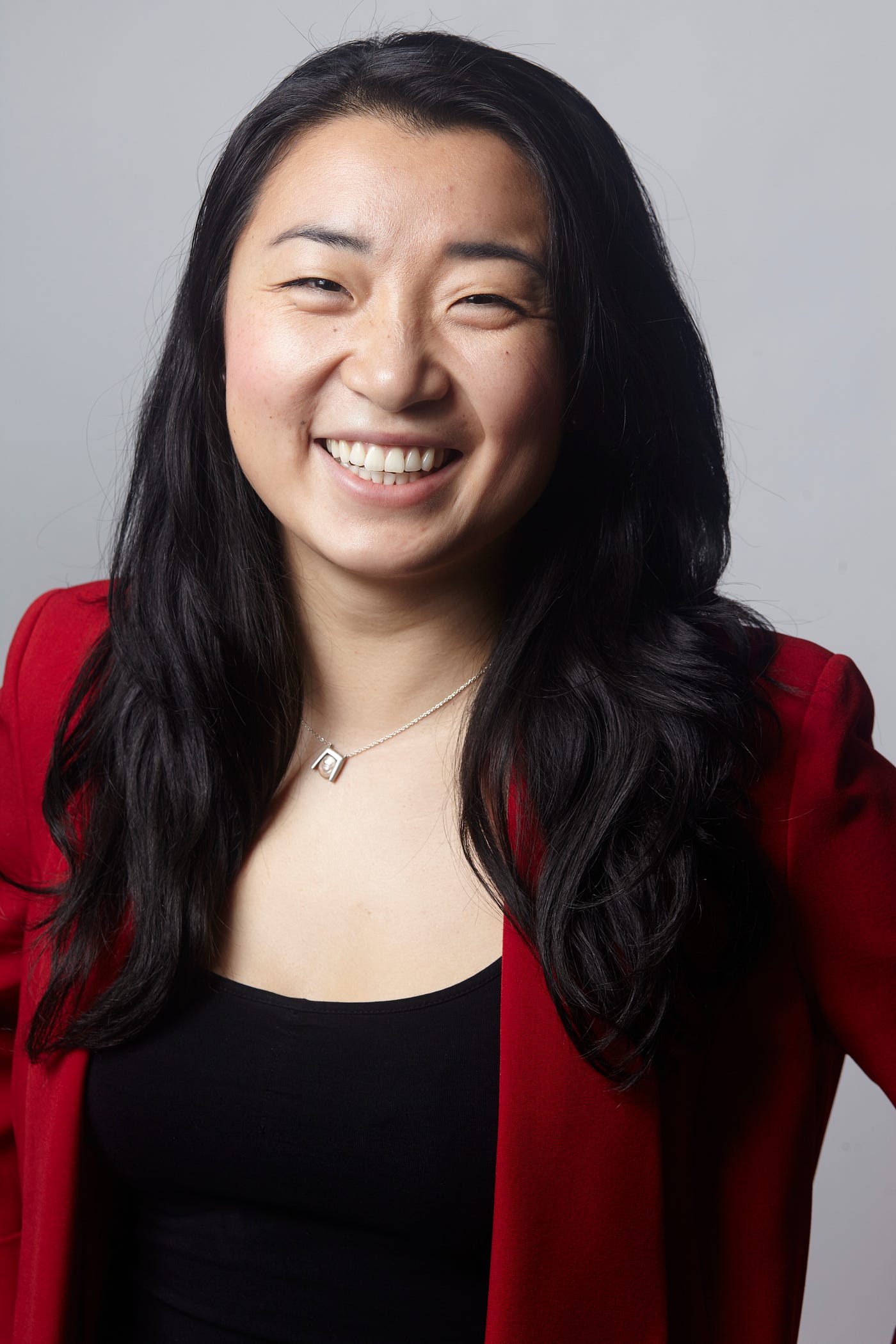
As a part of this series I had the distinct pleasure of interviewing (Dandan Zhu).
(Kindly insert your three sentence bio, written in the third person, here. The rest of the interview should be in the first person)
Dandan is a headhunter, real estate investor, and entrepreneur who went from broke and in debt at 22 to millionaire by 30 through her career as a top-billing recruiter and real estate investing. She is in the process of writing her first book about this life-changing career that gave her the “first pot of gold” breaking $215k a year as a 25 year old headhunter. Now, she runs her own recruitment company, DG Recruit, and co-created a course called Recruiter Prep for those interested to learn more about this lucrative career.
Thank you so much for doing this with us! Before we dig in, our readers would like to get to know you a bit more. Can you tell us a bit about your childhood “backstory”?
I immigrated to the US at age 4 and since my parents were poor University students, their strategy to give me the best life possible was to become live-in babysitters to a wealthy family so that I could grow up in a great school system.
Having grown up as less privileged than others and experiencing the trauma that immigrants go through, I was always highly attuned to the power of money. This class divide also shaped my experiences in college, where again, compared to my friends who were children of diplomats and plantation owners, I was on my own to afford life at college since my family did not come from that kind of money.
Instead of dropping money at clubs and driving designer cars like my peers, I worked multiple jobs in order to afford books, some times even opting to share material in order to save costs.
Whether it was bartending, waitressing, creating my own local Chinese tutoring business, and selling stuff on eBay which led me to become a powerseller, I was always busy with school and academics in solid last place in terms of priority.
Since I experienced the power of wealth creation at my own hands, I enjoyed that power and control much more than my internships where I was paid a fixed hourly rate and worked in a traditional 9-to-5 administrative/technical job. Thus, when I graduated in 2009 in middle of the financial meltdown, I was somewhat ambivalent when my parents had to leave town and left me with their restaurant and home to manage.
To cover the bills and keep the struggling business afloat at age 22, managing chefs I knew since I was a teen and worked alongside (very awkward dynamic), I subletted rooms in our family home to just get money in the door to keep the lights on. Thankfully, this duty which left me working 12 hour days for 7 days straight for 8 months finally came to an end when my aunt came back to take back the daily duties I carried out for them.
This left me at age 23, with no idea what to do for a living other than having a big dream in my heart to somehow make it big so I never had to live like this again.
Can you tell us the story about what led you to this particular career path?
When I was trying to find my career path, I didn’t know what to do other than apply to financial jobs since that was my major. But deep in my heart, I hated the career path of a technical worker since I enjoy the people end of things much more than figuring out excel sheets and fetching big bankers their coffee.
Thankfully, I applied by accident to a recruitment firm to one of their job ads. As expected, they called me with a rejection for that particular role but explained that my background as a salesperson, entrepreneurial experiences, and a hospitality worker actually translates very well to becoming a top recruiter, aka headhunter, which is a highly specialized hardcore sales job with big payouts for top-billers.
Right around this same exact time, I was pursuing a career at Uniqlo to get on their management program, live it up in Japan for a few months, and become a big retail hot shot as one of their first boots on the ground managers. They ultimately decided to forego my candidacy, which left me very sad and dejected.
I figured why not go with recruiting despite it being my second choice career. At the urging of a friend, I went for it. In my first year, I made more than DOUBLE what I would have earned at Uniqlo. In my second year, more than triple. In my 3rd year as a top-biller, I earned almost 4 times as much, breaking $215k in income from this highly rewarding sales job. This career of being a headhunter radically changed my life forever.
Can you share the most interesting story that happened to you since you began your career?
As an executive headhunter in my 4th year of my recruitment career, I was building a completely new practice targeting high net-worth investors and venture capital businesses in the life sciences and biotech space. Off of an email prospect, a CEO of a NYC-based firm responded to me, my first customer.
He was an older gentleman and quite a particular personality, not very charismatic or salesy like most execs, but polite enough. I had expected the selling of this division to be extra hard compared to my previous role of servicing more of a mid-to-senior tier, being that this was the elusive executive search practice that I was endeavoring to pioneer.
However, I realized very quickly, that people are all the same no matter how senior and this person was no different than the thousands of customers I had already serviced in my career as a top-biller since I frequently did in-person meetings. Thus, very quickly I got into the groove, landed the contract, signed on a contingent basis then proceeded in short order to place 3 high-level executives in his teams, earning me close to $300k in fees.
I went on to land more deals for my former employer before peacing out, but it was this client who gave me the confidence, initial income, and beginning business to build the rest of my practice on, billing over $600k in my first year in business from a standing start of 0 which was a great performance for the amount of effort I put in (which at that point was lower since I knew I was going to quit employment soon).
A few years later when I had already ‘retired’, I was at a Manhattan boat cruise and met a young professional who worked at the same company I had placed those people almost 2 years ago. We caught up about the executives I placed who all were there who he knew well, and I told him to give my regards to his CEO if he would ever remember the 26 year old Asian American headhunter (not very common from both age and demographic) he met a few years ago whom paid a crap ton of fees to (probably not, but we had some good times!).
You are a successful business leader. Which three character traits do you think were most instrumental to your success? Can you please share a story or example for each?
3 character traits that made me successful includes the first one which is a DEEP sense of self worth and self belief.
My mother was a typical ‘tiger’ mom who taught me not only to achieve but more importantly, to stand up for myself as a woman and as a minority. She and my aunt are two fearless immigrants who came to the US in the 90s and experienced racism and discrimination aggressively, but fought against it equally hard. By speaking up and confronting anyone and everyone who made them feel attacked, I saw how this was a non-negotiable skill to learn either overtly or subtly.
As they were my role models, I learned to deeply care about my own self worth and to speak up for myself. This helped me GREATLY establish myself as a top headhunter even though I was 23 years old selling to executives double to triple my age!
Since I sounded credible, confident, and spoke well, they took me seriously and I was able to achieve the record breaking revenue numbers I hit. This proves how: Until you take yourself seriously, no one else will. Especially as a salesperson, you have to sell like you really mean it.
The 2nd character trait is toughness. This one is all about not letting people getting away with mistreating you! Especially as women in the workforce, we uniquely face additional concerns at work such as sexual harassment, something I saw quite a lot of during my time in sales. You cannot let anyone think that you’re someone to be trifled with or else they will lose respect for you and hurt you in your career.
This may not sound popular or politically correct but that’s the reality of what I faced. I had to defend myself and project a strong demeanor so that my peers and customers in the heavily male-dominated field I was in would not treat me lightly or disrespect me.
This means, not crying over work-related issues and obstacles and letting others see or sense weakness even if I felt it. When bad things happen, which it can daily in sales, I try to solve it calmly and I don’t take it personally because it’s just business.
Some times I did this better than others, but I always kept top of mind how important it was to channel my frustration and compartmentalize in order to survive both in my job and in my environment. I had an advantage in this arena only because of how tough my mom was on me. Since her verbal abuse was worse than anything I’ve ever heard anyone else say to me, I developed thick skin, for better or for worse.
This was my magic power, gained through trauma. I never lost it at work other than 2 very personal incidents which leads me to the last trait:
Perseverance, grit, and resourcefulness. Whatever you want to call this trait, I always survive and work through challenges.
When I found out at work on a call during lunch to a number listed on my bank account for a withdrawal of $27000 I didn’t have, and losing another account into the red, I found out that my dad put me into debt by accident since he listed me as a part of his restaurant business that owed back taxes.
I cried in front of the elevators while on the phone with the IRS lady because this was such a shock! Where was I going to find $33k to pay the IRS?!
Daily interest was accruing at $300 and I was so scared I didn’t want to chance any bargaining in case the rate kept going. My immediate action was to call and tell every single person I knew so I could borrow money from them and pay down this debt asap. Between friends, family, colleagues, and my commissions, we paid off this debt and my future earnings took care of the money I owed everyone else.
Now, as a real estate investor, I constantly have to deal with big money problems and have to find ways to resourcefully work through cash and debt allocation, as this is a critical business skill. Those early challenges taught me that anything money-related can be handled and resolved.
As long as you stay in the game, you’re in the game and you have a chance to win.
Ok, thank you for that. Let’s now jump to the primary focus of our interview. The premise of this series assumes that our society still feels uncomfortable with strong women. Why do you think this is so?
Without saying any names, can you share a story from your own experience that illustrates this idea?
Simply put, men are afraid and uncomfortable with strong women because they’re too young, ignorant, misogynistic due to what society allows for and/or unequipped on how to interact with powerful women but are assigned leadership roles or positions of power regardless of this ineptitude since most organizations & systems are still male-led and male-dominated. This is the classic chicken and the egg issue.
For example, when I was interviewing to become a headhunter, I interviewed for 2 different teams. The first team led by a 22 year old male who had worked for the company since he was 17, rejected hiring me. I was hired by a 26 year old male who was a previous top performer and I became a global top rookie and global top biller every year thereafter.
A few years after I joined, I asked the 1st manager why he didn’t move forward with me when it was very clear I ticked off every check box that could predict that I would indeed become a top biller (strong sales experience, tough upbringing, competitive, charismatic, money-motivated since I grew up poor, etc).
His answer was simply that I was a woman and he had never managed one before!
It was that simple. My whole career could have been destroyed by people like this.
Eventually he did manage women, one of whom he dated and eventually married (she was not as strong of a producer than I was but looked very attractive). Since he felt more comfortable with less aggressive personalities who conformed to traditional beauty standards more and was in a position to hire, he could leverage those comfort levels and personal preferences to decide who to hire instead of thinking commercially on who objectively could fulfill the duties the role required.
I’m lucky his preferences on the female look or which female personalities he can tolerate had no bearing on my career as I was still offered the job by the other manager who thankfully could think logically with his head.
Nevertheless, I felt like he did, for sure, rob me of the opportunity to produce on the temp side of the business (aka contract recruitment, placing contractors), a role in our firm that was the most lucrative due to residual income and commission rates.
Others who went on to work for him (who were male) earned over $300-600k a year, compared to perm recruiting where top-billers like me could realistically only get around $200k-250k.
That whole experience was one of many, many more that led me eventually to quit corporate the moment I accumulated enough net worth to do so without ever looking back due to consistent challenges dealing with the male-dominated industry and environment many recruitment firms have.
What should a powerful woman do in a context where she feels that people are uneasy around her?
My strategy was to build my own wealth which would free me from having to work for others and around others who inevitably will never accept me as one of their own or promote me the way I deserved. No matter how much I produced, it was clear that I would never get the special treatment my male peers who achieved much less than I did would receive, such as additional compensation, faster promotions, and less oversight to let them do whatever.
Especially since I worked at a large company in a white-dominated industry and male-dominated industry at the senior level, I was constantly one of the few that were outsiders as a young Asian American woman.
No matter how hard I worked or how much I achieved, I would never be given my fair share or a seat at the table because the senior leadership never fully embraced me as one of their own or saw me as an equal person deserving of being treated like an adult since they viewed me more of a ‘good little girl’ type.
The only way to be free from these types of environments is to create your own business. Only in this way can you fully have utter control (or as much as feasibly possible) to be the leader in your own life. This is why I got into real estate investing at 25 without a moment to lose. I knew I had to build up my side hustle if I ever wanted true control over my life and direction.
If entrepreneurship isn’t something you want to do or are interested in, there are still other ways to escape bad environments. One would be to move to a MUCH smaller business!
In smaller businesses, you can find teams with higher talent density who adhere to value systems that are very different than how large companies (more bogged down by boys’ clubs) operate. In boutiques, startups, as well as non-profits, you can find great organizations with excellent culture that is forward-thinking and less old school. This makes sense especially since some industries can be very old school.
Lastly, there are companies founded by women with senior leadership who are women – definitely look into whether those cultures and environments may suit your needs. The traditional career path and linear model is changing due to how important having multiple skills can be in a matrix environment and the premium of being a culture/mission fit. Furthermore, hiring managers today are more openminded than ever as long as job seekers are creative, outspoken, bring value-add ideas, and can actually execute to boot.
What do we need to do as a society to change the unease around powerful women?
We need more women with money.
We live in a capitalist society.
Money is what frees people (not only women) from working in jobs they don’t like and for people they don’t respect. Financial freedom is what gives people the option of really enacting true change because now it’s not just about earning a paycheck, but living of one’s own accord and plan.
Until someone is truly free from interest groups and dependency on a high-consumer lifestyle, they are forever beholden to the money machine which usually entails working or doing something that isn’t truly what they want to do if money wasn’t an issue. For example, this is why politicians are largely so awful since they rely on lobbyists and nefarious causes to sustain their material lifestyle.
Women WITH money and the means can now leverage their skills and courage to do something. They are changing this status quo with people like Alexandria Ocasio Cortez top of mind as a great example of this, breaking actual systemic issues in government that ultimately will impact everyone.
Similarly, now since I have enough to sustain, I no longer have to recruit for industries I’m not passionate about (my old market pharma/life sciences). Now, I can focus on a market I actually care about (recruiting top headhunters!). The freedom from needing the dollar to eat and clothe myself allows me up to do more for the world in a way that I feel great about and contributes to my mission of helping people get rich through recruiting like I did.
In my own experience, I have observed that often women have to endure ridiculous or uncomfortable situations to achieve success that men don’t have to endure. Do you have a story like this from your own experience? Can you share it with us?
Sure! A very senior person in my old firm came up to me one day during a company outing and asked me to my face “do we have sexual chemistry?”. This leader has married women he had affairs with in the office as well as currently cheating on that same wife with multiple young women in our office, 15-20 years his junior.
This isn’t something I would expect any of my male colleagues to go through.
Having been a bartender, I am adept at turning men off and I had to literally crump my face into an obsequious smile, while making like a court jester, exaggerating my confusion and general pondering of the question. He found my facial expressions unattractive and walked away, saying “I guess not”.
This was after a few years of me proving myself to the company as a top biller every year and earning the respect of everyone.
It was annoying at the time, and now that I’m older and understand the severity of his transgressions, it’s horrifying I had to go through that.
Similarly, I also had to guard my referral who joined the company under my recommendation from this same predator!
During a company yearly gathering, he made it very clear he wanted to corner her somewhere somehow by continuing to party late. She literally forced me to come to each event to be her bodyguard essentially to fend him off. Although no words were spoken, I understood this mission clearly based on her body language and discomfort with this person.
These are the daily abuses that women in sales have to deal with who work at companies run by rich men. Every young female hire is subjected to this type of disrespect no matter how tough we are or how accomplished we have been for the business. I have seen my managers cat call quietly or make distasteful comments on the appearance of female potential hires as they walk out of their job interviews.
Even before they’re hired, they’re looked at as bait or somebody who can be objectified or otherwise disrespected purely on the way they look.
In your opinion, what are the biggest challenges faced by women leaders that aren’t typically faced by their male counterparts?
Women face the issue of not having any support or advocation for them at the senior level.
Since the boys’ club is so deep at many organizations, even if they have a diversity or gender council, it’s done for show, and it’s not truly to change the culture. Until they give women senior leadership positions, until they stop making women “earn it” when men are not held to the same standard, their words and actions are hypocritical.
Because there is a lack of support, recognition, trust, and desire to truly invest and bring women into their inner circle, women will always suffer in those environments. That’s why women AND men who champion women into senior leadership are the solution.
I have experienced being left out of growth because unlike my male counterparts, I don’t enjoy soccer and I worked at UK firm. Distinctly, I remember how awful I felt when my CEO used to come by frequently and talk to someone who worked in my team who barely produced a single cent that year. They bonded since they both watched soccer. He rarely said anything to me and didn’t make a single effort to build a relationship with me despite me being a globally ranked top producer.
Again, deeply held systemic beliefs and social preferences are really hard to resolve by staying because there simply isn’t enough demand and clout to force the organization to change over what can be perceived to be a ‘light’ issue since these matters are usually trivialized and thrown away for being “too sensitive” which is a form of gaslighting. Thus, the only solution is to leave those environments for better ones or to create your own.
Let’s now shift our discussion to a slightly different direction. This is a question that nearly everyone with a job has to contend with. Was it difficult to fit your personal and family life into your business and career? For the benefit of our readers, can you articulate precisely what the struggle was?
To be frank, my job, while it was time-consuming and required some travel, was relatively balanced and left plenty of time for play and relaxation. I went on many dates and travelled for leisure quite a bit. The worklife balance was not my issue at all because I was good at running my business and I could control the times I spoke with customers; this is unique to being a headhunter.
Since we run our own business and it’s a completely singular career path (i.e. no need to wait for teams or work in a project-based environment), I could very much plan my own lifestyle and work day between customer entertainment, travel, and leisure time.
What was a tipping point that helped you achieve a greater balance or greater equilibrium between your work life and personal life? What did you do to reach this equilibrium?
My current challenge as an entrepreneur is more about using my time wisely, intentionally, and productively instead of being distracted by social media, grandiose daydreaming, and comparing myself constantly to others who have more or achieved more in their life. This is the biggest challenge I have now.
Instead of thinking all the time of what I want to do, I end up wasting a lot of time since my motivation has changed drastically from needing money (what really drove me to incredible results) to where I’m at now, chasing purpose and impact (much less tangible and less formulaic). Thus, now I have to manage myself, the biggest challenge I’ve had to face.
Even 6 years into leaving a top-down environment that I flourished within from a productivity standpoint, I’m still struggling to manage myself most days to get everything I want done. This is still a work in progress.
As a salesperson, I still think in terms of key performance indicators (KPIs) which now consist of anchoring my day with a few core activities like posting on LinkedIn and social media, working with my business partner in person, day-planning on my calendar, gym and sauna at a certain time, and some general time-bound tasks (reach out to X amount of people per day from the recruiting side of my job), etc.
I work in the beauty tech industry, so I am very interested to hear your philosophy or perspective about beauty. In your role as a powerful woman and leader, how much of an emphasis do you place on your appearance? Do you see beauty as something that is superficial, or is it something that has inherent value for a leader in a public context? Can you explain what you mean?
Other than my actual important media appearances and/or interviews or speeches I give, I won’t wear makeup typically or dress up or wear any clothing or shoes that aren’t in the athleisure or straight up casual category. I am a big anti-conformist and rebel when it comes to beauty standards and I rarely go to the salons or get my nails done.
Beauty is self-objectification which I’m perfectly happy to do when there is a commercial utility and benefit for me or a social requirement to do so. Due to social contracts and what “presentable” means to the masses as it relates to female beauty standards, I do conform when I have to but in my daily life, I don’t do any of it.
How is this similar or different for men?
For men, it’s just different! They have to look decently presentable and it seems that as long as they’re fit (more or less) from a body-weight perspective, they can get away with wearing and dressing however they want with whatever style they choose to have. Even if they’re not fit, they can get away with anything as long as they’re rich (they’re just called eccentric with big things on their mind, above beauty standards, never a slob apparently).
I think for women, it’s everything: weight, shoes, hair, makeup, nails, accessories, plumpness of lips, how many wrinkles, acne, how young one looks for their age, anything and everything in between.
So as always, with women, we’re expected to do a lot more and expend a lot more time, energy, and worry in this aspect.
In other words, it’s no coincidence that a white male (Mark Zuckerberg) popularized how tech execs can get away with just wearing the same sweatshirt every single day, even to important meetings. I don’t think we’re there yet for women.
Ok super. Here is the main question of our interview. Based on your opinion and experience, what are the “Five Things You Need To Thrive and Succeed as a Powerful Woman?” (Please share a story or example for each.)
#1. An independent mind.
Having been raised by a certain culture, I was expected to do what everyone else in my culture idolized which is become a doctor or lawyer. My parents are highly educated immigrants from China with an iron-fist parenting style. I rebelled quite frequently, and ultimately rejected my mom’s demands for me to go to law school.
I knew I would hate that job and I didn’t trust that she would pay the $200k tuition bill nor would I go into further student debt and waste more time in school for a job I didn’t want. Thus, I became a headhunter at age 23 and got independently wealthy within 5 years, using real estate to escape the rat race, retiring by 28.
Had I went to law school and took her advice, I would still be saddled with debt, a hard job with long hours, and no net worth by the same exact amount of time it took me to fully retire from the workforce!
I knew something my mom didn’t: if I work young at a high paying sales job and invest my money correctly, I could retire from ever needing to work much earlier than by other means. Without this critical decision, I would not have the lifestyle and freedoms I have today.
#2. Voice.
As a young woman, it’s incredibly important to curate and cement your inner AND outer voice. That means getting good at the art of speaking to people. I was lucky I had the chance to work through my teens in both blue collar and white collar settings to work on my voice.
Due to culture shock in my early teens, I was an introvert and borderline mute for a solid year or 2 before a personal trauma shifted my personality back to my natural extroverted self as a child.
Since my late teens, due to learning how to speak up, I was able to defend myself against bullies, make friends, get ahead as a leader in extra-curricular activities, and obtain better grades since I was FINALLY earning participation points whereas my younger self would hold my pee in so I wouldn’t have to ask the teacher to be excused due to my fear of speaking.
This voice went on to get me internships in college and is the main and top tool I use to run my recruitment and real estate business. Most importantly, this voice brings a lot of joy into my life since I could finally speak again, be myself again, and fearlessly share my thoughts without caring too much what others think.
#3. Financial security.
Unless you have a trust fund or a large inheritance coming soon, it’s likely you will NEED to find a high paying job somehow if you want to live powerfully.
It cannot be ignored that we live in a predatory, capitalist society. To stay on top of things and in control of your life and choices, you have to have some form of financial security and better yet, abundance.
According to Maslow, you can’t ever get to self-actualization without even completing the first few steps of having basic lodging and necessities comfortably handled.
I can attest to that because I see tenants who barely can get by and pay rent, thus constantly living off of young landlords who don’t know any better to extend their time until their eviction dates ultimately double up in the same month requiring them to do the same hustle all over again to some other ignorant newbie landlord (happened to me many times).
They are not living powerfully, and in ways, are abusing the system. I cannot imagine living like that and I have a lot of sympathy for people who think that’s the only way to live.
The strategy I had to avoid ever falling into such a dire situation is to enact a 3-pronged strategy: earn a good living by any means necessary (work multiple jobs if need be as I did at various points of my life), SAVE quite a bit of what you’re earning, and INVEST as much as possible.
Many times, high income earners fail to achieve financial success due to heavy spending beyond their means. This means they have very little to invest with after it’s all said and done.
Conversely, middle-of-the-road earners can get ahead quite a bit for being savvy financially as it relates to saving and, doubly so, if they know how to invest their money.
If you’re a high earner, a big saver, and a savvy investor, THAT is the culmination of living powerfully.
#4. Become a creator.
Once you get a certain degree of net worth under your belt, now you’re faced with the question of “what’s next?”
This is why it’s critical to have some side hustles or to create a business (main hustle) for those who are deciding to quit their job fully.
These two opportunities lead to a beautiful harmony of one hand washing the other. You can leverage the profits in each to drive each other and learn more skills along the way.
This also makes life more interesting and is a great way to share your talents with the world! As corny as it sounds, this is how you can be the change you want to see.
Now as a creator, you can sell products, share your ideas, or make content that is meaningful to you and your audience to hopefully teach them what you learned so far.
#5. A partner who wants to be with a powerful woman.
Unless you want to be a bachelorette for your entire life, which is totally great and awesome, you’re going to have to find somebody who will not only DEAL with a powerful woman but be a great partner to a powerful woman.
Those are TWO different things.
I’ve dated many men who enjoyed my successful and independent mindset since it meant lightening their burden to take care of me both financially and mentally. I was great company, fun, challenging, and outspoken, always entertaining to them. But ultimately, the relationships didn’t work out because I did not receive the same level of reciprocation and respect I gave them.
While they like the fun of being with an independent high-earning woman, they cannot tolerate that same impertinence and independence since deep down inside they craved submission. Add the fact that I’m an Asian woman, that expectation was so deeply ingrained into their preference to date me in the first place that they could never tolerate the constant rebellion and lack of deference I had for them since I would call them out when it was needed (which they did not like).
Ultimately, I was very jaded for an entire decade+ of suffering, but finally I found the one for me. We are now happily engaged. He is a true feminist, the ultimate empathetic man, who enjoys cooking and cleaning with no expectation or pressure for any of us to follow traditional gender roles.
The difference is unbelievable. Now, I feel more empowered than ever to pursue my real estate side hustles on airbnb investing because he’s right next to me, fixing broken lights and rigging bathroom exhausts. He is the true partner that I hope every powerful woman who wants a relationship can find their version of.
This has undoubtedly been my biggest pain and suffering, bigger than any career or financial setback I’ve faced – the lack of a solid partner who truly values me, cherishes me, makes me feel woman enough the way I am, without makeup, without going on a diet, and without wearing clothes for his enjoyment.
The security of now having found “the one” is priceless, and it’s been an absolute gamechanger to my mental health and my outlook on life now that I have found someone who truly can be my best friend and staunch advocate generous with unconditional love for me on my journey.
We are very blessed that some very prominent names in Business, VC funding, Sports, and Entertainment read this column. Is there a person in the world, or in the US with whom you would love to have a private breakfast or lunch with, and why? He or she might just see this if we tag them.
Sara Blakely is a huge role model. She has a BIG family, a HUMUNGOUS business to run, and broke so many glass ceilings.
Thank you for these fantastic insights. We greatly appreciate the time you spent on this.