I have a different view on imposter syndrome. I have felt it was institutions that weren’t made to support different types of people, and it wasn’t actually about people not feeling worthy up for the job.
Power Women: (insertname) On How To Successfully Navigate Work, Love and Life As A Powerful Woman
(If you are unable to download it, please click File-Download)
Please answer the questions, and leave the questions formatted as they are in the document. We may schedule a follow-up call or skype to round things out.
INTERVIEW QUESTIONS:
How does a successful, strong, and powerful woman navigate work, employee relationships, love, and life in a world that still feels uncomfortable with strong women? In this interview series, called “Power Women” we are talking to accomplished women leaders who share their stories and experiences navigating work, love and life as a powerful woman.
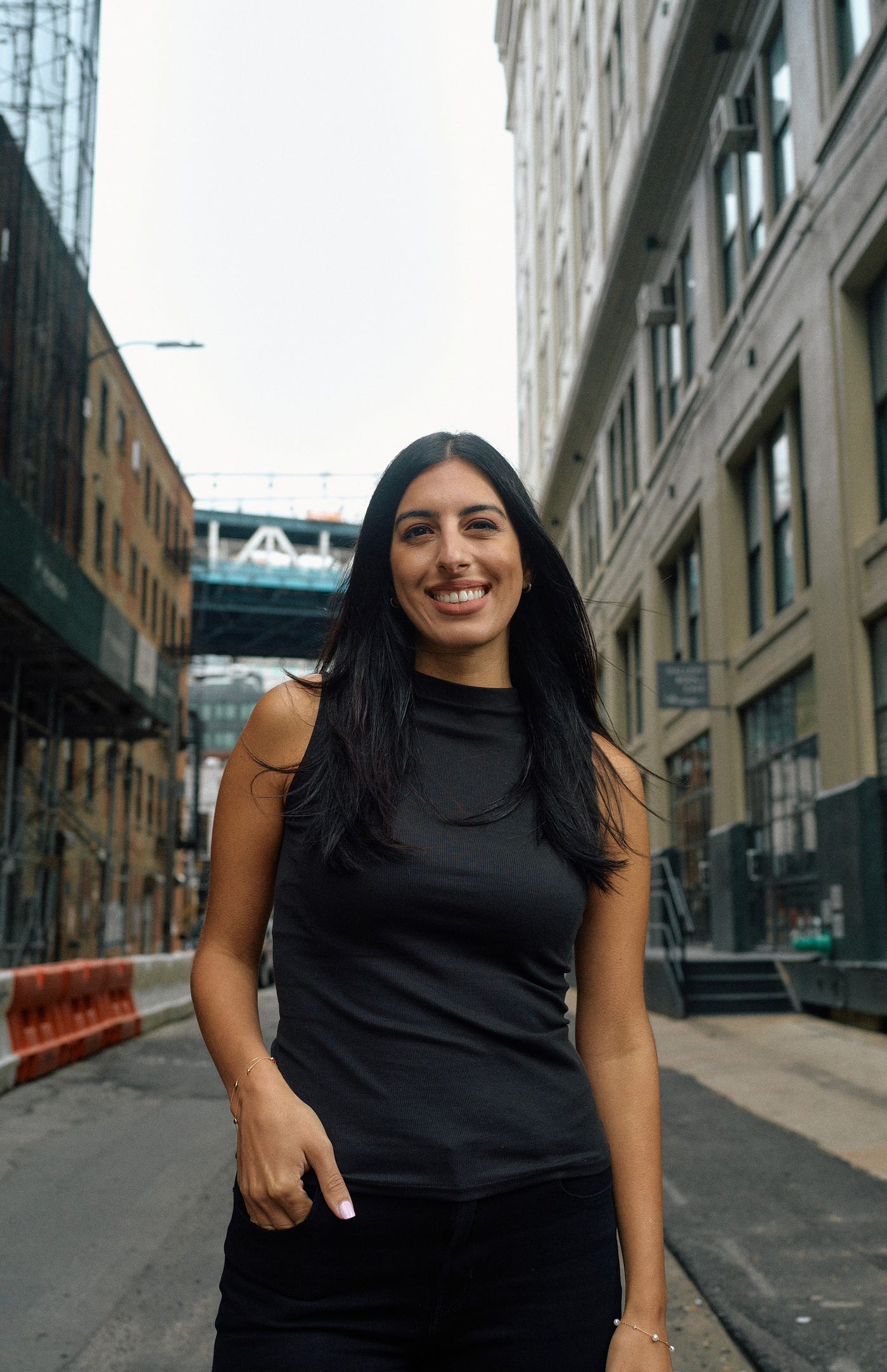
As a part of this series I had the distinct pleasure of interviewing Christina Hawatmeh
(Kindly insert your three sentence bio, written in the third person, here. The rest of the interview should be in the first person) Christina Hawatmeh, as CEO of Scopio, overseas vision and growth. She is the founder of the first female founded NFT marketplace, and first photography focused NFT marketplace. Anyone, anywhere can share images and get hired for their creative skills on Scopio in less than three minutes. She was named Top Entrepreneurs to Follow by NY Finance, and featured in CNN, Business Insider, and Forbes. Christina is based between LA and New York.
Thank you so much for doing this with us! Before we dig in, our readers would like to get to know you a bit more. Can you tell us a bit about your childhood “backstory”?
I grew up in Saint Louis Missouri. I was a very passionate child, and would put on speeches and presentations constantly. I won an award at high school for most community hours served in my class. I also very creative, and liked thinking of new interesting ideas usually alone. I like to do things right away when I think of them, that is why I was a first mover in the NFT photography space as the first photography focused NFT marketplace and first female founded one. My parents are doctors from Jordan and my grandma could not even read or write and did not speak English, and she was the most incredible matriarch that taught me how to lead with nothing but willpower. I am one of four girls, and went to an all girl school until I went to Washington DC to George Washington University to study politics to pursue my dreams. I thought I would be the next Madeline Albright. Big detour there…
Can you tell us the story about what led you to this particular career path?
I always wanted to “change the world” and spent a lot of time thinking of what I would do with “my time on earth.” I always cared about legacy that is why this book is so important, because it will live on past me which makes me so proud. I became interested in Facebook groups in college in DC and the way people could organize on them and make impacts in their society. I pursued this concept for years thinking of how I could work in this space, which took me to Columbia University for my masters. When I saw the speed at which photo sharing was happening on social media and no one was thinking about saving history, I knew this was for me, it was my life’s calling. My mom is a photographer and she always stressed the importance of saving images for documentation. Hers were burnt in a house fire when she was younger. She influenced me a lot.
Can you share the most interesting story that happened to you since you began your career?
I have spoken on stages at Mastercard and to the Computer History Museum. I presented in front of hundreds and thousands of people, and you have to convince them of your idea and why are you the best leader for the job. When I first started the concept of the “pitch” was so foreign to me, because it felt like acting and I felt like I couldn’t be myself. I totally froze on stage in front of really important figures. I think the numbers and why you can’t make it is constantly being told to you in the beginning and you feel like an alien. I had to overcome a lot of fear and approach it differently. Now I know that I am just sharing my work and my story, and that I am not seeking approval. It makes all the difference.
You are a successful business leader. Which three character traits do you think were most instrumental to your success? Can you please share a story or example for each?
1.I have a different view on “imposter syndrome.” I have felt it was institutions that weren’t made to support different types of people, and it wasn’t actually about people not feeling worthy/up for the job.
2.I knew these institutions would change I saw visible signs of that in tech for women, I wasn’t going to wait for these systems to embrace me with open arms. We have seen a lot of great advancements and opportunities for women in tech and the road got wider for me as I kept walking it. I always felt I was capable smart and had a great idea. I think that belief to know I deserve to be at the table, I am more than capable to lead and to have my dreams come true allowed me to cross paths others couldn’t due to their belief system.
3. I also really value and ask for help a lot, like a lot a lot, I think the ability to ask for help is benchmark in how to build a company especially when you only can see in the short path/short term and don’t know what resources or people you will need to help you just down that next road.
Ok, thank you for that. Let’s now jump to the primary focus of our interview. The premise of this series assumes that our society still feels uncomfortable with strong women. Why do you think this is so?
There are not enough women that people know about, especially in tech for me to visualize a future. Visualization (feeling, hearing, seeing what is possible for you) is crucial in this process. I used to make this up when I did not have those people now I am lucky to have incredible advisors, investors and friends I use for fuel to live my greatest life. You only live once, why not do the most you can?
Without saying any names, can you share a story from your own experience that illustrates this idea?
How many women run massive businesses? Public companies? How many built their own ideas? Gone beyond Series B or 10M+ in revenue (that don’t have a male co founder pushing the gas with them)? Somebody told me recently only 2% of women owned businesses make above $1M a year. How is that true? I used to watch Huda Kattan and Sarah Blakely’s interviews just to see how they act despite a male “co-founder.” It’s important to see role models and see how they think and how they talk about things to grow your mindset. You don’t need to know your role models, you can just read or watch them on Youtube. Inspiring yourself is a part of your job. You have to get good at where to find that source (that one Oprah video) when you need it.
What should a powerful woman do in a context where she feels that people are uneasy around her?
Make them laugh Humor and honesty work magic.
What do we need to do as a society to change the unease around powerful women?
Get more personal. I used to always wonder why people always wanted to ask me “where are you from” “what’s your background” Then I got advice to volunteer that info first and then jump into what I want to talk about to “break the ice” and I do that often and destigmatized that. If you can relate to me and we can share a quick story or laugh, we can build that friendship/connection/work relationship that I need to build my business and collaborate. I have lived in England, Turkey, Jordan, DC, New York, Saint Louis and California so I learned and enjoy meeting people where they are. The world is a beautiful place and people really do mean well.
In my own experience, I have observed that often women have to endure ridiculous or uncomfortable situations to achieve success that men don’t have to endure. Do you have a story like this from your own experience? Can you share it with us?
I have many especially as a young girl starting. I was 24 when I started working on Scopio and to be young and also enter the cut throat tech industry is really tough. Time really helps and staying focused and building on your expertise. Fear is a muscle you have to exercise so you can get to the next stage, so you can take risks which is what entrepreneurship is about. Watching others do this is the fastest track so my incubators and entrepreneurship communities really helped me see one step ahead and what to do next.
In your opinion, what are the biggest challenges faced by women leaders that aren’t typically faced by their male counterparts?
Getting the benefit of the doubt. You have to prove why you are ready and basically have it built and done. My advice is to just get your work done and show it and then ask for what you want and keep doing that in phases. Second thing I never thought would be an obstacle as women have entered tech more is not working on something that “you are not an expert at as a woman” for example the beauty industry or something like feminine product companies makes sense for a female founder, women in other industries like AI have to prove why “they are the expert” and I think its harder when you see where the money flows for female founders, but grass is always greener, I’m not sure what those founders would say in beauty and femme tech, since we are still behind there and more risks need to be taken to make innovative more on the actual products (materials, design etc) so who knows, I just stay focused.
Let’s now shift our discussion to a slightly different direction. This is a question that nearly everyone with a job has to contend with. Was it difficult to fit your personal and family life into your business and career? For the benefit of our readers, can you articulate precisely what the struggle was?
Finding a supportive ecosystem takes a while and I swear is the MOST important thing to have, but I built that for myself over many years, time is the only thing that matters when it comes to runway and your time to succeed, and it’s an important investment to make between your friends and family. When you succeed you also open doors for your family and friends so it really is a group effort. My family and friends know this is my calling and passion and support me. I did the work to show that I was serious about it and I stayed in it. I also will always try my hardest to do an intro and open doors as I go and connect the dots to get someone further if it’s just an intro I have to make. There is enough cake for everyone.
What was a tipping point that helped you achieve a greater balance or greater equilibrium between your work life and personal life? What did you do to reach this equilibrium?
I integrate a lot of fun things into work. My work is so fun. I work with photography and art so I find ways to bring that into my personal life and its for sure not separate. I have a very integrated life. It’s a lifestyle and I enjoy the creative side when I need that, and when I want to innovate and learn more on AI and tech I focus there so I go in between both worlds. It’s a work in progress. You just try every day to do better. I thank people like the founder of Bumble who went public and brought her baby to that. It makes me happy to see how far we’ve come.
I work in the beauty tech industry, so I am very interested to hear your philosophy or perspective about beauty. In your role as a powerful woman and leader, how much of an emphasis do you place on your appearance? Do you see beauty as something that is superficial, or is it something that has inherent value for a leader in a public context? Can you explain what you mean?
See above
How is this similar or different for men?
Ok super. Here is the main question of our interview. Based on your opinion and experience, what are the “Five Things You Need To Thrive and Succeed as a Powerful Woman?” (Please share a story or example for each.)
Mentorship does not look like you think it does
Surround yourself with people that support you
Do work even if you dont feel like it
Comparison is the thief of joy
Say Yes, and participate
We are very blessed that some very prominent names in Business, VC funding, Sports, and Entertainment read this column. Is there a person in the world, or in the US with whom you would love to have a private breakfast or lunch with, and why? He or she might just see this if we tag them.
Sarah Blakely or Huda Kattan, I recently met Gary Vee and he’s awesome too I value entrepreneurs who have fun in their own way and give back every day like these three
Thank you for these fantastic insights. We greatly appreciate the time you spent on this.