When I was told I had RRMS, I was devastated, but I also felt slightly relieved to have clarity about what was going on. Then, I immediately asked what this would mean for my dance career. To my surprise, the doctor said one of the best things I can do for MS is to keep my body moving — so dancing was actually a great way to stay healthy.
Wellness
Courtney Platt: Movement and Music Are Essential Clinical Tools for Managing Chronic Illness
Professional dancer and MS advocate Courtney Platt shares how she transformed a devastating neurological diagnosis into an ongoing career fueled by movement, music therapy, and family support.

As a part of our “Unstoppable” series, we had the pleasure of interviewing Courtney Platt.
Courtney Platt is a professional dancer, choreographer and actor who lives with relapsing multiple sclerosis (RMS). She was diagnosed in 2012 at the age of 23 after experiencing unsettling symptoms while on Season 7 of the So You Think You Can Dance Tour. Courtney is a spokesperson for MS in Harmony, Bristol Myers Squibb’s first-of-its-kind initiative to educate people with MS and their loved ones about achieving mind-body harmony through music therapy. In addition, Courtney is a spokesperson for the National Multiple Sclerosis Society. Courtney lives in Los Angeles with her two young children and husband Jonah Platt.
Thank you so much for doing this with us! It is really an honor. Our readers would love to get to know you a bit better. Can you share your “backstory” with us?
Dancing and music are integral parts of my story — they’re who I am. I’ve been dancing since I was three years old. Letting my body feel and move to music is exhilarating and a powerful form of self-expression for me.
In 2012 at the age of 23, I was diagnosed with multiple sclerosis (MS) after experiencing unsettling symptoms while on the Season 7 So You Think You Can Dance Tour. Despite my diagnosis, I was determined to continue to pursue my passion and since then I’ve had the opportunity to perform on Glee, VH1’s Hit the Floor and The Simpsons, all while becoming heavily involved with MS organizations and working with Bristol Myers Squibb on the MS in Harmony campaign, which helps patients discover the effects of MS on their body and mind — and the potential effect of music therapy as it relates to the physical, mental, and emotional aspects of MS.
Do you feel comfortable sharing with us the story surrounding how you became disabled or became ill?
When I was 23, while performing onstage during the 7th season of So You Think You Can Dance, I was surprised to suddenly experience numbness from the waist down. I felt shocks down my spine, and I had no idea what was happening.
I assumed I’d probably pinched a nerve in my back — after all, as a dancer, I was constantly throwing my body around. I was also used to pushing past pain and discomfort, so I just kept going.
After nearly a year of symptoms, I started to question whether I’d really hurt my back, or there was something else going on. I began to read up on MS. My maternal grandmother lived with primary progressive MS, and as I began to get more educated on the condition, I realized there was a lot of crossover with what I was experiencing. Ultimately, I was diagnosed with relapsing remitting MS (RRMS).
What mental shift did you make to not let that “stop you”?
When I was told I had RRMS, I was devastated, but I also felt slightly relieved to have clarity about what was going on. Then, I immediately asked what this would mean for my dance career. To my surprise, the doctor said one of the best things I can do for MS is to keep my body moving — so dancing was actually a great way to stay healthy. That was truly music to my ears and a wonderful motivation for me to continue to pursue my passion.
Can you tell our readers about the accomplishments you have been able to make despite your disability or illness?
Since being diagnosed with MS, I’ve had the opportunity to share my love for dance, music and movement with the MS community by partnering with Bristol Myers Squibb to support its MS in Harmony platform — found at MSinHarmony.com which helps guide people living with MS on how they may achieve mind-body harmony through music therapy. Music therapy exercises are designed to help people with MS support brain function, and potentially mitigate physical and mental symptoms.
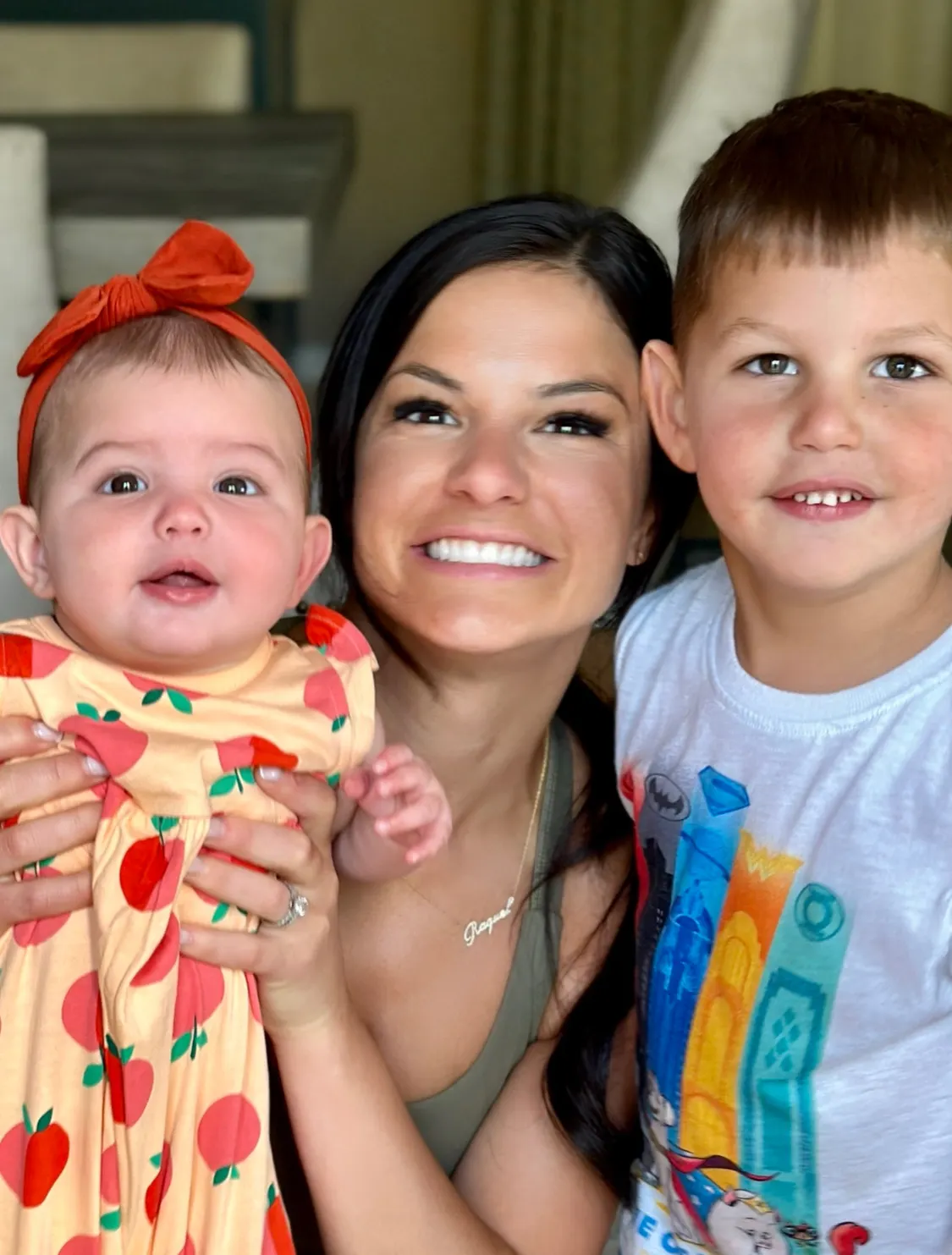
Of course, my most important and proudest accomplishment has been becoming a mom. Being a mom to my two young children is the most rewarding job, but it certainly has challenges. Even more so when living with MS symptoms or flares — there are no days off! Luckily, music continues to be a major part of my life — especially during pregnancy and labor (my birthing playlist got me through it!), and now it’s an important part of my family too. My son loves music, and my husband is a musician, so we often have dance parties in my house to our favorite songs — which is a great way to connect, and often ends in a big pile on the couch — all together!
What advice would you give to other people who have disabilities or limitations?
My biggest advice is to surround yourself with a proper care team. For me, this looks like a good neurologist, a therapist and a supportive community of friends and family who I can rely on being there for me every step of the way.
When the combined stresses of motherhood and MS take an emotional toll on me, it’s critical that I am honest about what and how I am feeling to the amazing people in my life — my “team.” It really gives them a chance to be there for me. Sharing my concerns and my hopes with the people I love and feeling so supported has helped me through challenging days.
None of us are able to achieve success without some help along the way. Is there a particular person who you are grateful towards who helped get you to where you are?
When I met my husband, he said to me, “This isn’t just your disease, it’s our disease.” His words and most importantly his actions are extremely reassuring to me as I continue to navigate my MS.
It may be difficult to admit, but sometimes I need additional help and that’s when I have to be honest with my support network — especially my husband — about what I need. I try to be as open and honest as possible and in turn, it really gives him a chance to be there for me. Although it’s hard sometimes, I really try my best not to shut out the people I love. My family supports me every step of the way — we even love to do the MS in Harmony video modules together — “Name that Tune” is one of our favorites!
How have you used your success to bring goodness to the world?
I was eager to use my platform to spread awareness about MS and the many resources available for MS patients and their families/caregivers as they navigate this chronic condition. I’ve partnered with the National Multiple Sclerosis Society and have had the incredible opportunity to work with the American Music Therapy Association and Bristol Myers Squibb on MS in Harmony.
I found music therapy, which has been around for an extremely long time, to be a very powerful form of therapy for me, as it’s helped to reduce any physical and mental MS symptoms I experience. I hope my positive experience with MSinHarmony.com inspires other MS patients and their caregivers to explore the benefits music therapy has on their mind and body.
Can you share “5 things I wish people understood or knew about people with physical limitations” and why.
- Not every disease is “visible.” MS is categorized as an “invisible disease.” MS looks different in everyone. For me, a lot of the symptoms are things you can’t see, such as fatigue.
- We want you to proactively offer support. Admitting and accepting you have a chronic disease, like MS, is not easy and often embarrassing, especially when you’re newly diagnosed. It’s helpful when someone asks: “I want to be there for you, can you tell me what that looks like right now?” This could look like preparing them a meal, sending funny memes and offering a shoulder to lean on.
- Each person’s experience is unique. When I was first diagnosed with MS, being wheelchair-bound was one of my first concerns because I felt like that was the image of MS I often saw. It’s important to remember that each person’s experiences, symptoms and limitations vary and are unique to them.
- We’re trying our best. When I’m not feeling well and ‘approaching empty,’ I try to communicate it as best I can. All I need is to know that my kids are all taken care of — everyone around me knows feeding and sleeping schedules, pick up, drop off times, dinner, etc. And when I know all my ducks are in a row, that is when I can just fully let go — sleep and relax. That is really all I need…that and my bed.
- Don’t put limitations on us. Even with MS, I’ve been able to live a full life and pursue my dreams as a dancer and mom. While I’m incredibly grateful for my family, friends and MS community for support, MS is just one part of my life.
Can you please give us your favorite “Life Lesson Quote”?
“Life is a dance from one stage to the next.”
This quote empowers me to keep moving forward, especially since being diagnosed with MS. It’s a reminder that not every chapter of life is easy but the ride is worth it — no matter the speedbumps I encounter with my health, I will continue to dance on.
We are very blessed that some of the biggest names in Business, VC funding, Sports, and Entertainment read this column. Is there a person in the world, or in the US whom you would love to have a private breakfast or lunch with, and why? He or she might just see this :-)
Selma Blair. Like me, Selma has MS. Her 2021 documentary “Introducing, Selma Blair” highlights life after her diagnosis and her efforts to slow disease progression. I’d welcome the opportunity to connect with Selma as we both are in the public eye, eager to share our MS journeys with the hope of inspiring others to continue to persevere. MS looks different for everyone, so I’d be interested to hear about her symptoms and how she manages her illness. And of course, as a dancer, I’d also like to hear about Selma’s experience on Dancing with the Stars’ season 31.
Thank you so much for the time you spent with this interview. We wish you continued success and good health!
Thank you for the opportunity to share my experience with MS. My hope is to be able to reach other MS patients and their families/caregivers to inspire and encourage them to lean on the MS community and resources available, such as MSinHarmony.com, to help them manage their MS symptoms so they can continue doing what they love in life.
AM
Written by
Authority Magazine Editorial Staff
Editorial Desk · Authority MagazineThe Authority Magazine Editorial Desk produces, verifies, and edits long-form primary-source interviews with executives, innovators, clinicians, creators, and social impact leaders across Business, Tech, Pop Culture, Wellness, and Social Impact.

Published inAuthority MagazineTop Lessons, Top Authorities · 42K Followers
Exclusive, curated interviews with the leaders and changemakers shaping tomorrow. Leadership lessons, industry deep dives, and executive profiles.