The mistake was thinking I could still train like I did when I was 19. The lesson I learned was that I was not the same resilient player I was as a teenager, and that I needed to practice recovery as hard as I practiced the sport.
As a part of our series about “How Athletes Optimize Their Mind & Body For Peak Performance,” I had the pleasure of interviewing Clyde Staley.
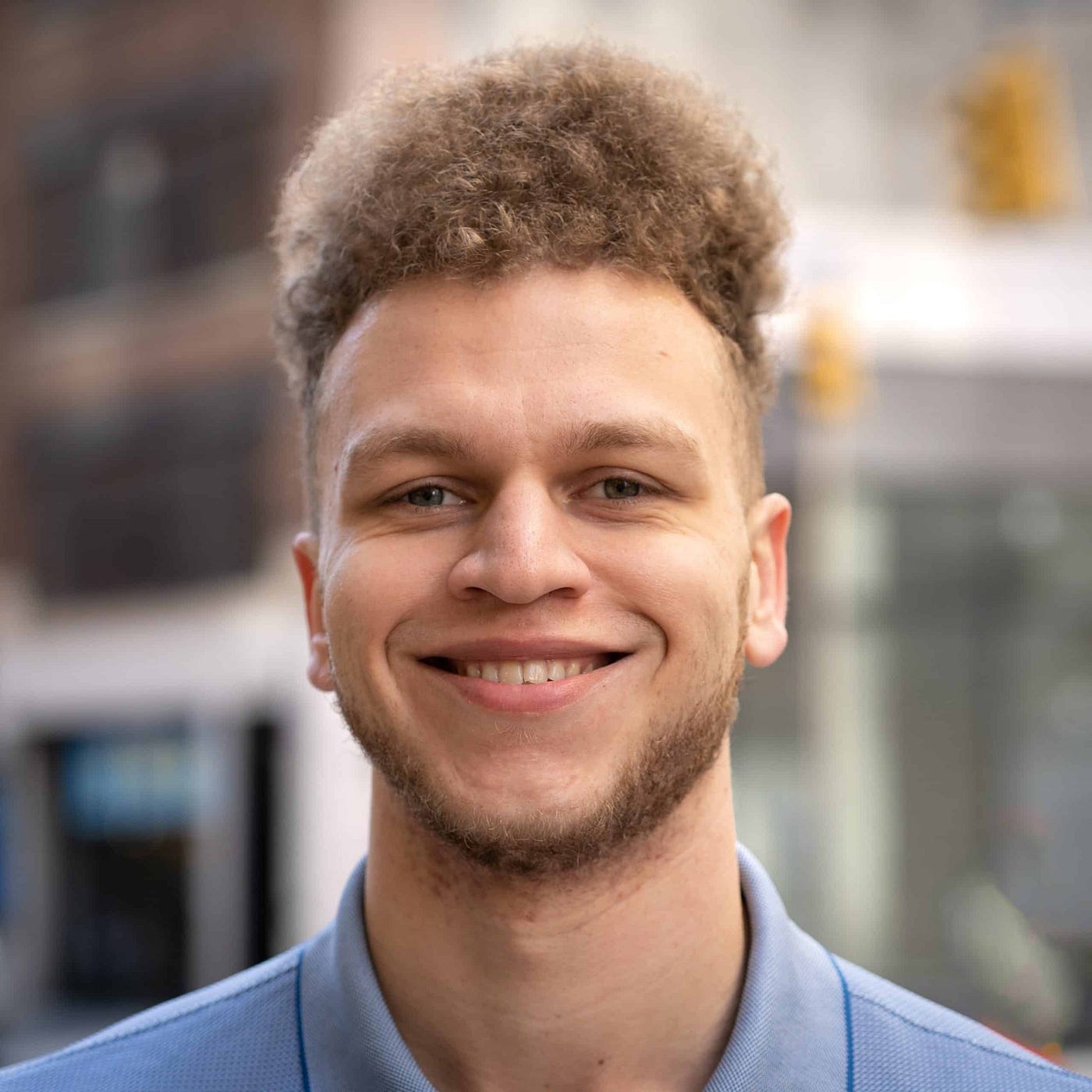
Clyde Staley is Clinical Director of Spear Physical & Occupational Therapy’s Upper West Side Sports Club and specializes in sports rehabilitation, performance optimization, and injury prevention. A Certified Strength and Conditioning Specialist (CSCS), board-certified Sports Clinical Specialist (SCS), and semi-professional soccer player, Clyde brings firsthand experience as both a clinician and competitive athlete to his work with professional, collegiate, and recreational athletes. He earned his Doctor of Physical Therapy degree from the University of St. Augustine, where he received the Distinguished Scholar Award, and is passionate about helping athletes return to play stronger while using movement, strength training, and performance science to prevent future injuries.
Thank you so much for joining us in this interview series! It is a great honor. Our readers would love to learn more about your personal background. Can you tell us the story of how you grew up?
My path to playing professional soccer was not the typical pathway most players take. I played high-level soccer throughout childhood, but after not receiving any offers from the big schools I was interested in, I let my soccer career naturally end in 2016.
After four years away from the sport, I picked it back up during the COVID lockdown while I was in physical therapy school. I saw a tryout opportunity for a pre-professional team in 2021 and made it my mission to make that team. While training for it, the captain of a semi-professional team showed up at the field where I was practicing and invited me to try out for their team. I made that team. In one season, I went from being a practice squad player to being last on the bench to a starter and goal scorer, five years after my last competitive goal.
I couldn’t stay with that team past that season because PT school clinicals required me to travel across the U.S., but I ended up trying out for and playing for a team at the pre-professional level in spring 2022 in Tampa, Florida. I played for that team throughout PT school and into the start of my PT career.
The journey was not the straightforward path that the most talented players take, and it was not the “jump-at-any-opportunity” path that hungry young players take. My journey was one of self-rediscovery, reconnecting with the athlete identity I always had and applying that mindset to prepare for the opportunities I found along the way.
What or who inspired you to pursue your career as a high-level professional athlete? We’d love to hear the story.
What inspired me most was the feeling of having an unfinished story in my athletic career and knowing that I had what it took to finish that story if I set my mind to it. I knew it would be a long shot to get to the professional leagues without an offer from a big school out of high school, but I also knew that I wasn’t at peace with walking away from the sport without making every attempt possible to make it.
That was all I needed to show up every day, even with no one watching and no one expecting me to make it. Turns out, someone — that team captain — was watching, and opportunity knocked when I wasn’t expecting it.
None of us can achieve success without some help along the way. Was there a particular person who you feel gave you the most help or encouragement to be who you are today? Can you share a story about that?
I worked with a performance coach, Chris Reuther, while I was training for my pro tryout. He’s now a performance coach out in Las Vegas.
His training helped me convert from being a stiff, gym-based lifter to being an explosive, agile, powerful soccer player. His drills, coaching, and education helped me develop one of the hardest things for new physical therapists and performance coaches to grasp: programming for sport-specific strength and conditioning. I knew how to program gym and lifting-based training. Working with him during the hot Florida summer taught me the importance of training the neurocognitive system, agility biomechanics, rapid stretch-shortening cycles, and other principles that field-sport athletes need to excel physically in their sport.
Without Chris’ guidance, not only would I not have been the athlete I became, but I would also not be the sports physical therapist and strength and conditioning coach I am today.
Can you share the funniest or most interesting mistake that occurred to you in the course of your sports career? What lesson or takeaway did you learn from that?
The week before my tryout with the semi-pro team in fall 2020, I injured my hamstring doing a sprint workout. It was horrifying in the moment. I thought I had lost my opportunity to try out for the team. Thankfully, the coach was understanding and let me join the team for preseason workouts while I recovered.
The mistake was thinking I could still train like I did when I was 19. The lesson I learned was that I was not the same resilient player I was as a teenager, and that I needed to practice recovery as hard as I practiced the sport.
What advice would you give to a young person who aspires to follow in your footsteps and emulate your career?
The best thing you can do to achieve success, in sports especially, but the same can be said for any career, is to fall in love with the process. Falling in love with the process has led to my success as an athlete and as a leader in the sports PT world.
In order to be a pro athlete, you have to show up every day ready to go and give your very best, whether that’s in practice, in the weight room, at the kitchen table, or in the treatment room. Every action you take and every decision you make is an investment in your future self. The easiest way to show up and give your best every day is to find ways to enjoy every aspect of those days: to look forward to practice, bond with the rehab staff, and enjoy making responsible choices around food and how you spend your downtime.
I tell my patients who are dealing with long-term injuries the same thing: fall in love with the process, and before you know it, you’ll have achieved your ultimate end goal. My most successful athletes who return to the field are the ones who show up to PT every day eager to work hard and have fun along the way.
What are some of the most interesting or exciting projects you are working on now? How do you think that might help people?
At Spear’s Upper West Side Sports Club, I’ve recently launched a Return to Sport Assessment that allows everyday athletes to measure their level of readiness to play sports using the same testing, technology, and objective parameters that professional athletes use.
Professional athletes receive hours of rehab nearly every day during their recovery and work with a team of physical therapists, sports scientists, strength and conditioning professionals, among others, to comprehensively measure readiness to return to sport. Lower-level pros, college athletes at smaller schools, and everyday athletes don’t get this attention to detail at your standard PT clinic. I aim to change that.
Our Return to Sport Assessment measures isometric and isokinetic strength, force output and absorption using VALD ForceDecks, the same ones most pro sports teams use, sport-specific physical performance tests, and psychological readiness screening. These results are reviewed with the athlete and facilitate collaboration toward a gradual and safe return to sport.
This project has been a dream of mine to implement for years. I didn’t have access to this when I was recovering from my own injuries. All I had was, “Yep, range of motion is good, you look strong, go ahead and play next game.”
The athlete who wonders if they’re truly “ready to return to sport” no longer needs to wonder.
OK, thank you for all of that. Let’s now shift to the core focus of our interview. As an athlete, you often face high-stakes situations that involve a lot of pressure. Most of us tend to wither in the face of such pressure and stress. Can you share with our readers 3 or 4 strategies that you use to optimize your mind for peak performance before high-pressure, high-stress situations?
1. Visualization: Before the game starts, I close my eyes and create a vision of what I’m going to do in the game.
2. Self-Talk: I speak to myself in the mirror or record a voice memo so I can hear myself saying what I need to hear. For me, that’s more effective than hearing it from a motivational speaker.
3. Assume the ideal outcome is the only outcome: If success is the only result I envision, I’m a lot more likely to achieve that result.
4. Have fun: It is a game, after all.
Do you use any special or particular breathing techniques to help optimize yourself?
I do a lot of box breathing (4–4–4–4) whenever I’m meditating or activating the parasympathetic response in my body. I also find that when I’m working in a more fast-paced, high-stakes setting where I don’t have time to fully step away, a 4–7–8 breath helps me reconnect with my present self so I can be a better version of myself for my patients and my team.
Do you have a special technique to develop a strong focus, and clear away distractions?
I try to practice gratitude every day, once in the morning before I train and once in the evening before bed. Being grateful for who I am, what I have, and what I’ve accomplished helps ground me no matter how chaotic the day was or how off-track things get during the more difficult days. This allows me to focus my energy and attention on the things that matter right in front of me, right now, rather than spending bandwidth on things that don’t matter in the grand scheme.
How about your body? Can you share a few strategies that you use to optimize your body for peak performance?
I try to follow the same advice I now give my athletes at Spear: prioritize the fundamentals and practice basic habits consistently. The three biggest areas of priority for body optimization and longevity for me include:
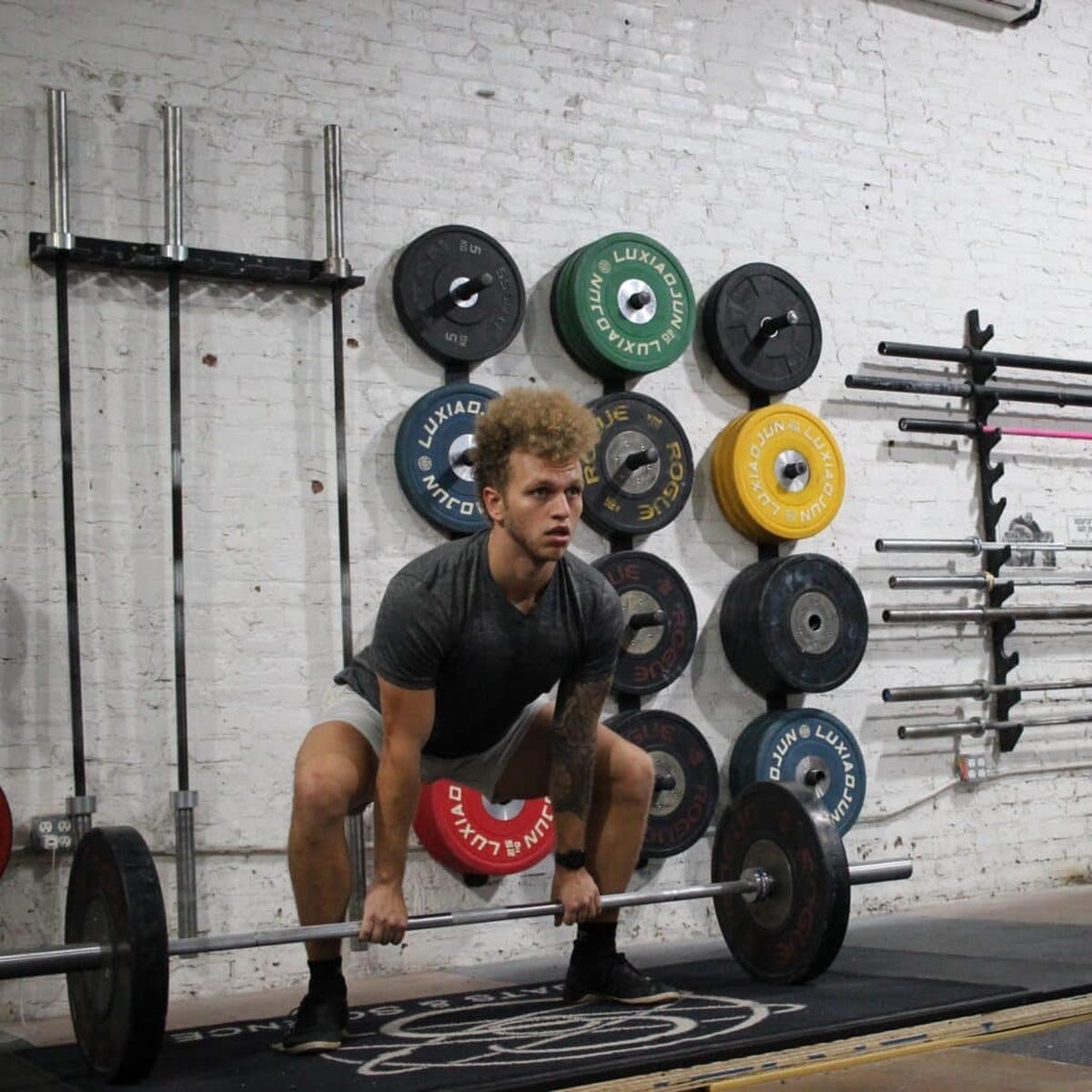
- Strength training consistently: I train three days a week and follow a progressive, periodized program based on where I am in my training cycle. Strength training is a non-negotiable for preventing injuries and optimizing athletic performance.
- Consuming the right foods and nutrients consistently: I eat enough carbs to support training and enough protein to recover well from hard sessions. I try not to demonize food groups; everything in moderation, but the priority is nutrient-dense whole foods and good protein sources.
- Scheduled recovery time: Sometimes this includes prehab or corrective exercise, sometimes it’s yoga, and sometimes it’s a day off and sitting in the sauna. Body optimization means executing recovery as effectively as executing training.
These ideas are excellent, but for most of us in order for them to become integrated into our lives and really put them to use, we have to turn them into habits and make them become ‘second nature’. Has this been true in your life? How have habits played a role in your success?
This is 100% true. It’s incredibly challenging to adopt new and uncomfortable habits at first, but the discomfort of falling short of my expectations is much greater than the discomfort of implementing new habits.
I wake up at the same time, almost every day. I eat the same breakfast every day. I do the same warm-up routine before every run, practice, and game. I evolve if the routine doesn’t fit the way it used to, but the structure and foundation remain the same.
I use the same philosophy with my patients at Spear. It may not be easy to do the home exercise program every day or to show up to PT in between practice, games, school, or work, but the discomfort of the injury almost always hurts more than the discomfort of showing up and doing the hard things necessary to make you stronger and more resilient.
Can you share some of the strategies you have used to turn the ideas above into habits? What is the best way to develop great habits for optimal performance? How can one stop bad habits?
I implemented one of the first ideas from James Clear’s famous book Atomic Habits: “Make it easy.” The lower the barrier to performing the habit, the easier it is to make it stick. I recommend doing your rehab or corrective exercises first on every gym day so you have no excuse to skip them when you’re tired from the main lift. Set your clothes out for morning workouts the night before. Keep gym or exercise equipment in your home, or choose the best gym possible that’s easily accessible from your home or work. The easier something is to implement, the more likely you are to do it. Once you implement it for the first two to three weeks, the “habit” starts becoming the “routine.”
The best way to develop optimal performance habits is to immerse yourself in an environment where others are doing the same. With a team, this is much easier. Spear’s Sports Club is an open-concept gym where everyone is focused on bettering themselves and challenging their limits. Seeing what works for others and identifying as a high achiever elevates the mental aspect of performance, and the physical aspect follows.
Similarly, removing yourself from environments that aren’t conducive to elite-level performance is one of the keys to eliminating bad habits.
As a high-performance athlete, you likely experience times when things are in a state of Flow. Flow has been described as a pleasurable mental state that occurs when you do something that you are skilled at, that is challenging, that is meaningful, and comes with ease because you have practiced so much. Can you share some ideas from your experience about how we can achieve a mental state of Flow more often in our lives?
Flow states are a byproduct of being fully immersed in your present practice. I believe that to achieve a flow state, you must fall in love with the process rather than chase the ideal outcome.
Rather than focusing entirely on your actions on the field, let the habits you build in practice and in the days and weeks leading up to the game be your passion. Focus on getting 1% better each practice, reframe mistakes as learning opportunities, and practice consciously until the outcome you want becomes an unconscious habit.
The flow state you achieve on game day is the result of your love of, and adherence to, the systems and processes you practice leading up to the game itself. I now use these same principles when I’m on the gym floor with my athletes and mentoring my younger PTs.
Do you have any meditation practices that you use to help you in your life? We’d love to hear about it.
I’m a huge advocate of Six-Phase Meditation, a practice built around gratitude, visualization, and intention-setting that has become popular in performance psychology. On the way to a game, I’ll do a full-body scan and a visualization practice to prepare my mind for what I’m about to achieve on the field.
What do you do to prevent injuries during your workouts or during your competitions?
Unfortunately, there isn’t a one-size-fits-all, guaranteed method for preventing injuries in sports. The best way we can “prevent” injuries is by practicing good habits and prioritizing strength training and recovery throughout each phase of the sports season.
I follow a comprehensive, progressive, periodized strength-training routine year-round. I strength train each muscle group at least twice per week, incorporating frontal-plane movements, plyometrics, and explosive exercises. I work at or just shy of failure for intensity. I incorporate prehab and corrective exercises into my warm-ups or off days for my weaker muscles.
On game days and during more intense conditioning sessions, I do dynamic warm-ups and activation exercises for my weak points 100% of the time.
What type of workout regime has helped you to rehabilitate from injury?
The same workout routine that helps reduce my risk of injury in the first place. Anytime I pick up an injury, I’ll usually rest for the remainder of that day. Then, the next day, I start incorporating any corrective exercise that the injured body part can tolerate and strength train the rest of my body to support it.
I pulled my groin during a soccer game on a Sunday night. On Monday morning, I went to my gym and did an incline treadmill walk and a full lower-body strength workout. I just reduced my weights and ensured my pain levels never got above a 3/10 intensity. I assumed I’d be out for weeks or months. I only missed five days because I rehabbed early and often.
The specific exercises I do after an injury are nearly identical to those I do when I’m healthy. The only things I change are the intensity and volume. This allows me to increase my capacity faster than if I were to rest and wait until the pain fully subsided.
Ok, we are nearly done. You are by all accounts a very successful person. How have you used your success to bring goodness to the world?
I’d say my success is the result of, not the vehicle for, trying to bring goodness to the world. I’ve always believed that everyone, no matter how much money they have or how many connections they have, should have access to the best healthcare, knowledge, education, training, and facilities we have to offer.
Spear’s Sports Club is a vehicle for that, giving access to professional-level healthcare, performance training, and education to anyone who identifies as an athlete. But the success I’ve had with opening this practice is the result of going through my athletic career without that level of access for the majority of it, and of building my own clinical and business practices using these guiding principles.
Can you share your favorite “Life Lesson Quote”? Why does that resonate with you so much?
“When you want something, all the universe conspires in helping you to achieve it,” Paulo Coelho, from his book The Alchemist. Every example of success I’ve shared up to this point is the result of persistence meeting passion. I know that if I want something badly enough, and if I take the initiative to achieve it, doors will open in the world around me to help support me on my journey.
We are very blessed that some of the biggest names in Business, VC funding, Sports, and Entertainment read this column. Is there a person in the world, or in the US whom you would love to have a private breakfast or lunch with, and why? He or she might just see this, especially if we both tag them :-)
I’d pick breakfast with Mikel Arteta, the current Arsenal FC manager, and lunch with Scott Galloway, NYU professor and entrepreneur. Mikel Arteta took his team, my favorite team, from a group of talented individuals and turned them into a championship team by investing in people and culture first, with his success coming as a result of those practices.
Scott Galloway is a perfect example of how ordinary people — he uses the term “unremarkable people” — who practice discipline, education, and relentlessness can turn a hard upbringing into generational success.
Thank you for these fantastic insights. We greatly appreciate the time you spent on this.