When I transitioned into my role as CEO I learned if I respond to emails or make decisions too quickly, it eliminates a lot of great ideas and work that my team could add to the conversation.
Business
Charles Watson of Tropical Smoothie Cafe: The Slow-Response Rule That Transforms a Salesman Into an Effective CEO
The chief executive officer of Tropical Smoothie Cafe reflects on transitioning from a fast-paced sales mentality to collaborative leadership and empowering a skilled executive team.
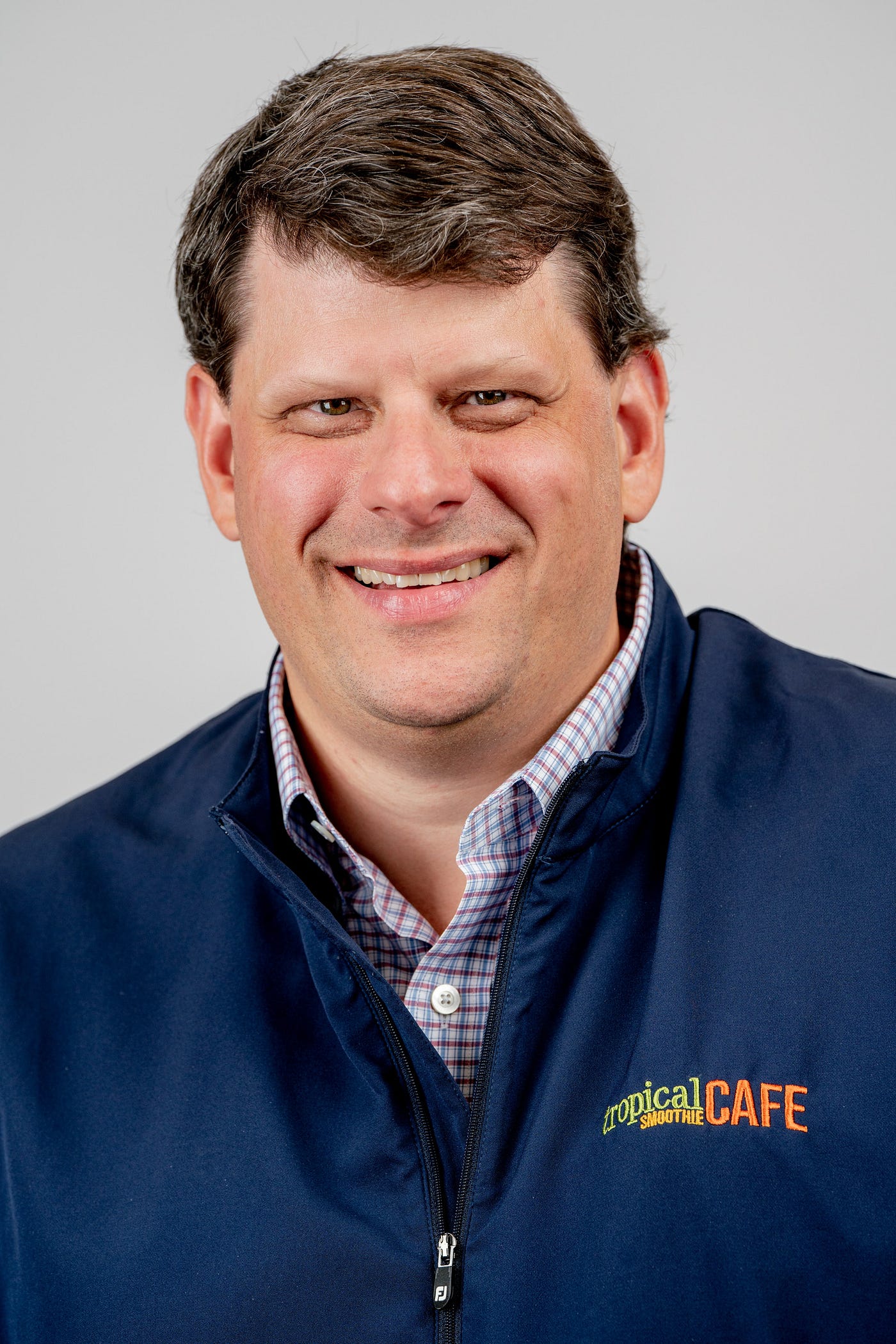
As a part of our series called ‘Five Things I Wish Someone Told Me Before I Became A CEO’ we had the pleasure of interviewing Charles Watson.
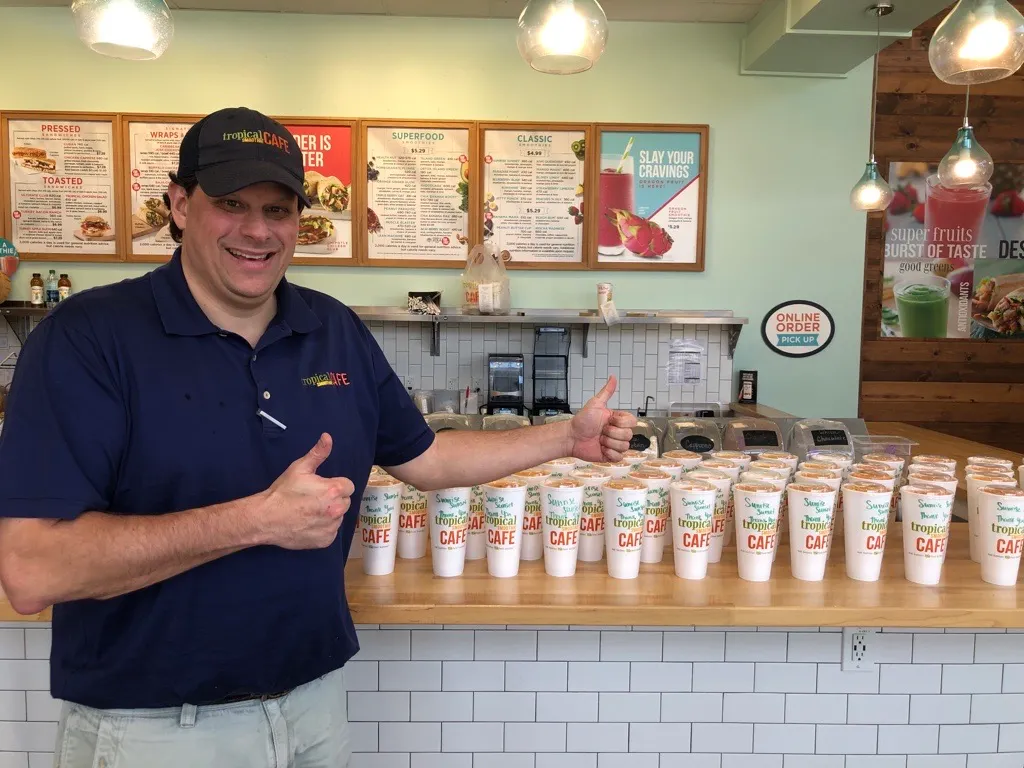
Charles Watson is the Chief Executive Officer at Tropical Smoothie Cafe (TSC) and focuses on the sustainable growth of the franchise system and executing on TSC’s mission to Inspire Better. Prior to ascending to the CEO role in 2018, Charles was the Chief Development Officer for Tropical Smoothie Café. Charles was responsible for all aspects of Franchise Development, Real Estate, Design & Construction, and Franchise Administration. Under his leadership, the Tropical Smoothie Cafe system grew from 265 open units to 725 open units, TSC currently has over 1000 units in 44 states.
Thank you so much for joining us in this interview series! Before we dig in, our readers would like to get to know you a bit more. Can you tell us a bit about your “backstory”? What led you to this particular career path?
I went into sales and development at a young age — I was enamored with business development. Right out of college someone approached me at the Newark airport and asked if I wanted to sell hotel franchises, which is what got me on the franchising path.
I would get in the car from Boston and go to hotel counters asking to speak to the owner, leaving a note and brochure. It was a feet-on-the-street job. It helped me understand what it means to actually knock on doors and appreciate the hard work that comes along with it. I found it difficult because I had thin skin, but it helped to toughen me up.
Prior to college, I worked in my father’s restaurant, starting as a dishwasher at 11 years old. Through my experience in restaurants and the hotel industry, I have a unique perspective on what it means to run a business and I’m passionate about jumping into any situation to get the job done.
Can you share the most interesting story that happened to you since you began leading your company?
One of my proudest moments at Tropical Smoothie Cafe is when our franchise community rallied together to give away more than 300,000 smoothies to first responders and medical workers during the pandemic. In March 2020, when everything around us was so uncertain, we decided to give our smoothies to the people working around the clock to help their communities. It was a small way for us to add a little sunshine to an awful situation for so many. One of the best parts of my job as CEO are the people who reach out to me, almost daily, with stories about how our smoothies are one of the only foods they can tolerate due to medical conditions. I recently I had a young woman reach out who is going through treatment for stomach cancer and smoothies are her main source of nutrition. It gives me such a sense of pride in our product to know that we can support someone in that way. It’s important to me to personally connect with these individuals and let them know that we are here for them.
Can you share a story about the funniest mistake you made when you were first starting? Can you tell us what lesson you learned from that?
I make mistakes all the time. I try to be myself, which is a bit of a goofball. I’m okay with who I am which means I have to be okay with making mistakes. One of the biggest lessons I had to learn was to overcome my sales mentality; in sales you must move quickly on deals and communication. When I transitioned into my role as CEO I learned if I respond to emails or make decisions too quickly, it eliminates a lot of great ideas and work that my team could add to the conversation. Now I try to be the last to respond, not the first, to ensure that the strong team I have built can do what they do best.
None of us are able to achieve success without some help along the way. Is there a particular person who you are grateful towards who helped get you to where you are? Can you share a story about that?
I had my first internship filing papers at Crowne Plaza Ravinia in Atlanta. Tom Oliver, the CEO of Intercontinental Hotels at the time, invited me to the corporate office for lunch one day. At this point in my career, I didn’t realize that when Tom invited you to lunch it meant that you were expected to arrive at his office at noon. Unfortunately, I did not arrive on time, received a call from his executive assistant and never made the mistake again. He is still a great mentor and never lets me forget my rookie mistake.
Toward the beginning of my time as CEO, I invited Tom to come to a team-building event. We were traveling to the venue, and he asked me the current revenue of the company. I told him we were almost at a billion dollars within my first 12 months and he immediately corrected me that he asked me about revenue, not sales. It was another reminder I needed to shift my sales mentality.
Leadership often entails making difficult decisions or hard choices between two apparently good paths. Can you share a story with us about a hard decision or choice you had to make as a leader?
Attracting and retaining talented franchisees is so important and that is what will keep us moving forward in the right direction. Discussions with franchisees who may no longer be the best fit for the company are always difficult. As a leader, any time you make the difficult decision to part ways with someone, it is never easy.
Ok, thank you for that. Let’s now jump to the primary focus of our interview. Most of our readers — in fact, most people — think they have a pretty good idea of what a CEO or executive does. But in just a few words can you explain what an executive does that is different from the responsibilities of the other leaders?
If you’ve done your job as CEO correctly, your executive team should be making the important strategic decisions about the business, and you should be there to clear roadblocks. If you’re making too many decisions as a CEO, I believe that something is out of balance. If I didn’t have a skilled executive team in my first years, we wouldn’t have succeeded in the way that we did. It’s important to empower your executives to shape people, company culture, and strategy.
What are the “myths” that you would like to dispel about being a CEO or executive? Can you explain what you mean?
I believe it is a myth that a CEO is someone innately more intelligent, different, or more special than anyone else. I also don’t believe that the success or failure of the company is totally dependent on the CEO. They must set a culture and direction for the entire company.
Someone who succeeds in a CEO role has a unique skill set, but I don’t believe the CEO role is more important than other roles. To use a football analogy, the quarterback takes the ball and hands it to someone else. It takes a team.
What is the most striking difference between your actual job and how you thought the job would be?
The job as CEO doesn’t happen on your own. When I entered this role, I was the chief development officer who agreed to become the interim CEO for six months while the executive team looked for a long-term hire. The six-month interim position turned into something much longer and eventually I knew I wanted to stay in the position. I didn’t realize that the position of CEO was as collaborative and team driven as it ultimately is, but I am grateful that I raised my hand to become the interim CEO and had the opportunity to find out.
Do you think everyone is cut out to be an executive? In your opinion, which specific traits increase the likelihood that a person will be a successful executive and what type of person should avoid aspiring to be an executive? Can you explain what you mean?
As the CEO I may guide the organization each day, but I must work effectively through other people to make a difference. As an executive moves up within a company’s hierarchy, it can be less fulfilling because there are fewer opportunities to make individual contributions — the focus shifts to empowering the team around you. You may not always see tangible results right away in this role, so patience and a clear path forward are key.
What advice would you give to other business leaders to help create a fantastic work culture? Can you share a story or an example?
It helps to have great people around you that remind you that business is about personal relationships. Wishing the people around you happy birthday or happy anniversary is so important. When other people have done that for me it has really meant something special and inspires me to share that same feeling with others.
I believe if you develop meaningful relationships, they can be mutually beneficial at different times for each person. I feel that professional relationships have the capacity to develop into important friendships.
How have you used your success to make the world a better place?
I support organizations that have supported me and offered opportunities that have led to where I am within my career. I am passionate about putting my time and dollars toward education so that kids like me who may not be A+ students but still have a broad skill set, can reach their unique potential.
Fantastic. Here is the primary question of our interview. What are your “Five Things I Wish Someone Told Me Before I Became A CEO” and why? (Please share a story or example for each.)
1 . Slow down. You don’t have to make a decision today and no one expects a decision immediately.
2 . Hire slow, fire fast. You must have a thorough process when hiring someone. The business isn’t going to fail while you take your time finding the right person.
3 . Culture is king. People and relationships rule. Companies succeed when people are aligned to work on a common goal they believe in.
4 . Give and Take. The relationship between a company and its employees must be mutually beneficial. If the opportunity is not equitable it will be harder for a company to attract people that can drive a healthy culture.
5 . Numbers matter. Success in business is numbers driven and you must be able to accomplish financial goals in addition to goals that drive culture.
You are a person of great influence. If you could inspire a movement that would bring the most amount of good for the greatest number of people, what would that be? You never know what your idea can trigger.
Our vision at Tropical Smoothie Cafe is Inspire Better. Ultimately as the CEO I want to inspire positivity. Doing the right thing and feeling good about yourself are all a part of the positivity loop which can help make the world a better place. While I am in this role as CEO, I want to work toward what is in my heart which is doing small things one day at a time to make a big difference.
Can you please give us your favorite “Life Lesson Quote”? Can you share how that was relevant to you in your life?
You must have the right attitude and be in the right headspace to attract positivity. Attitude is everything. I have had experiences in my life, especially in high school, where I needed to lean into positivity. That mindset can make all the difference.
We are very blessed that some very prominent names in Business, VC funding, Sports, and Entertainment read this column. Is there a person in the world, or in the US with whom you would love to have a private breakfast or lunch with, and why? He or she might just see this if we tag them
Jon Meacham. I’m a big history buff and I really enjoy his take on current events. He is open about the divided nature of the country, but he puts a positive spin on it by reminding us where we have come from and how much progress we have made. He is a breath of fresh air and reminds me that what we are going through right now is not unprecedented.
Thank you for these fantastic insights. We greatly appreciate the time you spent on this.
About the Interviewer: Douglas E. Noll, JD, MA was born nearly blind, crippled with club feet, partially deaf, and left-handed. He overcame all of these obstacles to become a successful civil trial lawyer. In 2000, he abandoned his law practice to become a peacemaker. His calling is to serve humanity, and he executes his calling at many levels. He is an award-winning author, teacher, and trainer. He is a highly experienced mediator. Doug’s work carries him from international work to helping people resolve deep interpersonal and ideological conflicts. Doug teaches his innovative de-escalation skill that calms any angry person in 90 seconds or less. With Laurel Kaufer, Doug founded Prison of Peace in 2009. The Prison of Peace project trains life and long terms incarcerated people to be powerful peacemakers and mediators. He has been deeply moved by inmates who have learned and applied deep, empathic listening skills, leadership skills, and problem-solving skills to reduce violence in their prison communities. Their dedication to learning, improving, and serving their communities motivates him to expand the principles of Prison of Peace so that every human wanting to learn the skills of peace may do so. Doug’s awards include California Lawyer Magazine Lawyer of the Year, Best Lawyers in America Lawyer of the Year, Purpose Prize Fellow, International Academy of Mediators Syd Leezak Award of Excellence, National Academy of Distinguished Neutrals Neutral of the Year. His four books have won a number of awards and commendations. Doug’s podcast, Listen With Leaders, is now accepting guests. Click on this link to learn more and apply.

Published inAuthority MagazineTop Lessons, Top Authorities · 42K Followers
Exclusive, curated interviews with the leaders and changemakers shaping tomorrow. Leadership lessons, industry deep dives, and executive profiles.