If you focus on the story, and don’t take things personally, you will see what your story is missing, isn’t needed, what could be changed to create more impact, and all the elements that make a good story great.
Some writers and authors have a knack for using language that can really move people. Some writers and authors have been able to influence millions with their words alone. What does it take to become an effective and successful author or writer? In this interview series, called “5 Things You Need To Be A Successful Author or Writer” we are talking to successful authors and writers who can share lessons from their experiences. As part of this series, I had the pleasure of interviewing Catharina Steel.
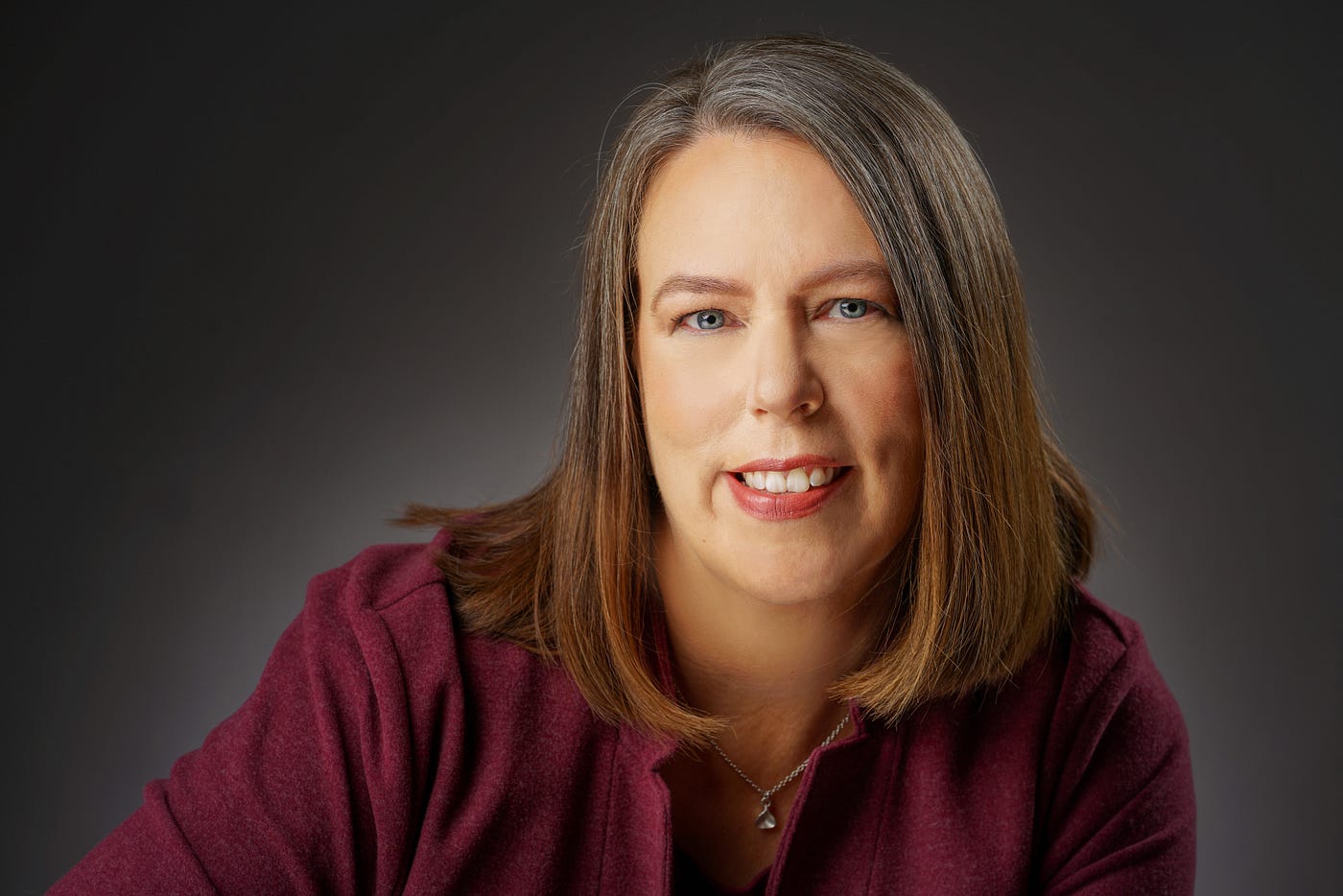
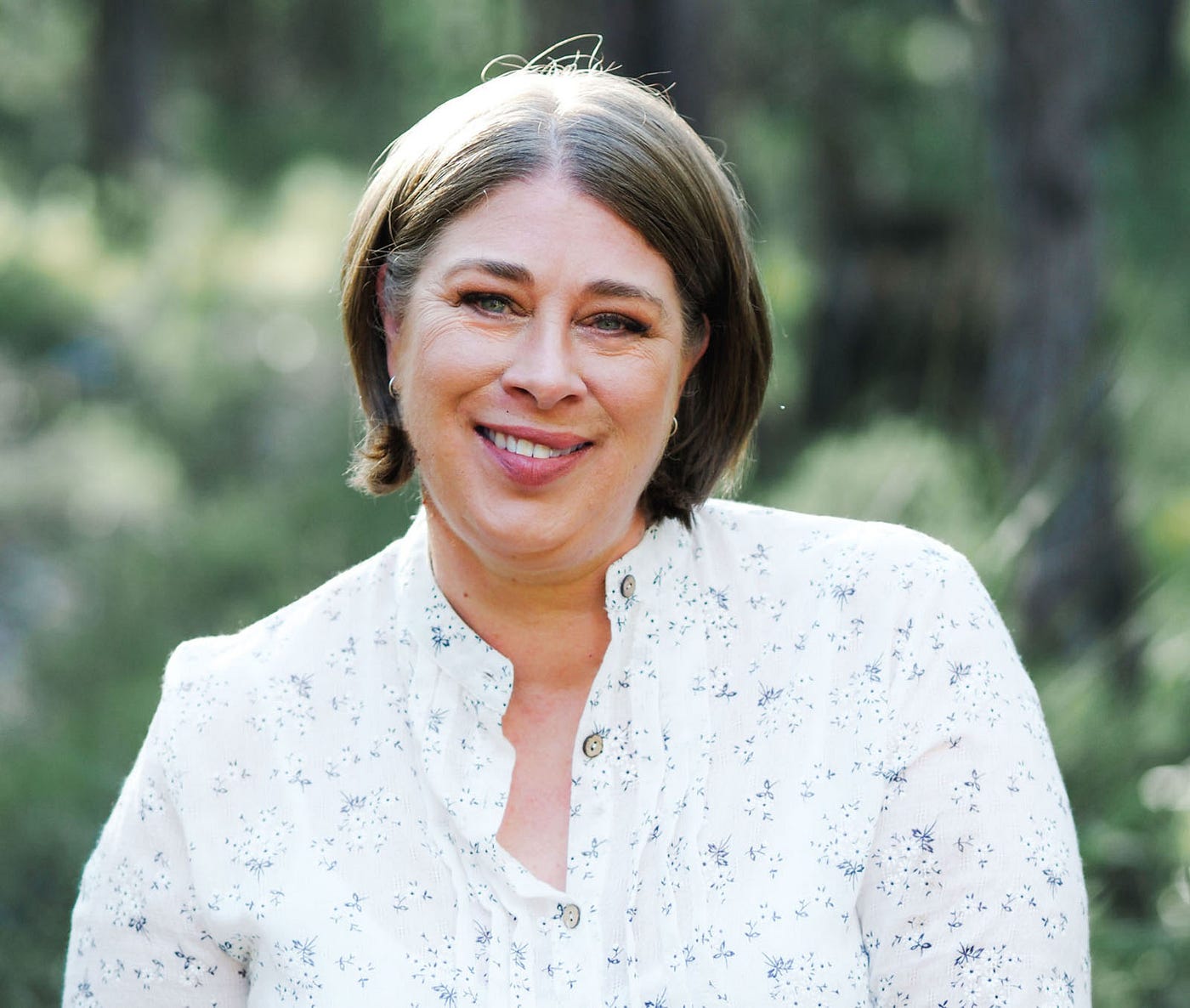
Catharina Steel has an adventurous spirit and enjoys traveling and exploring. The forests in The Wythic Wood Mysteries series stems from her love for hiking, the outdoors, and the enchanting essence found in these settings. Catharina's book Vanishings is being published by SparkPress on 20 May 2025. Check out her website for more information: www.catharinasteel.com.
Thank you so much for joining us in this interview series! Before we dive in, our readers would love to “get to know you” a bit better. Can you tell us a bit about your ‘backstory’ and how you got started?
When I was younger, I loved fantasy and mystery adventure novels such as the Famous Five Series and the Faraway Tree Series by Enid Blyton. I also enjoyed Alice in Wonderland by Lewis Carroll, and the Lion, the Witch, and the Wardrobe by C. S. Lewis. And many other novels within these genres. They sparked my imagination and I would use my toys to tell my own stories.
Very early on in my youth, way before it was time to consider a career path, I was discouraged from pursuing writing. I entered the workforce in a fulltime administrative position when I was sixteen. When I was eighteen, I was encouraged to study accounting because I showed an aptitude for this work. After working in this field for twenty years, my struggle with anxiety made it impossible to continue.
About seven years ago, I was sitting in my living room, thinking to myself, “what now”? When I visualized these magical creature homes located in a forest. A black knee-high boot, inspired by Mother Hubbard, where a mythical creature-witch lives. A twin-mushroom house where a kid-gnome lives. A fairy’s home made within the trunk of a tree, and another’s a tree-house, way up in the tree tops! I pictured a fairy city up there—with fairy-lights the lights from all the homes. Then I thought about a fort, and remembered my trip as a child in Germany where we visited several old castles. My mind lit up with excitement as I pictured rocks forming the four corners of the fort with another rock at the center, surrounded by gardens and lawn. But what about the walls? My thoughts travelled to a treetop walk I’d been on where the walk was hung by strong wires from the trees. I smiled as I imagined fir trees grown closely together, in rows, to form the four sides of the fort, with a lily-pad gate that lowered down to meet the lily-pad bridge across a pond—the fort itself located on an island in its center. I decided that this was the home of a goblin named Mort.
A story was developing in my mind and I felt the need to write it. I had no idea what I was doing when I first started to write what is now called “Vanishings”, but start I did!
Can you share the most interesting story that occurred to you in the course of your career?
It’s been an interesting journey, learning to write, but an important one was the very real mistake that many first self-published authors make—I published to soon.
I had obtained the services of editors, here in Australia, and they had a good reputation and edited traditionally published Australian children’s books. I reached out to them, provided some information about me and my story, and asked for a quote. Their response and price was reasonable and I decided to go with them. Their feedback was invaluable and I truly appreciate everything they taught me.
The only problem is that they were editing to what their idea of an acceptable self-published children’s book was—but they didn’t indicate this to me until it came up after my third book was edited. I can’t remember exactly how it came up, but I had received a review on the first book from a person at Voyage Media which indicated the book was not publish ready. This was confusing because I had received 5-star reviews for each book from a reputable book review business (even for traditionally published books). However, reading the notes from the reviewer, I knew she was correct—the book had been published too soon.
I took her notes and began doing a rewrite which I submitted to SparkPress about six months later. They thought the story was great, but there were still a few issues with telling and head hopping, and suggested I work with a book coach. This book coach, Sharon Skinner, was amazing. We met on zoom to discuss my book and how the coaching service worked. The value I received from working with Sharon (who I continue to work with) was well worth the expenditure. My writing improved so much under her guidance and I find myself able to see things so much clearer now.
When I resubmitted to SparkPress, after completing the work with Sharon, my manuscript was accepted and I commenced working with another editor to further improve the manuscript. Words with Erica offered some great insight and helped me to bring my story further to life.
The importance of knowing the skills of the editor you are working with, and the level they are editing to, has been well enforced through this experience. Receiving feedback, even when it may appear harsh, is about leveling up your story. If you focus on the story, and don’t take things personally, you will see what your story is missing, isn’t needed, what could be changed to create more impact, and all the elements that make a good story great. If you find an editor who can help you with that, then this is a great editor! And a great editor is worth their weight in gold!
What was the biggest challenge you faced in your journey to becoming a writer? How did you overcome it? Can you share a story about that that other aspiring writers can learn from?
I did a business degree at university and worked as an accountant for twenty years. But I’ve always been a writer. It’s a part of who I am and I feel like the end of my accounting career opened up the space for me to pursue what I believe I always should have done. It’s been an interesting journey to learn the craft since I had no previous training in writing—all while I completed drafting my first novel and then revising it again—and again! I’m fairly certain I’ve read this story one hundred times over!
I’m aware that most authors will move on to a new story (rather than rewrite the first one), but I strongly believed in my story—albeit badly written at first. I’ve worked with several editors over the last six years, all who helped me learn the various aspects to crafting a good—and then a great story. About eighteen months to two years ago I did the best thing I could do for my writing career—I hired a book coach. The transformation in my understanding of the craft was elevated so much through this process. If a hopeful writer wants to really improve their writing, I strongly recommend saving up to afford to work with a book coach. The is cost extremely reasonable considering the outcome. As an x-accountant—that’s saying something [smiles].
It has been said that our mistakes can be our greatest teachers. Can you share a story about the funniest mistake you made when you were first starting? Can you tell us what lesson you learned from that?
I don’t have a definite funniest mistake story, but my goodness, I’ve made mistakes galore! I guess the funny part is how I started, and then stumbled my way to where I am today—seriously, I’ve stumbled my way along this path! But it’s all been worth it.
I simply started writing my story. I had no idea where the story was going to end up. I had no idea about show don’t tell. I had no idea about character or world development. I had no idea about story arcs or the character’s emotional arc. To put it simply—I had no idea what-so-ever what I was doing!
I had written about 1,000 words and then stopped and stared at the screen. “How many words should a chapter have?” I asked myself and then frowned. “How many words should a book have?” I opened up my internet explorer browser and googled each question. A part of me thought this was a silly question, but it turns out this is quite important as there are word counts expected for different ages and genres. For a debut book, it’s best to stick to these ranges. (A stumble in the right direction . . .)
I continued writing (stumbling along), occasionally stopping to wonder why I was doing this. “What did I hope to achieve?” I didn’t know the answer to that. I figured I would publish it, but I had no idea how to do that either. I had nearly written the first (massively horrible) draft of my story when I realized that it would be a good idea to get an editor—I knew I majorly needed guidance! At this point I googled for a list of editors and found several I thought were a good fit for the genre and age of the story. I’m not sure how I figured out that this was important, but I was right about it, I guess the logical side of my brain thought this made sense.
While I waited for my manuscript to be edited, I began researching agents, and started to see that this was going to be a difficult task. Not only did I need to find an agent that was interested in my genre, but they also needed to be open to receiving submissions. Around this time, I realized I could self-publish and this seemed to be an easier route (it’s really not). Since it was going to be quite a few weeks before I would receive the edit back, I began writing the second book—still with no real clue what I was doing.
While this story has an undertone of humor, the reality is, I did the right thing by simply starting. Sometimes, if you don’t know how to do something, the best thing is to just give it a try. You’ll find yourself asking questions as you go. And, eventually, you’ll get better at it. The important thing is to never give up!
I didn’t know any writers who I could turn to for advice, but I think it would have been helpful to approach some as they could have pointed me to a few books which explained the things I ended up learning the hard way—such as show don’t tell and head-hopping (switching point-of-view in the middle of a scene). I possibly could have reached out to an author by searching one to approach online. But I didn’t think to do this at the time.
In your opinion, were you a “natural born writer” or did you develop that aptitude later on? Can you explain what you mean?
When I was younger, I would tell stories when I played with my dolls. I often wrote stories, and later poetry, as something I enjoyed doing. I loved reading stories from a young age, and I wanted to create my own. I had a writer’s heart from a young age—although I was discouraged from becoming one. It’s been a relief to get back to what I truly believe I was born to do.
It was disheartening to be pushed toward an accounting career. I honestly wished I had studied to become an English teacher, and pursued my writing on the side. This would have been a much better fit for who I am as a person. It highlights to me that the people who pushed me toward this career really hadn’t taken the time to see the things I enjoyed doing and that, while I happen to be very good at accounting, it was not the sort of work that would ever fulfil me. I was bored/unchallenged doing this work. I wish I’d had someone who supported me more when I was younger. Who had thought beyond the earnings potential and encouraged me to work toward a career that was better suited to my interests and personality.
To answer the question: I believe I’m a natural born writer—but I still needed to learn the craft to become a better writer. I hope to become a great writer one day, but I feel I’ve still a long way to go to reach that skill level—I love the challenge of this.
What are some of the most interesting or exciting projects you are working on now?
I’m currently working on editing the second book in The Wythic Wood Mysteries Series. Some of the rewritten elements in Vanishings has opened up the story in a way that excites me and I decided to split the second book (that I’d previously written) into two books. I feel that it always should have been two books, but it wasn’t until I did the rewrite of the first book that this all fell into place. I can’t wait to get it edited and ready to be published.
I’m also thrilled with the YA adventure romantasy series that I’m working on. I think this will have a wider commercial appeal compared to my middle grade series. This story explores the concept of being different to others around you and how hate and prejudices can drive others to do horrible acts—using kinetic powers as the driving force for this.
Here is the main question of our interview. Based on your experience, what are the “5 Things You Need To Be A Successful Author or Writer”? Please share a story or example for each.
1 . Get a good editor. That there are different quality editors out there and they all have their preferred genres—just like you as a writer do. Make sure you understand the scope and capacity of the editor you are working with.
2 . Book cover design is Important. This ties into the current marketplace interests. Make sure you get a designer who is experienced and understands the impact of a good cover to help market your book.
3 . Marketplace Standards. It’s necessary to be aware of the formatting standards for the marketplace you're publishing in (it's different in the US to Australia and United Kingdom.)
4 . Know the rules of the craft! Make sure you understand what keeps a reader turning the pages. Finding that balance between show and tell, understanding what information dumping is, what makes a scene great, and so much more. You need to know the rules to break them—if you’re using that to create an important element to the story you’re writing.
5 . Genre Specific Expectation. This ties into the readers of the genre you’re writing in will expect. EG a mystery needs to have a missing person (at least), without this, it’s just not a mystery novel!
Video YouTube Link: https://youtu.be/o-v_Nld9TSQ
What is the one habit you believe contributed the most to you becoming a great writer? (i.e. perseverance, discipline, play, craft study). Can you share a story or example?
I can be very stubborn! I tend to dig my heels in and will perseverance something within the face of “you’ll never be successful” or “it’s too hard”. I pursued learning the craft as I worked on my stories. I was open to constructive criticism. (There is a difference between criticism where the person truly wants to help you and are in a position to versus someone who is being judgmental without good intentions. Trust your senses on this.) Don’t be afraid to ask for help and also, have fun with it. If you aren’t enjoying what you are doing, at least most of the time, then maybe this isn’t the right thing to do. I think you need to have a strong desire to write—a need to write—because the pursuit is no small feat! Honestly, I still have a long way to go, but I feel so strongly that this is my calling, my passion—the path I’m meant to take. It’s not really a choice so much as I am compelled to keep on working toward my goal—to write great stories that readers can’t put down and they want to read my next book, and my next . . . That’s what my success story will look like. [smile]
Which literature do you draw inspiration from? Why?
I draw from the memories I have of the books I read growing up such as I mentioned earlier, but also Anne of Green Gables by by Lucy Maud Montgomery, the Secret Garden by Frances Hodgson Burnett, and even the Babysisters Club books written by Ann M. Martin, and so many more! The inspiration comes from their creativeness in storytelling—in a way, they gave me permission to write my own creative stories.
I tend to set my worlds in the great outdoors, something I’m passionate about and which I try to enjoy whenever time, and my various injuries, permit. Something so simple as looking at a trail of water through the leaves on the ground, the result of a heavy downpour—I see small creatures gathered by it, wondering how they will cross this ravaging river. The pebbles boulders, creating a place to hide in. The knots on trees, a secret door. The drew-drop on a leaf, a magical bead. The spiders webbing, a delicate crossing or a piece of thread waiting to be gathered. I pull from many memories I had playing, hiking, swimming in creeks, exploring the world around me that gave my imaginative mind so much scope to play with—and the books that sparked my imagination to see the world differently.
Seeing beyond what we’re taught to see can be so much fun—and is super beneficial when it comes to the workplace because you’re better equipped to think outside the box! It was William Armstrong’s imagination that thought “How do we harness electricity?” I think imagination (fantasy stories) have a bad reputation within some audiences—but it’s actually this amazing tool we have as humans. I choose to use my imagination to entertain. And who doesn’t like to pick up a good book, watch a great TV series, movie, or live show, listen to music, appreciate artwork, and more? If you can imagine a story, see it in your mind, then you can’t ignore it—it’s calling to you to write it!
I’ve always been a “day dreamer”, but I’m really devising a story idea in my head. I love writing in magical worlds because this provides so much scope to express things such as appreciating each other’s differences, and seeing how this works in a team. I also find that it’s such a fun genre to write in. I can make it whatever I want it to be without the limitations of the real world. What’s not to love about that?
You are a person of enormous influence. If you could start a movement that would bring the most amount of good to the most amount of people, what would that be? You never know what your idea can trigger. :-)
One of the things I see happening, particularly online, is the way people feel like they’re in a position to be extremely nasty toward others. I find this so sad to see.
If I could influence others, I would love to start a movement where people understood that others come from different backgrounds, have different talents and interests, have had different experiences which has shaped them, and that this is a good thing—not something to be bullied, teased, ridiculed, scoffed at, ostracized for, and so forth—whether that’s in person or online doesn’t matter (but online is truly a sign of a small person because they’re hiding behind the keyboard).
From my experience in the business world, I know it takes a group of people with different skills to get a task done well. There may be those who are able to perform multiple aspects, but there will be certain areas they’re better in than others, and others who are better in the areas where they are not. This is where having people with different skills plays an important role.
When you consider a board of directors, or the people in management, having people from different backgrounds, with different knowledge and skills, will almost always result in a better run business than if they are all say, for example, rich white men. These men can’t understand the consumer demands of women, of other cultures, of what is considered unacceptable within certain communities, and so forth because they are not from those groups. They are simply not in a position to make the best decisions in certain areas. Having both men and women, who come from different backgrounds, is important for a business’s success because they typically make better decisions as a whole.
So, see that person who looks different to you, and/or who has completely different interests, ideas, and skills/talents to you, as the person you want to make your friend (for reals, no pretending). Learn from each other. It will be a much better place for it. I think you will find out, sooner or later, that there are many things you have in common. If not, you will at least have learned some new things and will be able to rely on each other from a learning standpoint.