When we were just starting out, I would be in a room with Jake, and people would talk to him while never making eye contact with me. I felt the need to dress, talk, and act a certain way to be taken seriously — and to gain that eye contact from the other people in the room.
Business
Caroline Danehy of Fair Harbor: How Overcoming Early Dismissal in Male-Dominated Rooms Built an Inc. 5000 Sustainable Apparel Brand
The co-founder of Fair Harbor shares how navigating early entrepreneurial mistakes, scaling sustainability, and setting firm boundaries helped build one of America's fastest-growing private companies.
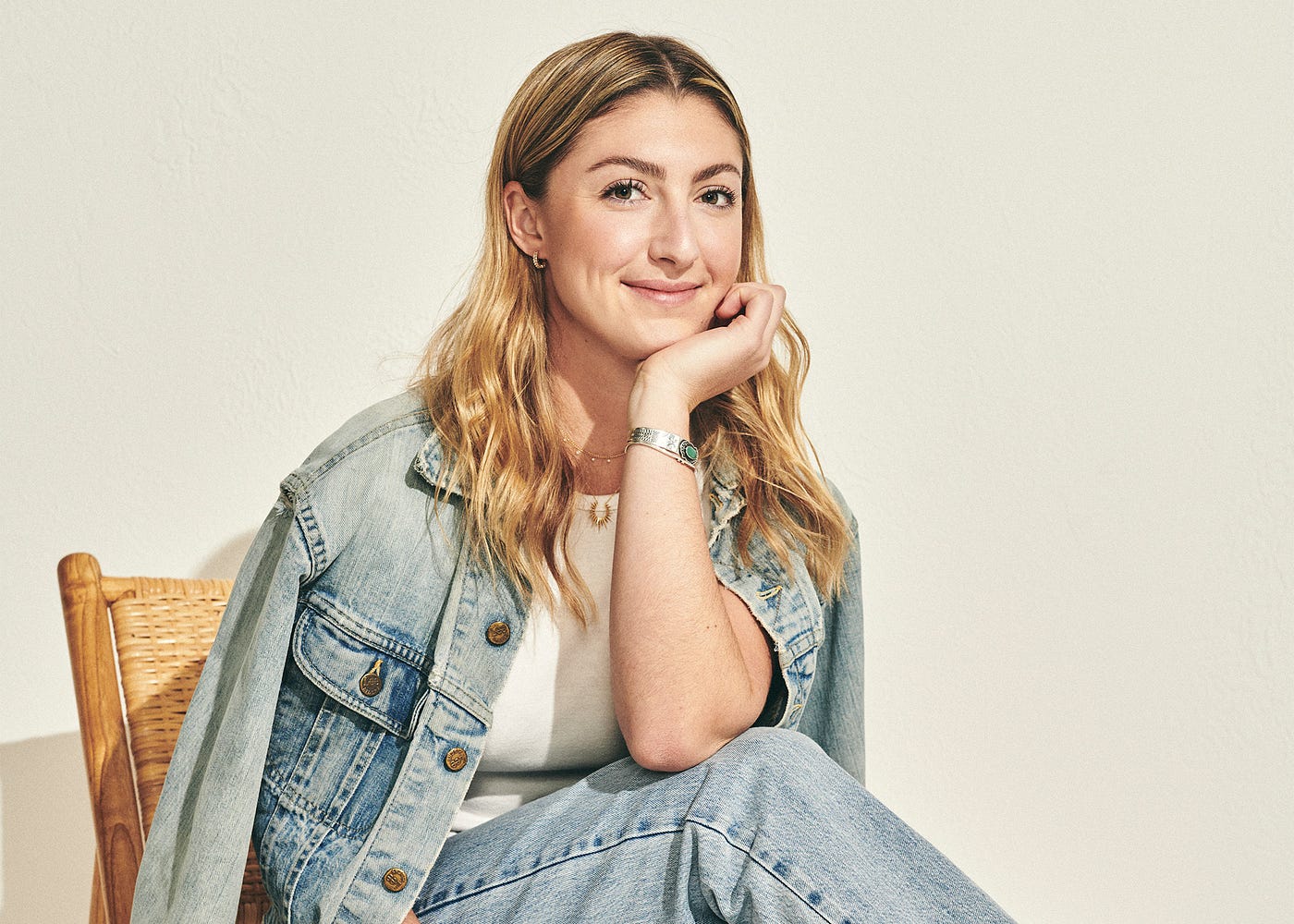
As a part of our series about “Why We Need More Women Founders”, we had the pleasure of interviewing Caroline Danehy.
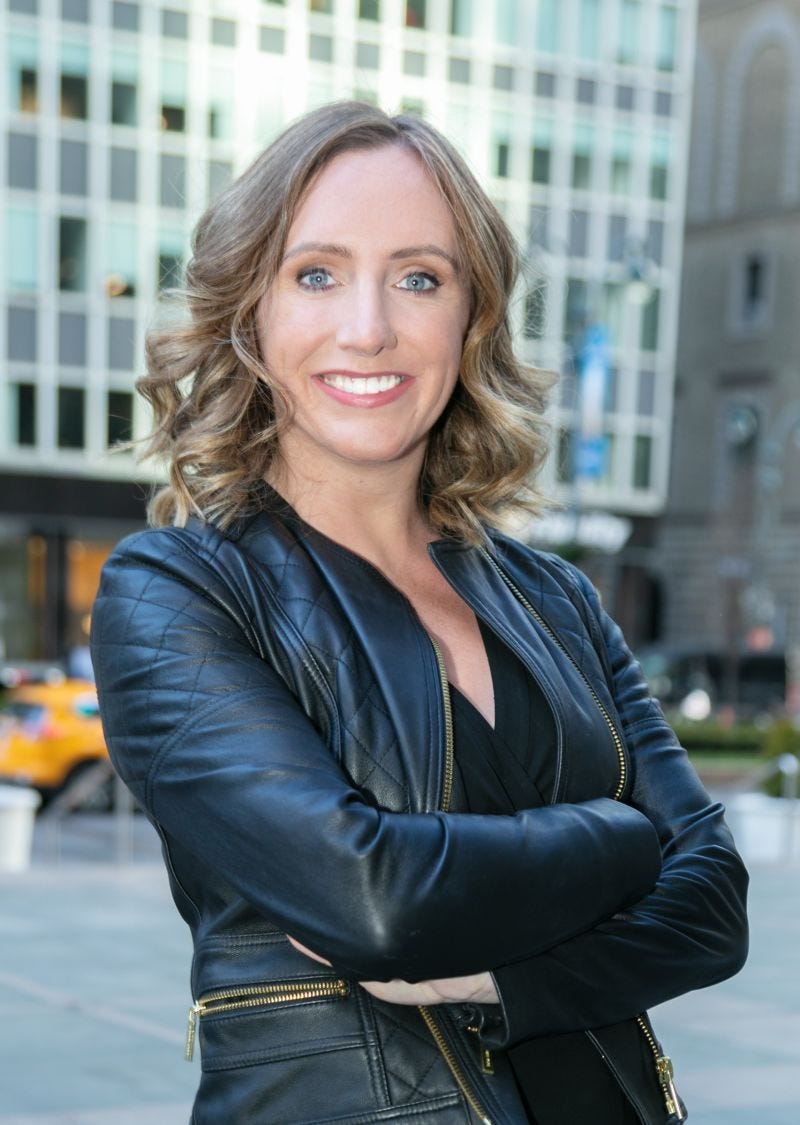
Caroline Danehy is the Co-Founder and Chief Brand Officer of Fair Harbor, which makes the world’s most comfortable and sustainable apparel. Inspired by her childhood spent on the shores of Fair Harbor, NY, Caroline launched the family business with her brother, Jake, in 2014. The duo quickly disrupted the men’s swimwear space by inventing BreezeKnit™, an ultrasoft interior fabric liner made from recycled plastic bottles, which solved the chafing problem of traditional swimwear. Since then, Fair Harbor has expanded into a year-round coastal lifestyle brand for the whole family with categories that include women’s wear, kids’ wear, knits, outerwear, and accessories.
Under Caroline’s leadership, Fair Harbor has evolved into one of the fastest-growing sustainable apparel brands in the United States. In 2020, Inc magazine’s 5000 List named Fair Harbor the 26th Fastest-Growing Private Company in America and the #2 Fastest-Growing Private Retail Company. In 2022, the company opened two retail locations and earned B-Corp status. Since first launching nine years ago, the company has repurposed more than 30 million recycled plastic bottles into comfortable, durable, and stylish apparel.
For Caroline, a former fashion blogger and committed environmentalist, Fair Harbor is the culmination of two of her interests, style, and sustainability. Her passion and persistence for both have garnered her awards and recognition. In 2020, she was named in Forbes 30 Under 30 list, and a year later, she was honored with both the EY Entrepreneur of the Year Award and the Reuters Responsible Business Award. Caroline has also appeared on numerous industry panels as an entrepreneurship and sustainability best practices expert.
The New-York based entrepreneur holds a geography degree from Colgate University. A daily practitioner of mindfulness, Caroline is also a certified yoga instructor.
Thank you so much for doing this with us! Before we dig in, our readers would like to get to know you a bit more. Can you tell us a bit about your “backstory”? What led you to this particular career path?
Thanks for asking me to do it.
I started Fair Harbor with my brother, Jake, about nine years ago when I was a senior in high school. Fair Harbor is a sustainable apparel company, and we make our products out of recycled plastic bottles and other environmentally friendly fabrics. It’s our mission to create products for people to enjoy the places they love while protecting them too. And we’ve had a real impact: to date, we’ve recycled over 30 million plastic bottles.
Our brand was inspired by Fair Harbor, a small town off the coast of Long Island, where we spent summers learning to swim, surf, and fish and consequently became connected more with the environment. While Fair Harbor is our spot, everyone has their own version. And we’ve focused on creating an inclusive platform that connects people through shared similar experiences in places they love and want to protect too.
Can you share the most interesting story that happened to you since you began leading your company?
While I have a lot of specific interesting stories over the years, I think the overarching theme that I’ve come to recognize is the importance of staying agile.
The business has demanded different things from me at various times, which has required me to keep learning and challenging myself to adapt and grow. As a result, the business practices and strategies that got us to where we are now differ from those that will take us to where we want to go.
As we bootstrapped the business, Jake and I had to operate everything ourselves, which meant keeping our heads down and just pushing forward. We’ve hired a team of incredibly smart, experienced, and genuinely good people to help us run our organization. Starting Fair Harbor in high school means I have never worked in a big company or for someone else. As I’ve transitioned my role from operating to managing and leading, I’ve grown and evolved in exciting ways I could have never predicted.
Can you share a story about the funniest mistake you made when you were first starting? Can you tell us what lesson you learned from that?
The funniest mistake we first made happened at our official launch party during the summer of 2015 with our first line of boardshorts. I organized an event at the Delancey Bar on the Lower East Side. They wouldn’t let me in when we arrived because I was only 18. I finally convinced them to let me in with big X’s all over the backs of my hand, signifying that I could not be served alcohol. Then at the end of the night, Jake went to the bathroom to find out that the velcro in the fly of the boardshorts wasn’t properly sewn– they were glued–and Jake’s had come apart. Once we looked at the others, we realized all 500 were glued.
That was our first lesson in understanding that the customer always comes first, no matter what. After that, we took all the boardshorts we had sold and the remaining inventory to a local seamstress to sew them all down properly.
None of us are able to achieve success without some help along the way. Is there a particular person who you are grateful towards who helped get you to where you are? Can you share a story about that?
When we started Fair Harbor, we didn’t fully wrap our minds around what it would take to build it. We had a clear vision of what we wanted with it, which has remained the same vision after all of these years, but we were naive in understanding the stress, challenges, and the pressure required along the way. The mental health issues exacerbated by entrepreneurship aren’t really talked about that much, but I have personally struggled with the anxiety that comes with founding a business.
I am beyond grateful for the mental, emotional, and physical support of my family: my mom, dad, and sister — from allowing us to turn their garage into our shipping facility, stepping in for trunk shows when an intern called in sick, providing shoulders to lean on or those late night conversations talking through strategy, we wouldn’t be where we are without them.
Ok, thank you for that. Let’s now jump to the primary focus of our interview. According to this EY report, only about 20 percent of funded companies have women founders. This reflects great historical progress, but it also shows that more work still has to be done to empower women to create companies. In your opinion and experience what is currently holding back women from founding companies?
When we were just starting out, I would be in a room with Jake, and people would talk to him while never making eye contact with me. I felt the need to dress, talk, and act a certain way to be taken seriously — and to gain that eye contact from the other people in the room. However, as we’ve grown, I have realized that I am now in control of who we choose to work with. And I want to work with people who treat me with respect as an equal. It was such a breakthrough just leaning into that. So, my advice is: Don’t take shit or be polite just because you’re a woman. Set that expectation early and often. Trust your gut, and embrace it.
Can you help articulate a few things that can be done as individuals, as a society, or by the government, to help overcome those obstacles?
As individuals, we should support women-run companies and go out of our way to prioritize them.
As a female founder, there’s a responsibility to advocate for other women-run businesses. That means mentoring aspiring female founders by offering them advice and introductions whenever needed, and generally acting with generosity. But all the advice in the world will only help with financial backing, so support should include challenging funders to invest in more female businesses. Eventually, my serving as a board advisor could provide female representation and help steer investments in favor of more women-owned companies.
This might be intuitive to you as a woman founder but I think it will be helpful to spell this out. Can you share a few reasons why more women should become founders?
More women should become founders because we offer a unique viewpoint and think differently than men. We often have a specific approach to EQ — also, representation matters. Seeing more people like you in the profession you want to follow permits you to start dreaming about that profession at a young age and working towards it. I don’t look like a typical c-suite executive, which has sometimes been challenging. I’m in my 20s, I have a nose piercing, and my personal style is a little funky. While these were things I was once self-conscious about, they’re authentic aspects of who I am. If anything, I hope sharing my story inspires even one young woman to see a bit of themselves in me, and know that it’s possible.
What are the “myths” that you would like to dispel about being a founder? Can you explain what you mean?
Being a founder means that you’re your own boss and that you make your own hours, can take a vacation when you want, and have a better work-life balance.
What I have actually experienced is that building Fair Harbor has been all-consuming in every way possible–particularly with having my co-founder as my brother. Especially during COVID when we were all living under my parent’s roof, family dinners were recaps of meetings, and road trips transformed into strategy conversations. There is always more work to do, and no one is there to tell you when to take a break.
Is everyone cut out to be a founder? In your opinion, which specific traits increase the likelihood that a person will be a successful founder and what type of person should perhaps seek a “regular job” as an employee? Can you explain what you mean?
I can only speak to my experience building Fair Harbor, but the way that we bootstrapped the business, hosting 500 trunk shows in the first four years, required a lot of grit and determination, where no task was too small, and there were no boundaries involved. This is not what all people want in life. We all have different values and thresholds. Some people thrive on structure, set working hours, clear boundaries, and designated responsibilities. While anyone can be a founder, I think only some would be happy being one.
But there are so many vital jobs that aren’t entrepreneurial. Our younger sister, Paige, is a second-grade teacher and is currently getting her master’s degree. While there will always be a door open for her to join FH, I am incredibly proud of her for following her own passion and staying focused on that. She’s got a critical job preparing young minds for the future. I don’t have the patience she does, nor could I ever be an elementary school teacher. I am in awe every time I see her with her students or hear her talk about her day because it’s clear that this is what she’s meant to do.
Ok super. Here is the main question of our interview. What are your “5 Things I Wish Someone Told Me Before I Started” and why? (Please share a story or example for each.)
1 . There isn’t ever a perfect time to start a company.
When we first started Fair Harbor, people told us that we needed more experience to know what we were doing. However, we were fortunate to have an incredible support system of friends, family, and advisors who we leaned on. When we launched the business, I was in high school, and Jake was in college. We time managed and put everything we had into building this brand, as we still do. But I couldn’t imagine launching Fair Harbor with a family and kids running around, as that comes with different stress. That to say, there’s never a good time to start a company, so you might as well start somewhere.
2. Being a founder can be lonely.
People don’t really talk about the fact that building a company can be lonely, and it has been hard to relate to my friends. We’re the same age but are at very different stages, experiences, and responsibilities. I feel fortunate to have started Fair Harbor with my brother, as we’ve had each other for support and to go through this experience together.
3. Fail quickly, learn from your mistakes, and keep trucking along.
Mistakes can feel like the world is crumbling around you; I’ve realized that you can’t focus on them for too long. It’s essential to fail quickly, learn from your experiences, and then keep trucking along. If you dwell too much on the negative, it won’t allow you to move past it and evolve from that lesson.
4 . Make time for yourself.
I’ve had to make a lot of sacrifices over the years, but I honestly didn’t really mind it because I didn’t feel like I was giving up something. For instance, telling my friends I couldn’t go out and meet them during the summer since I was traveling for trunk shows in the early years. Or spending my school breaks strategizing with Jake while I was home instead of using that time to relax and reset. But nine years later, I’ve come to recognize that letting life fall by the wayside is not sustainable. I need to carve out time for myself, which means cooking a meal, spending a Saturday reading with my boyfriend, or enjoying a yoga class. I have really appreciated slow time for myself, and now I try to carve out time to spend with people I care about too.
5. Get Comfortable With the Unknown
One of my favorite phrases is that being an entrepreneur is like jumping off a cliff and building an airplane on the way down. Most people spend their lives trying to create situations where they feel comfortable and have a feeling of familiarity or a known outcome. Being an entrepreneur is all about having an appetite for risk, constantly putting yourself in unfamiliar situations, and sometimes taking leaps without knowing where you’ll land. Even when you think you’ve got the hang of something, being a successful founder requires agility and the constant ability to pivot to grow.
How have you used your success to make the world a better place?
We started Fair Harbor to create a platform to help promote the mitigation of single-use plastics by creating products from post-consumer recycled plastic bottles. Our mission from the start has been to make products for you to enjoy the places you love while protecting them too. To date, we’ve recycled over 30 million post-consumer plastic bottles. It’s a number that still awes me because it quantifies one aspect of what we’ve accomplished.
We’re building a company that lasts for generations to come. I also believe in approaching sustainability in a holistic way for our business — from our financial model to our company culture and employee retention, to our production process, to community-building initiatives. For example, we hold community cleanups in local neighborhoods to unite people, and further spread our mission on an individual level. When people engage with us in our cleanups and see things they use in their everyday life (plastic forks, cigarette butts, plastic bags) in our environment, it connects them to the impact of their daily decisions.
You are a person of great influence. If you could inspire a movement that would bring the most amount of good for the greatest number of people, what would that be? You never know what your idea can trigger.
I think we’re leaders in a pioneering movement that’s already happening in our culture right now: making sustainability an intrinsic part of our business and collective consciousness. Rather than retrofitting environmentally friendly practices into our brand and trying to adjust our products or company culture, it’s already part of our DNA and has been a part of our mission from the beginning. We only consider eco-friendly materials for every style we design, we actively integrate community cleanups into our initiatives, and sustainable practices have been part of our office environment since we opened our doors. These are our core values. If more existing brands and newly launched brands prioritize environmentalism in their company ethos, it will extend into the larger culture until it’s a movement with a much more significant impact.
We are very blessed that some very prominent names in Business, VC funding, Sports, and Entertainment read this column. Is there a person in the world, or in the US with whom you would love to have a private breakfast or lunch with, and why? He or she might just see this if we tag them.
Pia Baroncini. She’s the incredibly talented creative director of LPA, a California-based brand I love. She is also the founder of an olive oil brand, host of a podcast, CMO of Ghiaia Cashmere –and on top of that, she’s a new mother. I’m in awe of her honesty, personal style, and raw/unapologetic authenticity. I share so many of her values regarding personal wellness and work/life balance. I’d love to sit down for a conversation and a meal with her — because she’s also a fantastic cook.
Thank you for these fantastic insights. We greatly appreciate the time you spent on this.
About the Interviewer: Douglas E. Noll, JD, MA was born nearly blind, crippled with club feet, partially deaf, and left-handed. He overcame all of these obstacles to become a successful civil trial lawyer. In 2000, he abandoned his law practice to become a peacemaker. His calling is to serve humanity, and he executes his calling at many levels. He is an award-winning author, teacher, and trainer. He is a highly experienced mediator. Doug’s work carries him from international work to helping people resolve deep interpersonal and ideological conflicts. Doug teaches his innovative de-escalation skill that calms any angry person in 90 seconds or less. With Laurel Kaufer, Doug founded Prison of Peace in 2009. The Prison of Peace project trains life and long terms incarcerated people to be powerful peacemakers and mediators. He has been deeply moved by inmates who have learned and applied deep, empathic listening skills, leadership skills, and problem-solving skills to reduce violence in their prison communities. Their dedication to learning, improving, and serving their communities motivates him to expand the principles of Prison of Peace so that every human wanting to learn the skills of peace may do so. Doug’s awards include California Lawyer Magazine Lawyer of the Year, Best Lawyers in America Lawyer of the Year, Purpose Prize Fellow, International Academy of Mediators Syd Leezak Award of Excellence, National Academy of Distinguished Neutrals Neutral of the Year. His four books have won a number of awards and commendations. Doug’s podcast, Listen With Leaders, is now accepting guests. Click on this link to learn more and apply.

Published inAuthority MagazineTop Lessons, Top Authorities · 42K Followers
Exclusive, curated interviews with the leaders and changemakers shaping tomorrow. Leadership lessons, industry deep dives, and executive profiles.