When I came home in March 2018, I didn't come home with some perfect plan to become an advocate or start an organization. I was trying to rebuild my own life.
Many successful people reinvented themselves in a later period in their lives. Jeff Bezos worked on Wall Street before he reinvented himself and started Amazon. Sara Blakely sold office supplies before she started Spanx. Dwayne “The Rock” Johnson was a WWE wrestler before he became a successful actor and filmmaker. Arnold Schwarzenegger went from a bodybuilder, to an actor to a Governor. McDonald’s founder Ray Kroc was a milkshake-device salesman before starting the McDonald’s franchise in his 50s.
As a part of this interview series, I had the pleasure of interviewing Bridgette Simpson.
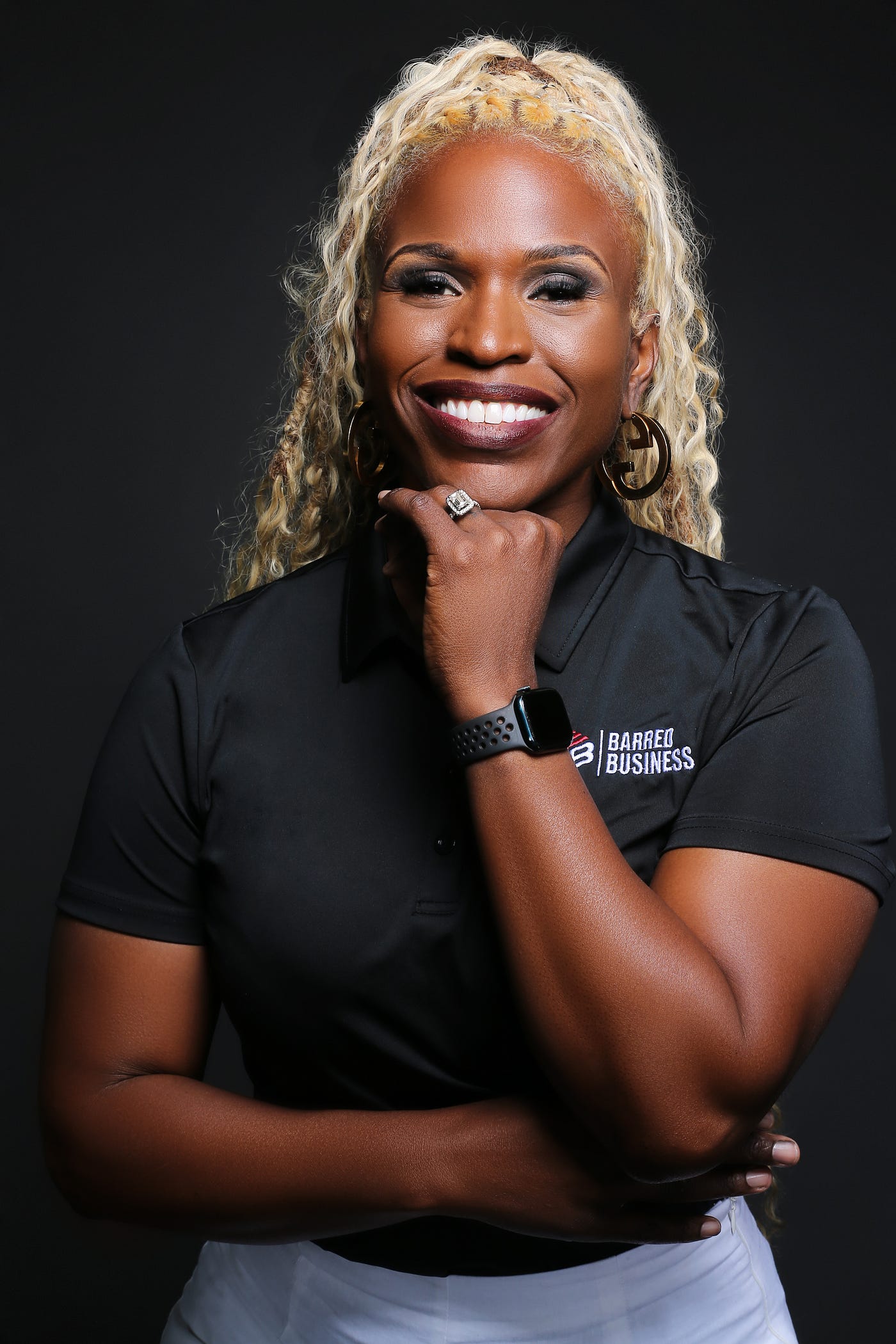
Bridgette “Bri” Simpson is the Co-Founder and Executive Director of Barred Business and a leading organizer behind the movement to make justice-impacted people a legally protected class, a movement that helped secure protected-class status for people with criminal records in Atlanta and led to the creation of the Protected Class Network to expand the movement nationally. Drawing from her lived experience as a formerly incarcerated survivor, Bridgette is an organizer, activist, advocate, entrepreneur and certified life coach who founded the S.T.A.B.L.E. reentry program for women and spearheaded Google Career Skills programming for justice-impacted people. She is a 2025 Robert Wood Johnson Foundation Black Women Executive Director Fellow, 2025 Galaxy Gives Fellow, 2024 Canary Impact recipient, 2023 Soros Justice Fellow and a member of the City of Atlanta’s Human Relations Commission.
Thank you so much for joining us in this interview series! Before we start, our readers would love to “get to know you” a bit better. Can you tell us a bit about your childhood backstory?
I was born in Jamaica and immigrated to the United States when I was 4, and I think that experience shaped me in ways I didn’t fully understand until I got older. When you come to this country, there is this idea that America represents opportunity. You’re supposed to go to school, work hard, get married, make something of yourself, and build a good life.
But life doesn’t always move in a straight line.
There were parts of my childhood and young adulthood that taught me how to survive long before I had the language to call it survival. I learned how to adjust. I learned how to figure things out. I learned how to keep moving even when things around me were uncertain.
For a long time, I thought success meant proving that I could make it. I wanted the things we are taught to represent success: the house, the car, the business, the relationship and financial stability. And I had some of those things.
Then I went to prison.
I served 10 years, and I lost almost everything I thought made me who I was. My home. My business. My education. My good life. Relationships. A marriage. Friends. Years with my family. Even my dignity at times. Prison has a way of stripping away the titles and things you use to identify yourself.
But somewhere in those 10 years, I started meeting myself.
That was probably the real beginning of my second chapter, even though I didn’t know it at the time.
When I came home in March 2018, I didn’t come home with some perfect plan to become an advocate or start an organization. I was trying to rebuild my own life. I needed a job. I needed stability. I needed to understand a world that had continued moving for 10 years without me.
My first job during and after prison was at a chicken plant.
When I look at the work I do today, I think about that journey a lot. I think about what we’ve been able to accomplish through Barred Business. I think about the laws and policies we’ve helped change, the people we’ve organized and some of the rooms I now find myself sitting in. Sometimes I’m still in disbelief.
Because I remember the woman who came home after 10 years and went back to work at a chicken plant, trying to figure out what her life could become.
I don’t ever want to erase her from my story. She is the reason I am who I am today.
Can you please give us your favorite “Life Lesson Quote”? Can you share how that was relevant to you in your life?
One of the things I say all the time is, “I didn’t just come home. I came home to change things.” That sentence really captures my life.
When I was released from prison, freedom could have simply meant that I wasn’t behind the wall anymore. And believe me, after 10 years, being able to decide when I ate, when I showered, where I went, or simply being able to close a door and have privacy meant something.
But eventually I realized that being free and being liberated are two different things.
I came home and saw people facing the same barriers over and over again. You serve your sentence, but your sentence doesn’t really end. Your criminal record follows you into the job interview. It follows you when you apply for housing. It follows you when you’re trying to take care of your children. It follows you when you’re trying to start a business. People tell you to rebuild your life and then put barriers in front of almost every path you could use to rebuild it.
At some point, I stopped asking, “How do I personally get around this barrier?” and started asking, “Why is this barrier here in the first place, and how do we change it?”
That question changed my life.
It is part of what led to Barred Business and eventually to our work in Atlanta to have justice-impacted people recognized as a protected class.
I spent years being told, directly and indirectly, what people with criminal records couldn’t do. Now a big part of my life’s work is changing what is possible for the people coming behind me.
So, when I say, “I didn’t just come home. I came home to change things,” that’s not a slogan to me.
That’s what happened.
You have been blessed with much success. In your opinion, what are the top three qualities that you possess that have helped you accomplish so much? If you can, please share a story or example for each.
The three qualities that have helped me the most are resilience, audacity and my ability to see possibilities where other people see barriers.
Resilience is probably the most obvious one, but I don’t use that word lightly.
I served 10 years in prison. You don’t come through an experience like that unchanged. Then you come home and everybody expects you to be grateful simply because you’re free; but coming home is its own kind of fight. You have to rebuild relationships, finances, credit, employment, your identity, everything.
There were plenty of moments when my life could have gone in a completely different direction. I just kept going.
I’ve learned that resilience doesn’t always look powerful. Sometimes resilience looks like crying and still getting up the next morning. Sometimes it’s admitting that you’re tired. Sometimes it’s starting over when you really don’t want to start over again.
The second quality is audacity.
I have enough audacity to believe that something can change even when people who know the system better than me tell me that it can’t.
When we began talking about making people with criminal records a protected class in Atlanta, that was a big idea. We weren’t asking for a program or a one-time investment. We were saying that people who had been impacted by the criminal legal system deserved protection from discrimination.
And we won.
In 2022, Atlanta added people with criminal records to the city’s protected classes in employment, housing and public accommodations. I later became the first justice-impacted person to serve on Atlanta’s Human Relations Commission, the body connected to enforcing those protections.
There is something powerful about once being a person affected by a system and later having a seat in helping hold that system accountable.
My third quality is that I see possibility in people. That might actually be the quality I value most. Our society is very comfortable defining people by the worst thing they’ve ever done. I know what it feels like to have someone look at a piece of paper containing your criminal history and believe they now know everything they need to know about you.
I also know how wrong they can be.
That’s why Barred Business isn’t just about providing services. I don’t want justice-impacted people to spend the rest of their lives being somebody’s client. I want people to have power. I want them leading organizations, changing laws, owning businesses, voting, organizing their communities, supporting their families, and making decisions about the systems that affect their lives.
I’ve watched people who were once told they were a problem become organizers, leaders and advocates.
Maybe I believe in that transformation so deeply because I’m living proof of it myself.
My second chapter wasn’t about becoming a completely different person.
It was about finally understanding what I could do with everything I had survived.
Let’s now shift to the main part of our discussion about ‘Second Chapters’. Can you tell our readers about your career experience before your Second Chapter?
Before my second chapter, my identity was rooted in finance. I was working in a professional field, using my skills with numbers, finances, organization and problem-solving to build a life and career for myself. I had a very different picture of what my future would look like.
Then incarceration interrupted that trajectory.
When I came home, I wasn’t coming home without skills, experience or ambition. I was educated, but now I also had a record. I quickly learned how much that one thing could change the way the world viewed everything else I brought to the table. My education, professional experience, work ethic and abilities were still there, but access to opportunity was completely different.
That experience forced me to rethink what my career and my life could look like. I had to navigate the realities of reentry while figuring out how to rebuild professionally and personally. Along the way, I began recognizing that the barriers I was experiencing were not unique to me.
There were incredibly talented and capable people coming home every day who were being defined by their involvement with the criminal legal system instead of by their skills, potential and humanity.
My first chapter taught me how to work within systems. My experiences with incarceration and reentry taught me what happens when those systems work against you. That understanding became an important part of what would eventually shape my second chapter and the work I do today.
And how did you “reinvent yourself” in your Second Chapter?
I reinvented myself by owning who I am today both good and bad. Deciding that my incarceration would not be the end of my story or the thing that determined what I was capable of becoming.
Coming home gave me a completely different understanding of the barriers people face after incarceration. I experienced firsthand how difficult it can be to rebuild your life when systems continue to punish you long after your sentence is over. Instead of allowing those barriers to define my future, I began asking how I could help change them.
That journey eventually led to co-founding Barred Business. What started as a desire to create greater access and opportunity for justice-impacted people became something much larger. I found my voice as an advocate, organizer and leader, and I learned how to use my lived experience to challenge systems, bring people together, and create space for directly impacted people to lead.
The biggest reinvention was internal. I stopped believing that I needed to separate myself from what I had been through in order to be respected. I learned that there was power in owning my entire story.
My second chapter became about purpose and not shame. I took an experience that could have limited my life and used it as fuel to create opportunities, build community, advocate for change, and make sure other people coming behind me know that their lives and possibilities do not end because of incarceration.
Can you tell us about the specific trigger that made you decide that you were going to “take the plunge” and make your huge transition?
The trigger was wanting to be a parent and being denied that right because of my record. Realizing that doing everything I was told to do still did not guarantee that I would have a fair opportunity to rebuild my life broke my heart.
I had served my time. I was ready to move forward, but I quickly realized that incarceration does not necessarily end when you come home. There are barriers attached to parenting, employment, housing, access to resources and simply being given a chance. At some point, I realized I could either spend my life trying to convince systems to make room for me or I could help create something different.
That was the shift for me.
I also knew that my experience was not unique. I was meeting people who were just as capable, determined and ready for another opportunity, but they were running into the same barriers. I could see that this was bigger than my individual story.
I decided that if the doors we needed did not exist, we were going to have to build them. That decision ultimately changed the direction of my life. I stopped focusing solely on how I was going to navigate these systems for myself and started thinking about how we could change them for everyone coming behind us.
What did you do to discover that you had a new skillset inside of you that you haven’t been maximizing? How did you find that and how did you ultimately overcome the barriers to help manifest those powers?
I discovered those skills by doing the work. I did not wake up one day and suddenly decide that I was an organizer or an advocate. I worked at a chicken plant and never imagined sharing my story. When I started showing up, having conversations, listening to people, understanding that I wasn’t alone, building relationships, speaking up, and encouraging others to speak up when something did not make sense or was not working for our community, I sharpened a newfound skill.
Over time, I realized that I had an ability to bring people together around a shared issue and move them toward action. I could walk into rooms with community members, elected officials, funders, organizational leaders or people directly impacted by the criminal legal system and help create conversations that moved beyond simply talking about a problem. I wanted us to figure out what we were going to do about it.
One of the biggest barriers I had to overcome was believing that I needed traditional credentials or someone else’s permission to lead. I had to learn that lived experience is expertise too. There were things I understood because I had experienced them, and there were solutions I could see because I had been on the other side of the systems we were trying to change.
I started trusting my instincts more, asking questions, learning from other leaders, building partnerships, and allowing myself to take up space in rooms where decisions were being made. The more I used those skills, the stronger they became.
How are things going with this new initiative? We would love to hear some specific examples or stories.
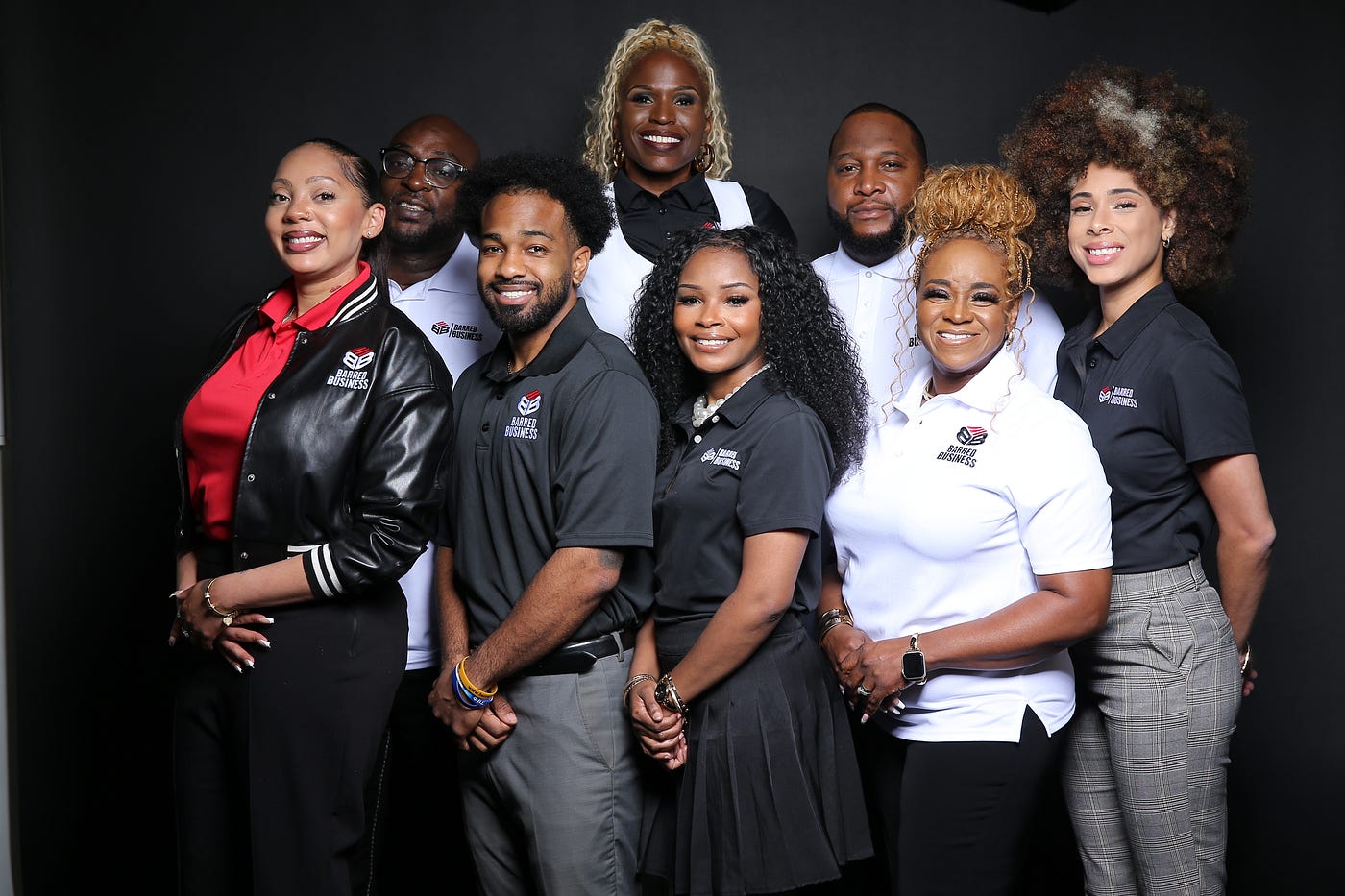
Things have grown beyond what I initially imagined. Barred Business has become a place where justice-impacted people are not simply receiving services. They are building power, developing leadership, supporting one another, and helping shape the solutions that directly affect their lives.
One of the things I am most proud of is seeing people come to us needing support and eventually become leaders themselves. Someone may first connect with us because they need identification, help navigating reentry, housing support, employment resources or assistance for themselves or a loved one. Then we see them become more engaged, participate in organizing, learn how to advocate for themselves, and eventually use their experience to help someone else.
Our Participatory Defense work is another example. Families navigating the criminal legal system are often overwhelmed and unsure of what they can do to support their loved one. We help families understand that they do not have to sit on the sidelines. They can become active participants in the process, organize information, advocate for their loved ones, and support one another through an incredibly difficult experience.
We have also expanded our work around civic engagement and voting through Release the Vote. Justice-impacted communities are too often disconnected from the political process or given incorrect information about whether they are eligible to vote. We work directly in communities to provide accurate information, register eligible voters and make sure people understand that their voices still matter.
Another major evolution of this work has been the Protected Class campaign. So much of reentry is focused on helping people navigate barriers, but I also believe we have to challenge why those barriers continue to exist in the first place. People can serve their sentences, return home and do everything asked of them and still face discrimination because of a criminal record. Through the Protected Class campaign, we are working to advance protections for people with criminal records so that coming home can mean having a fair opportunity to rebuild your life. What is especially important to me is that justice-impacted people are helping lead that work. We are not simply sharing our stories. We are organizing, educating, advocating and helping shape the solutions ourselves.
Our reentry work has grown as well. Through our S.T.A.B.L.E. house program, we are addressing one of the most immediate challenges people face when coming home, which is having a safe and stable place to land while rebuilding their lives. We also provide connections to resources and support that help people navigate the many other barriers that come with reentry.
What means the most to me is watching the cycle come full circle. People come through our doors looking for help and discover their own ability to lead, advocate, organize and support others. That is the impact I envisioned when I started this work. I wanted people impacted by these systems to understand that we are not just the people experiencing the problem. We can also be the people building the solutions and changing the systems that created those barriers in the first place.
Is there a particular person who you are grateful towards who helped get you to where you are? Can you share a story about that?
There are many people who have poured into me along the way, but I would have to say, Imani Evans. Imani has been my mentor since before Barred Business was even Barred Business. She saw something in me and in the vision before I fully knew what it could become.
When I came home from prison, I had passion and I knew that I wanted to change things, but passion and building an organization are two very different things. Imani helped me understand that. She helped me think through what Barred Business could be, how to build it and how to grow as a leader while I was building it.
What I appreciate most is that she didn’t just show up once Barred Business became successful or once people started recognizing our work. She was there in the beginning, when we were figuring it out.
Over the years, our relationship has evolved, but she has remained someone I can call, someone who will challenge me and someone who reminds me to think bigger. Today, she serves as Chair of Barred Business’ Board of Directors, which feels full circle because she helped me build the organization long before there was much of an organization to lead.
When I look at what Barred Business has become and what we’ve been able to accomplish, I know I did not build it alone. Imani’s fingerprints are part of that story and I’m deeply grateful for her.
Can you share the most interesting story that happened to you since you started in this new direction?
There have been so many moments that I could choose, but one of the most surreal has been watching something that started as an idea become law.
When we started working to make people with criminal records a protected class in Atlanta, we were asking people to think differently about discrimination. We were saying that after someone has served their sentence, they should not continue to be denied housing, employment or access to opportunities simply because of their past.
This wasn’t theoretical for me. I knew what it felt like to come home and have a criminal record attached to my name. I knew what it was like to be told, directly and indirectly, that there were certain places I didn’t belong anymore.
So we organized. We told our stories. We built relationships. We showed up. We kept pushing even when people didn’t understand what we were asking for or thought it was impossible.
In 2022, Atlanta passed the legislation.
But here is the part that still gets me: I now serve on the City of Atlanta’s Human Relations Commission.
Sometimes I sit in those meetings and think about the woman who was once incarcerated, the woman who came home and worked at a chicken plant, and the woman who experienced firsthand what it meant to have a criminal record following her everywhere she went.
Now I sit on a commission responsible for addressing discrimination in the same city where we fought to have people like me protected from it.
That’s a full-circle moment I could never have planned.
The story didn’t stop with Atlanta. What we learned from that campaign became the foundation for the Protected Class Network. Now we’re working with justice-impacted leaders and organizations in communities across the country to push this idea further.
That’s probably the most interesting part of my second chapter: I started out trying to figure out how to rebuild my own life. Somewhere along the way, that became a fight to change the conditions that make rebuilding so difficult for millions of other people.
Did you ever struggle with believing in yourself? If so, how did you overcome that limiting belief about yourself? Can you share a story or example?
Absolutely. I still struggle with it sometimes.
When you spend 10 years incarcerated, you don’t walk out of prison and suddenly leave everything prison taught you about yourself behind. I came home carrying a lot of shame. I had lost so much, and I questioned whether I could ever rebuild the life I once imagined for myself.
There were also so many reminders that the world saw me differently now. I wasn’t just Bridgette anymore. I was a person with a criminal record. I had to check that box. I had to explain those 10 years. I had to walk into rooms wondering whether people would see me or see my past first.
What helped me overcome that wasn’t waking up one morning suddenly believing I could do anything. I started doing things while I was still afraid and while I still had doubts.
Barred Business is probably the best example. When we started, I didn’t have all the answers. I certainly didn’t imagine that one day we would help change a law in Atlanta, build a national network or that I would serve on the city’s Human Relations Commission. I just knew the barriers I was experiencing weren’t unique to me and somebody needed to do something about them.
So, I kept showing up.
Every time we accomplished something people told us would be difficult or impossible, I started seeing myself differently.
I’ve learned that sometimes belief doesn’t come before the work. Sometimes the work builds the belief.
I didn’t overcome self-doubt and then become the woman I am today. I became her while I was still doubting myself.
In my own work I usually encourage my clients to ask for support before they embark on something new. How did you create your support system before you moved to your new chapter?
My support system was not something I had perfectly mapped out before stepping into this chapter. A lot of it was built along the way.
I have always understood the importance of relationships and community. As I began doing this work, I was intentional about surrounding myself with people who understood the vision, challenged me, opened doors, shared knowledge and were willing to build alongside me. Some of those relationships became mentors, partners, colleagues, funders, friends and people I could call when I needed perspective.
I also learned that support does not always look like someone having the answer for you. Sometimes it is someone making an introduction. Sometimes it is having people who will tell you the truth, even when it is not what you want to hear. Sometimes it is simply having someone remind you of the bigger vision when you are deep in the day-to-day work.
Community has been an important part of that support system as well. Being surrounded by other justice-impacted leaders and people who understand this work from lived experience created a different kind of support. There are things you do not have to explain when you are in community with people who have walked similar paths.
I also had to become comfortable asking for what I needed. I am very resourceful and naturally inclined to figure things out, but leadership has taught me that you cannot build something meaningful alone. You need people who bring different strengths, perspectives, relationships and resources to the table.
My support system did not come together before my second chapter began. In many ways, building that community became part of the chapter itself.
Starting a new chapter usually means getting out of your comfort zone, how did you do that? Can you share a story or example of that?
Getting out of my comfort zone meant becoming comfortable with being visible. I went from rebuilding my own life to speaking publicly about incarceration, reentry and the barriers that justice-impacted people face. That required me to take experiences that were deeply personal and use them to advocate for something bigger than myself.
There is a difference between knowing something because you lived it and being willing to walk into a room full of people with power and say, “This is what you are missing, and this is what needs to change.” I had to learn how to do that without shrinking myself or feeling like I needed to make my story more comfortable for other people.
As Barred Business grew, I found myself in rooms with elected officials, funders, policymakers, organizational leaders and people who had traditionally been considered the experts. I had to become comfortable understanding that I belonged in those rooms too. I was not there simply to share a compelling story. I was there because I had knowledge, solutions and a perspective that needed to be part of the decision-making process.
That has continued to push me outside of my comfort zone. Starting the Protected Class campaign is a great example. It is one thing to help people navigate systems as they currently exist. It is another thing to say publicly that the system itself needs to change and then organize people around making that happen.
I have learned that growth rarely happens where everything feels familiar. Sometimes getting out of your comfort zone is simply deciding that being uncomfortable is not a reason to stop. I can be nervous, I can be learning and I can still walk into the room and do what needs to be done.
What are your “5 things I wish someone told me before I started” and why? Please share a story or example for each.
1. You cannot take everybody with you.
I wish someone had told me that growth sometimes changes relationships. When you are building something rooted in community, you naturally want the people you started with to grow with you. However, everyone will not understand the vision, and everyone who is good for one season may not be good for the next one. I have had to learn that letting people go does not always mean that something went wrong. Sometimes the organization, the work or you simply outgrow the relationship. Leadership requires knowing when holding on is preventing everyone from moving forward.
2. Being needed is not the same as being supported.
When you are resourceful and people know you can get things done, it is very easy to become the person everyone calls. I learned that having a lot of people who need something from you does not necessarily mean you have people pouring back into you. Building Barred Business taught me to pay attention to reciprocity. I needed people around me who could challenge me, advise me, tell me the truth, and sometimes simply ask what I needed instead of always asking what I could provide.
3. You do not have to wait for permission to solve a problem you already understand.
There were spaces where I initially thought someone with more credentials, more resources or a bigger title needed to validate an idea before we could move forward. I learned very quickly that the people closest to a problem often understand the solution in ways institutions do not. The Protected Class campaign is an example of that. We did not need to wait for someone outside of our community to decide that discrimination against people with criminal records deserved attention. We understood the problem because we lived it, so we began organizing a solution.
4. Building the organization and doing the work are two different jobs.
I started this work because I cared deeply about people and wanted to change conditions in our communities. Then I learned that running an organization also means budgets, fundraising, compliance, staffing, partnerships, operations, strategy and a thousand decisions people outside of leadership may never see. There were times when I wanted to focus entirely on the mission, but the organization itself needed attention too. I had to learn that building strong infrastructure is part of protecting the mission. If the organization is not healthy, eventually the work will feel it.
5. Rest is part of leadership too.
This is probably the lesson I am still learning. When the work is personal, everything can feel urgent. There is always another person who needs help, another meeting, another opportunity, another crisis or another fight that matters. I have had moments where I believed being committed meant always being available. Over time, I realized that you cannot build sustainable change while constantly running yourself into the ground. The work deserves a version of me that can think clearly, make good decisions, and remain connected to why I started. Learning when to step away, reset and come back is not abandoning the work. It is part of making sure I can continue doing it.
You are a person of great influence. If you could inspire a movement that would bring the most amount of good to the most amount of people, what would that be?
If I could inspire a movement, it would be one centered on restoration and opportunity. I would want us to fundamentally change what we believe people deserve after they have served their sentence and returned to their communities.
We talk a lot about people rebuilding their lives, but rebuilding becomes incredibly difficult when someone cannot access housing, employment, education, financial stability, civic participation or the basic opportunities necessary to move forward. At some point, we must recognize that people should not be permanently defined or limited by their past.
I would want a movement that challenges permanent punishment. One that recognizes that accountability and opportunity can exist at the same time. One that stops requiring people to prove repeatedly that they are more than the worst thing they have ever done.
That is a big part of why the Protected Class campaign is so important to me. My hope is that we can create a future where having a criminal record does not automatically make it acceptable to exclude someone from opportunity or discriminate against them long after they have returned home.
Ultimately, that movement would benefit far more than justice-impacted people. When people can come home, find stable housing, work, build businesses, participate in their communities, support the people they love, and contribute their talents, entire communities become stronger.
I want us to move beyond the language of second chances and start creating real opportunities for people to build what comes next.
We are very blessed that some very prominent names in Business, VC funding, Sports, and Entertainment read this column. Is there a person in the world, or in the US with whom you would love to have a private breakfast or lunch with, and why? He or she might just see this if we tag them. :-)
I would love to sit down with Oprah Winfrey.
Not because she is Oprah, although obviously that would be incredible. I would want to talk to her because she has built a life and a platform around the power of people’s stories. She has shown that the things we survive don’t have to be the things that define or limit us.
I would want to talk with her about what I’m trying to build for justice-impacted people. There are millions of people in this country with criminal records, and too often our stories are told through the worst things we’ve ever done instead of who we are, what we’ve survived, what we’ve contributed and who we’ve become.
I would tell her about the Protected Class movement and why I believe freedom must mean more than opening the prison door. If someone comes home but can’t get housing, can’t get a meaningful job and continues to experience discrimination because of a past conviction, we have to ask ourselves what second chances mean.
If I’m being completely transparent, I would probably spend part of lunch just taking it all in.
There was a time when I was working at a chicken plant trying to rebuild my life after serving 10 years in prison. The possibility that Oprah Winfrey might one day be sitting across the table asking me about the movement I’m building? That would be one of those moments where I would have to stop and think, Bri, look how far you’ve come.
How can our readers further follow your work online?
Readers can follow my work through Barred Business and stay connected to the work we are doing around reentry, advocacy, civic engagement, organizing and the Protected Class campaign.
Visit us at www.barredbusiness.org and follow @BarredBusiness on social media to keep up with our work in the community, upcoming initiatives and ways to get involved.
Thank you so much for sharing these important insights. We wish you continued success and good health!