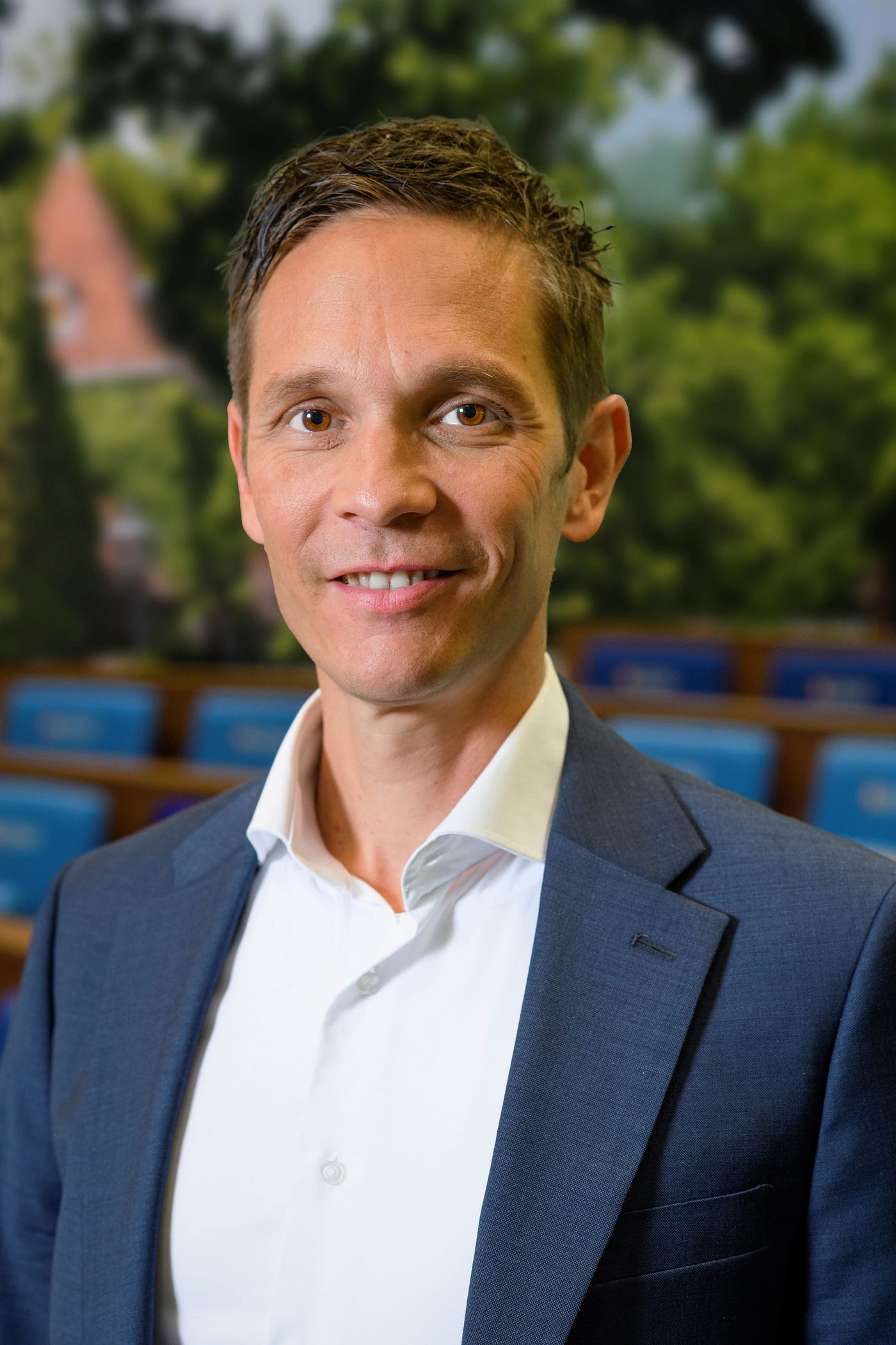
My husband has been my greatest source of encouragement. He’s always had an entrepreneurial mindset, and he has a gift for getting me to see possibilities beyond the obvious next step.
As a part of this series, we had the pleasure to interview Bree Johnson.
Bree is the founder of Executive Unschool®, a company helping ambitious women recover from workplace burnout, unlearn outdated beliefs about success, and lead more consciously. A former employment attorney and C-suite executive, she spent nearly two decades navigating high-performance workplaces before pioneering Work Recovery™, an approach to rebuilding a healthier relationship with work and reclaiming personal wellbeing. Today, Bree is an executive advisor, speaker, writer of the Executive Unschool Weekly Letter, and host of the How Good Can It Get? podcast, where she explores what becomes possible when ambition and wellbeing thrive together.
Thank you so much for joining us in this interview series! Before we dive into the main focus of our interview, our readers would love to “get to know you” a bit better. Can you tell us a bit about your childhood backstory?
I’m the only child of my divorced parents, born and raised in Minnesota. I had a pretty wonderful millennial childhood split between two very different households. My mom’s house and my dad’s house had their own rhythms, but one thing traveled with me everywhere: books. Reading was my constant. I could be completely absorbed in a story for hours, and I loved the feeling of discovering an entirely new world without leaving the room.
I was also a gold-star kid. Good grades, academic achievement and the satisfaction of getting things right meant a lot to me. I was endlessly curious and often enlisted my four younger siblings in my adventures. My mom stayed home with us, while my bonus mom worked in healthcare. Growing up around women making different choices about work and family gave me an early appreciation for the idea that there is more than one way to build a good life.
I didn’t fully appreciate it then, but my affection for achievement would become both a strength and something I eventually needed to examine. I took that drive into college, law school and the professional titles I worked hard to earn. These days I’m just as interested in who we become when we loosen our grip on the gold stars.
What or who inspired you to pursue your career? We’d love to hear the story.
Some of the women who inspired my career were fictional. I joke that April O’Neil from Teenage Mutant Ninja Turtles is partly responsible for my decision to major in journalism and political science. I loved a woman who would chase the story even when things got dicey. I was equally fascinated by characters like Ally McBeal, women finding their voices in workplaces that weren’t exactly built with them in mind.
Underneath those television influences was something real: I admired women with grit who were willing to take up space. In law school, I drew inspiration from Ruth Bader Ginsburg and Gloria Steinem, who helped expand the possibilities for women’s lives and careers. I wanted to be part of that work in my own way.
Eventually I became an employment lawyer and law firm leader. But the story took another turn. After years of witnessing what happens to people in unhealthy workplaces, I became interested in questions that law alone couldn’t answer. How do we restore trust in ourselves after a workplace betrayal? How do we stop carrying the same old work rules into every new role? And how do we create armor against the most common burnout cycles I’d witnessed firsthand in my work representing people harmed by work?
Those questions ultimately led me to Executive Unschool®.
None of us can achieve success without some help along the way. Was there a particular person who you feel gave you the most help or encouragement to be who you are today? Can you share a story about that?
My husband has been my greatest source of encouragement. He’s always had an entrepreneurial mindset, and he has a gift for getting me to see possibilities beyond the obvious next step. That mattered enormously when I was deciding to pivot away from the law firm I co-founded. Leaving a career and industry you’ve invested so much of yourself in invites a lot of second-guessing. His support helped me trust that I could take what I’d learned in the legal world and put it to work in an entirely new way.
Executive Unschool grew out of that decision. I wanted to address the habits, leadership patterns and workplace cultures that cause so much damage before a conflict ever becomes a legal matter. Having someone so fully in my corner who believed in that possibility made a courageous choice feel possible.
Can you share the funniest or most interesting mistake that occurred to you in the course of your career? What lesson or takeaway did you learn from that?
My most impactful career mistake — and one I see so many women making — was ignoring my own intuition when a business environment no longer aligned with my values. As a high achiever, I knew how to work harder, make a persuasive case and try to improve the most difficult business situations. But unfortunately, I was slower to recognize when the healthiest choice was to walk away.
There is a cost to staying quiet about bad behavior. The more we normalize what doesn’t sit right with us, the easier it becomes for bad behavior in workplaces to continue. From my own experiences that I coined as “work wounds”, I learned to pay attention to that internal signal earlier and to speak up before problems escalate.
One phrase I come back to often is, ‘What we tolerate expands.’ It’s a useful leadership tool too. What am I allowing in the name of being helpful, productive or successful? I wish I had listened to myself sooner in certain moments. I also know that experience changed how I lead and why I do the work I do today.
Can you share your favorite “Life Lesson Quote”? Why does that resonate with you so much?
I come back often to Maya Angelou’s invitation to “do the best you can until you know better and then when you know better, do better.” It helps me loosen the grip of regret. It’s tempting to revisit an old decision with everything we know now and wonder why we didn’t see things differently at the time. I’ve certainly done that as a lawyer, a leader and a founder. But hindsight comes with information and perspective we didn’t necessarily have when the decision was made.
The lesson I take from her words is that growth gives us another choice. We can change the way we lead, the standards we hold and the patterns we pass on. I find that much more useful than punishing ourselves forever for having been human.
What are some of the most interesting or exciting projects you are working on now? How do you think that might help people?
I’m working with a dynamite group of leaders who are thinking about the next 40 years of their business while the AI revolution is changing how work gets done. There’s real pressure to move quickly, but there’s also an extraordinary opportunity to decide what kind of workplace and business they want to build. The most exciting part for me is watching them have courageous conversations about unhealthy cultural patterns and the assumptions they’ve inherited. They’re willing to ask difficult questions about how they lead and how their decisions affect employees. That willingness to examine the old rules is where meaningful change begins.
I’m also building Executive Unschool around the idea of Work Recovery™. Through writing, my podcast and the Work Recovery Method™, I’m helping people recognize the ways work shapes their nervous systems, beliefs and sense of self. I want people to have practical ways to recover their energy and approach ambition more consciously. Transformation is the most interesting work I do, especially when it makes room for a more human future of work.
You are a successful business leader. Which three character traits do you think were most instrumental to your success? Can you please share a story or example for each?
Three traits have been especially important in my career: agility, conscious leadership and transparency.
Agility. Early in my legal career, at 29, I was given roughly 45 minutes’ notice to step in for a speaker at a partner meeting after the scheduled speaker had an emergency. I couldn’t prepare my way out of the moment. I had to steady myself, trust what I knew and speak to the best of my ability. I still think about that experience when something unexpected lands in front of me. Agility is the capacity to respond without needing perfect conditions, grounded in trust in myself.
Conscious leadership. I spent years inside the legal profession, including as a law firm co-founder and managing partner, and I saw how easily audacious goals can slide into unhealthy expectations and even questionable decision-making. Today I work with leaders who are actively examining old cultural patterns as they plan for their own future with greater awareness and vulnerability to hear what’s working and what’s not. For me, conscious leadership means being willing to notice the impact of your own habits and make a more intentional choice, even when it’s uncomfortable.
Transparency. I’ve learned the cost of staying silent about behavior that conflicts with my values. That lesson changed how I approach hard conversations. Transparency means being clear about what I see, what I believe and what I don’t know. It also means being willing to say when something needs to change. Trust grows when people can have a candid conversation before a problem turns into a crisis.
For the benefit of our readers, can you briefly let us know why you are an authority on the topic of burnout?
I spent nearly two decades in demanding professional environments, including as an employment lawyer and law firm leader. I watched brilliant people exhaust themselves trying to be successful in the law, and I heard from countless professionals dealing with burnout, bullying, betrayal and workplace behavior that had shaken their confidence.
As a COO and managing partner of a bootstrapped employment law firm, I personally fielded calls from countless professionals and executives who were often at one of the lowest points in their careers. One of the hardest truths was that many painful work experiences didn’t necessarily amount to a viable legal claim. A legal answer couldn’t tell someone how to sleep again, trust their judgment when their confidence was decimated or find their way back to themselves without the identity of what they did.
I’ve spent more than seven years studying what I call ‘work wounds,’ the effects our workplace experiences can have on how we think, feel and behave. Burnout is the work wound I see most often. My perspective on burnout comes from having worked inside demanding systems, having led organizations and now helping people build healthier relationships with work.
Ok, thank you for all of that. Let’s now shift to the main focus of our interview about beating burnout. Let’s begin with a basic definition of terms so that all of us are on the same page. How do you define “Burnout”? Can you explain?
I use the World Health Organization’s definition of burnout as an occupational phenomenon resulting from chronic workplace stress that hasn’t been successfully managed. That distinction matters because it places burnout in the context of work.
I also find psychologist Christina Maslach’s research on the relationship between people and their work especially instructive. Burnout can arise when there’s a persistent mismatch between what a person needs and what the job or workplace demands, whether that’s workload, control, recognition, community, fairness or values.
In everyday language, I think of burnout as what can happen when the demands of work chronically exceed our capacity to recover and our relationship with that work stops feeling sustainable. We should look at the person and the conditions around them, including the rules they’ve learned to live by.
How would you define or describe the opposite of burnout?
For me, the opposite of burnout looks like meaningful work paired with the capacity to recover from it. It’s a relationship with work that leaves room for the rest of your life. Even work we genuinely love can be stressful, demanding and occasionally messy. That’s part of being human. The question is whether we have enough agency, alignment and work recovery built into our lives to meet those demands without being perpetually depleted.
I want people to finish a workday with something left for themselves and the people they love. You can care deeply about your work while still having an identity, a body and a whole beautiful life beyond it. That, to me, is a much more compelling vision of success.
This might be intuitive to you, but it will be instructive to expressly articulate this. Some skeptics may argue that burnout is a minor annoyance and we should just “soldier on’’ and “grin and bear it.” Can you please share a few reasons why burnout can have long-term impacts on our individual health, as well as the health and productivity of our society?
When someone says people should just toughen up and push through burnout, I think they’re overlooking how much of the problem can come from the conditions of work itself. Resilience is valuable, but expecting individual grit to compensate indefinitely for unhealthy systems is a very limited strategy. Chronic workplace stress can affect sleep, emotional wellbeing, concentration and relationships. By the time someone recognizes burnout, they may have spent a long time overriding the signals that something needs attention. And when that strain follows people home, the effects extend beyond the employee to families and communities.
Organizations pay a price as well. Exhausted people have less room for thoughtful problem-solving, connection and the kind of judgment that good leadership requires. If we want healthy and productive workplaces over the long term, we must take the human demands of work seriously.
From your experience, perspective, or research, what are the main causes of burnout?
In my experience, four factors commonly contribute to burnout. First, demanding work. Sustained workloads and expectations can drain people’s energy when there is too little room to recover.
Second, a mismatch between the person and the work. Someone may be capable of doing a job and still find its expectations, culture or values fundamentally misaligned with their needs.
Third, chronic stress that goes unaddressed. Stressful periods happen in every career. Trouble grows when those periods become the default and no one changes the conditions creating them.
Fourth, an absence of intentional Work Recovery™ practices. Many high achievers have a sophisticated strategy for producing results in their work and almost no strategy for recovering from work in their real lives. I see this especially in people who learned early that being helpful, available and impressive was how they earned their place.

Fantastic. Here is the main question of our discussion. What can an individual do if they are feeling burned out by work? How does one reverse it? How can you “get your mojo back?” Can you please share your “5 Things You Should Do If You Are Experiencing Work Burnout?”. (Please share a story or an example for each.)
1. Acknowledge what you’re experiencing. A lot of high achievers are extraordinarily good at minimizing their own stress. You notice the irritability, the exhaustion or the Sunday-night dread and tell yourself to push through. Awareness gives you a chance to respond with more care. For example, after a difficult meeting, try naming what you’re feeling and where you notice it in your body before immediately moving on to the next demand.
2. Regulate. Stress can leave the body feeling as if work is still happening long after the laptop is closed. A short breathing practice, a few quiet minutes or a meditation at the end of the day can create a deliberate transition from work to home. One practice I encourage is to choose a consistent ritual that tells your nervous system the workday has ended. It doesn’t have to be elaborate to be useful to reset your energy, mind, and body.
3. Rewire. Examine the Agreements, Beliefs and Conditioning, or ABCs, behind your autopilot behaviors. A common example is the inherited agreement that being a good employee means always saying yes. Ask yourself where that rule came from and whether it still serves you. Then test a different response, such as asking which priority should move before taking on something new. The goal is to make more conscious choices instead of living inside an old script you’re running from your ABCs.
4. Reclaim. Burnout can shrink our identity until work becomes the primary measure of our worth. Reclaiming asks us to restore room for the things that make us feel fully alive. I know this one personally. I’ve spent much of my life collecting gold stars, and I’ve had to learn that a beautiful afternoon with a book or time spent simply being present is valuable on its own. Start with something small you genuinely enjoy that has no productivity objective attached to it.
5. Seek support. A trusted advisor, supportive colleague or qualified mental health professional can help you examine patterns you may be too close to see clearly. If someone is experiencing persistent or severe symptoms, professional evaluation matters. Recovery can involve changes to personal habits and changes to the working conditions themselves. You shouldn’t have to figure out every part of that process alone.
What can concerned friends, colleagues, and life partners do to help someone they care about reverse burnout?
The most helpful thing loved ones and colleagues can offer is patience paired with genuine curiosity. Recovering from burnout often involves understanding your relationship with work and the habits you developed to succeed in it. Someone may be rethinking long-held beliefs about being indispensable, accommodating or perpetually productive. That can be a bigger shift than it appears from the outside.
Instead of immediately offering fixes, ask what support would actually feel useful. A partner might protect some quiet time after work. A friend might invite the person into an activity with no performance attached. A colleague can respect boundaries and avoid making after-hours availability the price of belonging. I also encourage people to resist treating burnout as a personal weakness. Much of modern work rewards the very patterns that can leave people depleted. Sustainable recovery asks us to learn from the experience and create protective practices for the future.
What can employers do to help their staff reverse burnout?
Employers have to become more honest about what their performance expectations cost people. Too often, organizations celebrate revenue gains and deliverables without accounting for the time, attention and energy required to produce them. A win-at-all-costs culture creates consequences. Leaders can start by looking at workload, staffing, decision-making authority and the unspoken expectation that excellent employees should always be reachable.
Ask people where the friction is. Take their answers seriously. And make it safe to say what it is that’s no longer working.
I’m encouraged by leaders willing to examine culture as part of strategy, especially as AI changes how organizations operate. Technology may change the pace and shape of work, but we still have to decide how we want human beings to experience it. Respecting boundaries and designing sustainable expectations are leadership imperatives.
These ideas are wonderful, but sadly they are not yet commonplace. What strategies would you suggest to raise awareness about the importance of supporting the mental wellness of employees?
We need to make conversations about work wellbeing part of how leadership actually happens, rather than an occasional awareness campaign. Each of us has responsibility for paying attention to our own wellbeing. I believe that deeply. At the same time, leaders and organizations shape the conditions in which those choices are made. An employee can practice breathwork every evening and still return to a workplace with unsustainable demands the following morning.
The race to adopt AI and other technologies is adding pressure to achieve more, faster. This makes it especially important for leaders to model a healthier relationship with work. When an executive respects their own boundaries, speaks candidly about capacity and welcomes feedback about harmful norms, other people have more room to do the same. Culture shifts when healthy choices become visible and credible.
What are a few of the most common mistakes you have seen people make when they try to reverse burnout in themselves or others? What can they do to avoid those mistakes?
One of the biggest mistakes I see is the fear that healing will cost someone their edge. People worry that if they stop running on pressure and external approval, they’ll lose the very ambition that made them successful. Some have described the prospect of examining those patterns as opening Pandora’s box.
I understand the fear. If your identity has been built around being the capable one, questioning the rules behind that identity can feel unsettling. But curiosity is a better place to begin than a complete overhaul. Try noticing one automatic yes, one moment of guilt about rest or one assumption that everything is urgent. Ask whether that response is useful today.
Another common mistake is treating recovery as something to squeeze into an already overloaded schedule. A ten-minute practice can help, but a daily routine can’t fully compensate for conditions that continually create harm. We have to be willing to consider both our habits and our environment when unpacking burnout’s roots.
Ok, we are nearly done. You are a person of great influence. If you could inspire a movement that would bring the most amount of good to the greatest number of people, what would that be? You never know what your idea can trigger.
I’d love to inspire a movement of people who know themselves beyond their job titles and practice Work Recovery™ every day. I spent so many years in environments where achievement was a powerful currency. I know the satisfaction of earning the seat at the table, and I also know how easily our value can become synonymous with our output. I want more people to experience the freedom of being fully themselves, with or without the gold star.
Imagine if ending the workday included a moment to recover your attention and energy, as naturally as brushing your teeth. Imagine if people knew how to recognize the beliefs work had taught them, decide which ones to keep and reclaim what matters outside the office. That’s the movement I’m building through Executive Unschool. I want ambition and wellbeing to have room to thrive together.
We are very blessed that some of the biggest names in Business, VC funding, Sports, and Entertainment read this column. Is there a person in the world, or in the US, whom you would love to have a private breakfast or lunch with, and why? He or she might just see this, especially if we both tag them :-)
Sara Blakely. I admire the way she’s built iconic products for women while keeping a sense of individuality and a visible commitment to family life. There is something compelling to me about a founder who creates on her own terms.
I’d love to talk with her about the choices behind that business: how she has protected her creativity, navigated the expectations that come with success and decided what deserves her energy as her business and life evolved. Those questions fascinate me as a founder thinking about how to build something meaningful without losing the life it’s meant to serve.
How can our readers further follow your work online?
You can find me at ExecutiveUnschool.com, where I write about conscious leadership, personal growth and Work Recovery™. My Executive Unschool Weekly Letter is a regular invitation to examine the habits we’ve inherited from work and imagine something better.
You can also listen to my podcast, How Good Can It Get?, and follow me on Instagram at @breejohnsonofficial and @executiveunschool. I share ideas and practical prompts for people who are ready to outgrow workplace chaos and build a relationship with work that leaves room for a life they love.
Thank you for these really excellent insights, and we greatly appreciate the time you spent with this. We wish you continued success and good health!
About The Interviewer: Yitzi Weiner is the Founder and Editor in Chief of Authority Magazine. Together with his team, he has conducted more than 150,000 in-depth interviews with leaders and changemakers, including Shaquille O’Neal, Peyton Manning, Venus Williams, Chris Evans, Snoop Dogg, Kerry Washington, Ava DuVernay, Maria Shriver, Ice-T, Lindsay Lohan, James Patterson, Dr. Jane Goodall, Mark Cuban, Daymond John, Lori Greiner, Cal Ripken Jr., Jewel, Bethenny Frankel, Derek Hough, Jillian Michaels, Eric Schmidt, Seth Godin, Guy Kawasaki, Temple Grandin, Joseph Abboud, Jenny Craig, Flo Rida, Katee Sackhoff, and Alicia Silverstone. Alongside his work with Authority Magazine, Yitzi is also the founder of the Thought Leader Incubator, a program that helps executives, entrepreneurs, and visionaries build authority in their industries. The program connects participants with recognized experts, develops service-driven thought leadership content, produces book anthologies of their insights, and organizes TED-style events to showcase their ideas. He lives in Maryland with his family. If you are interested in the Thought leader Incubator you can email support@authoritymag.co