Thank you so much for joining us in this interview series! Can you tell us a story about what brought you to this specific career path?
My career path unfolded almost by chance. I was studying computer science and computer engineering when my professors suggested I should consider business and analytics. This serendipitously led me to a position at a marketing analytics firm, which turned out to be a pivotal moment.
I was drawn to marketing because I wanted to understand what drives brand growth and how brands connect with consumers. That curiosity naturally evolved into learning how to build and run brands, and eventually discovering the crucial importance of financial knowledge to lead and scale businesses. Looking back, my career has been a journey of discovery — I didn’t see the path clearly at first, but as I pursued different opportunities, I realized I love solving the puzzles of growing and building businesses.
Can you share a story about the funniest mistake you made when you were first starting? Can you tell us what lesson you learned from that?
One of the funniest experiences I can remember was as a young 20-something, presenting to the trade marketing leadership team at one of the large companies I had joined. I thought it would be a walk in the park — I’d just present the numbers and everything would be fine. But when I walked into the room and saw all the leaders dressed in suits and ties (this was back in the 90s), it became incredibly intimidating.
I wasn’t necessarily an extrovert who could get up and talk on the fly. Before I even got through my first sentence, two questions were shot right at me, completely throwing me off. I looked like a deer in headlights in front of 15–20 executives. My manager had to jump in to answer the questions, and the rest of the presentation was disastrous. The head of trade marketing later said, “Kid, you know your numbers, but you just froze like a deer in headlights. What happened?”
It became a joke, with everyone teasing me for weeks. By the time the next quarterly meeting came around, I was ready — game on — and I did well. The lesson I learned was that no matter how well you know your content, people will always approach it with different perspectives. You need to prepare for multiple viewpoints and know how to engage in a meaningful conversation with your audience. And, sometimes you just have to laugh at yourself and turn those moments of embarrassment into your best stories later.
None of us are able to achieve success without some help along the way. Is there a particular person who you are grateful towards who helped get you to where you are? Can you share a story about that?
One of the most impactful moments in shaping my career came from a key mentor who challenged me with a few simple but powerful questions. Whenever I doubted myself or felt I wasn’t ready for a particular opportunity, he’d ask, “If not you, then who? And why do you believe you can’t do this?”
Those questions helped me take stock of my skills, competencies, and capabilities — focusing on what I could bring to the table versus what I needed to develop to be successful. If he hadn’t nudged and pushed me, I could easily have taken myself out of the running. Sometimes we need mentors who see potential beyond our own present line of sight.
Today, I bring this approach to my team by looking for talent and potential in others. I try to put people into positions where they can grow into their roles and rise to meet challenges, they’re capable of overcoming.
Leadership often entails making difficult decisions or hard choices between two apparently good paths. Can you share a story with us about a hard decision or choice you had to make as a leader?
One of the most challenging moments I remember was having to make a critical decision regarding the creative direction for a $15 billion brand. We had two exceptional creative concepts presented by an agency, both of which perfectly captured the essence of the brand and met all the requirements of the creative brief. As the brand manager, the decision was mine to make, and I had to choose between them.
So I went back to basics — what were we trying to solve? What were we trying to achieve? Would this creative emotionally connect with our target audience? Did it support the brand in a meaningful way? Once I worked through this rationally, the challenge became articulating my decision in a way that would convince everyone in the room that it was grounded in strong convictions.
What I learned from that experience was this: when faced with a tough decision, take a moment to go through your thoughts, ensuring that your choice aligns with your broader objectives. And perhaps most importantly, do you have the conviction to stand behind your decision and communicate it clearly, even when others may have a different perspective?
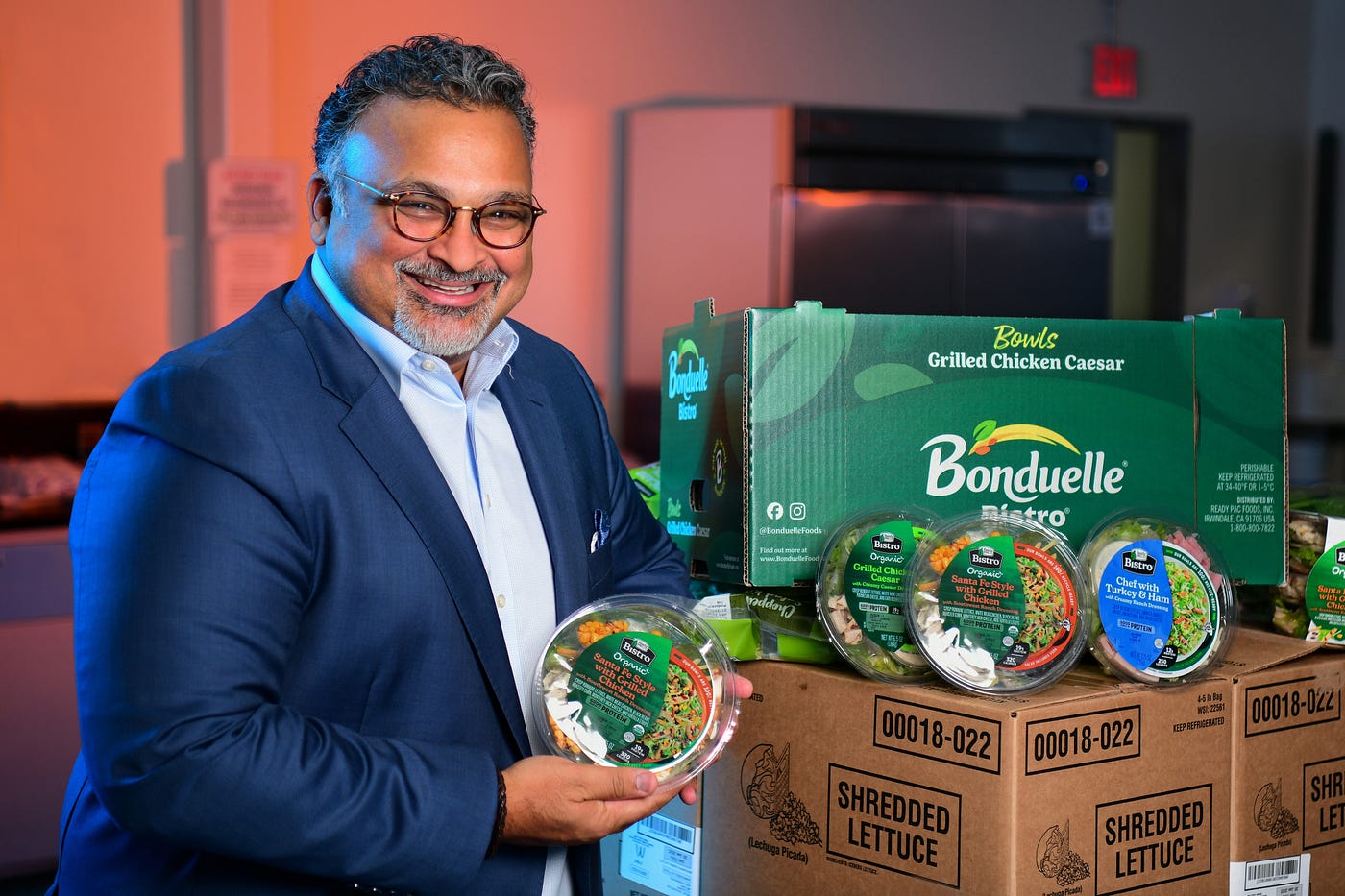
Today at Bonduelle, as we bring our brand to America, my north star is always our consumer. How do they view our brand? How do they experience it? What does our brand mean to them in the context of their shopping basket and pantry at home? How consumers connect with us drives every decision we make.
Ok, thank you for that. Let’s now jump to the primary focus of our interview. Most of our readers–in fact most people–think they have a pretty good idea of what a CEO or executive does. But in just a few words, can you explain what an executive does that is different from the responsibilities of the other leaders?
When I was a young professional, I looked at executives and the CEO role as something to aspire to. My view was largely informed visually — they had beautiful corner offices, they traveled, attended meetings, said a few words, and then left. Oh, and they made a lot of money.
As I grew and moved up in organizations, I realized this perception was far from reality. My aha moment came when I understood that as a young professional, all my actions, priorities, and work were set by executives. The strategy, the operating plan, and even the culture of the company were defined by executives that we were all following — something I had taken for granted.
When you step into an executive role, you look at an organization from a much wider perspective. You shape the company with the artifacts you create the people you hire, the priorities you set, and how you work with other organizations to create more value.
At the CEO level, it goes even further — you must think three to five years down the road. Where is the company headed? How will it perform? What will the company become because of your strategies, priorities, culture-building, and people development?
What are the “myths” that you would like to dispel about being a CEO or executive? Can you explain what you mean?
There are a lot of myths about being an executive or CEO, and the first thing I’ll tell you is that it isn’t always what it’s cracked up to be. It’s not just about going into meetings, saying a few words, dressing the part, or giving an inspiring speech. The reality is that it’s hard work–really hard work.
Being an executive comes with a tremendous amount of responsibility for the people in your organization. It’s also a role that requires you to be comfortable under pressure and able to manage it effectively. How you manage your time and that pressure directly correlates with the company’s performance. It can be a lonely place, but it’s also a role where you can have significant impact and growth — not just for yourself as an individual, but for many people in the company or your function.
At Bonduelle, we focus on developing leaders who thrive under pressure, are eager to take on significant responsibility, and have the drive to shape the future trajectory of our business. We want to cultivate individuals with the grit and vision to step into leadership roles and create lasting impact across the company. These are the kinds of leaders we aspire to build and empower.
What is the most striking difference between your actual job and how you thought the job would be?
One of the biggest surprises I encountered at Bonduelle, something I hadn’t anticipated or even knew was part of the role, was our agricultural operations. It was after I joined the company that I discovered, for the first time, that we have a significant presence in sourcing and harvesting produce in California and Arizona. Agriculture, in this way, had never been part of my previous responsibilities, but what energized me was having the opportunity to go out into the field and harvest lettuce alongside the team while I learned about this aspect of our business.
This experience has added a whole new dimension to my understanding of the company. It’s a reminder that sometimes the biggest surprises are the ones that contribute most meaningfully to your journey.
Do you think everyone is cut out to be an executive? In your opinion, which specific traits increase the likelihood that a person will be a successful executive, and what type of person should avoid aspiring to be an executive? Can you explain what you mean?
I believe everyone has the potential to be an executive, but the real question is whether they truly want to take on that role. Have they put in the work to understand where their passion lies, what they’re good at, and what they’re not? One of my favorite questions to ask candidates, whether for a manager role or executive role at Bonduelle, is: What are you good at? What are you terrible at? And then, I ask a crucial question: What is your superhero skill? These questions help uncover whether someone has the self-awareness and the right qualities to move up in an organization and ultimately step into an executive position.
What advice would you give to other business leaders to help create a fantastic work culture? Can you share a story or an example?
The advice I would offer leaders on building culture is that culture is deeply personal to each company, and it serves as the foundational element that unlocks performance. As Peter Drucker famously said, “Culture eats strategy for breakfast.” There’s a reason for that–culture defines who you are as an organization, and it shapes your direction, or your “North Star.”
At Bonduelle, my goal is to define a culture where people feel empowered to operate collaboratively, communicate directly with “straight talk,” and feel comfortable being at stake with each other. It’s about creating an environment where people can be candid and hold each other accountable. This means looking out for one another while also being direct and results-driven. And finally, having grit — the ability to persevere and achieve those results.
How have you used your success to make the world a better place?
For me, making the world a better place begins with the work we do every day. It starts by creating an environment that shapes opportunities for people, helping them achieve their goals. Beyond that, I’ve always chosen roles with companies and products that have a tangible, direct impact on both business success and doing good in the world.
At Bonduelle, we are a B Corp, and we are committed to more than just talking about making a difference–we are actively making a positive impact on people and the planet. Our focus is on the products we bring to market, all of which are centered around offering plant-rich options. By doing so, we are not only contributing to a healthier food system but also making a significant, positive impact on the planet.