Career navigation will become more important than climbing a pre-set career ladder. As your experience grows, it will become increasingly important to have great clarity of the direction you are seeking—while being very flexible about how you might get there.
February 15, 2023
Preparing For The Future Of Work: Bob Johansen, Institute for the Future (IFTF) On The Top Five Trends To Watch In The Future Of Work
INTERVIEW QUESTIONS.
(If you are unable to download it, please click File-Download)
There have been major disruptions in recent years that promise to change the very nature of work. From the ongoing shifts caused by the COVID19 pandemic, the impacts caused by automation, and other possible disruptions to the status quo, many wonder what the future holds in terms of employment. For example, a report by the McKinsey Global Institute estimated that automation will eliminate 73 million jobs by 2030.
To address this open question, we reached out to successful leaders in business, government, and labor, as well as thought leaders about the future of work to glean their insights and predictions on the future of work and the workplace.
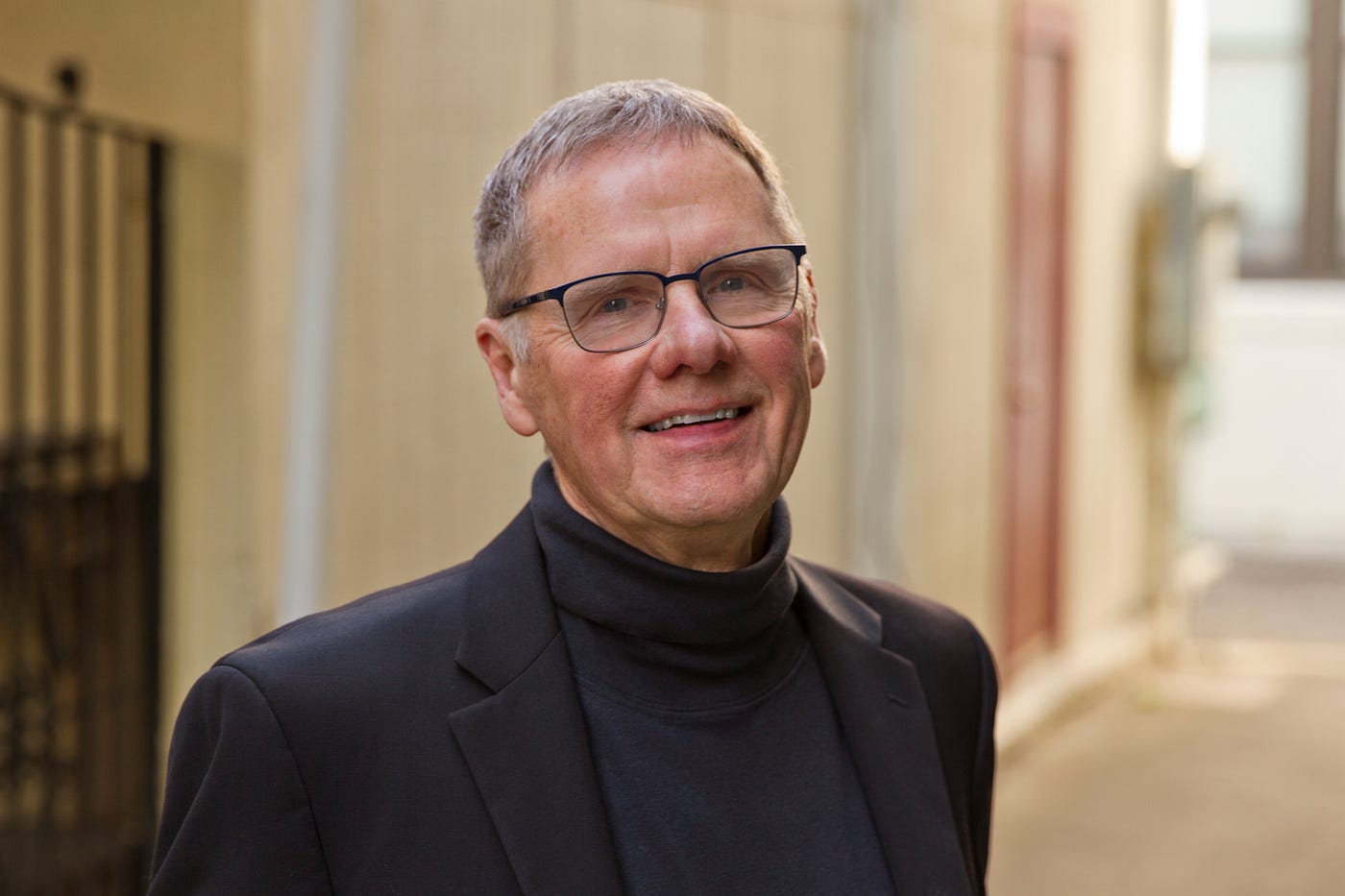
As a part of this interview series called “Preparing For The Future Of Work”, we had the pleasure to interview Bob Johansen.
For nearly 50 years Bob Johansen has worked as a professional futurist. He is the author or co-author of thirteen books as well as a frequent keynote speaker. He recently completed a trilogy of books that details the types of leaders who will thrive in the next decade: The New Leadership Literacies focuses on essential practices of leadership, picking up where Leaders Make the Future, the more skills-oriented precursor left off. In 2020, he published Full-Spectrum Thinking, which focuses on the need for a futureback mindset. Bob’s latest book, Office Shock: Creating Better Futures for Working and Living, written with IFTF colleagues Joseph Press and Christine Bullen, was published in January 2023. Bob holds a B.S. from the University of Illinois (which he attended on a basketball scholarship), an MDiv from Crozer Theological Seminary (where Martin Luther King, Jr. attended divinity school), and a Ph.D. from Northwestern University.
Thank you so much for joining us in this interview series! Our readers like to get an idea of who you are and where you came from. Can you tell us a bit about your background? Where do you come from? What are the life experiences that most shaped your current self?
I am a humble futurist, working with the longest running futures think tank, Institute for the Future, which is based in Silicon Valley. I grew up in rural Illinois but came to Silicon Valley before it was called that. I am a social scientist who works constantly with technology and science, exploring the human, organizational, and even (at times) spiritual issues. I focus my life ten years ahead, thinking futureback. I am not an expert in the present.
What do you expect to be the major disruptions for employers in the next 10–15 years? How should employers pivot to adapt to these disruptions?
The VUCA World (Volatile, Uncertain, Complex, Ambiguous) will get even more VUCA.
Employees must design for more flexibility in where, when, how, and even why they work. Unsettling change (what we call “office shock”) will continue for at least the next decade before ways of working resettle in new patterns.
There will be less demand for office buildings and those offices that remain will be designed to encourage orientation, trust-building, renewal, early-stage creativity, and corporate culture creating and sustaining. Officing (the ways in which we work) and the officeverse (the blended reality mix of places and spaces) will become increasingly important over the next decade. Office buildings will still be important in the future, but there will be fewer of them, and offices will be different experiences.
Purpose and meaning in work will become increasingly important, particularly for younger working generations.
Stakeholder value will become increasingly important (not just shareholder value or profits), especially regarding climate disruption, where employers will be expected to be regenerative—not just net zero in terms of carbon impact.
The choice as to whether or not a young person should pursue a college degree was once a “no-brainer”. But with the existence of many high profile millionaires (and billionaires) who did not earn degrees, as well as the fact that many graduates are saddled with crushing student loan debt and unable to find jobs it has become a much more complex question. What advice would you give to young adults considering whether or not to go to college?
Thinking futureback, I believe an undergraduate degree from an elite university will continue to be valuable—but not if the individual student loan debt is too extreme. The need for continuous learning will grow and the quality of online resources will be unprecedented—if learners can get organized enough to fully utilize and filter those resources. Critical thinking is the most important skill to learn, as well as seeking out the best resources.
Despite the doom and gloom predictions, there are, and likely still will be, jobs available. How do you see job seekers having to change their approaches to finding not only employment, but employment that fits their talents and interests?
Career navigation will become more important than climbing a pre-set career ladder. As your experience grows, it will become increasingly important to have great clarity of the direction you are seeking—while being very flexible about how you might get there. Early in life, it will be important to have many different experiences with many kinds of people, preferably in many different cultures and places.
The statistics of artificial intelligence and automation eliminating millions of jobs, appears frightening to some. For example, Walmart aims to eliminate cashiers altogether and Dominos is instituting pizza delivery via driverless vehicles. How should people plan their careers such that they can hedge their bets against being replaced by automation or robots?
I think, along with Tom Malone, in his book Superminds, that the big story of the next decade is not computers replacing people but rather computers and people doing things together that have never been done before. In our new book Office Shock, we identify the “spectrum of augmentation” as critical over the next decade as we all, to variable degrees, become cyborgs. We need to answer the question of what humans can do best and what do we want to keep for ourselves, as well as what computers can do best. There will be cases of automation where computers replace people in simple ways, but the far greater impacts will be from augmented humans.
Technological advances and pandemic restrictions hastened the move to working from home. Do you see this trend continuing? Why or why not?
Yes, but this won’t be an either/or choice. Rather, the focus will be on what we call the “officeverse,” which will be a mix of in-person offices, virtual officing, and blended reality mixes that will include work from home, work while moving around, and work in physical offices.
What societal changes do you foresee as necessary to support the fundamental changes to work?
Acceptance of and engagement with people of very diverse backgrounds and interests.
Ability to broaden our societal definitions of what we choose to do together, such as public health measures and political engagement beyond the polarized present.
Increased use of digital media to enhance human skills.
Increasing organizational models that are more equitable and responsive to extreme diversity.
What changes do you think will be the most difficult for employers to accept?
Entry into the workforce of young people who will be far more digital savvy and more demanding of flexibility in when, where, and how they will work.
Commitment to regenerative energy use practices (not just net zero) to ease global climate crises.
What changes do you think will be the most difficult for employees to accept?
Efforts to force a return to the old-fashioned office.
Inflexible ideas about where and when work should happen.
The COVID-19 pandemic helped highlight the inadequate social safety net that many workers at all pay levels I have. Is this something that you think should be addressed? In your opinion how should this be addressed?
We are now in an “inter-pandemic” period, with the rolling risk of other pandemics looming for the foreseeable future.
The unfairness of this situation for workers should be addressed, but it will be very difficult and there will be no obvious or simple solutions.
Employers will need to offer flexibility and support for varied ways of working that fit the job and fit the abilities of employees. Supporting remote and flexible workers will become increasingly important.
Institute for the Future has a current project exploring the future of more equitable enterprises and ways of narrowing the rich/poor gap. See www.iftf.org
Despite all that we have said earlier, what is your greatest source of optimism about the future of work?
I am very optimistic about digitally-savvy young people if they have hope.
I am very optimistic about our ability to create shape-shifting organizational structures with leaders who are very clear about direction, but very flexible about execution.
I am very optimistic about the digital media capabilities for working anytime/any place in the emerging officeverse.
Historically, major disruptions to the status quo in employment, particularly disruptions that result in fewer jobs, are temporary with new jobs replacing the jobs lost. Unfortunately, there has often been a gap between the job losses and the growth of new jobs. What do you think we can do to reduce the length of this gap?
This is a complicated topic, beyond the framing of this question. I believe some traditional jobs will go away and far more traditional jobs will be reimagined in ways that are augmented by technology. New jobs will be created, but often they will be traditional jobs reimagined in very different ways.
Okay, wonderful. Here is the main question of our interview. What are your “Top 5 Trends To Watch In the Future of Work?” (Please share a story or example for each.)
MORE PURPOSE-DRIVE WORKERS AND ORGANIZATIONS. Purpose- driven people are happier, healthier, and live longer. Purpose-driven organizations perform better.
MORE AUGMENTED HUMAN WORKERS. Looking futureback from ten years ahead, most high performing people will be augmented in some way.
MORE DISTRIBUTED WORK IN THE “OFFICEVERSE.” New models for anytime/anyplace work will be everywhere. Leaders will need to be very good at leading through multiple media (including in person) and very good at choosing which medium is good for what.
INCREASED STAKEHOLDER VALUE RESULTS—ESPECIALLY REGARDING CLIMATE IMPACTS. Leaders will need to consider not only shareholder value and profit, but stakeholder value and community impact.
MORE SHAPE-SHIFTING ORGANIZATIONAL STRUCTURES WITH GREAT CLARITY OF DIRECTION, BUT GREAT FLEXIBILITY OF EXECUTION. Command and control just won’t work in the increasingly VUCA World (Volatile, Uncertain, Complex, and Ambiguous). These new shape-shifting structures will enable a positive VUCA characterized by Vision, Understanding, Clarity, and Agility.
Can you please give us your favorite “Life Lesson Quote”? Can you share how this quote has shaped your perspective?
The future will reward clarity—but punish certainty.
Our brains want certainty, but we cannot have it in the VUCA World. We can, however, be very clear about direction—but not how we get there.
We are very blessed that some of the biggest names in Business, VC funding, Sports, and Entertainment read this column. Is there a person in the world, or in the US with whom you would love to have a private breakfast or lunch, and why? He or she might just see this if we tag them.
Scott Ostler, sports columnist for the San Francisco Chronicle who writes about both sports and larger social issues in integrated ways.
Amanda Gorman, American poet
Our readers often like to follow our interview subjects’ careers. How can they further follow your work online?
The best way to follow me is via Institute for the Future’s social media, LinkedIn and Officeshock.org
Thank you for these fantastic insights. We greatly appreciate the time you spent on this. We wish you continued success and good health.