Because I was so personable and I offered men’s waxing, guy after guy told me how happy they were to have a place to go that wasn’t their girlfriend’s or wife’s spa, where all the women are and people look at them weird.
As a part of our series about Women Founders, we had the pleasure to interview Bianca Marie.
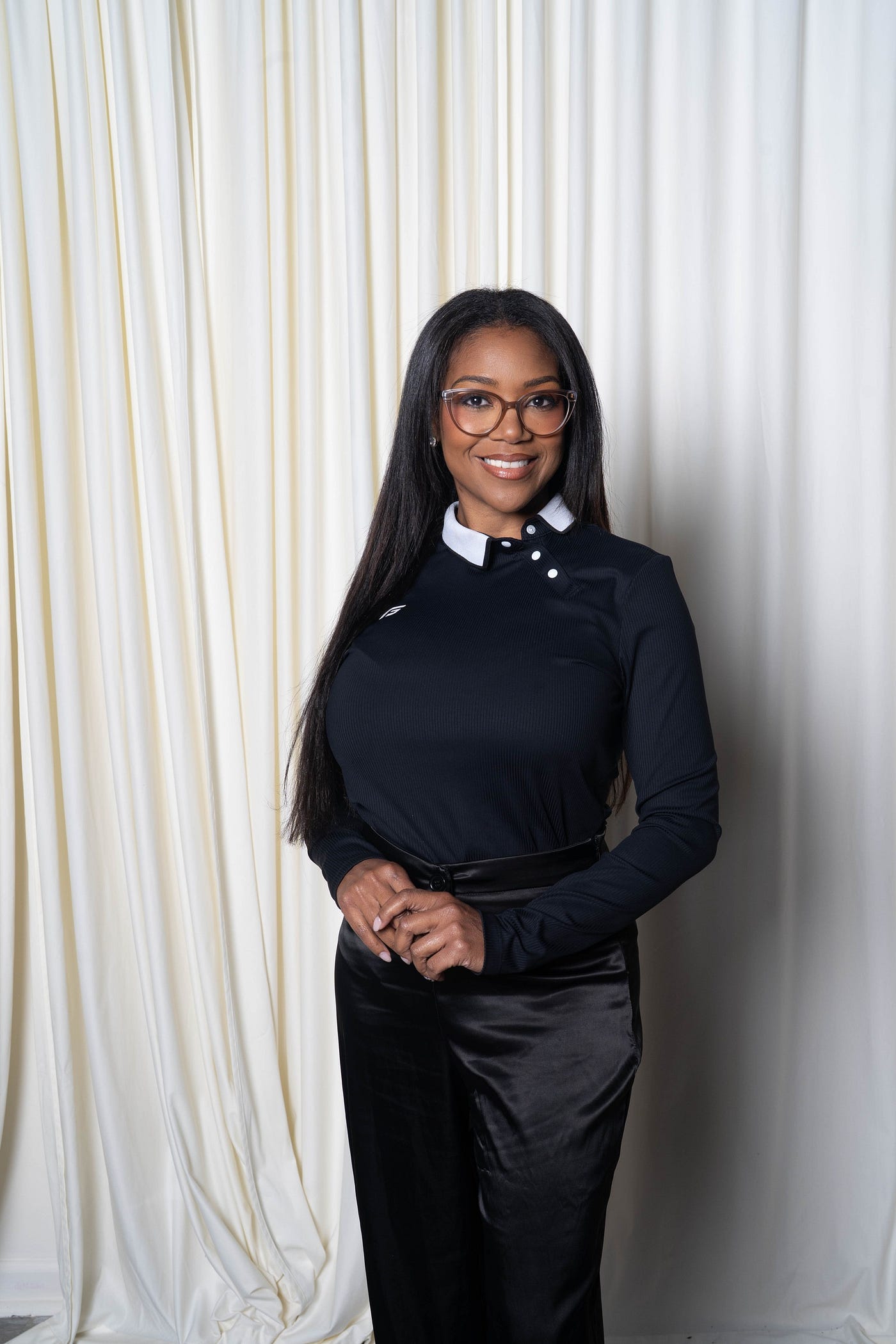
Bianca Marie is the founder of Elite Muse Studio, a private, appointment-only grooming and relaxation studio dedicated to men, located in the Oak Brook area (Villa Park, IL). She started the studio after realizing there were no true spaces where men could prioritize their self-care that weren’t spas their girlfriends, wives or other women frequent. Over 5+ years she has built a judgment-free space with over 200 reviews on Fresha, and she was named a 2026 American Express Neighborhood Small Business Champion.
Thank you so much for joining us in this interview series! Before we dig in, our readers would like to get to know you a bit more. Can you tell us a bit about your “backstory”? What led you to this particular career path?
Before I became an esthetician, I worked as a bartender and bottle girl and did promo modeling. I was obsessed with looking young forever, and I always took pride in my skin and my skincare routine. I was constantly complimented on it, so I decided to go to esthetics school to learn more and get licensed. My first venture as an esthetician was a salon suite, where I saw both men and women. Because I was so personable and I offered men’s waxing, guy after guy told me how happy they were to have a place to go that wasn’t their girlfriend’s or wife’s spa, where all the women are and people look at them weird. After hearing that from so many men, I decided to create a space just for them, because there are millions of spaces like that for us women.
Can you share the most interesting story that happened to you since you began leading your company?
I was already in a suite in Oak Brook, and I was looking to expand. The property manager showed me a one-room space, under 100 square feet, with a shared bathroom down the hallway. Then he mentioned that a new opening had come across his desk two days earlier, and he drove me about 10 minutes away to see it. I walked in and knew it was perfect. It had its own bathroom and treatment rooms, and it was all mine. The owners wanted a 2-year lease, so I asked for 1 year and some time to think about it. A week later, I asked him to negotiate a lower rent for the 2 years, because I was extremely interested. The owners agreed. I was ecstatic, because I knew this was the office I had been praying for for about 3 years. I’ve been there for 5+ years now.
Can you share a story about the funniest mistake you made when you were first starting? Can you tell us what lesson you learned from that?
The funniest story when I first started: I had a client come in for a manscape waxing. I think I was in my first year, and I was still fairly new to manscape waxing, because I was fresh out of school. Before that I was mainly doing facials, lashes, body contouring, and waxing on girls, but not on dudes. He had to be like my client number six — my sixth client ever when it comes to waxing a guy. Now the other clients I didn’t have an issue with, but this particular client, I go to, and I use a two-wax method. I use a soft wax and a hard wax. But at this time, I was mainly using soft wax. And I go to wax his ball sack, or his scrotum, and lo and behold, the skin came up with it. I was so embarrassed. Oh my God. I had to just pretend like I knew what I was talking about. I was like, “I’m so sorry. Things like this happen. Did you exfoliate before you came?” Da da da da. I asked him several questions just to fluff through it. And then I was like, “You know what? Just so you know, the skin came up a bit. It should be fine. It’ll heal fine. But I do apologize.” And at the end of it, I was like, “I’m willing to give you like three free waxes after that, or a facial, or whatever services you like for free. It’s on me, because this normally doesn’t happen.” And I apologized my bum off. But lo and behold, that man ain’t never booked with me again. He never booked with me again. That’s it.
The lesson I learned: never do soft wax on the scrotum. Ever. I mean, you can, I guess you can. I never do it. It’s not my best thing to do. Also, be mindful of the skin of the clients, because with older clients you really cannot use soft wax like that. You can, but you have to be very, very careful. So I just use hard wax regardless on them. I learned the hard way: if you don’t pay attention, you will be pulling up some skin on them. Mm-mm. We don’t want that, and we don’t like that.
None of us are able to achieve success without some help along the way. Is there a particular person who you are grateful towards who helped get you to where you are? Can you share a story about that?
I’m just grateful for my whole family: my daughter, my mom, my brother and my cousins. They really helped me get through the good and the bad times mentally. And I’m grateful for God, because without the grace of God, I wouldn’t be in my position.
Ok, thank you for that. Let’s now jump to the primary focus of our interview. According to this EY report, only about 20 percent of funded companies have women founders. This reflects great historical progress, but it also shows that more work still has to be done to empower women to create companies. In your opinion and experience what is currently holding back women from founding companies?
Fear is number one. They’re afraid of failing. They’re afraid of being seen as strong and independent. And then also, they’re afraid of being their authentic selves while actually building something. They’re afraid to build something from scratch and it not work.
Can you help articulate a few things that can be done as individuals, as a society, or by the government, to help overcome those obstacles?
I think there should be more mentorship — being able to find good mentorship, and it being available and affordable, for women to be able to step into these roles.
This might be intuitive to you as a woman founder but I think it will be helpful to spell this out. Can you share a few reasons why more women should become founders?
More women should become founders because being a founder actually helps you to be a better leader — a better leader at home, a better leader in your family, a better leader in the world in general. Little girls need to see more founders because it shows how much you are dedicated and committed to things, and it gives them a sense of role models to look at, to see that if this person can do it, I can do it. Little girls need to see this. They need to see more women founders founding businesses that are massive, that are beautiful, that are moving, whether they are small, medium, or big, because everybody has their own different niche and everybody has their own different way and flow. And every little girl is different, just like every business is different. So there need to be more founders so more little girls can grow up and understand: you don’t have to sit at home and be a mom and be a housewife. You don’t have to do that. Or you can be a housewife and also be a founder. It is a real thing. It is okay. And there are different ways of doing it. You don’t have to sit in the office all day. You can be at home, and that could be your founding job position, but also be a house mom as well — you also founded this beautiful job within being a house mom that you cultivated. They need to see more of that.
What are the “myths” that you would like to dispel about being a founder? Can you explain what you mean?
It’s easy. When people be like, “Oh, if she could do it, I could do it. It’s easy.” No, it’s not easy. It’s gonna take a lot of work, a lot of time, a lot of dedication, a lot of motivation, a lot of sleepless nights, a lot of uncertainty, a lot of chaos at times, a lot of miscommunication and misunderstandings at times, but also a lot of drive, dedication, and a lot of love.
Is everyone cut out to be a founder? In your opinion, which specific traits increase the likelihood that a person will be a successful founder and what type of person should perhaps seek a “regular job” as an employee? Can you explain what you mean?
I don’t think everybody is cut out to be a founder at all, no. There are a lot of people who can embark on it and try it out and see if it’s for them, but for a fact, not everybody’s cut out for this. If you’re not a problem solver — if you cannot come with a solution or, as my mama used to say, pull a rabbit out a hat — you’re not cut out for this. ’Cause anything can happen at any point, and you need to know how to pivot and be ready at all costs. If you’re someone who breaks down and crashes out every time, you’re not cut out for this. This ain’t it. This ain’t for you. You need to go work somewhere else. But if you can handle it, if you’re good under pressure, you’re probably cut out for it. You know what I mean? Who should just go work at a nine to five? Honestly, everybody in the whole world should work at a nine to five just so you can get your feet wet at some point in time in your life. So I can’t say who should just go work at a nine to five. Everybody should just go work at a nine to five, and then find out whether or not you’re founder material along the way.
What are your “5 Things I Wish Someone Told Me Before I Started” and why? (Please share a story or example for each.)
1. There’s a lot of sleepless nights. I wish somebody would’ve told me I’d be up at like 2, 3, 4, 5, 6, 7, 8, 9 o’clock in the morning, sometimes 24 hours, doing work that’s just busy work.
2. All your friends and family are not gonna rock with you the way you think. Just ’cause you think you got a good idea and you’re like, “I’m doing this, I’m doing this. My friends and family, they support me.” They’re not gonna support you the way you think they are. They’re gonna support you with a lot of verbal love and support, but not the other way. And I wish somebody did tell me when I started, because I was highly disappointed.
3. When it comes to people, don’t really have high expectations. Have ’em as high as you can throw ‘em.
4. Numbers don’t lie. But people do all the time. Clients lie. Staff lie. So you just gotta be very discerning. You have to have a lot of discernment when you’re being a founder.
5. If you don’t love what you do, then move on to something else. Move on to something else that you do love, or at least that you like. Don’t stay in something that you’re just tolerating for the money, because you will find yourself burnt out, not happy, stressed out, aging faster. Don’t nobody wanna do that. You’ll just be unhappy and wanna quit. You founded it for a reason, and it’s not to quit. So if you don’t love it, leave it. It’s okay. Start over.
How have you used your success to make the world a better place?
I’ve used it by helping the men who’ve come through my doors actually leave their trauma and stress on the table. So when they walk outside these doors, they’re no longer holding in so much stress, tension, and agony, and they’re leaving lighter, with a lighter mind, with a lighter feeling, and they’re able to go and take on the day. Because now, they’ve come through these doors. They’ve come to the safe space that they’ve possibly never entered before. Anywhere.
You are a person of great influence. If you could inspire a movement that would bring the most amount of good for the greatest number of people, what would that be? You never know what your idea can trigger.
Self-love and healing. In order to be able to do everything else in the world for everyone else, you have to start with self-love.
We are very blessed that some very prominent names in Business, VC funding, Sports, and Entertainment read this column. Is there a person in the world, or in the US with whom you would love to have a private breakfast or lunch with, and why? He or she might just see this if we tag them.
Who else but Oprah? Come on. The reason being is because I want to know: what’s the magic trick? What’s the magic trick to actually continuing to move even though you feel so alone? And how do you actually get over that feeling and actually start trusting people to be like, okay, I need a team. I need to trust these people as my team. And how do you build that trust when you’ve been through so much trauma, when you’ve been through so much ups and downs and ins and outs? How do you literally build that trust and trust that it’s gonna work? Because I have troubles with that.
Thank you for these fantastic insights. We greatly appreciate the time you spent on this.