As AI agents start performing decision-making and actions on actual systems, there is a necessity to know what agents do, what authority th
In our uncertain and turbulent world, cyberattacks on private businesses are sadly a common tactic of hostile foreign regimes as well as criminal gangs. Cyberattacks and ransomware have crippled large multinational organizations and even governments. What does every company need to do to protect itself from a cyberattack?
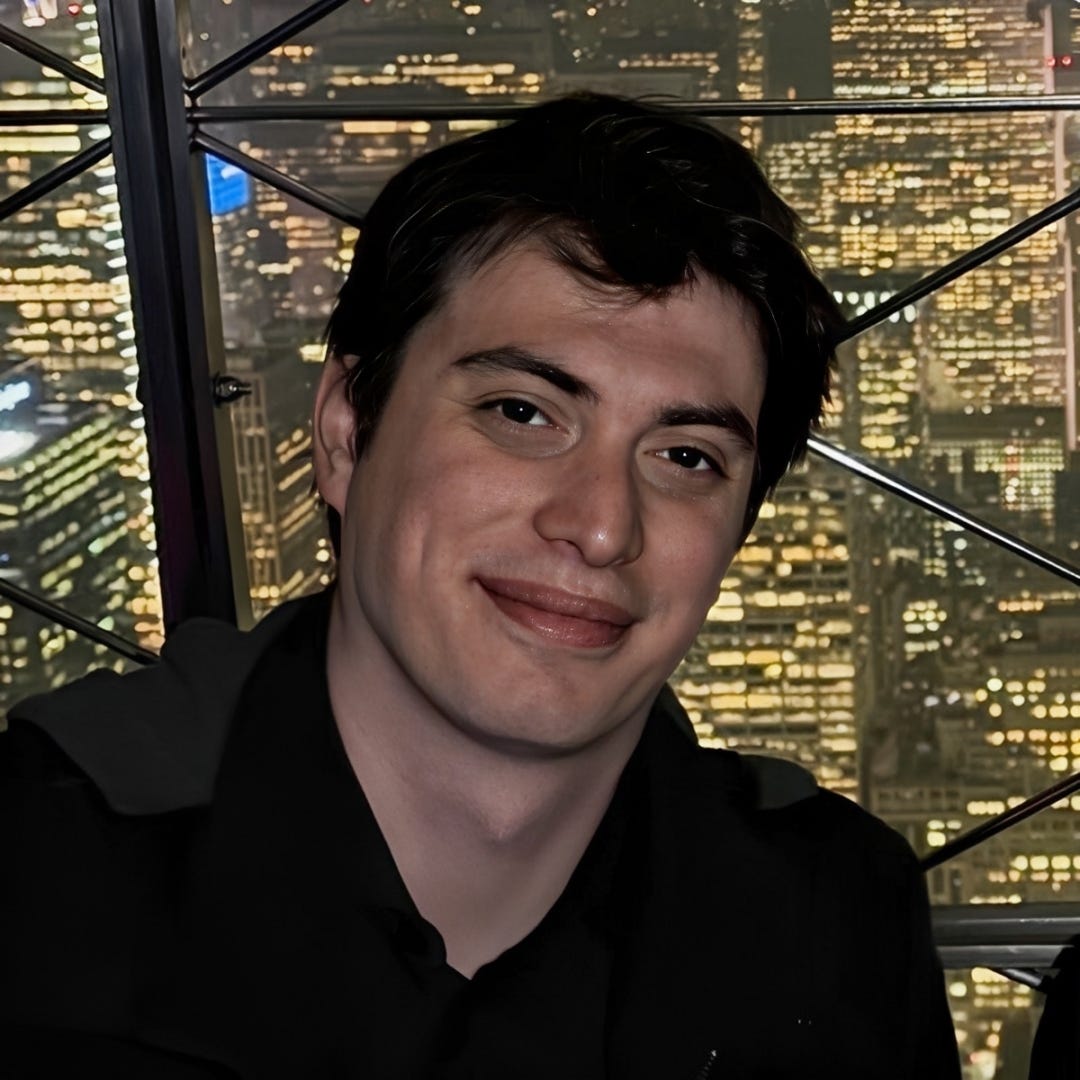
In this series called “5 Things Every American Business Leader Should Do To Shield Themselves From A Cyberattack” we are talking to cybersecurity experts and chief information security officers who can share insights from their experience, with all of us. As a part of this series, I had the pleasure of interviewing Berk Yilmaz.
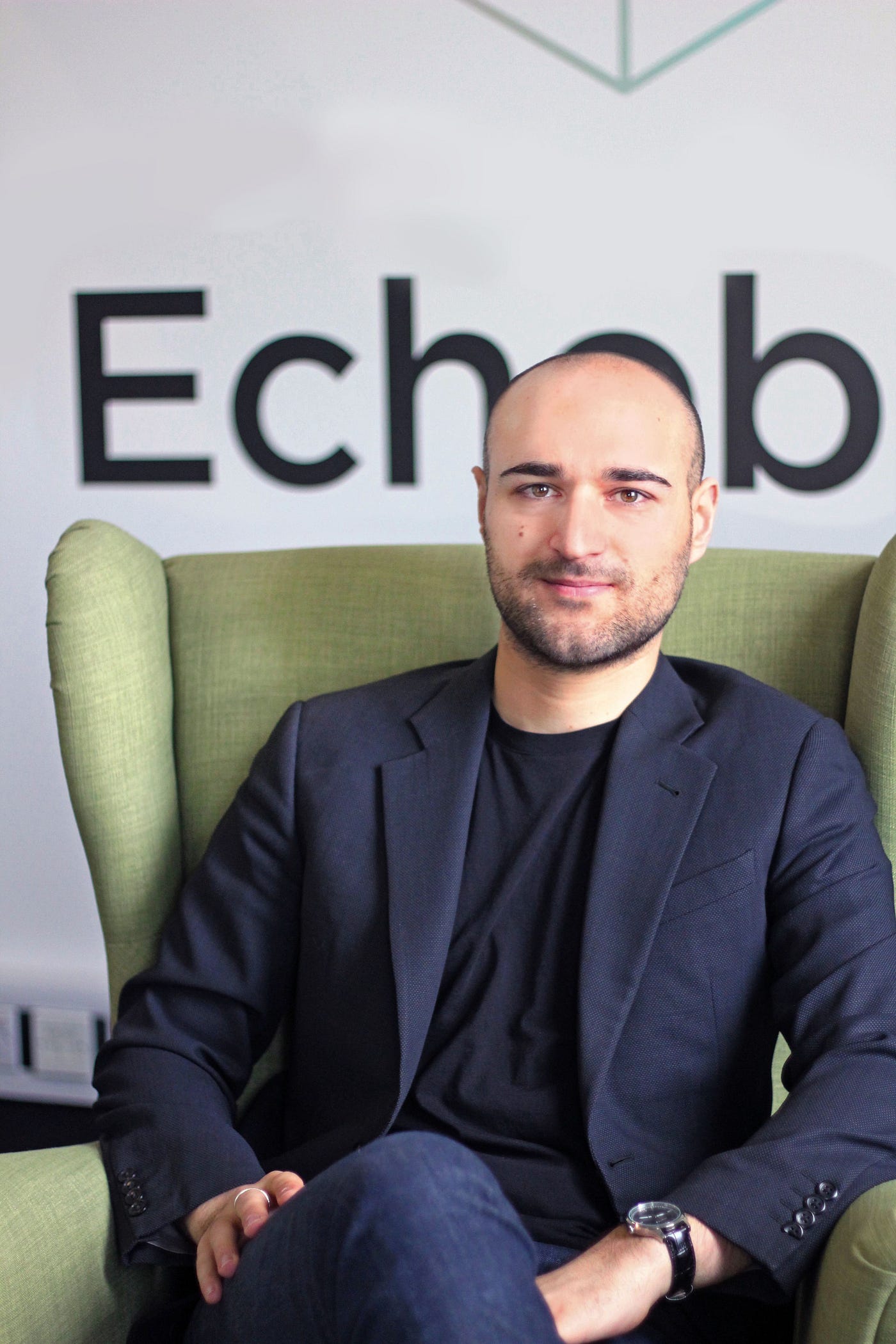
Berk Yilmaz is an AI engineer, researcher, and technology entrepreneur working at the intersection of artificial intelligence, autonomous systems, aerospace, defense, and mission-critical software. He is also the CTO of Noah Labs, where he leads the development of secure, agentic AI systems for code modernization. A Columbia University alumnus and winner of a NASA grant, his work focuses on agentic AI, open-weight models, and secure AI infrastructure.
Thank you so much for joining us in this interview series! Before we dig in, our readers would like to get to know you. Can you tell us a bit about how you grew up?
I spent my childhood years in Turkey and have been interested in problem solving since early age. Engineering has always attracted me due to my ability to break down complicated issues and see how the system works.
It turned out that my passion for breaking down complicated systems has led me to the field of electrical engineering, then artificial intelligence and robotics. Later, I went to Columbia University and specialized in AI, where over time my emphasis transitioned towards creating intelligent systems that would be able to operate in real world conditions.
One of the key factors in my personal development was an urge to solve problems that have an effect on something. This desire to contribute to some changes drove me from academia and NASA-funded projects to entrepreneurship and finally to founding Noah Labs.
Is there a particular story that inspired you to pursue a career in cybersecurity? We’d love to hear it.
It wasn’t a single event, rather a gradual process.
Since childhood, I have always been amazed at how telecommunication systems communicate with each other. Gradually, I started researching the inner workings of the process — the signal transmission, device authentication, and the way the communications protocol works.
Gradually, I began to see that each communication system is also a security system. Understanding how protocol works leads to understanding where its weak points are, what assumptions underlie it and what risks arise from them.
This naturally led me to cybersecurity. With the advent of AI technology, I think security has become one of the most pressing topics since AI systems do not exist independently and are connected to the same network, software, communication infrastructure, database, and critical systems that we have been developing for decades.
With autonomous AI agents, it takes on another dimension. These systems can take decisions on their own, use different tools, communicate with other systems and act independently. Therefore, AI security depends on all previous stages: network security, communications security, identification, access control, software security and autonomy.
Can you share the most interesting story that happened to you since you began this fascinating career?
The most impressive experience of my professional life is connected with the work on the space technology project that my team created in the area of cold welding for space applications.
The project was supported by NASA, and some support was provided in relation to NASA Marshall Space Flight Center. The point is that we were solving a particular problem that required taking into account such engineering factors as harsh environment, reliability, and mission requirements.
In addition, later I got an opportunity to watch the launch of NASA’s Lucy mission. Having seen the launch of a spacecraft after having solved many space engineering problems, I felt how real that experience was.
And I will definitely say that the most interesting engineering problems are those where software, hardware, and reliability merge together.
You are a successful leader. Which three character traits do you think were most instrumental to your success? Can you please share a story or example for each?
Of all the skills I consider to be valuable to me, there are three I can name off the top of my head. These skills are listening, persistence, and problem-solving.
First, it is listening. I take feedback from my peers, engineers, customers, and advisors into account a lot. In my opinion, the leader is not one who knows how to solve everything by himself. The best decisions we have taken at Noah Labs were those that resulted from careful listening.
For instance, while building the Sentinel platform, discussions with engineers and people working in the field of regulation and defense revealed that having only capabilities was not sufficient; they required not only good performance of artificial intelligence but also control, isolation, permissions, and reliability. This input guided our thinking about the product and led us to consider an architecture that is suitable for on-premises and air-gapped settings.
The second is persistence. I work very hard, especially when we are facing a difficult technical problem or operating under a tight deadline. In engineering, things often do not work the first time. Whether it was research, space technology projects, or building Noah Labs, I learned that progress usually comes from continuing to iterate when the first few approaches fail. A lot of the problems worth solving require staying with them longer than most people are comfortable with.
The third is problem-solving. I’m always looking for a different way to approach a problem instead of accepting that something cannot be done. At Noah Labs, we work in environments with very specific constraints, including air-gapped and highly regulated systems. Those constraints force us to think differently about how AI should be deployed, secured, and integrated.
As one example, you cannot always count on finding the best cloud model when you face challenging tasks in an air-gapped environment. There are new ways to look at the problem in terms of model selection, how agents interact with tools, access control, output validation, and optimization of the process as a whole to achieve maximum productivity in the given environment. I personally like such problems, as they make you look for cutting-edge strategies that will never be developed in an environment with fewer restrictions.
I believe that all three features complement each other: listening attentively, solving difficult problems, and searching for an optimal solution.
Are you working on any exciting new projects now? How do you think that will help people?
Indeed. At Noah Labs, we are working toward formulating a more holistic strategy to the deployment of AI in government and defense, among others.
One of our core products that we are developing is called Sentinel. It is an agentic development platform for secure software engineering, designed from the ground up as an AI-native tool. And it does not simply do code generation; Sentinel includes a range of capabilities, including agentic development, formal verification, cybersecurity and safety analysis, documentation, testing, developer-in-the-loop design, as well as integration with legacy software systems.
We’re also creating ARK that concentrates on the governance, control and supervision aspects of autonomous systems. As AI agents start performing decision-making and actions on actual systems, there is a necessity to know what agents do, what authority they have, what kind of evidence do they base their decisions on and whether or not humans need to retain control.
It is the mission of Noah Labs which really connects Sentinel and ARK. We see that the future of AI systems not only lies in increased capability but also lies in security, verifiability, auditability, and deployability in contexts where there are serious stakes to failure.
I believe that the significance is all about being able to make such AI technology applicable in situations where errors can cause damage. We would like to assist companies in being able to work faster and more automated but with the focus on security and human control.
For us, the aim is not simply to make AI better. It is about making advanced AI systems reliable enough for operation at crossroads of innovation.
For the benefit of our readers, can you briefly tell our readers why you are an authority about the topic of Cybersecurity?
My views on cybersecurity are shaped by my experience of being part of AI, software engineering, communications, and secure systems for many years.
My education and experience include both electrical engineering and AI, and before even joining Noah Labs, I was familiar with the idea of engineering where reliability, limitations of systems, and security are the essence of the engineering task. This involved space-related and other research projects where you really had to take into account how things might fail, and how communication works.
In my case, the experience became even more specific in terms of cybersecurity, as we create solutions for the sectors of defense, government, and regulated industries where isolation, access control, verification, and human supervision are necessary. For instance, while developing Sentinel, we implement various features including formal verification, static and dynamic analysis, cybersecurity validation, controlled tool access, and full on-premises or air-gap deployment.
So, the topic I am most experienced in is actually cybersecurity of autonomous and agentic AI systems, or what happens when AI technology goes beyond generating data and starts doing things like manipulating tools, software, infrastructure, etc.
Ok super. Thank you for all that. Let’s now shift to the main focus of our interview. In order to ensure that we are all on the same page let’s begin with some simple definitions. Can you tell our readers about the different forms of cyber attacks that we need to be cognizant of?
Cyberattacks are multi-faceted in nature; however, in most cases, I tend to classify them into a couple of categories.
One such category is social engineering attacks, where the attack is targeted at the human and not the computer. The second category includes malware or ransomware attacks, which involve the use of software to attack an organization. Next, there are network and infrastructure attacks, such as denial of service, man-in-the-middle, exposed service exploitation, and lateral movement after an attacker penetrates the network. There is also the type of software supply chain attack, which happens when the attacker compromises some dependency, update, development tools, or other components that the organization trusts. These types of attacks are particularly dangerous because the victim may introduce them through something trusted.
Other types of security threats include identity and access attacks. An attacker with the proper credentials or access privileges may find that they do not need to hack into the system but can use the system as a legitimate user.
Moreover, we should consider the types of attacks that specifically target AI-based technologies, an area that I am currently very actively researching. This includes prompt injection, manipulation of context or tools for the agent, data poisoning, abuse of the permissions of the model, and attempts to expand the limits of the operation of the autonomous system.
The importance of such types of attack stems from the fact that AI-based agents more and more often gain access to actual tools and systems.
The significance of the AI-agent age lies in the fact that such categorizations begin to intersect. An AI agent could have access to software repositories, databases, terminals, API’s, or operational systems. Therefore, an injection or breach of identity could turn into a software or even an infrastructure incident very fast.
This is why I believe that modern cyber security must not just prevent attacks but control the situation after the occurrence, limit the level of authority and its revocation, as well as containment of the incident.
Who has to be most concerned about a cyber attack? Is it primarily businesses or even private individuals?
Today, cybersecurity isn’t only an issue of concern for businesses. Individual citizens are also vulnerable to attacks such as identity theft, phishing, account hijacking, financial scams, and AI-assisted scams. On the other hand, businesses are faced with a more serious problem since a single attack can compromise the security of thousands or even millions of people. The companies that I am worried about are the ones running vital or sensitive systems, like government, military, health care, finance, telecom, energy, and other infrastructures. These are places where the cyber attack is not merely an IT incident but an operational or even a safety incident. The worry multiplies as AI agents become connected to all of these systems, since the compromised software not only leaks information but can act on its own.
Who should be called first after one is aware that they are the victim of a cyber attack? The local police? The FBI? A cybersecurity expert?
First of all, one needs to deal with containment. If you are an organization, your initial contacts will usually be your own security team or IT department or incident response team provided by some outside cyber security company if you do not have such capabilities internally.
Secondly, you need to secure the evidence and not make any actions that might destroy logs or complicate the further investigation.
Finally, the law enforcement agencies will step in based on the type of the attack. For example, if the attack is taking place in the United States and it includes ransomware, significant financial losses, attack on critical infrastructure, nation state actor involvement or any other complex cyber intrusions, you may have to notify FBI or some other governmental agency. At the same time, your local police department may be of use if the attack is related to some kind of fraud or identity theft. However, this is usually not your primary contact when dealing with a cyber incident.
What are the most common data security and cybersecurity mistakes you have seen companies make that make them vulnerable to ransomware attacks?
Most commonly, the largest mistakes made are rather simple: inadequate identity management; poor patching practices; excess permissions; flat network structure; and inadequate backup isolation and testing. Visibility also stands out as a common problem. Typically, businesses do not understand all the exposed systems, software, data, and credentials they may have. With AI agents, that means the same can occur when discussing what those AI agents have access to. It should be that no compromise of any individual account, device, or agent can cause a business-wide breach.
What would you recommend for the government or for tech leaders to do to help limit the frequency and severity of these attacks?
In my opinion, prevention should come first, especially when it comes to those places where any potential attack would have disastrous outcomes. These areas include: secure identity management, secure network segmentation, quick patching, software development, monitoring and at least minimal security for critical infrastructure and AI implementation. But even if all precautions are taken into account, we should keep in mind the likelihood of the security breach. In this case, the following step would involve restricting the blast radius by means of limiting access rights, isolation, credentials withdrawal, and incident response techniques. What must be clear is that all these steps must be taken in such a manner that everything must be prevented, and the system is secure in spite of preventive efforts failing.
Ok, thank you. Here is the main question of our interview. What are the “5 Things Every American Business Leader Should Do To Shield Themselves From A Cyberattack” and why? (Please share a story or example for each.)
I would give these 5 things;
1. Anticipate the technology.
It is crucial for leaders to recognize how fast new defense as well as offense technology is developing. In order to be able to defend yourself from some danger, you must have an understanding of it. For instance, AI is one such area. Leaders implement a lot of autonomous systems in their businesses without really having a complete knowledge of all that these systems are capable of accessing and doing.
2. Embed prevention into the design from day one.
Security is not supposed to be an after-the-fact add-on. Identity controls, segmentation, least-privilege access, secure development, and guardrails should be put into place right away. From our experience in the ecosystems we work in, particularly defense and regulatory sectors, we’ve noticed that security considerations must influence the architecture itself.
3. Restrict the scope of damage.
No matter how much prevention there is, you have to accept the idea that sooner or later something will happen. The breach of one user, machine, or AI agent should not be able to get access to everything in your company. The objective is to ensure that a failure remains just that.
4. Simulate attacks before they occur.
Organizations need to conduct regular tabletop exercises, red-team attacks, and scenario planning. The leaders need to know who will make the decisions, shut down the systems, contact the authorities, etc., in advance. You don’t want to be figuring that out in real time during an attack.
5. Develop resilience and recovery capabilities in the system.
The leaders must develop strategies that help maintain the operations of the business during a cyberattack and recover the critical system in as short a time as possible. This involves backup systems that are tested and isolated, good monitoring, recovery plans, and preparations for any disruptions. The objective here is to ensure that the cyberattack affects the organization only temporarily.
You are a person of enormous influence. If you could inspire a movement that would bring the most amount of good to the most amount of people, what would that be? You never know what your idea can trigger. :-)
If I could instigate a movement, it would be one to build technologies that help humanity as opposed to serving our selfish ends.
Technology such as AI is now becoming sophisticated enough to have an impact on economics, politics, security, education, and daily life on a massive scale. It feels like those designing these technologies should consider asking a broader question whether what we build actually improves the lives of individuals.
It seems like it would be beneficial to motivate more engineers, entrepreneurs, scientists, and other leaders not to consider what is feasible and profitable but what will generate value for society. I believe that more and more innovations like this could make technology a powerful force for good.
How can our readers further follow your work online?
The best way to follow my work is through my LinkedIn at linkedin.com/in/berkyy, the Noah Labs LinkedIn page, and our website at noahlabs.ai. We regularly share updates on what we’re building, our work in secure and agentic AI, and new developments at Noah Labs.
This was very inspiring and informative. Thank you so much for the time you spent with this interview!
About The Interviewer: Tavares Beverly ( www.tavaresbeverly.com ) is the Founder and CEO of Beverly Boy Productions, a national video production company that has helped organizations tell their stories through video for more than two decades. Over the course of his career, he has worked with everyone from Fortune 500 executives and healthcare professionals to politicians, nonprofit leaders, educators, and artists, gaining a unique perspective on the role communication plays in leadership, business, and human connection. A frequent contributor on topics including communication, entrepreneurship, leadership, and personal development, Tavares believes that the ability to communicate effectively is one of the most valuable skills a person can develop. His work is driven by a passion for helping organizations connect with their audiences and helping individuals unlock their potential through mentorship, perseverance, and meaningful relationships. To learn more, connect with Tavares on LinkedIn or visit www.BeverlyBoy.com . If you’re interested in using the power of storytelling and communication to grow your organization, strengthen your brand, or inspire your audience, he welcomes the opportunity to connect.