The lesson I took away from this is that there is more than one way to accomplish your goals; don’t be rigid in the way you see your life or career going. Sometimes you need to take the opportunity at hand and see what it leads.
Tech
Stephanie Covert of FICO: The Flexibility Mindset That Turns Overqualification Into Career Transformation
Stephanie Covert shares her insights on navigating industry transformations, embracing allyship, and addressing gender diversity challenges in the financial technology sector.
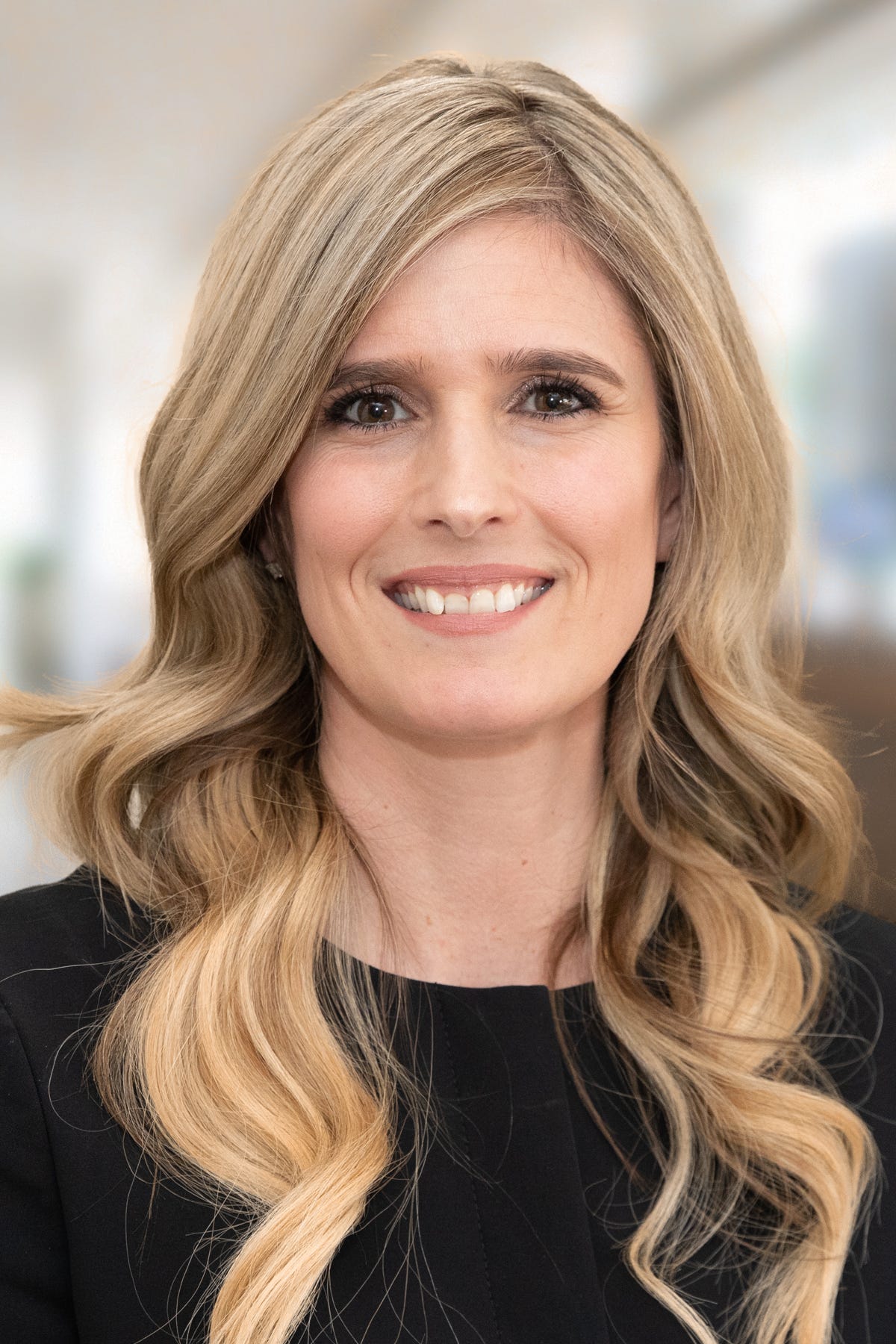
As a part of our series about “Women Leading The Finance Industry”, I had the pleasure of interviewing Stephanie Covert.
Stephanie Covert serves as FICO’s executive vice president of software. Stephanie joined FICO in 2014, recently serving as executive vice president of sales and marketing. As executive vice president of software, Stephanie is responsible for all elements of the company’s software business, including software technology, product management, service, sales, and marketing functions. She has decades of experience building leading global operations teams and designing enterprise sales go-to-market strategies while delivering impactful customer experiences. Stephanie has previously held executive roles at Apttus, Oracle and RightNow Technologies.
Thank you so much for joining us in this interview series! Can you tell us the “backstory” about what brought you to the finance field?
Prior to joining FICO, I had a spent over a decade working in the software Industry, but did not have a singular focus on financial services. A prior CEO that I had worked for was a board member at FICO, and he recommended that our CEO Will Lansing recruit me to work in the software business at FICO. Because financial services is our principal industry at FICO, going right back to the late 1950s and continuing across our solution suite to this day, by joining the software team I entered the financial services field. Building allies is not something that is regularly taught to young women entering the workforce, but it has been allies that have helped encourage me and referred me even when I was not in the room. I believe allyship has had a profound impact on my success.
Can you share with our readers the most interesting or amusing story that occurred to you in your career so far? Can you share the lesson or take away you took out of that story?
Way back at the start of my career, I knew that I wanted to work in software. I could see how software was changing the world that we live in daily and wanted to be in an industry that was innovating. I also knew the company that I wanted to work for. Unfortunately, during that time, they didn’t have a lot of open positions, so I ended up applying for a job that was open, even though it wasn’t my ideal position and I was overqualified for it. I knew that if I could get my foot in the door and work hard, there would be other opportunities to pursue later. The lesson I took away from this is that there is more than one way to accomplish your goals; don’t be rigid in the way you see your life or career going. Sometimes you need to take the opportunity at hand and see what it leads.
Are you working on any exciting new projects now? How do you think that will help people?
At FICO we are going through a transformation in our software business. Consumers know FICO due to our FICO Score, the industry standard for consumer credit risk, but may not know that FICO has an equally large software business. Lenders know us for our solutions in areas like fraud detection and credit risk management, where again we have industry-leading products. Now we are shifting from separate point solutions to an AI-powered platform built with microservices on the cloud. FICO Platform enables businesses to drive hyper-personalized experiences across the customer journey.
It’s the same core concept — the combination of human intelligence and artificial intelligence to drive smarter, better, faster decisions — but delivered via a more flexible, agile platform instead of standalone solutions. This is the future of decision management, and it’s exciting to see the way our clients are embracing the platform approach and driving true transformation in their business, while helping their customers achieve their goals.
What do you think makes your company stand out? Can you share a story?
Firstly, we are a pioneer in the use of analytics and AI, decades before these were the hot technologies they are today. But beyond that, the people and the culture are what make FICO stand out. People at FICO are united towards a common vision and focused on doing whatever it takes deliver results to our customers. We are not just another vendor, we really are a partner to our customers. One of the things that makes me proud is when we are in person with our customers or hosting them at our FICO World customer event, I hear so many great stories about how the people at FICO have gone above and beyond to ensure that their customers succeed. Because that is what we are about, helping drive strategic business outcomes for our customers.
Ok. Thank you for all that. Let’s now jump to the main core of our interview. Wall Street and Finance used to be an “all white boys club”. This has changed a lot recently. In your opinion, what caused this change?
If we step back and look at the S&P 500, roughly 10% of CEOS are now women, only 5 of these women are women of color, and a quarter of them became CEOs in the last year. This is up from around 5% five years ago. So we have seen some progress, but there is still more work to do.
I believe there are a few reasons that we are seeing this shift. First women are entering the workforce at a higher rate; the labor force participation rate for women was 76% in May 2023. Second, women are seeking higher education at a rate greater than men. Women now comprise nearly 60% of enrollment in colleges and universities. Third, I believe that there is more awareness about the importance of diversity. Studies have shown that gender diverse companies are more successful and more profitable. I believe it’s a combination of these factors that are creating the environment for women to ascend to leadership roles in organizations.
Of course, despite the progress, we still have a lot more work to do to achieve parity. According to this report in CNBC, less than 17 percent of senior positions in investment banks are held by women. In your opinion or experience, what 3 things can be done by a)individuals b)companies and/or c) society to support this movement going forward?
It’s important for us to understand that there is no single thing that we can do to solve this disparity. If we are going to drive meaningful change, we have to tackle the problem from many different sides. I would place these three things at the top of my list:
- Mentorship/role models: Many women enter the workforce and do not have the right role models or mentors to help them succeed. In fact, nearly 63% of women report that they have never had a mentor in their career. This leaves women at a large disadvantage to men, who are being mentored at a higher rate.
- Improve the environment women work in: Women still face more challenges than men in leadership positions. Women often suffer from micro aggressions and/or harassment. In addition, women still face gender bias. Men are often seen as more competent and capable of leadership than women. If more women are to succeed, we need to create an environment that is psychologically safe and supportive where women can thrive and succeed.
- Teaching leadership skills and self-awareness: Women and men tend to have different leadership styles and qualities. Far too many women believe that they have to adopt a masculine style of leadership to reach higher levels in organizations. Women are not taught to embrace their strengths. Women leaders are often more empathetic and make decisions from a sense of community and not self. It’s important that we reach women at young ages and help them to understand the power of their strengths so they can be the best version of themselves. I believe so strongly in helping women understand the power of their personal leadership styles that I founded a program at FICO called FICO Women Leaders. This program is focused on helping women understand how to take a value-based approach to leadership and find their voice and confidence to lead.
Let’s now turn to a slightly new topic. According to this report in Fortune, nearly two-thirds of Americans can’t pass a basic test of financial literacy. In your opinion or experience, what is the cause of these unfortunate numbers? If you had the power to make a change, what 3 things would you recommend to improve these numbers?
The lack of financial literacy concerns me deeply. It is one of those life skills that our education system too frequently leaves out, and that is true in many countries worldwide. While the old litmus test was balancing a checkbook, people today have more options than ever on how to spend, protect and invest their money, as well as more options on where to borrow. We just aren’t keeping up.
This is one reason that FICO has made so much educational content available online and through seminars — in fact, we just partnered with Chelsea FC to deliver financial education in American cities where they’re playing this summer. This is through our Score A Better Future webinar program, which has educated nearly 3,000 Americans to date.
At FICO, as we developed the score used in 90% of US lending decisions, we are committed to helping people understand the part their FICO Score plays in their financial independence, and what they can do to improve their score. These include:
- Make all your payments on time, every month
- Keep credit card balances low
- Apply for new credit only as needed
We make all the information about the FICO Score and what goes into it available to the public on our myFICO website.
You are a “finance insider”. If you had to advise your adult child about 5 non-intuitive things one should do to become more financially literate, what would you say? Can you please give a story or example for each?
I would rather focus on what we as adults can teach our children when they’re young. These are critical life lessons that every parent should share with their children.
First, teach them how earning money works. Give your child actual opportunities to raise money for themselves, such as by completing tasks. For older children and teenagers, you can look for some money-earning opportunities like a part-time job, a yard sale, babysitting or mowing lawns, or even starting an online business.
Next, teach them about budgeting. You could involve them in your own household budget, and share the categories of spending and how much go into them. If they’re already earning money, through allowance or jobs, teach them how to manage those funds. Help them understand the difference between what they truly need and what they want.
Then you can explain how saving money works. Even before they’re old enough to open a savings account, you can have them save up for something they want to buy. At the same time, you can explain how you have put money aside for college or a house or car. With older children and teenagers, explain how compound interest works.
You can also explain how giving works. If you contribute to a charity or church, explain why and how it makes you feel to do good for someone else.
Finally, make sure to explain how credit works. Most of us are borrowers — tell your child how and why you borrow, and how you pay it back. Tell them how credit bureaus and FICO® Scores fit into that process. Tell them how a credit card works and how you pay yours back. When you feel your child is ready, you can consider adding him or her as an authorized user on your own credit card account.
None of us are able to achieve success without some help along the way. Is there a particular person who you are grateful towards who helped get you to where you are? Can you share a story about that?
There are two people that have had a big impact on my success. My father is my biggest motivation for success. From a very young age he taught me how to stand on my own two feet and that I could accomplish anything that I put my mind to. He set high expectations for me, but also taught me how to set those expectations for myself. He taught me the value of hard work and sacrifice. His support and guidance helped me to develop the confidence to be who I am and live and lead from my values.
The second person is my husband. He is my biggest supporter and has always encouraged me to reach for the stars. Over the years he has helped me to see my value, find the confidence to take risks, and has given me the feedback that I needed to become the leader I am today. So many women go through their career without getting honest feedback and it can hold them back from succeeding. I am grateful for his support and the lesson that — feedback is a gift.
Can you please give us your favorite “Life Lesson Quote”? Can you share how that was relevant to you in your life?
My quote would be, “People can only meet you where they are.” Often times in life we put our own expectations on other people without them knowing and we become disappointed when they don’t meet our expectations. When we can bridge the gap between our own expectations and where the other person is coming from we can create an environment that is inclusive and that creates learning and growth for all parties.
When I was younger and coming up in the leadership ranks I used to get frustrated with people. I would often think to myself, a person at this level or in this role should know what is expected of them. Over time I learned that approaching these situations with empathy and understanding always resulted in a better outcome and a more trusted relationship between me and the other person.
You are a person of great influence. If you could inspire a movement that would bring the most amount of good to the greatest amount of people, what would that be? You never know what your idea can trigger. :-)
I would continue to focus on creating more diversity in the workplace. There are so many brilliant and talented women in the world that have their success limited simply due to the access that they have to things like education, mentors and role models. It’s a personal goal of mine to continue to advocate for women in leadership and to continue to give my time and experience to help others.
Thank you for the time you spent on this interview. We wish you only continued success.
About The Interviewer: Jason Hartman is the Founder and CEO of Empowered Investor. Jason has been involved in several thousand real estate transactions and has owned income properties in 11 states and 17 cities. Empowered Investor helps people achieve The American Dream of financial freedom by purchasing income property in prudent markets nationwide. Jason’s Complete Solution for Real Estate Investors™ is a comprehensive system providing real estate investors with education, research, resources and technology to deal with all areas of their income property investment needs. Through Jason’s podcasts, educational events, referrals, mentoring and software to track your investments, investors can easily locate, finance and purchase properties in these exceptional markets with confidence and peace of mind.
Starting with very little, Jason, while still in college at the age of 19, embarked on a career in real estate. While brokering properties for clients, he was investing in his own portfolio along the way. Through creativity, persistence and hard work, he earned a number of prestigious industry awards and became a young multi-millionaire. Jason purchased a California real estate brokerage firm that was later acquired by Coldwell Banker. He combined his dedication and business talents to become a successful entrepreneur, public speaker, author, and media personality. Over the years he developed his Complete Solution for Real Estate Investors™ where his innovative firm educates and assists investors in acquiring prudent investments nationwide for their portfolio. Jason’s sought after educational events, speaking engagements, and his popular “Creating Wealth Podcast” inspire and empower hundreds of thousands of people in 189 countries worldwide.
While running his successful real estate and media businesses, Jason also believes that giving back to the community plays an important role in building strong personal relationships. He established The Jason Hartman Foundation in 2005 to provide financial literacy education to young adults providing the all-important real world skills not taught in school which are the key to the financial stability and success of future generations. We’re in a global monetary crisis caused by decades of misguided policies and the cycle of financial dependence has to be broken, literacy and self-reliance are a good start. Visit JasonHartman.com for free materials and resources.
JH
Written by
Jason Hartman
Editor & Journalist · Authority MagazineJason Hartman is a senior columnist at Authority Magazine covering Business and Tech, conducting primary-source Q&A interviews with founders, executives, and industry leaders.

Published inAuthority MagazineTop Lessons, Top Authorities · 42K Followers
Exclusive, curated interviews with the leaders and changemakers shaping tomorrow. Leadership lessons, industry deep dives, and executive profiles.