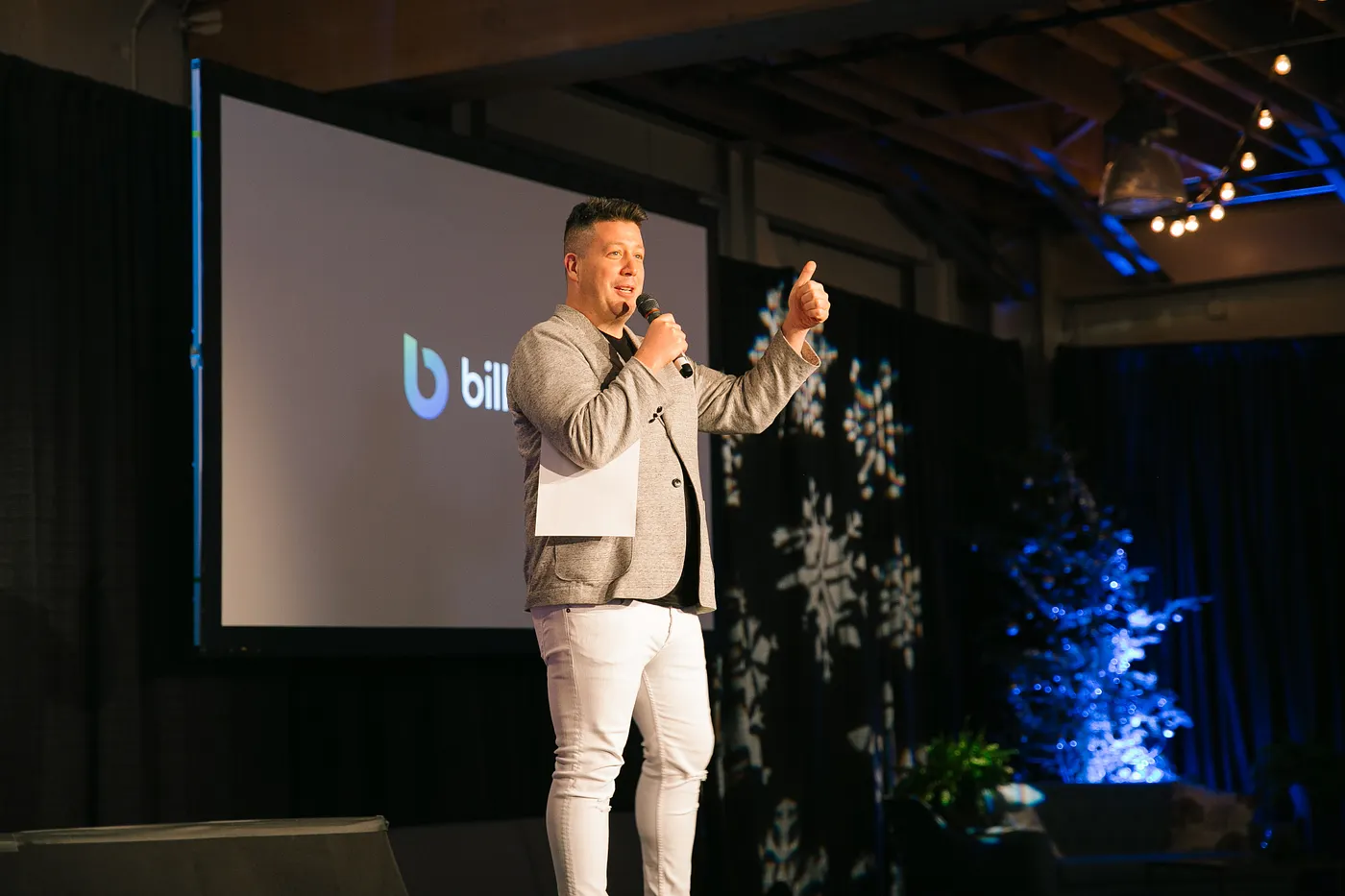
The life lesson was to stick with what you know. If you get too far outside your sweet spot and center of gravity for the work you know and love, there’s going to be an impact.
The founder and CEO discusses how to synchronize global teams, embrace calculated risks, and scale the largest independent out-of-home technology company in the U.S.

The life lesson was to stick with what you know. If you get too far outside your sweet spot and center of gravity for the work you know and love, there’s going to be an impact.
I had the pleasure of interviewing Ben Billups, founder and CEO of Billups, a leading out-of-home (OOH) technology company that works with brands across categories such as CPG, entertainment, QSR, retail, spirits, tourism and technology. Based in Portland, OR, with offices across the U.S., Billups helps clients to create smarter outdoor advertising campaigns — connecting brands to their audiences in the real world.
Thank you so much for doing this with us! What is your “backstory”?
I founded Billups in 2003 and together with our team, have since grown the company to become the largest, independent out-of-home (OOH) technology and managed services company in the U.S. Our mission to transform the out-of-home experience through data science and technology — empowering brands to develop smarter OOH campaigns that fully complement the broader marketing mix.
From the beginning, the driving force for me was about bringing people together and empowering them to deliver amazing work. Earlier in my career, I worked at an integrated media agency working with clients in the travel and aviation space. I was traveling on a regular basis and I think this is one of the factors that really sparked my curiosity as an entrepreneur. I wanted to stretch further to build a dynamic OOH media company at the nexus of creativity and data science — bringing left and right brain thinking together to transform the space.
Can you share the most interesting story that happened to you since you started your career?
Through the arc of building Billups and my career, I’ve had a chance to work with major brands across categories in markets around the world. The experience of traveling globally has had a big impact on my overall leadership style and staying open to new ideas — knowing that inspiration and opportunity can come from anywhere.
Every time we work with a client in a new category or market, it feels like there’s an interesting story behind the campaign. Similar to the tension captured in the movie, “Three Billboards Outside Ebbing, Missouri”, there have been times where we’ve had clients with bold creative copy, and opposition groups within local markets who were reacting. The AIDS Healthcare Foundation is one example — with their campaign around STD checks and HIV testing, sparking follow up from conservative groups.
Today Billups works with a roster of clients including large agencies and brands across categories such as CPG, entertainment, QSR, retail, spirits, tourism and technology. With every client campaign, one of the core questions we ask is how can we deliver amazing? We encourage our team to think big as they ideate around new ideas and follow their instincts. In the end, things always seem to work out imperfectly. Nothing’s ever perfect, but so long as you give the challenge at hand your full attention and act with an urgency of now, you’re going to find a path to success.
Can you share a story about the funniest mistake you made when you were first starting? Can you tell us what lesson you learned from that?
For me, one of the “funniest” mistakes was deciding to buy and develop real estate in Costa Rica as a side investment and project. What transpired in one impulsive weekend, took several years of lengthy negotiating to get my investment back out. The life lesson was to stick with what you know. If you get too far outside your sweet spot and center of gravity for the work you know and love, there’s going to be an impact.
When launching into a new area outside my comfort zone, I try to look at both the pros/cons and tradeoffs of pursuing the opportunity and make sure we have the time and resources needed to make it hyper-successful. I also try to slow down, listen to my instincts and make sure I’m asking the right questions, while also creating the space I need to focus on the opportunity.

How do you synchronize large teams to effectively work together?
It starts with defining the core values for your company and having a shared mission, vision and goals.
For teams to work together effectively and build something transformative, you need to have a mission that resonates and a common language around what you value. From there, you need to empower your team and get out of their way, so they can execute to make great things happen.
Another key is clear communication and well defined work streams. Be specific about the next steps and owners for each program, and establish a regular cadence for everyone on your team to share ideas, discuss work and receive important updates.
What is the top challenge when managing global teams in different geographical locations? Can you give an example or story?
Mission, vision and values are critically important to bringing any team together. People not only need to understand what our brand stands for and how it delivers value for customers, but also why they get up in the morning — what we’re collectively striving for.
At Billups, our core mission is to deliver amazing and move the world. We try to deliver amazing in everything we do — from how we deploy teams and build technology to how we produce campaigns. The reason we get up in the morning is to empower brands and clients to develop smarter campaigns that tap into the physical power of OOH — reaching consumers where they work, live and shop.
In addition to having a shared mission and goals, another key factor is co-creating your culture and work process. Today we have more than 110 employees in 16 offices, and we make it a priority to have execs or directors on our team travel to each office, to not only meet with clients, but also spend in-person time with the team.
Constant interplay across our team and offices is vital to our success and doing our best work for clients. Collaboration tools such as Slack, AirTable, Hubspot, and our proprietary data platform Boohma are also an important part of our daily work flow.
What advice would you give to other CEOs or founders to help their employees to thrive?
Listen to your team, empower them and encourage them to listen to their instincts. I would rather have our team fail fast and openly learn from their mistakes, than hold back. Too often people do what they have to do and not what they want to do, or don’t voice an idea they have — simply because their day-to-day work is more pressing.
Part of listening to your instinct is slowing down to ask the right questions. Data and technology give us more freedom than ever before to experiment with what’s working and what’s not, but at the end of the day, instinct is what builds opportunity as we continue to take risks and learn through experience.
Most times when people quit their jobs they actually “quit their managers”. What are your thoughts on retaining talent today?
Talent and people are the lifeblood of our business. Nothing is more important than building and retaining a high performing team, and I think a big key to doing that is being open, grateful and transparent as a leader.
To inspire the best from people, you need to create a collaborative environment where your team can take an open approach to problem solving and brainstorming new ideas. To make this happen, managers need to walk the talk — openly sharing problems they’re facing and lessons they learned, so their team feels empowered to do the same.
You also need to give people space to operate and deliver their best work, while giving them new opportunities and areas where they can grow. Another key is taking a genuine interest in your team’s experiences, while encouraging them to think freely and improvise — that’s when the magic happens.
Based on your personal experience, what are the “5 Things You Need To Know To Successfully Manage a Team”. (Please share a story or example for each, Ideally an example from your experience)
Here are 5 keys I believe you need to know to successfully manage a team:
You are a person of great influence. If you could inspire a movement that would bring the most amount of good to the most amount of people, what would that be? You never know what your idea can trigger. :-)
If I could start a movement, it would be to inspire others to help children in need in communities around the world. To me, there is no greater cause than one that builds positive momentum for the next generation of kids to have better education and opportunity in sports. We need a movement that brings more people together — with the resources to help — to drive sustainable and impactful change.

Can you please give us your favorite “Life Lesson Quote”? Can you share how that was relevant to you in your life?
It’s biblical: “A gentle answer turns away wrath, but a harsh word stirs up anger.” To effectively lead, you absolutely need to walk in humility. People need to feel you, not hear you. At the end of the day, success as a leader is about serving others, it’s definitely not about being served.
By giving a gentle, truthful and kind answer, you show empathy for people, which deepens your relationships, and that’s what every great business requires — genuine relationships.
Yitzi Weiner is a journalist, author, and the Founder and Editor-in-Chief of Authority Magazine. Since 2018, he has conducted and overseen thousands of in-depth primary-source interviews with Fortune 500 CEOs, founders, scientists, bestselling authors, and cultural leaders.

Exclusive, curated interviews with the leaders and changemakers shaping tomorrow. Leadership lessons, industry deep dives, and executive profiles.
 Yitzi Weiner
 Yitzi Weiner

The Casago CEO shares how overcoming near-bankruptcy in 2008 and cultivating deep team loyalty shaped his philosophy on endurance, faith, and resilient leadership.
Ingredion plant manager Gretchen Miller shares her journey of breaking barriers, leading high-performing teams, and driving operational excellence in the manufacturing sector.
The co-founders of Pura discuss pioneering the smart fragrance industry, overcoming early financial hurdles, and the lessons learned from scaling a fast-growing hardware brand.

Fifth-generation rancher and Ultimate Cowboy Showdown competitor Katey Jo Gordon shares how overcoming industry expectations and mastering mental toughness drive success.
The veteran executive and entrepreneur explains why bootstrapping early, assembling an experienced C-level team, and letting science lead are essential to building a lasting beverage brand.

The renowned neurosurgeon and former HUD Secretary explains why government overreach in medicine threatens individual freedom and how free-market health savings accounts offer a superior alternative.