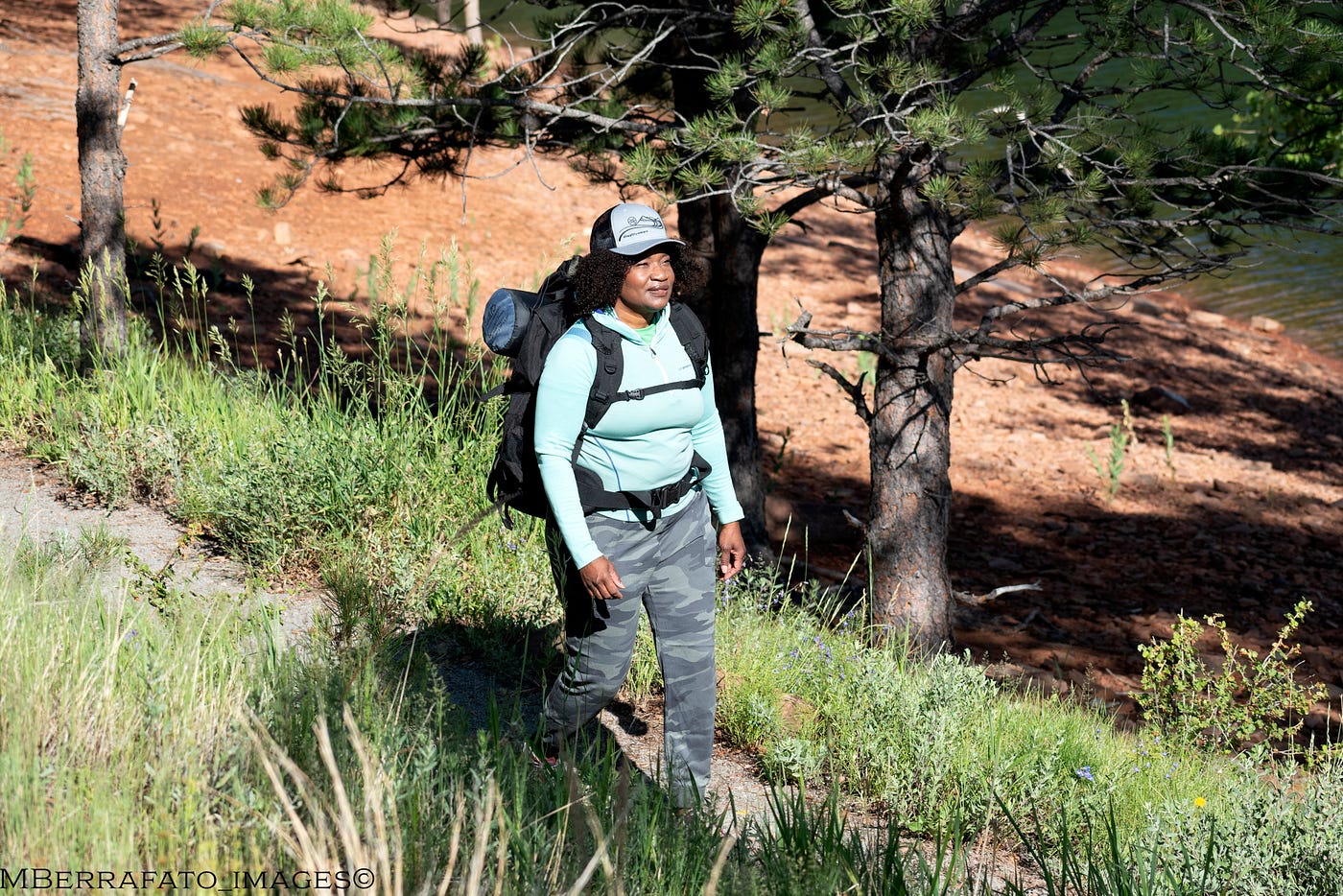
What I immediately loved about sitting in a little plastic boat running rapids on a wild and scenic river was the feeling of freedom and normalcy. The anxiety from the disease afflicting me melted away.
(If you are unable to download it, please click File-Download)
INTERVIEW QUESTIONS:
As a part of our series about Mental Health Champions helping to promote mental wellness, I had the pleasure to interview Antoinette Lee Toscano, MBA.
Antoinette Lee Toscano, MBA — is an 11-year U.S. Army veteran, contributing writer at the America Outdoors Association, serving on its DEI task force, contributing writer at Paddling Magazine and Culturs, global, multicultural magazine, a public speaker, and the executive producer of AdventureTV.
Thank you so much for doing this with us! Before we dig in, our readers would like to get to know you a bit. Can you tell us a bit about how you grew up?
I grew up in a little green two-story house in Queens, New York. My parents moved to New York City from their respective farms in South Carolina and Virginia. My mother and father were born two generations post-slavery, were children during the great depression, and my father served in World War II and the Korean conflict. As a result of leaving their humble beginnings behind, they considered themselves "Cosmopolitan New Yorkers." To their disappointment, I loved being on the farm in Virginia because I was born wild. I sensed my deep connection to nature as early as four years old when I learned to read. I dreamed of heading out west like the characters in my books. And I spent as much time on the farm hunting, fishing, farming, and riding horses as I could. However, my parents wanted to tame the wild out of me, so they sent me to debutant school from age fifteen to sixteen. I learned to become a lady, but I was still a wild nature girl. However, the cultural baggage of post-colonial America cut my parents, siblings, and me, by extension, off from having a relationship with nature. My mother used to say, "classy Black people don't do that." And by "that," she meant anything outdoorsy except managing our kitchen garden.
You are currently leading an initiative that is helping to promote mental wellness. Can you tell us a bit more specifically about what you are trying to address?
Although stating adventure sports can "cure" anyone from a death of despair is an oversimplification of a complex societal and healthcare crisis, the evidence that an adventure sports lifestyle can reverse persistent health challenges is everywhere.
But if you are not outdoorsy or part of this lifestyle, which many formerly marginalized people like people of color, women, folks with disabilities, low-income households, and the LGBTQ+ community, you might never hear the stories of miraculous "recovery." My writing on the New Normal Big Life Blog discusses the current crisis of suicide, drug overdose, and alcohol-related deaths—collectively, deaths of despair. And how outdoor recreation can improve mental health challenges, how to become outdoorsy, and what researchers know about outdoor recreation's health and social benefits.
What the experts know about deaths of despair
Nicholas Kardaras, Ph.D., said, "We're just not meant to be sedentary, screen-staring, and meaning-devoid creatures," in his new book, Digital Madness. Kardaras says, "Psychologists have known for decades that the best non-pharmaceutical antidepressant is physical activity—taking a walk, riding a bike, jogging, playing a sport. Anything that gets the body moving also increases serotonin levels and helps to oxygenate the brain." — Nicholas Kardaras, Ph.D.
Simply put, human evolution has not caught up to living a contemporary 21st Century life of automation and disconnection from others. Humans are still hard-wired for physical work or play, immersion in nature, and being physically present with other humans. We are still evolutionary hunter-gatherers.
The deaths of despair and epidemic of loneliness are staggering, but the cure is simple. And outdoorsy people knew the treatment long before the Center for Disease Control (CDC) or economists and authors Anne Case and Angus Deaton began writing about "deaths of despair," a phrase they developed.
The epidemic of suicide, drug overdose, and alcohol-related deaths—deaths of despair took 200,000 lives in pre-COVID 2019. Between 2017 and 2019, so many Generation Z youth and Millennial adults lost their lives to deaths of despair that the U.S. life expectancy decreased for the first time in one hundred years. In addition, according to the CDC, one in five millennials report having no friends, and 56% of Gen Zers report loneliness in the past twelve months, according to the Institute for Family Studies.
Can you tell us the backstory about what inspired you to originally feel passionate about this cause?
When my Veterans Administration physical therapist recommended kayaking as recreational therapy, I used a walker, a service dog, and a full-time caregiver. Unfortunately, disabilities resulting from a traumatic brain injury (TBI) and spinal cord injury severely debilitated me after eleven years of military service.
"What I immediately loved about sitting in a little plastic boat running rapids on a wild and scenic river was the feeling of freedom and normalcy. The anxiety from the disease afflicting me melted away. After leaving the river, I felt confident in my ability to handle daily life, and eventually, the anxiety became manageable." Excerpt from my debut book—Four Hours to Live: A soldier's journey of adoption, assault, advocacy, and adventure. — Antoinette Lee Toscano, MBA
My experience of physically recovering from a TBI and spine injury and the emotional recovery from post-traumatic stress disorder, depression, and anxiety that left me unable to leave my home for eighteen months made me passionate about mental health recovery through outdoor recreation.
It is not enough to simply tell people they need to create a balanced life consisting of the inescapable technology-driven work and school with some daily time outdoors and with other people. Even the most introverted among us need to be in a space with other humans and feel part of a collective. But with the atomized lives we live basking in the glow of screens and with only online friends, humans are not getting enough of what we need.
And most people do not know how to start an adventure sports lifestyle. So, I created AdventureTV on the XOTV.me platform and HiSense smart TVs. I wanted to give people new to outdoor recreation a community where they could take what they learned about mental health and well-being from my 'New Normal Big Life Blog' and apply it to their lives using the content on AdventureTV.
Many of us have ideas, dreams, and passions, but never manifest them. They don't get up and just do it. But you did. Was there an "Aha Moment" that made you decide that you were actually going to step up and do it? What was that final trigger?
I am an all-around adventure sportswoman, and I first began posting about my adventures on Instagram — @AntoinetteLeeToscano. Then, my editor-in-chief at Culturs Magazine, where I am a freelance writer, introduced me to the executives at XOTV. I am also a freelance writer for Paddling Magazine and the America Outdoors Association. And I teach outdoor recreation and diversity, equity, and inclusion marketing as a part-time Aims Community College Instructor. Teaching and training are things that I enjoy, so when XOTV approached me about producing and hosting adventure sports shows, it seemed a natural fit. Two weeks after that initial meeting, I started WhitewaterTV, recently rebranded as AdventureTV. We already had one outdoor industry sponsor when we published our first episode. And the market immediately responded to our content by becoming paid monthly subscribers to my channel.
Can you share the most interesting story that happened to you since you began leading your company or organization?
On AdventureTV, we feature the people, places, and products that support your adventure sports lifestyle. It is a destination where you can learn how to ice fish or stand-up paddleboard. Then you can learn how to set up your paddleboard for adaptive paddling or kayak fishing. You will get a sneak peek into the lives of other outdoor enthusiasts and learn from professional and competitive athletes how they started their sport.
The most interesting and surprising benefit is that outdoor brands like Merrell footwear, Badfish SUP, Kokatat, and Camelback, for example, watch my channel. These brands later offered outdoor enthusiasts, professionals, and competitive athletes feature on my channel brand ambassadorships.
Today, I have helped nine people become sponsored athletes, and I have become a sponsored athlete and adventure sports model. Most importantly, these companies sponsor my philanthropic work with the American Adventure Sports Club (AASC). I started the American Adventure Sports Club powered by Vibe Tribe Adventures—a national 501(c)(3) to create opportunities for formerly marginalized youth and adults to have free access to outdoor recreation gear, instruction, and a supportive community. In this video, you can view our impact on the mental health of some of our youth participants.
None of us can be successful without some help along the way. Did you have mentors or cheerleaders who helped you to succeed? Can you tell us a story about their influence?
The outdoor industry has been trying to improve diversity and teach its customers about the health and social benefits of adventure sports for a least a decade without significant success. So, when I started writing about the topic on my New Normal Big Life Blog and teaching folks how to become outdoorsy in a safe, supportive, and sustainable way on AdventureTV, many leaders in this space offered to help. They served as mentors, financial supporters, and cheerleaders.
According to Mental Health America's report, over 44 million Americans have a mental health condition. Yet there's still a stigma about mental illness. Can you share a few reasons you think this is so?
There is still a stigma around mental illness for three reasons. First, there can be significant unintended consequences, especially in communities without resources, like Black and brown communities and low-income communities. For example, when you have disposable income, and your child tells a teacher their parent is so depressed they do not get out of bed, the school will contact the parents, and they will work together to support the child while the parent gets their mental health better managed. However, when you are poor or a person of color, the school, in this case, often contacts social services, and the immediate response is usually to separate the child from the parent. This punitive response to a mental health crisis in formerly marginalized communities can prevent people from getting help.
The second reason people are concerned about getting help for mental health challenges is that families do not often react in a supportive way after hearing about a mental health challenge. For example, a child told me they feel lonely and constantly think about suicide. When I told their parent, the parent immediately began defending how great they are as a parent and how they give their child a lot of love, material things, and attention. This defensive reaction makes it difficult to tell a family member about your feelings and ask for help.
Lastly, society begins taking things away from you when you admit to or are diagnosed with a mood disorder, for example. For example, suppose you are a bow hunter with a mental illness. In some states, you might not be able to get a hunting license. In addition, courts can decide that a parent with a well-managed mood disorder is less capable of shared custody.
In your experience, what should a) individuals, b) society, and c) the government do to better support people suffering from mental illness?
As a society, we need to remove the punitive responses from admissions and mental illness diagnoses and remove this as a barrier to getting help. We must also make no-cost and low-cost mental health services available to everyone without health insurance. And create a marketing campaign showing happy, healthy, whole people living big lives despite mental health challenges. I am a model for the Veteran Administration's new mental health awareness and lifestyle campaign. It is important that people with a disability or persistent life challenges can see people like them living full lives. Representation matters!
What are your 5 strategies you use to promote your own well-being and mental wellness? Can you please give a story or example for each?
I offer a five-step program for creating your new normal and living the biggest and happiest life you can envision despite your challenges.
Identify what makes you happy.
Determine how you want to show up in the world.
Find your rope team—the supportive folks you will surround yourself with.
Plan what you will do in your new life for work and play.
Begin living as if your new life already exists as you work toward making it a reality.
If you take these five actions beginning tomorrow, you will create your normal and take the first step toward your new life. This five-step process is how I went from using a walker, a service dog, and a full-time caregiver to being a sponsored adventure sports athlete living my dream life in Colorado.
Fifty percent of who you are is genetic, and ten percent is what happened to you throughout your life. Still, the remaining forty percent of your happiness is one hundred percent within your control, according to happiness researcher Sonya Lyubomirsky. I took control of the forty percent of my life and happiness that I could alter and improved my mental and physical health. I found an incredible boyfriend and moved to a place identical to the home I envisioned while in my sick bed years ago.
What are your favorite books, podcasts, or resources that inspire you to be a mental health champion?
I am inspired by Sonja Lyubomirsky's 'The How of Happiness,' Dr. Nicholas Kardaras' 'Digital Madness,' and Dr. Shad Helmstetter's 'The Power of Neuroplasticity.'
If you could tell other people one thing about why they should consider making a positive impact on our environment or society like you, what would you tell them?
Doing good for someone else or for society feels good. Full stop!
How can our readers follow you online?
You can contact me using my e-business card here: https://linqapp.com/antoinettetoscano
Access more great content helping you process what has happened to you and how to recover from it on my New Normal Big Life Blog here: https://antoinettetoscano.com/the-new-normal-big-life-blog/
Learn how to #GetOutsideAndAdventure here on AdventureTV: https://xotv.me/channels/359-adventuretv
@Antoinette Lee Toscano on Facebook and Instagram
This was very meaningful, thank you so much. We wish you only continued success on your great work!
About the Interviewer: Inspired by the father of PR, Edward Bernays (who was also Sigmund Freud's nephew), Michelle Tennant Nicholson researches marketing, mental injury, and what it takes for optimal human development. An award-winning writer and publicist, she's seen PR transition from typewriters to Twitter. Michelle co-founded WasabiPublicity.com