When you have a business plan that essentially says let’s do few things but let’s try to do it thoughtfully; that means you are not going to run around trying to make things happen.
Business
Joel Citron of Tenth Avenue Holdings: Why Building A 40-Year Business Requires Ignoring Short-Term Returns And Focusing On Important Knowables
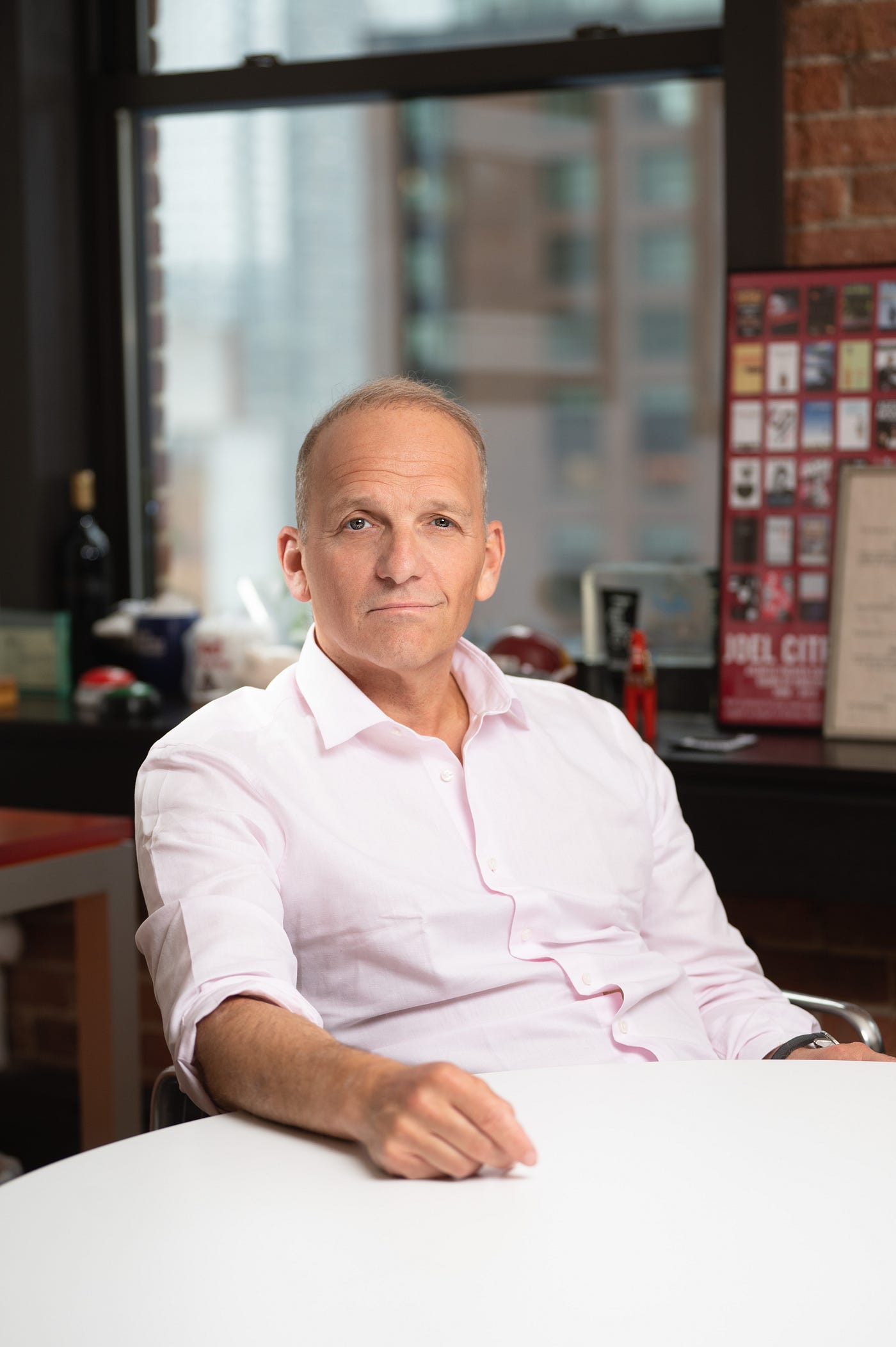
As part of our series about the “Five Things You Need To Be A Highly Effective Leader During Turbulent Times”, we had the pleasure of interviewing Joel Citron, co-founder and co-CEO of Tenth Avenue Holdings (TAH).
Joel Citron is co-founder and co-CEO of Tenth Avenue Holdings (TAH). Founded in 2008, Tenth Avenue Holdings is a privately held, diversified holding company that operates and invests in privately and publicly held businesses and is the parent company of Tenth Avenue Commerce (TAC). The inspiration for the company was to combine the founders’ close friendships with a shared desire to build an entity with enduring value. The company’s passion is for long-term value creation rooted in relationships with founders and operators. Joel currently serves as chairman of the board of Tenth Avenue Commerce and Bambuser AB; as Director of Evolution AB and Caulipower, among others. He is also actively involved in philanthropy with positions including Chair of the Board of Councilors of USC Shoah Foundation, Vice Chair of the Auschwitz Birkenau Memorial Foundation, the Audit Committee of the UJA of New York, The Leadership Council of the President of the University of Southern California, and The Starfall Education Foundation.
Thank you so much for your time! I know that you are a very busy person. Our readers would love to “get to know you” a bit better. Can you tell us a bit about your ‘backstory’ and how you got started?
Laurence [Denihan], our co-CEO, and I, have been friends for well over 30 years. We met because of our wives, both pregnant at the same time, who asked their husbands to join them for dinner. Like everything else of profound meaning in my life for the 30-plus years we’ve been married, I have my wife to thank for bringing us together over three decades ago.
Fast forward several years, Laurence exited his family’s business while I sold the interest in the company I was CEO of around 2006–2007. We were at a turning point and had this idea that if we bought or started a company once every year for the next 30–40 years and we didn’t mess up too badly, we might have something. That was 14 years ago. We have no idea how the story will end or if it will end. As I like to say, our kids grew up and we didn’t age — so we have another 30–40 years to find out.
It has been said that our mistakes can be our greatest teachers. Can you share a story about the funniest mistake you made when you were first starting?
We don’t linger on the mistakes because we are in our partnerships for the long run. Of course, mistakes happen but because we’re not concerned about short-term returns, we believe in our ability to course correct over time. Though it’s not quite a funny mistake, a valuable lesson we have learned is that we must hire people who share our values and integrity — that’s critical for our shared long-term success.
Can you tell us what lesson you learned from that?
That goes back to our core beliefs: Stay the course; consider the long view; get a little better every day. During Covid we learned that so many factors were out of our control but because we didn’t panic and stayed the course, our businesses did well.
None of us are able to achieve success without some help along the way. Is there a particular person who you are grateful towards who helped get you to where you are?
I was gifted with two extraordinary parents, that is number one. Number two, I was fortunate enough to have the best life partner you can have. Number three, as it pertains to the business, thanks to my incredible life partner, I met the best business partner you can have.
Can you share a story?
All my stories have the same foundation: people and relationships with them.
Extensive research suggests that “purpose-driven businesses” are more successful in many areas. When your organization started, what was its vision, what was its purpose?
Our strategic plan is simple and has not changed since we started Tenth Avenue Holdings: if we can start or acquire a business once a year for the next 30–40 years, and not mess up too badly — we might have something. This is still our business plan, and that is still what we want to accomplish.
Aside from that, we want to be around people we like, people we trust, and people we can develop life-long relationships with and have fun.
We are not here to keep score in terms of the value of a business from one month or one year to the other. We want to build something that hopefully has enduring value; that provides opportunities for our team members to build their own families and their lives while having fun and meaning doing it.
Pretty much all the businesses we have partnered with are — at least at the time we partnered — founder-led.
Tenth Avenue Holdings is a wonderful place for founders who want to have an ongoing home for their business; who want to continue to prosper to build without having the full capital responsibility or full strategic responsibility. A company is really nothing more than the aggregation of the people and what the people can do on a daily basis. It’s a home.
Thank you for all that. Let’s now turn to the main focus of our discussion. Can you share with our readers a story from your own experience about how you lead your team during uncertain or difficult times?
We started in 2008 and that was a pretty uncertain time. When you have a business plan that essentially says let’s do few things but let’s try to do it thoughtfully; that means you are not going to run around trying to make things happen. In turbulent times and in all times — turbulent or not — you want to be thoughtful, and you want to be careful.
We are not managing other people’s money; we are not a fund. We are a company that relies on our capital and ability to generate free cash flow to grow. We are not prone to get carried away when things look wonderful and don’t get particularly frightened when things look awful. And the reason for that is we are not going to change our business plan.
There are relatively few things — when times are good and when times are bad — that you can control. You have to focus on what you can control and focus on the things that are knowable and important. And a lot of people focus on what’s knowable but unimportant, or they focus on what’s important but unknowable. This doesn’t work. You can only focus on the important knowables. And if you do that, you are probably going to be better off.
Finally, we recognize that we know absolutely nothing about what tomorrow’s going to bring. All we can do is focus on the things we know. We make decisions around that which enables us to deal with turbulent times.
Did you ever consider giving up? Where did you get the motivation to continue through your challenges? What sustains your drive?
Giving up is not an option. That has never entered my mind. We are trying to create something that has lasting and enduring value. We are doing this because we like doing it, and we like doing it with the people we are doing it with.
We are going to have hardships. We are going to have disagreements. We are going to have to fight through challenging times.

I’m an author and I believe that books have the power to change lives. Do you have a book in your life that impacted you and inspired you to be an effective leader? Can you share a story?
There are at least two books.
- How the World Really Works: The Science Behind How We Got Here and Where We’re Going by Vaclav Smil. The renowned energy scientist takes the long view going back thousands of years, and unpacks the changes in populations, agriculture, energy, and economics that have transformed the way we live. Named by Foreign Policy as one of the Top 100 Global Thinkers, the author’s approach is to create thorough, science-backed understanding and consider economic realities to address some of our most fundamental societal challenges. This fact-based way of thinking aligns with my approach to our businesses: consider the long view, understand the data, and infuse sound economic and operational foundations.
- Trillion Dollar Coach: The Leadership Playbook of Silicon Valley’s Bill Campbell by Eric Schmidt, Jonathan Rosenberg and Alan Eagle. The book offers an important perspective on leadership, gleaned from Bill Campbell — who helped grow companies such as Google, Apple and Intuit. Coach Bill’s approach inspired his teams, resolved tensions, and fostered long-term relationships, which reflects my ethos for leadership at Tenth Avenue Holdings.
What would you say is the most critical role of a leader during challenging times?
Number one is not to deviate from the core purpose because if you start doing that, there is no end. You can always find a reason to do things differently, and then you find yourself doing something that you are not good at, and then the organization starts doing things they are not good at, and the whole thing collapses.
I believe in staying the course and making sure people understand the best thing you can do is stay the course and continue to execute. Times are always — in one way or another — turbulent, even when things are going well, because you’re navigating internal and external factors.
Leaders need to focus on staying the course, making sure you coach the people who are tasked with making the decisions to keep them executing and working on getting a little bit better with each decision. If you can get a little bit better every day, it becomes non-linear — whether there are turbulent or nonturbulent times because it compounds on itself.
When the future seems so uncertain, what is the best way to boost morale? What can a leader do to inspire, motivate and engage their team?
First responsibility is never hiding what is happening from your team. Always be transparent, honest, open, and candid.
What is the best way to communicate difficult news to one’s team and customers?
Bad news needs to be communicated right away; you want to let people know immediately and inform them fully. Most good news requires no action and has no particular time sensitivity.
How can a leader make plans when the future is so unpredictable?
This is where I differ from experts and pundits. I have no idea about the future. All I can do is try to manage our business and inspire our people to do their best no matter what happens. You want to get a little better every day and focus on the things you can control as opposed to the things you can’t control.
Yes, the future is unpredictable. If you stood around in early June of 1914, you would think we were living in the most wonderful time; trade was booming, globalization was happening, peace was breaking out everywhere, and technology was extraordinary. We had the automobile. We had the telegraph. The telephone was coming. Think about what was happening.
If you were sitting around the same table in July of 1914, you were staring The Great War in your face. How did that happen? It happened because individuals in positions of power make history. And individuals are unpredictable, and they make things change in a hurry. Did people take Putin seriously going into the Ukraine? Are people taking Xi Jinping seriously about Taiwan? We can’t predict what individuals in positions of power will do.
People say that the times we are in are somehow unique or more predictable than it was yesterday or will be tomorrow. It isn’t. It’s the same thing.
Is there a “number one principle” that can help guide a company through the ups and downs of turbulent times?
It is staying the course. Trying to get a little better every day. Being open and honest, and available.
Can you share 3 or 4 of the most common mistakes you have seen other businesses make during difficult times? What should one keep in mind to avoid that?
People tend to be guided by greed and fear in what they do and feel compelled to reexamine everything they are doing. When you do that in difficult times, you are prone not to make the right decisions. Sometimes doing nothing is the best decision.
There are external things that happen to make things difficult and internal things that happen. With the internal things where you have done a bunch of mistakes, you created the difficulties yourself — then you must pivot.
Then there are external things that happen, and with some of those external events, no matter how you pivot, you are not going to change anything.
Based on your experience and success, what are the five most important things a business leader should do to lead effectively during uncertain and turbulent times? Please share a story or an example for each.
- Stay the course; consider the long view; get a little better every day.
- Be around people you like, people you trust, people you can develop life-long relationships with and can have fun with.
- Remain open, honest, and available. Be transparent.
- Focus on what you can control. Know the important knowables: what is exogenously generated and what is endogenously generated.
- Understand the difference between irreversible and reversible decisions.
There are two types of decisions that you can make. There is the decision to go through a door, and once you are through that door, there is no exit. And then there are the decisions where you walk through the door and can walk back again. You must know what decisions you can correct for and get back out the door and the ones you can’t because the ones that are irreversible tend to change the course — for good or for bad.
You can make the reversible decisions fairly easily in good or bad times, and you have to try things, but the ones where there is no exit once you make them, they have got to be very well understood. People make decisions and don’t realize that some of those decisions are much, much weightier than others.
Can you please give us your favorite “Life Lesson Quote”? Can you share how that was relevant to you in your life?
You want to build your life as if it is a work of art, and you want to do it in wonderment. You want to live in the wonder of life and the gift of life. I am paraphrasing a couple of different quotes from a famous rabbi, Abraham Joshua Heschel. He was very instrumental in the civil rights movement with Dr. Martin Luther King, Jr.
How can our readers further follow your work?
My LinkedIn profile is here: https://www.linkedin.com/in/joelcitron/ or via email at info@tenave.com.
Thank you so much for sharing these important insights. We wish you continued success and good health!
Written by
Yitzi Weiner
Founder & Editor-in-Chief · Authority MagazineYitzi Weiner is a journalist, author, and the Founder and Editor-in-Chief of Authority Magazine. Since 2018, he has conducted and overseen thousands of in-depth primary-source interviews with Fortune 500 CEOs, founders, scientists, bestselling authors, and cultural leaders.

Published inAuthority MagazineTop Lessons, Top Authorities · 42K Followers
Exclusive, curated interviews with the leaders and changemakers shaping tomorrow. Leadership lessons, industry deep dives, and executive profiles.