Good companies survive, make money, and generally do their thing. Great companies, however, change the industry and leave an everlasting impression.
Wellness
Anthony Geisler: Inside the Franchise Architecture That Scaled Xponential Fitness From Boutique Startups to an Industry Empire
Fitness industry veteran and Xponential Fitness founder Anthony Geisler shares how resilience, strategic brand acquisition, and exceptional talent retention transform a good company into an industry titan.
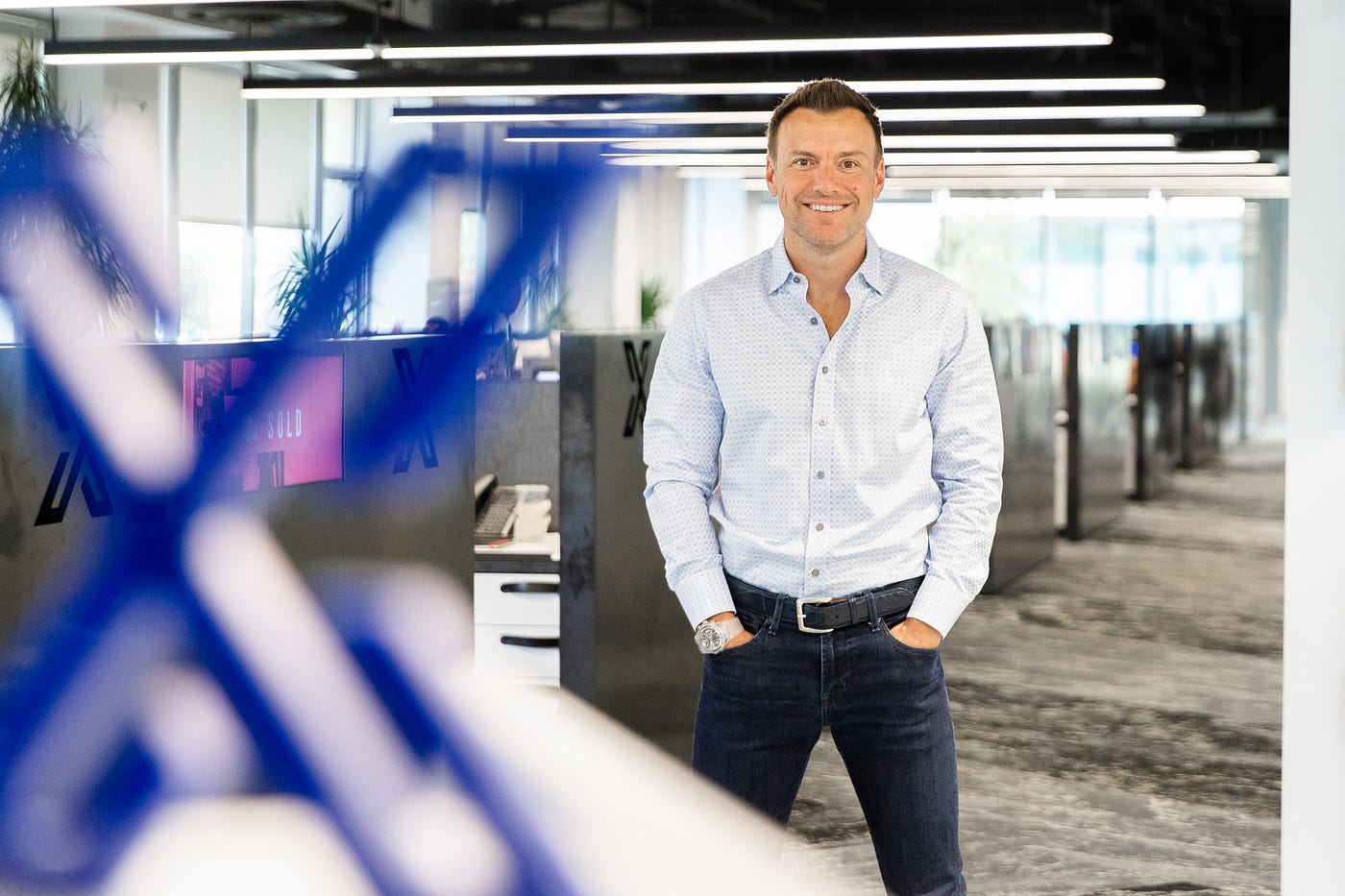
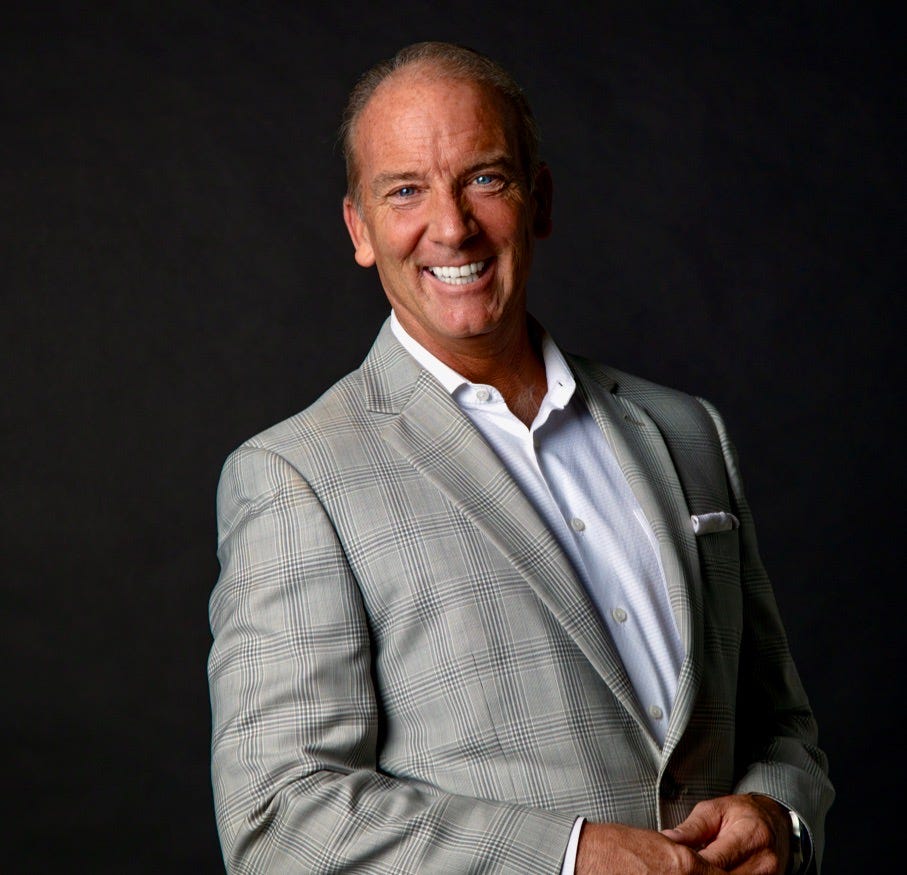
As part of my series about the “How To Take Your Company From Good To Great”, I had the pleasure of interviewing Anthony Geisler.
Growing up in a working class family in Orange County, CA, Anthony Geisler was the first in his family to attend college, attending the University of Southern California. He remembers spending weekends working for his mother’s cleaning business and exhibited entrepreneurial character from a young age. After graduating from USC in 1999 with the Entrepreneurial Spirit Award, Geisler and a friend saw the potential in the dot.com era and created a domain name and website development business. Within a year, they sold the company for $20K. “And we thought that was great.”
Along with being awarded Ernst & Young’s Entrepreneur of the Year in 2019 and Goldman Sachs’ Top 100 Most Intriguing Entrepreneurs, he has been a guest lecturer at USC’s Marshall School of Business for the Entrepreneur program for over 20 years, mentoring students in the program each year. He also sits on the Greif Center’s Advisory Board and in 2008 was named the Alumni Entrepreneur of the Year by the Lloyd Greif Center for Entrepreneurial Studies. In 2016, he was also inducted into the USC’s Entrepreneur Hall of Fame and remains heavily involved in the school’s activities.
Thank you so much for joining us in this interview series! Before we dive in, our readers would love to “get to know you” a bit better. Can you tell us a bit about your ‘backstory’ and how you got started?
I graduated from the University of Southern California in 1999, where I was awarded their Entrepreneurial Spirit Award and from there, aimed to live up to the accolade as I began buying and selling businesses after graduation. I started out in the gaming and tech space before eventually making the move to fitness when I became a member of the boxing gym LA Boxing in 2002. I fell in love with the gym, and subsequently, in 2004, I bought it and began franchising it. I sold 200 franchises before eventually selling to UFC Gym in 2012 and rebranding the studios. I stayed on as President of UFC Gym before retiring when my wife became pregnant. Set on staying home and raising my children, I was put in touch with the owner of a successful Pilates brand with 6 locations not far from me, who was eager to sell the business. I bought the business from her and grew it like a rocket ship over 24 months, before then selling to TPG Partners. I then partnered with TPG to create Xponential, and began acquiring brands including CYCLEBAR, StretchLab, RowHouse, and AKT. TPG told me to essentially slow down, which then prompted me to buy them out. We have since acquired YogaSix, Pure Barre, STRIDE, and Rumble Boxing.. In 2019 we sold 917 franchises and opened 394 studios, and while our industry was closed due to COVID, we still generated $435M in systemwide studio sales and found success amid a very tough year.
Can you tell us a story about the hard times that you faced when you first started your journey? Did you ever consider giving up? Where did you get the drive to continue even though things were so hard?
I came from a humble family, and we didn’t have a lot of money growing up, but both of my parents always worked extremely hard to provide us with what we needed. I remember being at a wealthy friend’s house for dinner whose parents left $100 on the table and told us to order something and being so impressed by that. My friend, however, thought that the grass was greener on my side and preferred the frozen burritos or meals my family made whenever he came to my house. That said, I was determined to acquire that level of wealth my friend’s parents had for myself, and have that $100 for dinner, but still be able to be home with my kids. I essentially vowed to never be broke again, and that fear propels and drives me to continue moving up in my career now. I am also hugely competitive and always striving to be better than others in my same field who came before me in order to grow the industry as a whole.
Can you share a story about the funniest mistake you made when you were first starting? Can you tell us what lessons or ‘takeaways’ you learned from that?
When I first started off in the gaming business, I assumed the casino owners didn’t like each other, before realizing that they actually all had lunch together on a weekly basis, so that was definitely eye-opening. When I became entrenched in the franchise business, I thought franchisees would heed my advice, direction and essentially do what I told them to do. I soon found out that that was unfortunately not the case. I liken this to a doctor who tells his patients to take certain prescriptions or pills in order to become healthier or fix their ailments. What you find is that as the doctor, the patients won’t usually take your advice, and as a result, it will still fall on your shoulders and be your fault for why they haven’t been “cured” or “healed”. Franchisees are humans, of course, and will focus on things they like more, more, and things they like less, less. The best still follow the system only 95% of the time.
What do you think makes your company stand out? Can you share a story?
What sets us apart is definitely the sheer size of Xponential. In the beginning, we were a group of 8–9, and it was the blind leading the blind. We all worked hard, and my original LA Boxing team still works at Xponential. It’s been a long journey to grow to where we are today, but the loyalty we all feel towards each other and the brand sets us apart.
What tips would you recommend to your colleagues in your industry to help them to thrive and not “burn out”?
I always say you should enjoy what you’re doing and push yourself to not give up right away.
I live by the quote by Rocky Balboa, that it’s not how hard you can hit, but how many times you get back up after being hit. It’s also important to remember that you could potentially be one day away from success. Tomorrow might be the day that the cogs finally fall into place, and your goals become a reality.
None of us are able to achieve success without some help along the way. Is there a particular person who you are grateful towards who helped get you to where you are? Can you share a story?
There are so many great people in my life who have supported me from the beginning. My parents always told me I could be or do anything I set my mind to, and my dad even joked that I would own NYC by 21 (which, when I finally reached that age, I had never even been to NYC funnily enough). Ed Tracy, Chairman of Hard Rock, gave me advice when I was working with him during my time in the gaming industry and is still a mentor to me today.
Ok thank you for all that. Now let’s shift to the main focus of this interview. The title of this series is “How to take your company from good to great”. Let’s start with defining our terms. How would you define a “good” company, what does that look like? How would you define a “great” company, what does that look like?
Good companies survive, make money, and generally do their thing. Great companies, however, change the industry and leave an everlasting impression. There is no other company doing what Xponential is, aggregating all these amazing fitness brands together and allowing XPASS members to be a member of not just 1 but all 9 brands and their hundreds of locations. Great companies are often mimicked and serve as the leaders in their space.
Based on your experience and success, what are the five most important things one should know in order to lead a company from Good to Great? Please share a story or an example for each.
- Hire from Within: Many at Xponential have been in the industry for 20–30 years, and have spent the majority of their careers with us. We love to groom and build from within and it has made a huge difference in the way the business runs.
- Lead with Integrity: This is tested in private, not public. What decisions you make behind the scenes show whether or not you have integrity, and your employees will pick up on that, and follow you into fire or into a battle if you’ve led that way. During COVID, we duplicated the commissions our employees earned in Q1 and stamped that out for the year so that they could still make money and survive while everything was up in the air. We spent $20–30M in payroll that we essentially didn’t need to, because our employees are like family and it was the right thing to do. We were able to keep everyone on and keep money in their pockets without putting the business in jeopardy, and that’s exactly what we did. We have a team mentality.
- Perseverance: This goes back to what I said before about never giving up. A lot of people in my life were concerned about me as I was working incredibly hard in the lead up to COVID hitting.Instead of feeling dejected when we saw what the virus and the closures were doing to our industry, I felt energized and thought “this is wartime”. I was likened to Lieutenant Dan and Forrest Gump when they were the only shrimping boat with shrimp after the hurricane hit because they went into the storm. I had a flight or flight response, and we chose to fight. We converted everything from physical to digital and still generated $435M in systemwide studio sales.
- Mobility + Flexibility: Being able to shape-shift and adapt to your environment is key to survival, which we learned early on amid COVID.
- Be a Great Partner: Everyone’s a partner until it’s time to actually be a partner. Find the people who will ride the wave with you. We were fortunate enough, thanks to our incredible team, to have 0 permanent closures and 0 franchisee litigations. I couldn’t be more proud of how everyone reacted and what we’ve accomplished. We’re battle-tested, bullish, and ready for whatever else comes our way.
Extensive research suggests that “purpose driven businesses” are more successful in many areas. Can you help articulate for our readers a few reasons why a business should consider becoming a purpose driven business, or consider having a social impact angle?
Fitness itself is an industry that builds your immune system and keeps you healthy. Our members used to already be active when they came to the front desk to sign up to start working out with us. Today, people showing up to start a membership with us are people who realized that they need to get in shape and want to live healthier lifestyles. Our old members are back, but now new “Corona-Resolution” members want to better themselves and start working out with us.
What would you advise to a business leader who initially went through years of successive growth, but has now reached a standstill? From your experience do you have any general advice about how to boost growth and “restart their engines”?
I encourage other business leaders to find their purpose and what motivates them. Why did they start their business and what goals did they set out to accomplish in the first place? Was it to create a legacy? Focus there, and create lofty, achievable goals. Drive those possibilities daily and never be complacent. More is always possible.
Generating new business, increasing your profits, or at least maintaining your financial stability can be challenging during good times, even more so during turbulent times. Can you share some of the strategies you use to keep forging ahead and not lose growth traction during a difficult economy?
While we definitely didn’t reach the 2020 goals we originally set out to accomplish, we still pushed on ahead and came out on top. We kept our loyal labor force by paying them what they would’ve made pre-COVID. Additionally, we switched over to digital as soon as we heard rumblings of the virus and the “tsunami” that was headed straight toward us, and were able to continue serving our members and subsequently, collect membership dues that way.
In your experience, which aspect of running a company tends to be most underestimated? Can you explain or give an example?
Retaining and acquiring good talent is so important. You build a great company from great people who all have one dedicated mission. Investing in relationships will drive your success.
As you know, “conversion” means to convert a visit into a sale. In your experience what are the best strategies a business should use to increase conversion rates?
It’s important for us and our business model to get people to try the classes. We offer introductory classes that are 30 minutes so people can start to feel comfortable working out around others. There is an inadvertent fear associated with working out alongside other people and being embarrassed that we don’t look good — the fear is even more important and affects business more than money and time. The reason I love Rumble Boxing is that the classes are dark, so you can work hard or take a breather without the fear of others watching or judging you, similar to how dancing at a nightclub is easier than being the first one on the dance floor at a daytime wedding.
Can you share a few ways that a business can earn a reputation as a trusted and beloved brand?
Surrounding yourself with loyal staff and treating them like family spreads over to the customer side. A company that trusts in each other is one that customers can trust in too.
What are your thoughts about how a company should be engaged on Social Media? For example, the advisory firm EisnerAmper conducted 6 yearly surveys of United States corporate boards, and directors reported that one of their most pressing concerns was reputational risk as a result of social media. Do you share this concern?
We use our social media to educate and promote. We tend to stay away from politics on our platforms so as not to be divisive. We have clients from all walks of life and want to be inclusive and inviting of all people. We are always sharing the good things we’re doing across the country on our social media and think it’s a great tool to grow and create another avenue in connecting with our customer base.
What are the most common mistakes you have seen CEOs & founders make when they start a business? What can be done to avoid those errors?
I often see CEOs who are overconfident and lack humility, and their business suffers as a result. Some people go into start-ups and don’t have the right work ethic. I hear people say they want to start a company so that they can make a lot of money and not have to work as hard when actually the opposite is true. You’re going to make a little money and work your butt off for a long time in the beginning. People also need to realize that starting a business isn’t going to be a fast, easy pass to something as big as Facebook. In fact, things are going to be hard and you’re going to have to go farther with less.
Thank you for all of that. We are nearly done. You are a person of great influence. If you could start a movement that would bring the most amount of good to the most amount of people, what would that be? You never know what your idea can trigger. :-)
At Xponential, we consistently donate our effort, energy, time, and dollars to helping kids across the country. We work specifically with a group called Miracles for Kids. Having children of my own made me so appreciative and grateful for their health and we want to help those parents who have terminally ill children. We are the largest financial donor and title sponsor to Miracles for Kids, and also host Bicycle Nights and Surfing Days, Pilates events, and more across all our brands to give our time to help the community.
This was very inspiring. Thank you so much for the time you spent with this!

Published inAuthority MagazineTop Lessons, Top Authorities · 42K Followers
Exclusive, curated interviews with the leaders and changemakers shaping tomorrow. Leadership lessons, industry deep dives, and executive profiles.