
My mother comes from a long line of mothering people pleasers, and she knew that she didn’t want my sister and me to put others’ well-being before our own in the ways that she had.
Power Women: Angela Schmitt On How To Successfully Navigate Work, Love and Life As A Powerful Woman
INTERVIEW QUESTIONS:
How does a successful, strong, and powerful woman navigate work, employee relationships, love, and life in a world that still feels uncomfortable with strong women? In this interview series, called “Power Women” we are talking to accomplished women leaders who share their stories and experiences navigating work, love and life as a powerful woman.
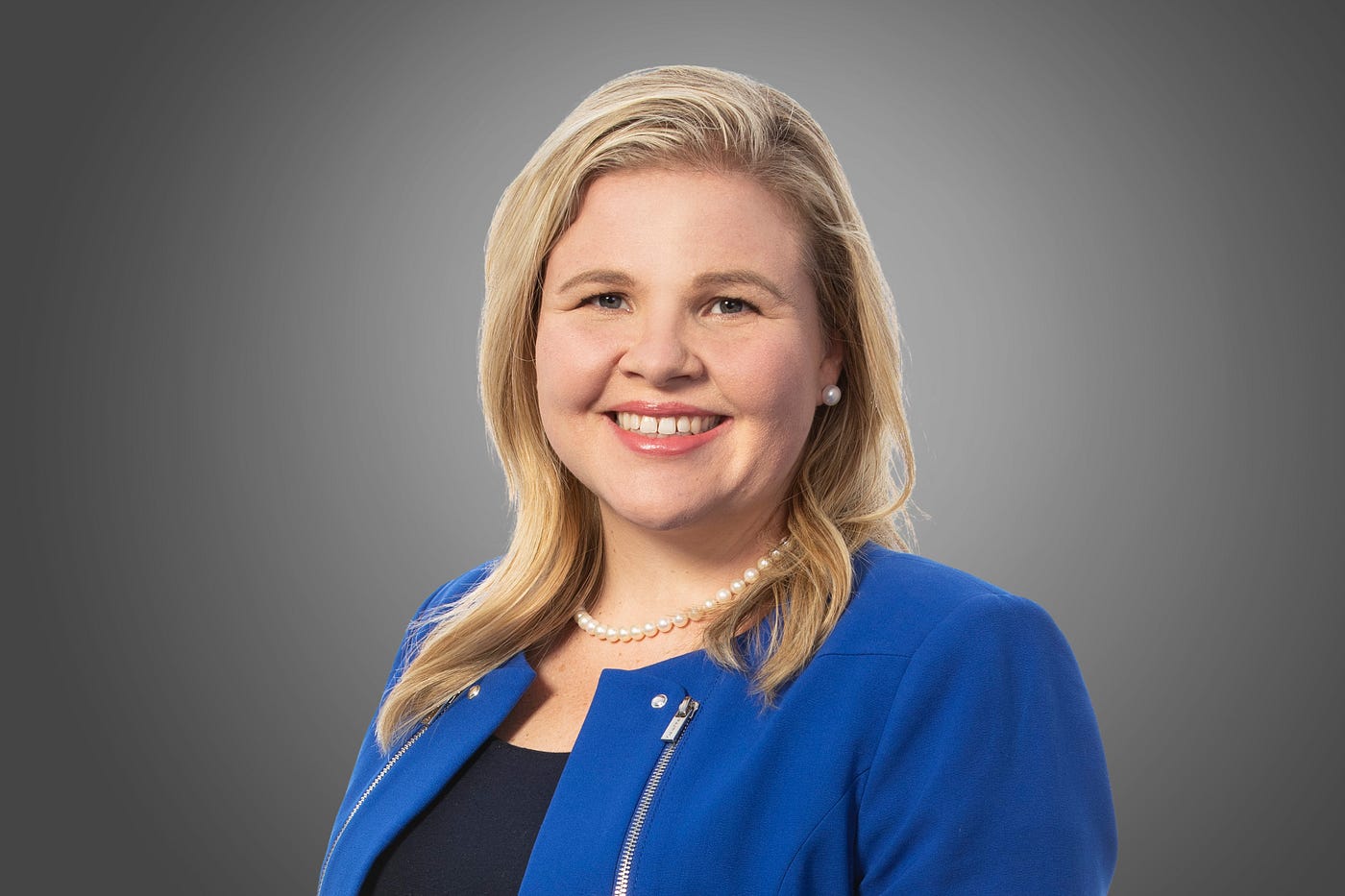
As a part of this series I had the distinct pleasure of interviewing Angela Schmitt.
Angela Schmitt is the founder and CEO of Alignment Advisory, a personal development company that Teaches Women Healthy Boundaries through corporate workshops and 1:1 coaching. She holds her M.S. in Organization Development, as well as certifications in Technology Management and Culture. Her clients range from Fortune 500’s to startups, including tech, government, and healthcare companies. Personally, she is a sun-loving foster parent, living in Los Angeles, CA. Learn more about her work at AlignmentAdvisory.com.
Thank you so much for doing this with us! Before we dig in, our readers would like to get to know you a bit more. Can you tell us a bit about your childhood “backstory”?
Thanks so much for having me! Absolutely - I grew up about 40 minutes east of San Francisco in a city called Livermore. Back then, the outskirts of town were surrounded with ranches, and in high school we had a group of cowboys that would rope trash cans at lunch! Now Livermore has over 60 wineries, and downtown is very cute and trendy.
Growing up, I went to a Montessori school through middle school. I think the connotation of Montessori tends to be pretty hippie with little structure. In reality, it’s flexibility within structure. You learn decision-making, responsibility, and time management from a young age. Per the Montessori philosophy, I got to decide which subject I’d focus on first, if I’d work at a table or on a mat on the floor, or if I’d work in a group or by myself. The classes are mixed grade level, so the younger kids have role models to look up to, and the older kids learn to be leaders and mentors. There are physical and visual materials to help learn grammar and math. I’m a tactile learner myself, so this worked well for my learning style and personality. For me, Montessori cultivated a love for learning and a community of authenticity. It gave me those first opportunities to practice leadership.
My parents divorced when I was 6, and I very much took on a parental role for my younger sister. I’d help her with homework, and I’d make dinner for us when my mom was working nights. I’d say this definitely influenced my feeling of responsibility and desire to be in service to others. My mom also intentionally kept our household just the three of us girls until my sister and I graduated high school - girl tribe! Our little matriarchy allowed for us to be whoever and whatever we wanted and didn’t allow for society’s gender norms to disrupt that too much.
Can you tell us the story about what led you to this particular career path?
Years ago, I was asked to present at an international women’s leadership conference. I had free rein to speak on any topic I wanted. So my thinking was, “What topic would be most helpful for women to know more about? What topic would be relevant to every woman?” The topic I landed on was “Boundaries.” In our society, women are generally not taught to have healthy boundaries. In fact, it’s often the opposite. Women are raised to have specifically unhealthy boundaries. And this isn’t just within the Western world. We see this among global cultures. After I had given my presentation at the conference on setting and communicating boundaries, it clicked that this was the direction I wanted to take my business. I was doing Diversity, Equity, and Inclusion consulting at the time, but pivoted to focus on Teaching Women Healthy Boundaries.
Can you share the most interesting story that happened to you since you began your career?
I’m sure I’m forgetting the most interesting story, but this one’s definitely laughable. When I was building my business, my imposter syndrome and procrastination got so bad that I really tried to “quit” my own company by getting a 9-5 job. I landed a Director’s role at a very well known tech company and was so excited in thinking I had made the “right” decision. One short month later, the company got acquired, and I got laid off in the process!
By being let go, I learned there was no “right” or “wrong” decision. But there was a decision that was most aligned with the work I wanted to do, and that was furthering the education and development of women by focusing on my own company. That was my “right” decision all along, but I had previously been going about it in the “wrong” ways. I had been so overwhelmed with the laundry list of things I needed to get done, and instead of breaking down my goals and tasks into bite-sized chunks (which I highly recommend!), I had spent all my time worrying about getting to the end result. I hadn’t been present, and I hadn’t been enjoying the process. The second time around, I realized that my own boundaries with my internal dialogue and with my time needed a serious upgrade, and I dove into the self-work that helped me get to where I am today.
You are a successful business leader. Which three character traits do you think were most instrumental to your success? Can you please share a story or example for each?
1) “Just ask” - One of the lessons my mom taught us was that if you want something, then just ask for it. The worst answer will be “no,” and you’ll be right where you are now. In grad school in my mid-20’s, I was working at a job that had little growth potential, and I knew I wanted to be doing something with bigger impact. I asked two of my professors if they had any work I could help them with. Both said yes. Asking the question led me to a consulting gig that allowed me to leave my job.
2) Bullish - This also came from my mom, who was the exact opposite. My mother comes from a long line of mothering people pleasers, and she knew that she didn’t want my sister and me to put others’ well-being before our own in the ways that she had. So she intentionally raised us more in line with how we raise boys in our society. Although I’m still extremely empathic (I’ll cry at just about anything, happy or sad!), when I make a decision, I prioritize myself and my own needs when appropriate.
3) Curiosity - If curiosity killed the cat, then being too proud to ask killed the company. I don’t think we as a society take enough time asking questions and really listening. We assume we know the answers: to what our customers want, to what their pain points are, to why one of our colleagues seems mad at us. The truth is that we don’t know. How could we? We aren’t in their head. Start asking more questions (to everyone!), and you’ll be amazed at what you learn.
Ok, thank you for that. Let’s now jump to the primary focus of our interview. The premise of this series assumes that our society still feels uncomfortable with strong women. Why do you think this is so?
I think there’s this idea that if there is a multitude of powerful women, then men must have less “power,” or that there will be fewer strong men. Another way of saying this: if women get what they want, then men can’t possibly get what they want, which is just silly. This idea runs parallel with the response we saw to the Black Lives Matter movement. There is a subset of the white population that truly believes that if other races have more “power,” or equitable opportunities, then that means they’ll have less. This is very narrow-minded thinking. It’s fear-based. It’s a scarcity mentality. I’m of the mindset that when we’re each individually doing well, our whole community is better for it.
The negative connotation of “strong” women is strongly woven into our society’s fabric. Women today have a trichotomy working against us: 1) men who don’t want to share the power and opportunity, or who don’t believe women are capable; 2) women who believe there are finite opportunities available to us and cut each other down in competition because of it, or who’ve been brainwashed into thinking women aren’t supposed to be strong; 3) ourselves, who have also often been raised to think that women shouldn’t be or are not capable of being strong, and in response have consciously or unconsciously shrunk ourselves.
Without saying any names, can you share a story from your own experience that illustrates this idea?
Oh, I’m happy to say a name - my own! We’ve all heard the stories about men needing to maintain control, whether it’s talking over women in meetings or having opinions about women’s clothing choices. It’s just as common that women are catty and jealous of each other, talking behind each other's backs. In my experience, much more often than another person being uncomfortable with my strength, I’ve been uncomfortable with my own. I’ve absolutely dimmed my own light because I’ve been told, implicitly and explicitly, that shrinking myself is what I’m “supposed” to do or that it’s safer. This played out in my daily life for years! I was so uncomfortable with the possibility of my power that I was much more afraid of success than I was of any failure. If I fail, who cares? Pivot and try again, or take the learnings and find your next thing. I know now that it’s not in the best interest of myself or my community if I play small. We are ALL naturally strong. It actually takes effort to be small! Take a second to think about that. So why not be who we are? Peel back the layers of everything we’ve been told to be, drop the masks of everything we think we should be. And in being your honest self, you’ll realize and become more comfortable with your inherent strength.
What should a powerful woman do in a context where she feels that people are uneasy around her?
Wow! This builds nicely on my last answer, and I’m going to push back on the wording of the question a bit. The question seems to assume that a woman should take a course-correcting action to change herself when another person is uncomfortable with her presence. I disagree. Of course, if the uneasiness is coming from disrespect by any person, woman or otherwise, then that’s another thing. However, if a woman is being true to herself and other people aren’t comfortable with it, it’s her self-responsibility to stay true to herself. Perhaps there is some privilege behind those words. There may be situations where one may need to bend and flex if it’s a matter of safety or security. But by and large, you do you, boo.
If a woman would like to do something to settle any uneasiness, I recommend first to clarify her goal in settling the unease. If your goal is to fit in, then sure, learn the lingo, dress the part. If your goal is to stay true to yourself and bring authenticity, transparency, and vulnerability to the workplace (or any place), then make that your priority and ensure your decisions and actions stay in line with it.
You can also communicate. Whether you perceive or have been told directly that there’s some discomfort, you’re welcome to bring it up in a way that respects all parties, including yourself. “I’m curious if you think my pink hair affects my ability to perform. Have you had any friends or direct reports with colored hair before?” “I heard you thought I was too direct in our meeting. Is this true? I’m curious if you would’ve thought the same about Rob if had been the one to tell you the deadline was Friday.” Sometimes saying the words out loud are enough to bring people back to reality and help them realize their discomfort isn’t rational. Other times, they’ve had a negative past experience and are projecting it onto you consciously or unconsciously, and together you now have the opportunity to realize that. It’s possible they grow and move past it, but regardless, you’ll now know it’s not personal. At the end of the day, it’s not worth your energy or your time to change yourself to make others more comfortable.
What do we need to do as a society to change the unease around powerful women?
That’s a big culture shift! I think the obvious answer is that we need more women in positions of leadership. But how do we get there? As far as specific actions go, I see three sides to act from: 1) ensuring that we aren’t smoldering the power within our girls as they become women; 2) actively helping our girls and women to become their powerful selves; 3) taking measures to reduce the existing unease.
1) Harm reduction - For all people, especially men, how can we ensure we aren’t shrinking our girls? Do a self-audit. Are you treating each of your children, direct reports, and colleagues the same, regardless of gender? Do you hold the same expectations? Do you provide similar opportunities where appropriate? Are you sure? Ask your daughters and direct reports, and see what they say. What have their experiences been? Then listen when they share their thoughts and feelings. Listen ever harder when they give you feedback about your own shortcomings. I’m happy to help you facilitate or coach you through those conversations! :)
Women, check yourselves. What uneasiness and playing small of yours are you passing down to your own daughters or women direct reports? They’re watching you and your actions. Even if you say women are powerful and they can do anything they set their mind to, is that how you’re living? They’ll believe your own actions more than your words. Women, where are you cutting another woman down, whether it’s in the office or in your personal life? What gossip are you starting, partaking in, or a bystander of? What drama do you involve yourself in? Finally, where are you cutting yourself down? Where and with whom are you saying “yes,” when it’s healthier for you to say “no?” All children are born powerful, but our society has historically fed the flame of men and extinguished the flames of others. Make sure this isn’t you.
2) Encouraging our women and girls to be powerful - How can we support our women? In the workplace, be an active participant in women’s growth. When you hear a woman being interrupted, redirect the attention and focus to her. Have proactive career conversations with your direct reports; don’t assume you know their career plans based on what you know or don’t know about their family life. What mentorship and sponsorship opportunities does your company have? Can you be an informal mentor or sponsor for women? Especially men, go out of your way to be a sponsor for just as many women (or more!) than men. On the data side, look at your company’s numbers. How equitable are your sourcing, hiring, promoting, and retaining practices? Business school acceptance and graduation rates are reaching gender parity, but we’re not seeing this reflected within companies. So dive into your company’s data and find out at what levels or in which orgs women are not being promoted at the same rate, and find out why. Find why women are leaving if it’s at a higher rate. Have the conversations, strategize, and implement.
3) Reducing unease - All people, take the time to check your biases and the biases of others. Where do your own gender biases exist? Where did they come from? Your parents? Society? A past partner? If reporting to a woman makes you uncomfortable, question that. If you find yourself calling a woman a name, in your head or out loud, ask yourself why and if you’d do the same if her actions had come from a man. If you catch yourself judging a woman on her appearance, at work or in public, call yourself out! Speaking of calling it out, this last point certainly applies to women, but I’m speaking more directly to the men here. If you hear or see something, say something. If you hear a man, or any person, speak poorly of a woman, it’s quite possible that they are either intimidated by her or they don’t value her equally. Neither are ok. Sometimes men (and women) put down women because they think it’s cool. Hopefully you know it’s not cool. If you say something now, even if it’s simply, “That’s not cool,” he may not say it again later, and you may even start to change his view of women for the better. If you see a man disrespecting a woman or making her uncomfortable, step in. It’s as simple as “Is everything alright here?” Why is it important for men to be active participants in these situations? It’s more likely another man will listen to you more than they’ll listen to us. So say something, especially when it’s awkward or hard.
In my own experience, I have observed that often women have to endure ridiculous or uncomfortable situations to achieve success that men don’t have to endure. Do you have a story like this from your own experience? Can you share it with us?
Not even to achieve success, women just endure ridiculous and uncomfortable situations, period. I would love to share a story from before “success” if that’s alright, because I think it will be most helpful for the readership. I hear of it happening often. In my mid-20’s, I had an older male colleague who was very clearly romantically interested in me, and I was not at all interested in him. He spent far too much time stopping at my desk to chat. He’d make comments about my boyfriend. He once invited me to a group lunch, and when I showed up, no one else was there. He tricked me into having lunch alone with him! Our company had an auction and he bought the art piece I had donated. Weird stuff.
While it felt uncomfortable, none of it seemed “bad enough” to my mid-20’s brain to warrant any action. I also genuinely didn’t realize there was anything I could do or should do. I talked to my friends about it, but none of us had the knowledge, skill, or boundaries to handle it. At some point an HR employee overheard, and I got called in to share what was happening. I learned there were HR policies in place to help with situations like this. There are even trainings! But again, to my mid-20’s brain, his actions were in a gray area. He was a nice guy, it didn’t feel like he was doing anything “wrong,” and I didn’t want to get him in trouble. I realize now that I was prioritizing his comfort above my own. I didn’t want to make him feel uncomfortable by my rejection, so I jeopardized my own safety and wellbeing.
So what should you do when you’re in that gray area, and you’re unsure if it’s worth speaking up? Your thoughts, feelings, and body will tell you. (This goes for all life situations, not just work.) Are your thoughts, feelings, or body trying to tell you something isn’t ok? Examples: Does someone else’s actions make you anxious or uncomfortable? Is there frustration or resentment toward someone? Does your heart race, or do you have a gut feeling that something isn’t right? All of those are clues to you that their actions are not ok, and that your boundaries are either being crossed or in jeopardy of being crossed. It’s your responsibility to keep yourself safe, to speak up, and to do something about it whenever possible. The same thing could also be happening to another person, and by speaking up, you could be helping someone else who doesn’t know how or can’t speak up for themselves.
At the time, I thought it would be enough to tell that man that I was busy when he’d stop at my desk. I thought I was implying that I didn’t want to talk, and I thought he’d get it. If that happened now, I would explicitly tell him that his actions were making me uncomfortable and give him clear directives of what I needed from him to keep myself feeling safe. I also wish I had known that at the first sign of any discomfort, I should speak to HR. It’s their job to help protect you.
In your opinion, what are the biggest challenges faced by women leaders that aren’t typically faced by their male counterparts?
1) Sexism and gender bias - I’ll say it like it is. Our capabilities and judgment are questioned. Our clothes, makeup and hairstyles are nitpicked. We’re too young to have a real impact, then suddenly we’re too old. Hopefully the sexism and gender biases that exist in the workplace and in broader society are on their way out. To get them out faster, don’t be part of the problem. Don’t perpetuate. And when you hear or see another person being ignorant or hateful, speak up.
2) Society’s perception of working moms - As women approach the child-bearing years, our managers may assume we’ll leave soon to have children. In turn, they may give us less responsibilities or opportunities for growth, which lead to less promotions. It’s great if you choose to have children (or not!), or to take off a few months or years (or not!). But ladies, talk to your bosses about your clear career goals and together come up with a plan to help you reach them.
If women do have a family, they do twice the unpaid care work as men. Is this because it’s what has been historically expected of women? Is this because women don’t ask for help from their partners, or because their partners are unwilling to help? If any of these apply to your situation, is it possible to find more gender equity in your partnership? A dad who brings home fast food is a “fun” dad. A mom does the same, and she’s a “lazy” mom. A dad who leaves work at 3 to pick up his kid is rewarded. A mom who does the same is shamed for leaving early. Let’s be much less judgmental of our working moms.
3) Access to funding - Raising capital is a near-requirement for scaling one’s business. During the pandemic, the PPP and EIDL loans were structured to largely benefit male-owned businesses. Access to loans was granted based on number of employees or current revenue. Only 2% of women-owned businesses have more than 10 employees. We may unfortunately see the detrimental effects that this period will have on women-owned businesses for years (or decades) to come.
Let’s now shift our discussion to a slightly different direction. This is a question that nearly everyone with a job has to contend with. Was it difficult to fit your personal and family life into your business and career? For the benefit of our readers, can you articulate precisely what the struggle was?
With each new chapter of life comes an adjustment period, whether it’s a new job, moving to a new city, welcoming a partner into your life, or building a family. Each chapter brings a different schedule or a new person to orient yourself around. I make my decisions and align my time around my values, and I urge you to do the same if you don’t already! My own values prioritize personal and family life over my business and career, so for me, the question is reversed. How can I fit my business and career into my personal and family life? How can I be as successful as I plan to be with my professional goals, while still valuing my own care, my family, my friends, and my hobbies? If we’re defining “difficult” as “needing effort or skill to accomplish,” then yes, each new chapter has brought a difficulty in the beginning as I navigate what my new responsibilities and priorities are. However, for me, this difficulty should feel temporary and should pass when I settle into a new normal. When the blend between personal life and work starts to feel difficult again, I know something is off and needs to be shifted.
What was a tipping point that helped you achieve a greater balance or greater equilibrium between your work life and personal life? What did you do to reach this equilibrium?
In my twenties, I didn’t know how to be alone or to spend time with myself, and I’d spend much of my time with friends. This wasn’t an issue when I had a 9-5 job and a salary, but after I started my company, I quickly realized I wasn’t getting any work done! At that point I think I had the opposite issue of most people, where I was spending too much time on my personal life and not enough time on work. Regardless, I still needed to tip the scales back to balance. My answers now are prioritization, discernment, and boundaries, always making decisions with my values in mind. If I wake up anxious, I know it’s time to take a step back and reassess what’s working well and what needs to shift. When I’m anxious about work, it’s because I’ve either not managed my time well and need to look at how I’ve been spending my work hours, or I’ve tipped the scale too far in the social direction and need to say “no” to a few social engagements. If I’m anxious about a specific person, I know it’s because they’re crossing a boundary of mine that I need to address, or I owe them a deliverable and need to make sure it’s scheduled into my calendar. If I’m anxious in general, it’s usually because I haven’t had enough alone time to recharge.
I work in the beauty tech industry, so I am very interested to hear your philosophy or perspective about beauty. In your role as a powerful woman and leader, how much of an emphasis do you place on your appearance? Do you see beauty as something that is superficial, or is it something that has inherent value for a leader in a public context? Can you explain what you mean?
I think there’s a socially acceptable answer to this, and then the answer that I actually live by. I don’t place much of an emphasis on my appearance. My peers consistently spend much more time on their hair and makeup (maybe if I knew how to do my hair or makeup, I’d spend more time on it? Haha). However, I do recognize that I have hair that dries straight and my skin is fairly clear, so maybe I don’t feel the need to spend time on my hair and makeup because my genetics align with beauty standards. I understand that my answer may be extremely different if I had simply been born with different genes.
I don’t think the concept of beauty is superficial in itself. I think we should all learn to feel confident and beautiful in our own skin. It’s us! If certain clothes or makeup help us to feel more confident or beautiful, I don’t see that as superficial. However, I do feel that our beauty standards are becoming more superficial, and that’s extremely dangerous, especially for our girls and women. Social media and filters can be fun, but the growing popularity of cosmetic and surgical procedures that influencers and celebrities are showing us on those platforms are skewing both men and women’s gaze to what is considered “normal.” It’s not realistic.
Unfortunately, I do think beauty has an inherent value for leaders. That’s how our brain chemistry is wired, and it would take thousands of years of evolution to naturally move another way. But beauty can oddly be a double-edged sword for women leaders in corporate America. There’s such a thing as being too beautiful to be taken seriously. I look forward to this changing.
How is this similar or different for men?
In our society, we don’t value women’s beauty as they age. For men, aging is welcomed. Men are often considered even more handsome as they age! Men are given the grace to age as themselves. Women are expected to not look too old, nor too young; to wear makeup, but not too much; to cover up if you’re a leader, but don’t be prudish. You can’t please everyone, so wear what makes you happy. Be who makes you happy.
Ok super. Here is the main question of our interview. Based on your opinion and experience, what are the “Five Things You Need To Thrive and Succeed as a Powerful Woman?” (Please share a story or example for each.)
1) Values - Why? Your values are going to be your guiding light in how you make decisions and prioritize. When I’m in a tricky situation or I’m deciding between two options, I turn to my own values to help me get unstuck. Values make decision-making easy. My own values are: health, growth, communication, impact, and fun, in that order. If you haven’t done so already, take some time to get clear on your own values. Not sure where to start? Google “personal values,” and the internet will populate a nice long list for you to whittle down to choose your own.
2) Boundaries - Boundaries are our limits of what’s ok with us and what’s not ok. They let us know what’s our responsibility and what’s not. When we are able to set and communicate healthy boundaries (physical, mental, emotional, financial, etc.), and also when we’re able to notice where our boundaries may be unhealthy and in need of shifting (with family, friends, partners, children, colleagues, and ourselves), then we can spend our time and energy on things that matter most to us. Boundaries help to keep us safe and healthy, and they also help to keep us growing and reaching our goals.
3) Goals - Goals, resolutions, things you want to accomplish, I don’t care what word you use, but to be successful, you must have them. Otherwise, how are you going to know you succeeded? How are you going to get there if you don’t know where you’re going? You have the option to either make the most of your life or to let life happen to you. When we set goals, break them into bite-sized chunks, get them scheduled on the calendar, and execute them, we can make meaningful progress and impact. When we don’t set goals, time still passes, and we may find we haven’t done much of anything. Accomplishing goals brings meaning to our lives. Pro tip: if you ever feel overwhelmed by a goal, and don’t know where to begin, then it’s most likely because you haven’t broken it into small enough pieces yet. BJ Fogg, habit expert, says this best. It’s not about running for 30 minutes a day, or whatever your goal may be. It’s about putting on your running shoes, then getting out the door, etc.
4) Time audit - You’re either running your calendar or your calendar is running you. Audit your time regularly. How are you spending it? Is this the way you want? Is it aligned with those values of yours? What on your schedule isn’t necessary? What’s not providing value or bringing you joy? How can you shift your schedule to free up some time to be more productive and creative? For example, I take most of my recurring meetings on Wednesdays, so I have flexibility in the rest of my week if a priority pops up or something needs to be shifted. Learn to block your time at work, and invite your colleagues to do the same. For example, 2-4pm every day is heads down focusing. No meetings allowed.
5) A “Why” - What gets you out of bed in the morning? Why are you doing the work you’re doing? Why is it important for you to show up? Knowing your “why” brings clarity and fulfillment to your life. When times get tough, and they will get tough, your “why” can help you pull through. Don’t have a “Why?” Easy answer: look up Simon Sinek on YouTube.
We are very blessed that some very prominent names in Business, VC funding, Sports, and Entertainment read this column. Is there a person in the world, or in the US with whom you would love to have a private breakfast or lunch with, and why? He or she might just see this if we tag them.
In line with my “why,” furthering the holistic development of women, I would love to sit down with Sheryl Sandberg. Many leaders, especially women, feel they have to show up to work wearing a mask and present this version of themselves that is different from who they are. Sheryl has continuously shown the world what authentic leadership looks like. She’s fought gender biases and stigmas. She’s recognized her own biases and made changes transparently. She’s brought vulnerability and grief to the workplace. Not to mention, the work she has done on a global scale to advance girls and women is exceptional. My perception of her is that lunch would be a great balance of serious and fun.
Thank you for these fantastic insights. We greatly appreciate the time you spent on this.
Thanks so much, it’s my pleasure! Be well.