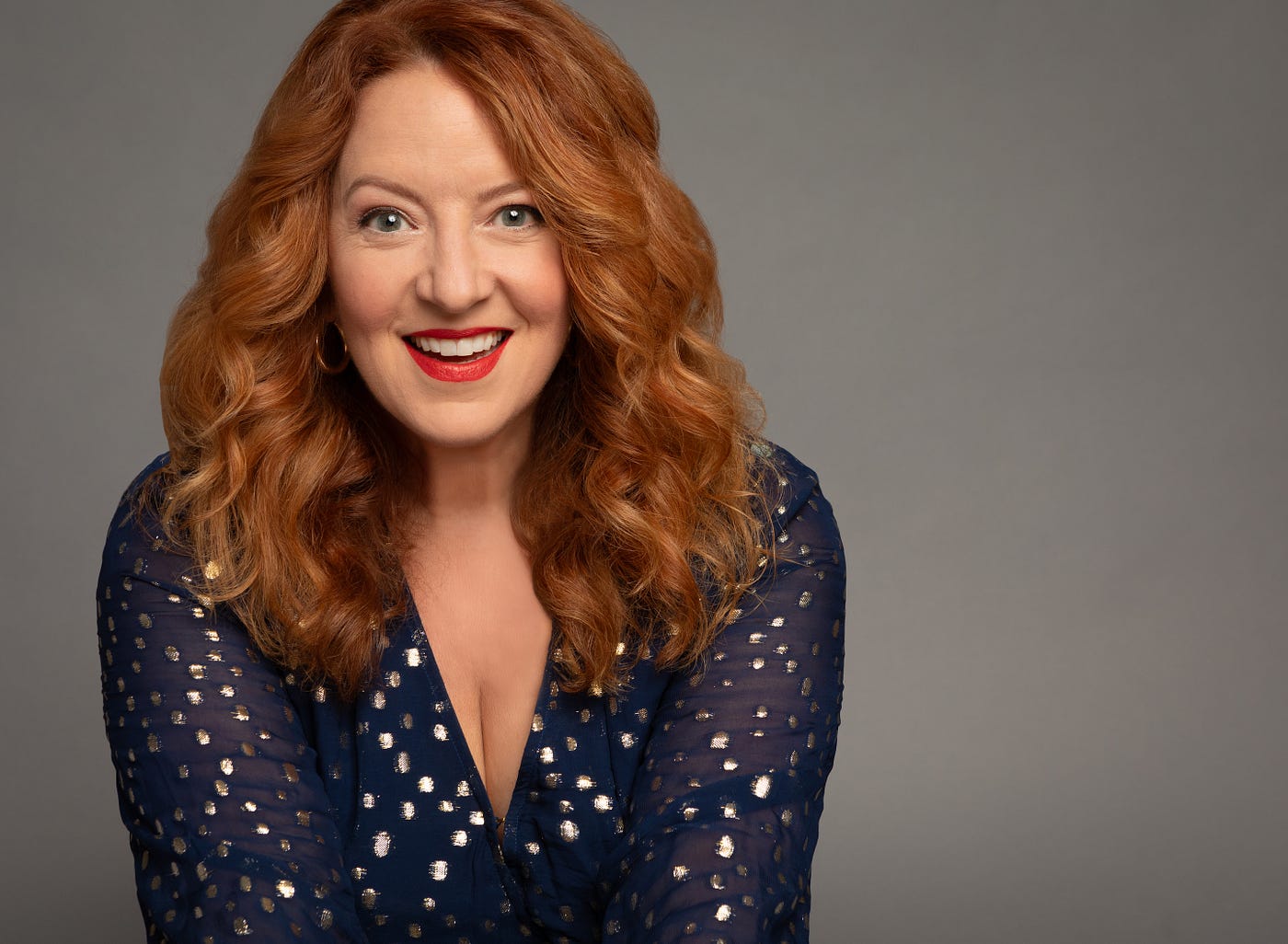
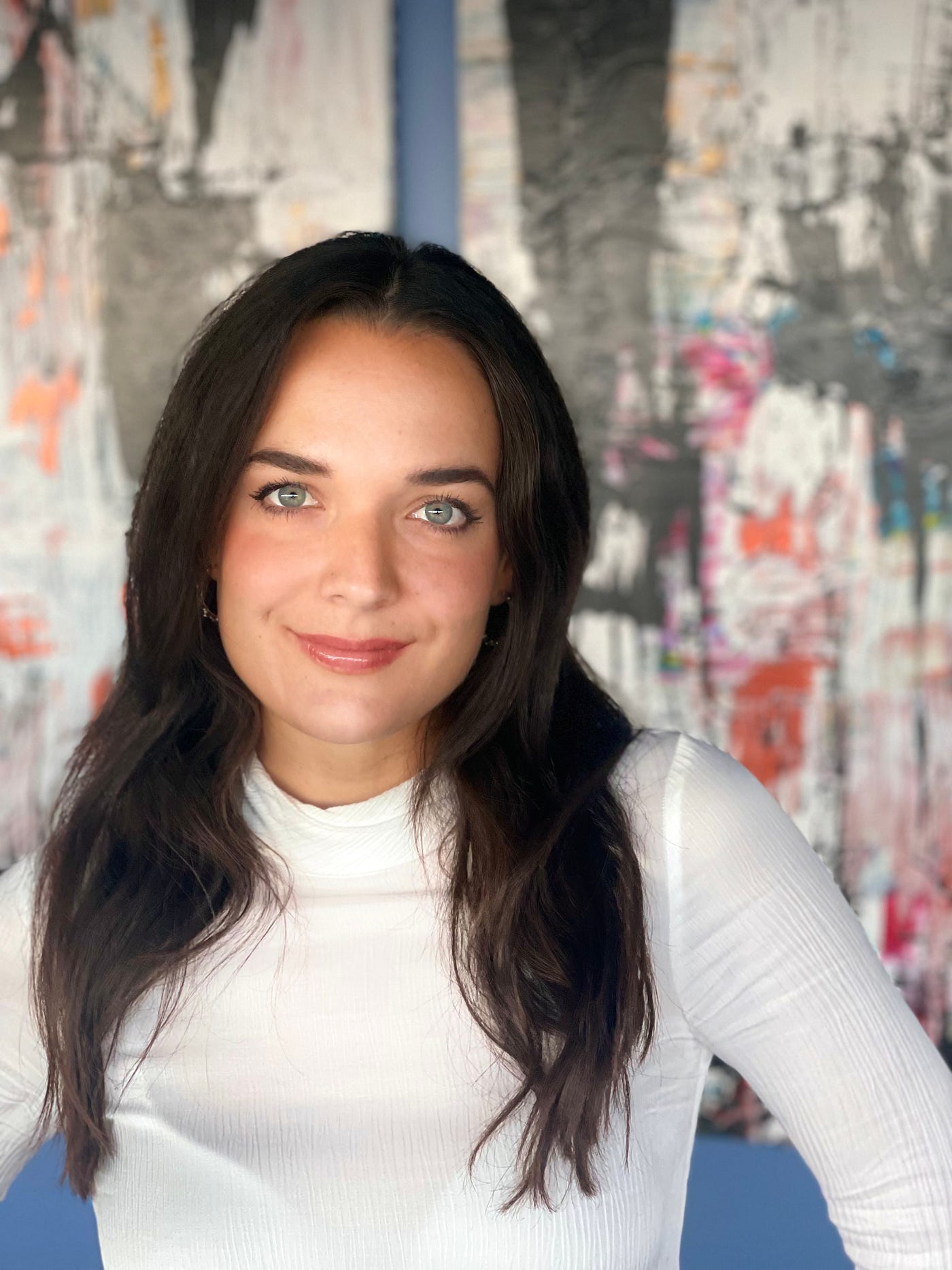
I've always had a passion for science, but I've also always known that I don't fit into the typical scientist stereotype. I love talking, meeting new people, and making connections.
As a part of our series about Women Founders, we had the pleasure of interviewing Andrea Stephany
Andrea Stephany is the CEO and Co-founder of OncoSwab, an early-stage biotech startup focused on cancer screening. She was born in Venezuela and grew up in Spain, where she studied Biochemistry and specialized in Molecular Biotechnology. At the age of 24, she was selected as one of the top 100 young scientists to participate in the European Science Hackathon, EU TalentOn. This experience led her and her co-founder, also a participant, to start OncoSwab, which is now preparing to conduct a proof-of-concept trial with lung cancer patients. In her spare time, she makes videos about biology, biotechnology and entrepreneurship for her YouTube channel, DNAndrea.
Thank you so much for doing this with us! Before we dig in, our readers would like to get to know you a bit more. Can you tell us a bit about your “backstory”? What led you to this particular career path?
I've always had a passion for science, but I've also always known that I don't fit into the typical scientist stereotype. I love talking, meeting new people, and making connections. So, being in a lab all day with only the cells in my culture to talk to was definitely not my ideal role.
I tried working in academia and the biotech industry. While the projects I was working on were deeply interesting from a scientific perspective, I knew that I had to do something where I could combine my creativity, passion for connecting with other people, and, most importantly, a drive to create a positive impact in society.
I then got exposed to the world of entrepreneurship. I even attempted to start my first startup when I was 21, still in college. I had this idea to implement QR codes in restaurants to pay your part of the bill. This was driven by the ridiculous amount of time me and my friends back in Spain spent dividing each of everybody's meals while eating out. I know it's a silly idea nowadays, but these are pre-COVID times, and QR codes were not that established in restaurants.
I even did a pitch deck and pitched it to my first investor, who, by the way, wanted to support me. But then, funny enough, this investor was the one who made me realize that if I truly have a passion for entrepreneurship, I should take advantage of my background in science, as biotech is a growing field in startups. I kept that in mind for the following years while I continued to finish my education and entered the workforce with an open mind to try to identify market needs.
Can you share the most interesting story that happened to you since you began leading your company?
Probably attending the receptions during JP Morgan Healthcare Week in San Francisco was one of the highlights since starting OncoSwab: for the good and for the bad. JP Morgan Healthcare Week is like the Super Bowl of health. The most influential leaders in biotech and pharma are in one city for one week. I, of course, was not invited to the actual conference, but several people recommended for me to go to all the receptions I possibly could during that week (that's where the actual networking happens), so I did. Some of them were open for everyone; some of them were invite-only. It was awesome – I met a lot of incredibly interesting people and expanded my network like crazy. Mind you, at this time, we hadn't even incorporated the company; we only had an idea. But I was there on a mission to learn from the best and mingle with the best. Some of the connections I made there became valuable mentors of mine, so I'm very grateful for that experience.
At the same time, it was probably the most obvious expression of the downsides of being a young founder in this space or even in general. The most exclusive event I attended was an invite-only event where I got invited last minute. The second I stepped in; it was obvious that I didn't belong there. I reckon that being new in this space, it's up to me to make the connections and to make the first steps, and I'm okay with that. But this time, it was clear that I was a nobody, and I could feel how people were actively avoiding me (I've been to dozens and dozens of events, and this is the only time this has happened). It should also be noted there were only 2-3 female attendees; the rest were your typical male executives. I'm not ashamed to say I felt belittled, and this is why us young, female founders need more representation.
Can you share a story about the funniest mistake you made when you were first starting? Can you tell us what lesson you learned from that?
Funny enough, it was at that same event I'm referring to in the previous answer. It's the time I was talking to one of the biggest investors, and I didn't know who they were.
Mind you, I'm only a few months into my entrepreneurial journey, and there's a lot to be learned – including who the biggest players in the space are. And I sure was just getting started.
In an attempt to make connections in an event where I was clearly not being well-received, I jumped from person to person and tried to start interesting conversations. So, I started to talk to an investor at none other than SoftBank – except I'm embarrassed to admit I didn't know what SoftBank was (you know, this tiny little fund that invested in companies you've probably not heard of, like WeWork and FTX).
I can't think of anything better to ask than "so, what does SoftBank do?" – I can't even describe the puzzled look on the investor's face.
I have to say he was extremely polite and gave me a short 1-minute pitch about SoftBank. By far the most embarrassing moment of my journey, and I learned my lesson: do your homework. But, well, you live and you learn.
None of us are able to achieve success without some help along the way. Is there a particular person who you are grateful towards who helped get you to where you are? Can you share a story about that?
I believe I wouldn't be anywhere near where I am today if it weren't for my mom and my dad. They've not only supported every crazy idea that I've had (you can imagine there have been a few), but they take them seriously, sit down with me, and help me brainstorm how to execute them. They're incredibly supportive, and they're the first people I call whenever I need help or have exciting news.
For example, when I had my first startup idea, I was doing my semester abroad in New York. When my mom was visiting from Spain, we spent a significant amount of her visit understanding the competition, figuring out how the company was going to make money, and creating what I now know is called a pitch deck. For my current startup, my dad was the very first (small) investor, so he has true skin in the game.
Ok, thank you for that. Let’s now jump to the primary focus of our interview. According to this EY report, only about 20 percent of funded companies have women founders. This reflects great historical progress, but it also shows that more work still has to be done to empower women to create companies. In your opinion and experience what is currently holding back women from founding companies?
I’ll tell you what made me hesitate: a lack of representation. In biotech, less than 10% of CEOs are female. t's hard to even contemplate starting a company when, based on what you see, it doesn't even feel like an option.
That being said, the efforts currently being made to support female founders are helping make a real difference. And, as you very well say, there has already been significant historical progress. All big changes take time, and I truly believe we're heading in the right direction.
Can you help articulate a few things that can be done as individuals, as a society, or by the government, to help overcome those obstacles?
The issue of a lack of female representation in C-level positions is often met with the argument that there aren't enough qualified candidates. But is that really true? Is the male counterpart objectively more prepared for a given role, or is it due to bias?
As individuals, we must find ways to prevent these biases from occurring in the first place. A cousin of mine, who is a Manager at Google, told me that when they review resumes from candidates, they use only the pronoun "they." I think that's a fantastic idea.
Then, there's the issue of maternity. While this hasn't yet affected me personally, I believe that our current 9-5 work structure was created in a world where men were the primary breadwinners and women stayed at home. I can see how such a schedule can be challenging to reconcile with childcare responsibilities. As a society, it's important to both be more flexible in accommodating the different needs women may have and be more supportive of paternity (not just maternity) leave. This is just a step, not the solution. Countries like Denmark, with one of the best policies in the world, still exhibit a profound gender gap in executive roles, and women’s careers tend to plunge after having their first kid.
We certainly need better policies, but most importantly, we need a mindset shift. We need to normalize a father taking a significant paternity leave, similar to that of the mother. Earlier this year I met Anthony Vallance-Owen, a CVC investor at Werfen. He recently shared his story of going back to work after taking 10 weeks off on a paternity leave, and mentioned how grateful he was to live in a country like Spain, whose policies made it possible, and to work for a supportive firm.
This might be intuitive to you as a woman founder but I think it will be helpful to spell this out. Can you share a few reasons why more women should become founders?
Speaking of biases again, I believe that any person who recognizes a genuine market need, possesses a great idea, and is determined enough to embark on a mission to solve that problem from scratch should become a founder - regardless of their gender. Being a founder is an incredibly challenging journey as it is, and your gender shouldn't be an additional constraint.
Now, focusing on women specifically, I encourage women who identify with the conditions mentioned above to step out of their comfort zone and pursue it. One of the things that motivates me as a female founder is the hope that I'm contributing to paving the way for future female founders to come, just as many before me did, even though they faced much greater challenges. Ultimately, I hope to reach a point where articles like these won't be relevant because being a female founder will be just as normal.
What are the “myths” that you would like to dispel about being a founder? Can you explain what you mean?
It's not about luck; it can get ugly, and contrary to what the media leads you to believe, it's not fancy. We're all led to believe that you have an idea, find an investor, they throw money at you, and that's it — you've completed the startup game. But no, reality couldn't be further from that.
As a first-time founder, I wanted to figure out how to tackle this whole "building a biotech startup" thing. I could only do that by talking to people who have done it before. I was initially in Germany when this adventure started, but I quickly got discouraged there. I was told to pursue a PhD first to validate the scientific hypothesis and then start a company. All of the paths there seemed slow and too data-driven, more of a "build it, and they will come" kind of approach.
I then came to the US for 3 months. Here, there's more of a risk-taking mentality. I quickly learned that while the tech is the core of a biotech company, it doesn't matter how incredible the technology you spend years developing is if it doesn't address a real market need.
So, I needed to ask stakeholders (patients, doctors, and payors) more about the problem and get some feedback. But I needed to build a network first. That led me to travel around different cities in the US (NYC, Boston, Miami, and ultimately the Bay Area), attending events and congresses, and focusing on making those connections.
Whenever I told my friends back home about this, they'd say, "Girl, you're living the jet-setter life!" Little did they know I was spending all my savings, sleeping on the couches of my friends and relatives for months (thankfully, life has blessed me with friends across the world), constantly worrying about money, finding side hustles to sustain myself, missing out on holidays, working 70-80 hours a week, losing all sense of work-life balance, and much more. All for something I was completely in the dark about whether it would work or not.
The weirdest thing is that despite all that, there’s nothing in the world I’d rather be doing right now.
Is everyone cut out to be a founder? In your opinion, which specific traits increase the likelihood that a person will be a successful founder and what type of person should perhaps seek a “regular job” as an employee? Can you explain what you mean?
Not everybody is cut out to be a founder, that’s for sure. Being a startup founder is romanticized by the media and the movies, but it’s a really, really complicated thing to do, and most of the people I know in my personal life would much rather do a less-demanding job and have a secured paycheck at the end of each month.
If you like security, have a hard time getting out of your comfort zone, are risk-adverse, and like to be given a list of tasks to work on, being a founder is not for you.
On the other hand, if I’d had to find common patterns between the successful founders I’ve met, I’d say what sticks out the most is their incredible, almost delusional, self-belief. They’re also great communicators: they manage to convince multiple people to believe and support their crazy idea. And in general terms, they work hard, and are willing to go anywhere, talk to anyone and do anything for their project to succeed. They’re go-getters.
Ok super. Here is the main question of our interview. What are your “5 Things I Wish Someone Told Me Before I Started” and why? (Please share a story or example for each.)
1 . Beware of confirmational bias.
When I first started, I began attending congresses and events to connect with people in the industry and fellow startup founders to learn from them. Every time someone asked me about what my startup aimed to achieve, and I shared our mission to make lung cancer screening more accessible, praise would pour in. "What a fantastic idea!", "Such an important mission!", "It'll be a success!" I felt completely validated, and I genuinely believed it would be a success.
It wasn't until one of my mentors called me out and told me I was experiencing confirmation bias. Going to congresses and saying, "I want to disrupt lung cancer diagnostics," is like telling your mom you want to conquer the world – everybody will say it's great. But that really means very little – these people have no skin in the game. They're not investing; they're not buying the product or signing letters of intent, so it's by no means a confirmation of a market need. "The Right It" by Alberto Savoia and "Talking To Humans" by Giff Constable are two books that helped me understand this better.
2 - It’s an interview, not a conversation
At the beginning of your startup journey, when conducting interviews with potential customers and/or end users to gain a better understanding of the problem, it's easy to become a bit too enthusiastic (after all, you both share a connection to the same problem).
So, when your excitement gets the best of you, an interview can quickly turn into a conversation focused on that particular topic. For instance, when I began interviewing doctors about lung cancer screening, I would often offer my opinions after the interviewee's responses, saying things like, "Oh, and did you know that less than 6% of people at high risk get screened for lung cancer?"
Not only can this come across as being a know-it-all ("If you already know so much, why are you asking me questions?"), but it can also cause you to miss the entire purpose of the interview, which is to genuinely understand your users' problem. So, it's essential to concentrate on listening and comprehending their perspective instead.
3 . Everybody has advice to give. Take it all with a grain of salt.
When I had my very first meetings with professionals in the industry, my imposter syndrome was at its peak, and I believed that every single person knew more than I did because they had more experience in the industry. I assumed that everything they said had to be right.
However, every person's advice is influenced by their unique journey, and everyone's path is distinct, including yours. So, it's important to listen to and gather advice from people who have succeeded and whom you admire (please, don't take advice from just anyone). But ultimately, it's YOUR responsibility to determine what's best for your company, and you need to trust your skills and instincts to make the right decision.
4 . Be proactive and follow up.
When you're starting off, you're going to meet many accomplished people who are well ahead of you, and you'll notice how almost everybody really wants to help. The thing is, it's easy to get caught up in the moment of an in-person (or Zoom) interaction and promise things like introductions or assistance, only to later fail to deliver. Don't take this personally: chances are that person also has a billion other things to do.
Be proactive, follow up, and make it easy for them to fulfill their promises. Send an email specifying exactly what you want from them, and even better, provide them with a blurb they can easily forward. Since you're the one who needs help, it's up to you to do all the heavy lifting and make it easy for people to assist you.
5 . Focus on making long-term connections.
This is something I did a lot at the beginning, and it took me a little too long to learn my lesson.
For instance, when I attended a conference and had the opportunity to speak with someone who could potentially become a valuable connection, I used to think, "Okay, I have them right in front of me. If they're going to help me, it has to happen now; otherwise, I'll never see them again, and they'll forget about me." But the truth is, a person is unlikely to be genuinely helpful to you after just a few minutes of meeting you. People are more likely to help if they genuinely care about you, and that can take some time.
So, instead of desperately trying to extract an introduction or a connection from someone, I learned that sometimes the best way to build long-lasting connections is through genuine conversations with no clear end goal in mind, simply for the pure pleasure of connecting. It's better to plant a seed for the future and take the time to nurture the connections you genuinely care about, rather than expecting quick returns from shallow connections.
How have you used your success to make the world a better place?
While I am proud of the journey I'm on, I'm only getting started! I'd like to think I'm using my humble amount of influence to inspire the younger generation, especially girls, to pursue careers in STEM and to develop a critical mindset. Since I started my YouTube channel, I've received an overwhelming number of messages from teenagers telling me they want to study Biochemistry because of my videos. Some people have reached out to say that their biology teacher recommended my videos, or that my videos were played at their schools. Once, I received a message from a girl who needed help with her homework because her assignment was to study a couple of my videos as examples of science communication. The fact that my videos can have a positive impact on someone's life, even if only for a moment, is something that never ceases to amaze me. I hope I can achieve a similar effect by sharing my entrepreneurial journey now.
You are a person of great influence. If you could inspire a movement that would bring the most amount of good for the greatest number of people, what would that be? You never know what your idea can trigger.
Mental health is a topic I'm particularly affected by. My mom, who means the world to me, is currently battling mental health issues. I've experienced firsthand how debilitating a mental health condition can be, but its less visible nature can make it challenging for people to relate to and provide support. Fortunately, there has been a significant increase in visibility surrounding mental health over the last decade. However, I've noticed a lack of resources for the relatives of those who suffer, who often end up as caregivers in the dark. I'm on a personal mission to find a solution that can address this need.
We are very blessed that some very prominent names in Business, VC funding, Sports, and Entertainment read this column. Is there a person in the world, or in the US with whom you would love to have a private breakfast or lunch with, and why? He or she might just see this if we tag them.
If I had to name a single influential person who sparked my interest in entrepreneurship, it would undoubtedly be Tim Ferris. I read 'The 4-Hour Workweek' when I was still in college. I know it sounds cliché, and many people say this, but I truly never saw life the same way. It wasn't the concept of working a minimal number of hours that struck me the most (as one can easily deduce given my current 70+ hour work weeks), but rather the principles that lay beneath the book. Some ideas he talks about, like the 80/20 principle, are rules I live by. I've read a couple more of his books, and I'm a hardcore fan of his podcast. He genuinely is an inspiration to me.
Thank you for these fantastic insights. We greatly appreciate the time you spent on this.
About the Interviewer: Douglas E. Noll, JD, MA was born nearly blind, crippled with club feet, partially deaf, and left-handed. He overcame all of these obstacles to become a successful civil trial lawyer. In 2000, he abandoned his law practice to become a peacemaker. His calling is to serve humanity, and he executes his calling at many levels. He is an award-winning author, teacher, and trainer. He is a highly experienced mediator. Doug’s work carries him from international work to helping people resolve deep interpersonal and ideological conflicts. Doug teaches his innovative de-escalation skill that calms any angry person in 90 seconds or less. With Laurel Kaufer, Doug founded Prison of Peace in 2009. The Prison of Peace project trains life and long terms incarcerated people to be powerful peacemakers and mediators. He has been deeply moved by inmates who have learned and applied deep, empathic listening skills, leadership skills, and problem-solving skills to reduce violence in their prison communities. Their dedication to learning, improving, and serving their communities motivates him to expand the principles of Prison of Peace so that every human wanting to learn the skills of peace may do so. Doug’s awards include California Lawyer Magazine Lawyer of the Year, Best Lawyers in America Lawyer of the Year, Purpose Prize Fellow, International Academy of Mediators Syd Leezak Award of Excellence, National Academy of Distinguished Neutrals Neutral of the Year. His four books have won a number of awards and commendations. Doug’s podcast, Listen With Leaders, is now accepting guests. Click on this link to learn more and apply.