
Early in my career, I always felt that as an actress and singer, I had to wait for others to hand me an opportunity, and that I didn’t truly have any agency in my career beyond my talent. I was so wrong, and sometimes the opportunities that you create for yourself or with your friends and fellow artists really end up making your career and opening doors you didn’t know where even there!
Rising Stars
INTERVIEW QUESTIONS.
(If you are unable to download it, please click File-Download)
Please write your answers below, leaving the questions in the document. We might schedule a follow-up call or skype to round things out.
As a part of our series about pop culture’s rising stars, I had the distinct pleasure of interviewing Ana Dragovich
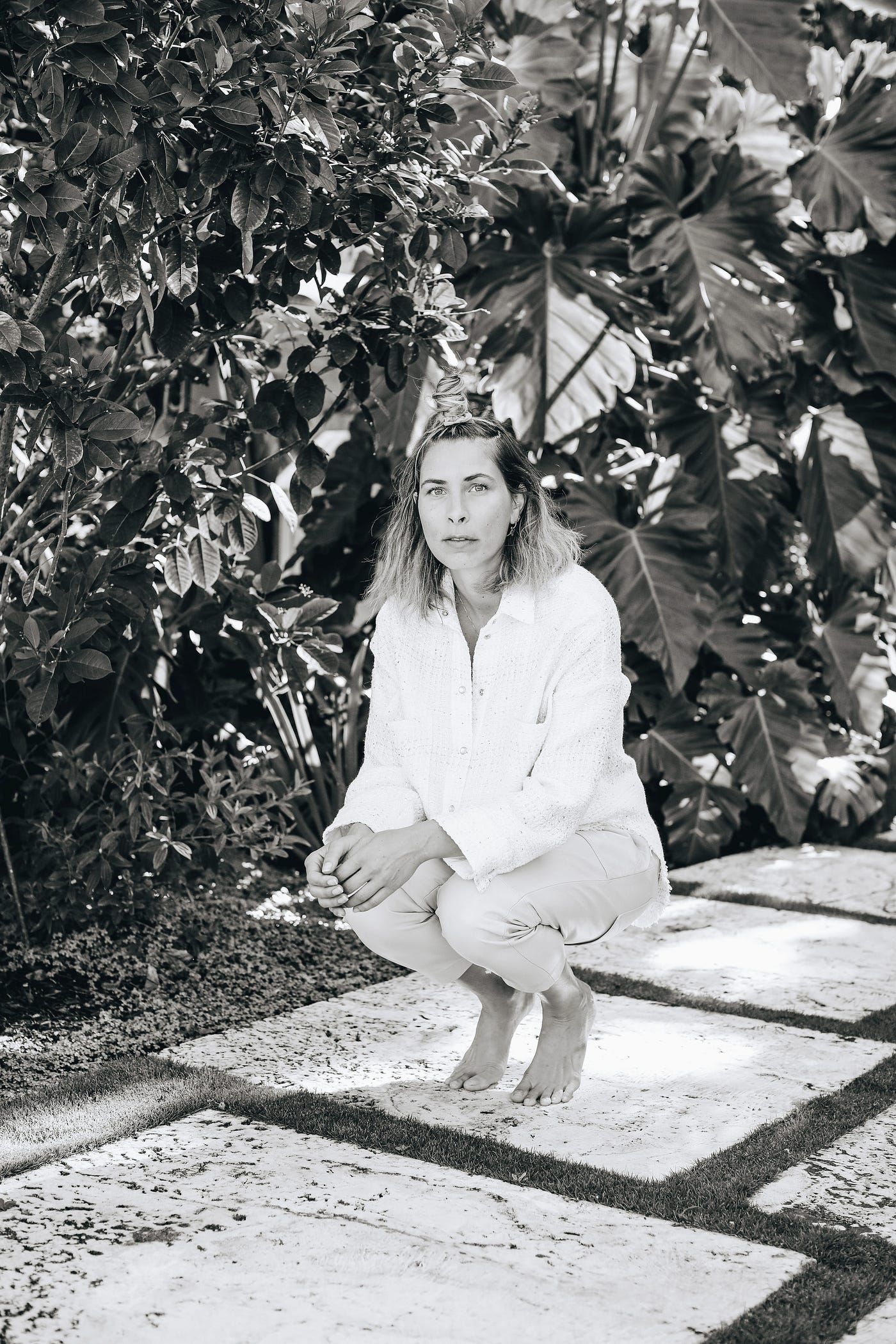
Ana Dragovich is a Serbian-American operatic soprano, theatre performer, and film actress based in Chicago, IL. Recent roles include Violet in the world premiere of Samuel J. Pummill’s Opera Noir, Anna Held in Tintypes the Musical, and the lead in Cursed, Adam Salinas’ short film submission to the 2019 Jakob Owens Short Horror Film Contest. She is also a founding member of The Valkyrie Ensemble, a non-profit opera company dedicated to promoting and empowering women in and through music. To learn more about Ana, read the interview below, and check out her website.
Thank you so much for joining us in this interview series! Can you tell us the story of how you grew up?
Thank you for having me! Definitely. I was born in Chicago, which is where I’m based now, and my earliest years were spend in Little Italy near the University of Illinois, and the south loop. My parents were in grad and med school when I was born, so my grandmothers would fly in from Serbia and take turns watching me while my parents were out working hard and making their dreams come true! My grandmothers do not speak very much English, so it was a great opportunity for me to learn Serbian, even though I was growing up in the states. They tell me stories about how sassy I was as a little girl now. Apparently, I would go up to strangers and start rambling off in Serbian, then get annoyed when they didn’t speak the same language back to me. I guess I didn’t understand that it wasn’t the universal language. So, my earliest memories were in Chicago, which is interesting now because there are certain hazy memories from being a kid where I’m not totally sure if they were real or a dream, and then I’ll be walking through the city and see something familiar where it clicks that a childhood memory is actually real. Anyways, when I was about 5 we moved to beautiful Tucson, AZ, which is where I’ve spent the majority of my life! A key aspect of my childhood there was my best friend Arlene, and her family, who lived right down the street from me. Tucson is spread out, so you have to drive most places, and it felt so freeing to be able to just walk to my best friend’s place anytime. When we had a dramatic argument, one of us would storm off back to their home, and then we would quite literally meet each other halfway as we both would start walking towards the other’s house to reconcile, only to find that the other was doing the same. We are truly friends for life!
Growing up, I had a lot of interests. As a kid I thought I was going to be a ballerina, but with the growingly intense schedule, my scoliosis, and my desire to just be a kid, I stepped away from it and pursued other interests instead. I took piano lessons, was very into tennis, a horrible swimmer who nonetheless enjoyed swim team, and also tried my hand at volleyball. I was an only child, who was blessed with some wonderful step parents and step-siblings. My step-mother’s kids were closer in age to me, so they taught me the harsh realities of sharing is caring! I quickly had to give up the notions of personal space and that all the dessert was mine! My step-siblings and I have a close relationship, although we are quite different personalities, and I think that is awesome because we help each other grow as individuals.
I had the privilege of moving to Munich, Germany with my mother and step-dad when I was 15. As many teens do, I was having some intense internal turmoil and craving a fresh start, so it was perfect timing. It was such a positive experience for me to go to an international school because it got me in gear to actually put an effort in my classes, and exposed me to a new culture, and individualistic kids who had been traveling for most of their lives, and thus were not limited quite as much by the pressure to “fit in” that seemed to plague most high schools at the time. It also made me unafraid of change -- quite the opposite actually, now I seek it!
Can you share a story with us about what brought you to this specific career path?
I kept circling back to the performing arts in different ways throughout my life, but it took me a while to realize that I wanted to pursue them as a career path. At first, it was ballet and piano, and then my parents encouraged me to take voice lessons in middle school because they noticed how much I liked to sing. I first studied voice with operatic soprano Stephanie Don Carlos, who began teaching me vocal technique, introduced me to classical music, and told me that she thought I would develop a great voice for opera as I got older. She also inspired me to start auditioning for musicals in high school, so I began enrolling in theatre and choir classes, and auditioning for the ensemble roles and solos. I wasn’t really thinking about these interests in a career sense, or really of any career path for that matter, until my junior year of high school when it was time to apply to colleges. By that time, I was in Germany attending Munich International School, and had selected Theatre as one of my higher level classes towards my International Baccalaureate diploma. I studied with Dr. Jo Riley who over the course of two years introduced us to a myriad of international theatre practices from the works of German playwright Bertolt Brecht, to Augusto Boal’s Theatre of the Oppressed, to Japanese Kabuki theatre, as well as children’s theatre. At that point I realized how impactful theatre could be, and that it reached depths far beyond entertainment. Additionally, I was a curious individual who craved variety in my day to day life, and theatre could offer me that. These two realizations made acting the natural career choice for me.
Can you tell us the most interesting story that happened to you since you began your career?
I fell into launching a non-profit opera company in 2020! I’m a founding member and the Media & Marketing Manager of The Valkyrie Ensemble, a non-profit opera company dedicated to promoting and empowering women in and through music. Our origin story has two aspects to it, both originating from the amazing women I met at the Roosevelt University Chicago College of Performing Arts Master of Music in Voice Performance program. One summer some of us were attending the Stars of Lyric Opera in the Millennium Park concerts, and started talking about who we would hypothetically cast in an all-female production of The Magic Flute by Mozart, and finally thought, forget hypotheticals, we could totally put on this production ourselves! Thus, The Valkyrie Ensemble’s first live production idea, which we still intend to put on when it is safe to do so, was born. The formation of the company around the production was General & Artistic Director Karen Hunt’s brain child, when we had a class project assigned to us by Roosevelt’s Dr. Dana Brown, where we had to come up with a pitch and plan of execution for an entrepreneurial idea. Karen’s idea sprung from the realization that for an industry that was comprised of 75% women, the opera world was not super friendly towards them. She wanted to create a company that would highlight young women in the industry, provide them with more performance opportunities that they didn’t need to pay for, and uplift the works and contributions of women both past and present to the classical music world. I’m so glad I was one of the people she trusted with bringing this vision to life. Early in my career, I always felt that as an actress and singer, I had to wait for others to hand me an opportunity, and that I didn’t truly have any agency in my career beyond my talent. I was so wrong, and sometimes the opportunities that you create for yourself or with your friends and fellow artists really end up making your career and opening doors you didn’t know where even there! Creating your own projects means you will always have a way of staying connected to your craft, and that is a beautiful thing, especially in the rough times when no one seems to want to hire you.
Can you share a story about the funniest mistake you made when you were first starting? Can you tell us what lesson you learned from that?
I’ve had a handful of funny audition mishaps, and each of them has taught me how to be more comfortable with myself in an audition setting, how to get a handle on my nerves, and how to more gracefully or humorously recover from an audition oops when it occurs. My very first audition flop happened when I was auditioning for colleges, specifically NYU. I was excited about this audition because instead of requiring a dance call, the faculty wanted everyone to make their own choreography to go with the song they chose to sing, which meant I would be better prepared! Well, I got so nervous during the audition, that I froze, remembered that I was supposed to be dancing half-way through my song, proceeded to drop to the ground and awkwardly kick my leg in the air, and then shot back up to standing and froze once again. It was mortifying, and I didn’t get in, but I survived! Bad auditions sometimes help you relax in future auditions, because you’ve already experienced the worse-case scenario. Looking back, I can laugh at myself, and know that Chicago was where I was meant to be anyways! After a few embarrassing auditions, and some successful ones, I have learned that same as most things in life, practice makes progress. The more I audition, the less overwhelming my nerves are, and the more enjoyable the auditions end up being. For me, the key was to treat each audition like a mini performance, rather than frame it with such high stakes, and to remind myself that people aren’t only interested in my song or monologue, but in who I am as a person, and what it would be like to work with me. As they say, your audition begins when you walk in the door. Everything from how you treat people in the waiting room, to the energy you give off in the audition room counts. Call me crazy, but now I find auditions to be really fun!
What are some of the most interesting or exciting projects you are working on now?
Recently, I completed an 8-week virtual role study program with MIOpera, which is based in Bloomington, IL. In those 8 weeks I learned and coached the role of Susanna from Mozart’s Le Nozze di Figaro, a role I hope I get the chance to perform on stage someday! This was my first time learning a full opera, as previously I had only performed in operettas, musicals, 15-minute operas or scenes, and had only learned solo pieces from major operas rather than an entire role. It was encouraging to know that I was capable of learning such a big role, (the opera is 4 hours long, and Susanna is on stage for the majority of that time). We are now in the process of recording our audio and video tracks individually, which will then be mixed together by MIOpera Artistic Director Tracy Koch into a remote, virtual version of the opera!
You have been blessed with success in a career path that can be challenging. Do you have any words of advice for others who may want to embark on this career path, but seem daunted by the prospect of failure?
In this career failure is certain, but it’s not permanent. You’ll keep failing until you succeed once, you’ll fail some more, and then if you stay in the game long enough those successes will get more and more frequent. I suppose that the rate of success also depends on what the definition of failure is. For me, failure used to mean not landing a role that I had worked really hard to get, but now I see failure as when I chicken out of an audition, or never even try to land a role in the first place. Each audition-gone-bad, or role not landed can be framed as failure, but I see those as a win, because they are learning experiences. While something may seem like failure in the short-run, in the long-run they are contributing to your development as a performer, and as a human being.
I would also ask people seeking advice what their definition of success is. If your definition of success is “making it big,” it’s going to be a difficult road. If that is the definition of success, then I’m definitely not there yet. For me, the definition of success in the arts is just constantly being involved in some type of creative project. Of course, performing full-time is the dream, but the reality is that most of the time you’re going to need to pursue a second career path alongside acting for a very long time…but I digress! In a nutshell my advice would be: choose to be an optimist, because a negative outlook is pointless, try to find a day job you like and that is solid, so that you aren’t in a rough place while you can’t get acting work, and surround yourself with people who lift you up and believe in you! In general, I would say there are no guarantees in the acting or music industry, everyone’s path here is different, and it is always changing. If uncertainty really scares you, this is probably not a career you will be happy in, but if you like change, on the contrary! Fear of failure is natural, but if you want this career solely for the prospect of success in the traditional sense of money, fame, maybe stability, etc., acting may not be for you. Do it because you love it. Do it because it brings you fulfillment. Do it because you cannot imagine a life without it. Loving what you do and how you spend your life is more important than so-called success.
We are very interested in diversity in the entertainment industry. Can you share three reasons with our readers about why you think it's important to have diversity represented in film and television? How can that potentially affect our culture?
Representation matters. As a white girl, I was privileged to have a myriad of inspiring characters to relate to and look up to as a child. Imagine never seeing someone who looks like you playing these inspiring characters in the films and tv shows you love to watch, and when you do see someone of your background, for them to be displaying a racial or cultural stereotype. For some readers, I’m sure this experience is one they unfortunately know well.
Avoiding culture shock. People fear what they don’t know or understand, and this is harmful primarily to those who are being feared, but also to those fearing them, and to society as a whole. Hypothetically, if a child grows up in a white, “traditional,” catholic, small town, and is never exposed to cultures, religions, gender identities, sexualities, or ethnicities that are different from their own in their own surroundings, nor in the media that they consume, their awareness of the world around them is being limited, and they will start to view anything beyond what they are used to as abnormal. I’ve heard a handful of stories about Black children being upset by a white child commenting on or even making a scene about the Black child looking so different from them and everyone they know. Of course, the white child may not mean any harm in this scenario, but it is hurtful all the same. It is crucial to ensure that our films and tv shows truly reflect the beautifully diverse world around us, so that people living all over can see that “the world” goes beyond just “their world,” and that no one is made to feel alienated on their own planet. Film and television have historically contributed to the upholding of prejudiced values and stereotypes that we still see engrained in society today, so they can conversely help guide society to move in a more positive direction by casting diverse actors, and telling diverse stories.
Empathy. There have been so many times where a tv show, film, or play enlightened me to experiences that minority and impoverished groups were going through, that I had been naïve to. Storytelling moves us and connects us all in a way political rhetoric consistently fails to. When we see real life issues through the lens of a made-up world, we can more easily engage with them, be open-minded, and transfer the lessons within that made-up world to our real lives. I mean, as audience members we even empathize with the villains of a story when we learn about how society led them there. Film and T.V. make us think beyond our often stubborn and misguided sense of what is right and wrong, because we let our guard down, and can take a more reflective rather than defensive stance on the issues captured within the film or show we are watching. Visual and audio storytelling opens our minds to the cognizance that our personal experiences do not represent the whole truth, and that there are likely larger social issues represented in the stories we watch that we also need to work through in our own society, because they were inspired by real life experiences.
What are your "5 things I wish someone told me when I first started" and why. Please share a story or example for each.
Which tips would you recommend to your colleagues in your industry to help them to thrive and not “burn out”?
The quickest way to burn out, in my opinion, is hating your day job. We may be passionate about our artistic careers, but that is not always enough to get you through the hard times, whether they be financial or emotional. In the end, you will be spending most of your day-to-day life in this job in order to pay the bills, so try and find something that you like, and if a time comes that you are unhappy at your current day job, don’t be afraid to leave that job and try something else. You don’t have to be just as passionate about your day job as you are about performing, but you don’t want to be miserable at your job every day if you have the option of choosing something else. If your day job is draining you emotionally, you will not have the creative energy required to stay on top of your acting training and audition prep, and pretty soon the job you took on to give you the ability to pursue your acting career, will be detracting from it.
Next, try to avoid stewing in negativity, and taking rejection personally. When you walk out of an audition, let it go. Don’t obsess over what everyone’s mood was in the room (often it isn’t about you, or you’re misreading people), convince yourself that they hated you and that you blew it, or conversely, that you absolutely got the part. Be proud of yourself for putting yourself out there, take note of what went well, what you want to improve next time, and leave it at constructive criticism. Instead of dwelling on the past, look forward to preparing for your next audition! If they call you back for this one, they call you back, if they don’t, they don’t, and obsessing over it is only going to bring you down. A negative mindset is a slippery slope, and pretty soon you’ll be blaming others for your failures, or convincing yourself you don’t have what it takes, or that you’re the most talented person but other people have connections and are blocking you out of opportunities. None of these mindsets helps you whatsoever, and furthermore, the people who are looking to hire you can pick up on that negative energy, and will flee from it. So, when you catch yourself in a negative spiral, try to reframe your thoughts in a positive way that is kind to yourself and forward thinking, rather than putting yourself down over what has already transpired. For example, instead of saying: “why didn’t they like me? What did I do wrong?” try and say “well I guess that opportunity wasn’t meant to be. What do I want to try differently or do better at my next audition?” I know that changing our mindsets is way easier said than done, but if you don’t want to burn out, you have to try.
Thirdly, try to enjoy your auditions! Think of it as a mini performance and an opportunity to share your talents with a new group of people. People love watching other people enjoying themselves on stage or on camera. While nerves will always show up at auditions for the majority of us, the difference between good nerves and bad nerves is reminding yourself to have fun! Framing auditions as a positive experience rather than a scary one, will help take some of the pressure off, and prevent you from burning out.
You are a person of enormous influence. If you could inspire a movement that would bring the most amount of good to the most amount of people, what would that be? You never know what your idea can trigger. :-)
I can’t say that I have a concrete idea at the moment, but I do have a growing passion for social and environmental justice, and am learning more and more about how intertwined those two movements actually are. I would love to start something that would inspire people to adjust their everyday living habits in minor ways that are within their means, but have a big impact on the environment and people across the world. For example, being more mindful when we shop for groceries, and instead of just grabbing the brands we always do, seeking out products that are local or fair trade, and that have environmentally friendly manufacturing processes and packaging. I feel like there is this perception that living mindfully means sacrificing things you like doing, and is too expensive and difficult. While in certain low-income communities or remote areas that may understandably be the case, generally I think those who are socioeconomically able to make those adjustments are reluctant to do so, because we are all creatures of habit and feel uncomfortable when we are asked to change those habits. People also tend to use the “well, I’m just one person” excuse to imply that they can’t make a difference on their own, and thereby are absolving themselves of that responsibility. I want to show people that it’s really not all that uncomfortable to try new things if the option exists, and that often products that are ethically made are also better for the individual purchasing them! Furthermore, while the initial change-of-habit of the individual may not change the world, the collective impact we could have if many individuals decided to change their habits to benefit other people and the environment, is great!
None of us are able to achieve success without some help along the way. Is there a particular person who you are grateful towards who helped get you to where you are? Can you share a story about that?
Not to be cliché, but my parents! Of course, when I first announced that I wanted to study acting in college, they were nervous, but I’ve seen their faith in me grow as I’ve demonstrated my continued dedication to music and acting. They are so supportive and proud of me and I just hope they know how lucky I feel to have their love and support. From a young age they fostered in me a sense of curiosity and adventure by paying attention to my evolving interests and connecting me to outlets for them. My parents never tried to force me into any particular set of expectations or career path, and gave me room to explore, which gave me sound mind that when I finally realized that acting & music were what I wanted to spend my life doing, it was truly the right decision by me and for me. To the external eye it may have seemed that I was someone who had a lot of whims, but to me it was a process of elimination. The freedom, support, and outlets my parents provided me with helped me discern my hobbies from my passions, and it is much easier to figure out whether or not you want something by trying it, rather than just wondering. In an industry that is so full of rejection, it is important to have a strong support system, and I’m so lucky to have found that in not only my friends, but my parents as well.
Can you please give us your favorite "Life Lesson Quote"? Can you share how that was relevant to you in your life?
“We are not going in circles, we are going upwards. The path is a spiral; we have already climbed many steps.” – Siddhartha
A concept that weighs on me both in terms of my personal growth and the progress of the world at large is that history seems to repeat itself, and sometimes that can make me feel like as an individual I am just going in circles, and so is society.
This quote reminds me that growth is not in fact linear. Often times we will find ourselves in similar situations over time, and beat ourselves up because we feel like we haven’t changed at all. However, before succumbing to this idea that we haven’t changed, we have to look closer and see if there are any differences present in how we are handling the same situation. Are you reacting the same way as you would have 5 years ago, or are you doing better this time? Since personal progress happens gradually over time, it’s easy to lose track of all the steps we’ve taken and feel like we’ve accomplished nothing at all when we are measuring ourselves up against our loftier goals. This idea can apply directly to acting, but for me it has come into play most often in my personal life. However, I believe that becoming a better person goes hand in hand with becoming a better actor, and feeling in tune with who you are can help you more easily find clarity along your career path.
Is there a person in the world, or in the US whom you would love to have a private breakfast or lunch with, and why? He or she might just see this, especially if we tag them. :-)
Adrienne Walker, who is Nala in The Lion King on Broadway, and the creator of the podcast and YouTube series 32 Bar Cut! I first heard of Adrienne when the Roosevelt Chicago College of Performing Arts’ Instagram page highlighted her as an alumnus, and have been following her page ever since. It was inspiring to learn about her career, because here was this Broadway singer who had attended the same school and enrolled in the same grad program as I had. It made my dreams seem more real and tangible, and the stories she continues to share on 32 Bar Cut about her own performance career and journey to Broadway, as well as those of the guests she invites onto her show, accentuate that feeling. She shares so much valuable insight and career guidance on her show, and, for me personally, also gives me a sense that I am doing something right, and that if I keep working at this, I will be a full-time performer someday.
How can our readers follow you online?
I am most active on Instagram, and my handle is @anciibanci; it’s a childhood nickname of mine. I’m a pretty open book on Instagram, so you will find content ranging from professional creative projects, to just my day-to-day shenanigans of joking around with my roommate, enjoying my morning coffees, and so on. I also have a professional Facebook page, YouTube Channel, and do livestreams a couple of times a week on Sessions Live where I sing opera, musical theatre, pop, and play acoustic guitar covers. Please feel free to connect with me on any of these platforms!
This was very meaningful, thank you so much! We wish you continued success!
Thank you so much for inviting me to do an interview! I enjoyed all of your questions!
About The Interviewer: Growing up in Canada, Edward Sylvan was an unlikely candidate to make a mark on the high-powered film industry based in Hollywood. But as CEO of Sycamore Entertainment Group Inc, (SEGI) Sylvan is among a select group of less than ten Black executives who have founded, own and control a publicly traded company. Now, deeply involved in the movie business, he is providing opportunities for people of color.
In 2020, he was appointed president of the Monaco International Film Festival, and was encouraged to take the festival in a new digital direction.
Raised in Toronto, he attended York University where he studied Economics and Political Science, then went to work in finance on Bay Street, (the city’s equivalent of Wall Street). After years of handling equities trading, film tax credits, options trading and mergers and acquisitions for the film, mining and technology industries, in 2008 he decided to reorient his career fully towards the entertainment business.
With the aim of helping Los Angeles filmmakers of color who were struggling to understand how to raise capital, Sylvan wanted to provide them with ways to finance their creative endeavors.
At Sycamore Entertainment he specializes in print and advertising financing, marketing, acquisition and worldwide distribution of quality feature-length motion pictures, and is concerned with acquiring, producing and promoting films about equality, diversity and other thought provoking subject matter which will also include nonviolent storytelling.
Also in 2020, Sylvan launched SEGI TV, a free OTT streaming network built on the pillars of equality, sustainability and community which is scheduled to reach 100 million U.S household televisions and 200 million mobile devices across Roku, Amazon Fire TV, Apple TV, Samsung Smart TV and others.
As Executive Producer he currently has several projects in production including The Trials of Eroy Brown, a story about the prison system and how it operated in Texas, based on the best-selling book, as well as a documentary called The Making of Roll Bounce, about the 2005 coming of age film which starred rapper Bow Wow and portrays roller skating culture in 1970’s Chicago.
He sits on the Board of Directors of Uplay Canada, (United Public Leadership Academy for Youth), which prepares youth to be citizen leaders and provides opportunities for Canadian high school basketball players to advance to Division 1 schools as well as the NBA.
A former competitive go kart racer with Checkered Flag Racing Ltd, he also enjoys traveling to exotic locales. Sylvan resides in Vancouver and has two adult daughters.
Sylvan has been featured in Forbes, the Wall Street Journal, the New York Times and has been seen on Fox Business News, CBS and NBC. Sycamore Entertainment Group Inc is headquartered in Seattle, with offices in Los Angeles and Vancouver.