In a few adjectives, leadership is being assertive and collaborative, stern and empathetic, and finally, calculated and impulsive all at the same time.
Business
Ammar and Mohammed Amdani: Why Domain Expertise and Founder Alignment Matter More Than Chasing Proven Business Models
Founding Partners Ammar and Mohammed Amdani share their contrarian approach to venture capital, the power of sibling partnership, and what it really takes to back early-stage founders.
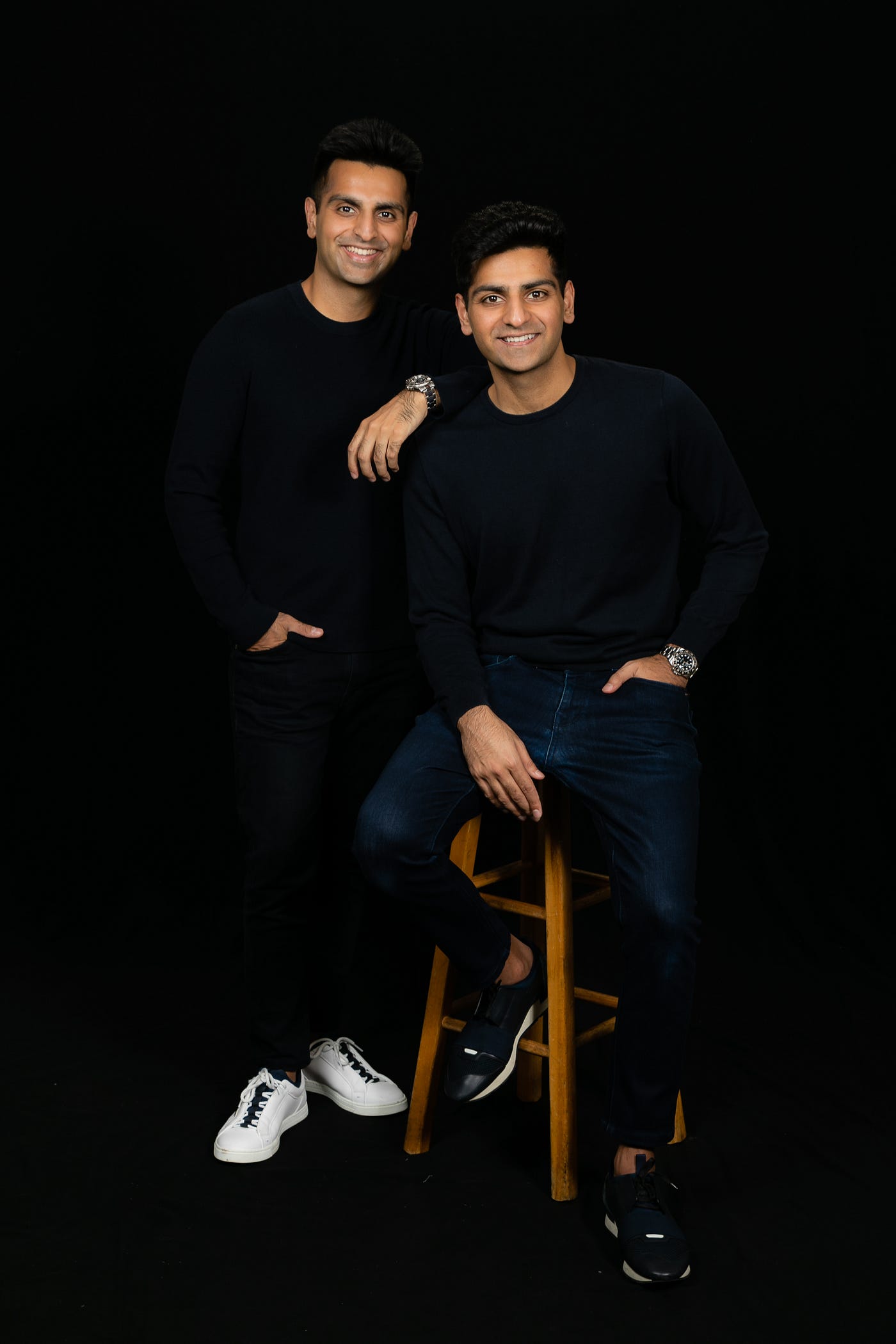
As part of my series about “5 Things I Need To See Before Making A VC Investment” I had the pleasure of interviewing Ammar and Mohammed Amdani.
Ammar and Mohammed are the Founding Partners at Adapt Ventures. Their entrepreneurial ambitions started early when they re-sold American candy bars in middle school in the Middle East and milk tea out of their dorm rooms. They co-founded their first company, Sugar Clothing, out of their dorm rooms as 17 and 19 year old students, quickly becoming experts in marketing, brand strategy, and operations. Ammar’s start in venture began at RLC Ventures in London, where he led pre-seed investments across Europe. Ammar holds a bachelor’s degree from NYU. Mohammed’s venture career began at Plug and Play Ventures in Silicon Valley, where he went on to lead Seed and Series A investments, later becoming Head of Ventures for their EMEA region. Mohammed holds a bachelor’s degree from NYU and a master’s degree from Imperial College London.
Thank you so much for doing this with us! Before we dig in, our readers would like to get to know you a bit. Can you please share with us the “backstory” behind what brought you to this specific career path?
As you can see from our last name, we’re brothers and Business Partners in an industry that can pose numerous challenges for siblings to partner up. But what got us here is our past successes together. While in college, we launched a Direct-To-Consumer womenswear brand called Sugar as freshmen and juniors at New York University. Although it was extremely challenging, we managed to break into the largest retailers and partnered with major entertainment companies and influencers within months of launching including Macy’s, Neiman Marcus, Paramount Pictures, and Bella Thorne, among others. We exited the company 18 months later and were able to pay our tuitions and had left over funds to make investments with. To invest our money more effectively, we joined Venture Capital firms in Silicon Valley and London. As of most recently, we decided to partner up once again but on the investment side, and started an early-stage venture capital firm called Adapt Ventures.
Is there a particular book that made a significant impact on you? Can you share a story or explain why it resonated with you so much?
Do you have a favorite “Life Lesson Quote”? Do you have a story about how that was relevant in your life or your work?
““How many millionaires do you know who have become wealthy by investing in savings accounts? I rest my case.”
–Robert G. Allen
As entrepreneurs who had capital in the bank, we thought this resonated with us deeply. Shortly after, we decided to start actively investing in early-stage startups.
How do you define “Leadership”? Can you explain what you mean or give an example?
In a few adjectives, leadership is being assertive and collaborative, stern and empathetic, and finally, calculated and impulsive all at the same time. Leadership is a tough characteristic that everyone has, but it takes different situations bring it out of people.
How have you used your success to bring goodness to the world?
Whether it is running a company, running a venture capital firm, or anything else, we pledge to donate a portion of the proceeds to different causes we believe in.
In addition, we do our best to uplift those around us and support the local communities by providing them with opportunities that came our way.
Ok, thank you for that. Let’s now jump to the main part of our discussion. The United States is currently facing a very important self-reckoning about race, diversity, equality and inclusion. This is of course a huge topic. But briefly, can you share a few things that need to be done on a broader societal level to expand VC opportunities for women, minorities, and people of color?
As minorities ourselves, this resonates with us within our core. We’ve discussed this internally a number of times and came to the conclusion that some of the steps that need to be made include the following:
- Giving (paid or unpaid) internships to all of those groups mentioned. Although the majority of the time you may not want to or can’t afford to hire interns full-time, it will definitely open the door to other opportunities for them.
- Include diversity mandates in your line of work to ensure progress will be made. That way, whether you’re focused on it or not, as you continue investing and have it on your checklist when evaluating a candidate, it will be a great reminder.
- Holding each other and industry peers accountable. You need to be willing to ask others, “how have to contributed to giving opportunities to women, minorities, and people of color?”
Can you share a story with us about your most successful Angel or VC investment? What was its lesson?
One of our most successful VC investments is in a company based in the Middle East. Although the ecosystem is nowhere near as developed as other technology hubs across the world such as San Francisco, New York, or London, the company has scaled significantly in a small period of time.
Ultimately, it thought us that emerging markets are ripe for disruption and that being ahead of the curve pays off.
Can you share a story of an Angel or VC funding failure of yours? What was its lesson?
We’ve began deploying just over a year ago, therefore, we are fortunate that we don’t have any companies in our portfolio that have had to shut down. That being said, during Covid, we had a couple companies that had to pivot their businesses and we went through the trenches with them as they did it. That gave us perspectives on what they went through while operating in tough times.
Is there a company that you turned down, but now regret? Can you share the story? What lesson did you learn from that story?
As an early stage firm, we come across 300–400 companies every quarter. Therefore, it can be a challenging task to pick the diamonds from the haystack consistently. That being said, there are a number of companies that we turned down, which end up being quite successful. Often times, we see the potential, however, although we are investing in the businesses themselves, we feel the founders of an early-stage company is it’s DNA and if our vision doesn’t align with the founders, we don’t mind missing out on the opportunity to invest in a successful company.
Super. Here is the main question of this interview. What are your “5 things I need to see before making a VC investment” and why. Please share a story or example for each.
There are just three characteristics that we need to see before we make investment.
- Passion — Passion is the first attribute we look for in a founder. No matter how promising the opportunity is, we don’t invest in founders without passion. While working in VC firm’s prior to launching our own, we’ve seen a number of companies that had plenty of potential to grow, however, they became complacent and other competitors came into the market. When going through the tough times, it’s the passion that brings out the best in you. Whether it’s communicating with clients, hiring a team, or developing a strategy, passion is essential to be a successful entrepreneur.
- Domain expertise — An entrepreneur, or someone on their team, needs to have domain expertise in the space that they’re operating. We’ve seen a number of first-time founders that identified a proven business model and attempted to replicate it in a new region and it failed because the founder was trying to learn the fundamentals of the business while competitors were able to set up and operate quicker.
- Market Size — Having a large and growing TAM (total addressable market) is extremely important for us investors. Companies often target a specific niche and try and develop such a focused product for their demographic that even when they outcompete their competition, the market size isn’t large enough for them to become a large company. At that point, no matter what you do, it is close to impossible to educate customers and grow your market size.
You are a person of enormous influence. If you could inspire a movement that would bring the most amount of good to the most amount of people, what would that be? You never know what your idea can trigger. :-)
Encouraging students to reach out to those that impress them via LinkedIn. Although it seems quite straightforward, the number of students that lose out on opportunities because they’re unaware of how to approach those that can provide them with one, is extremely high. Point is — cold reach outs are underrated!
We are very blessed that some of the biggest names in Business, VC funding, Sports, and Entertainment read this column. Is there a person in the world, or in the US whom you would love to have a private breakfast or lunch with, and why? He or she might see this. :-)
This was really meaningful! Thank you so much for your time.
AM
Written by
Authority Magazine Editorial Staff
Editorial Desk · Authority MagazineThe Authority Magazine Editorial Desk produces, verifies, and edits long-form primary-source interviews with executives, innovators, clinicians, creators, and social impact leaders across Business, Tech, Pop Culture, Wellness, and Social Impact.

Published inAuthority MagazineTop Lessons, Top Authorities · 42K Followers
Exclusive, curated interviews with the leaders and changemakers shaping tomorrow. Leadership lessons, industry deep dives, and executive profiles.