I define “success” as being happy with who we are, what we’re doing, and who we’re doing it with.
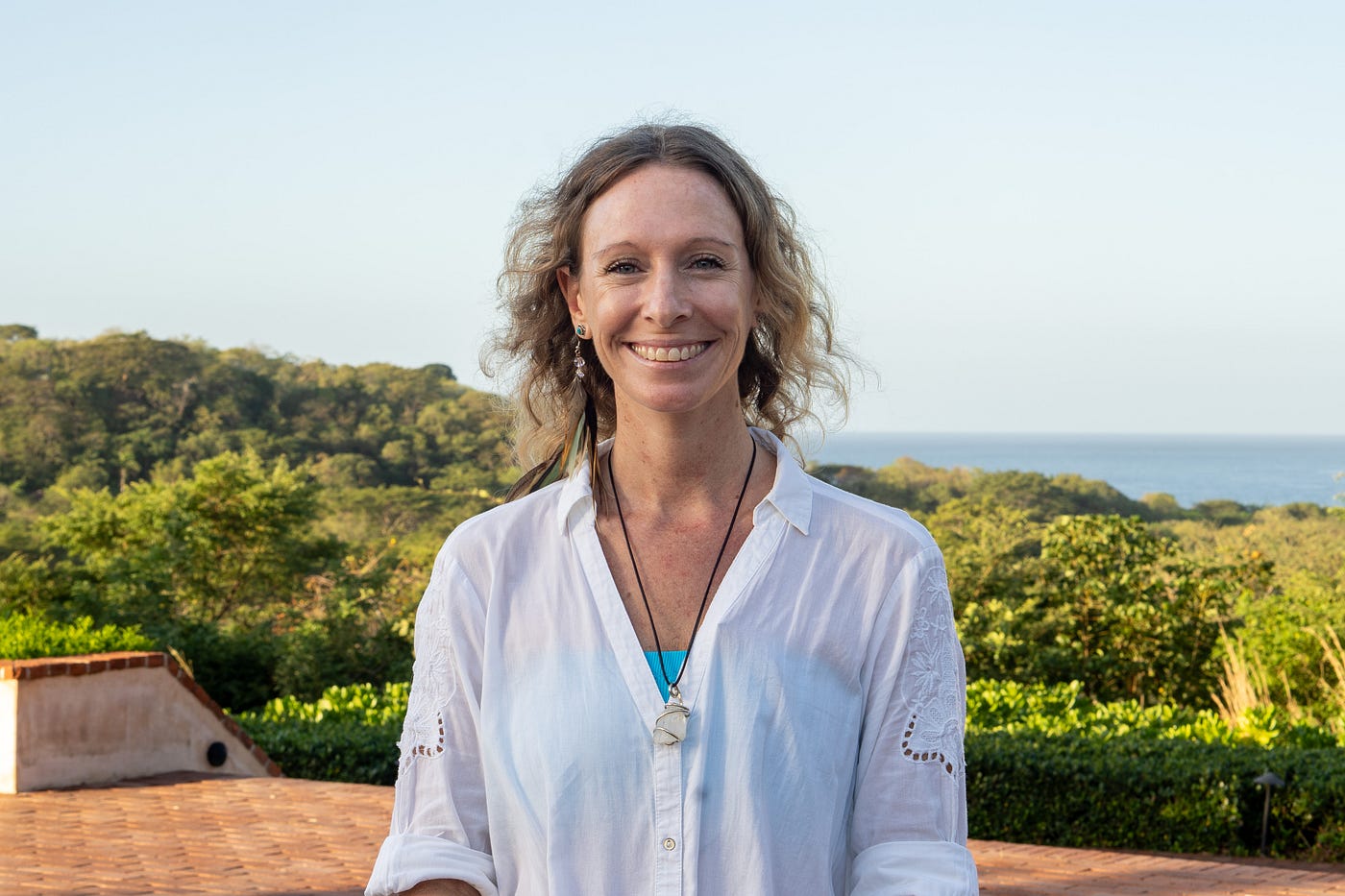
ALLY DALSIMER is an award-winning author, motivational speaker, and podcast host. She holds degrees in English and Psychology from the University of Richmond and a Master’s in Public Policy from Georgetown University. In her free time, Ally enjoys reading, traveling, and spending time with her children and her chubby rescue cat, Pooma.
Thank you so much for joining us! Before we dive in, our readers would love to get to know a bit about you. Can you tell us your “childhood backstory”?
I recall little of my early childhood. We traveled a lot, first in Africa, where my dad was stationed, then to California, Massachusetts, and Virginia. My parents divorced when I was five, so my younger sister and I lived with our mom. She worked long hours, and we became latchkey kids – not uncommon at the time.
We saw our father most Sundays. He took us to Rock Creek Park, to museums and concerts, and on family camping trips. My mom took us to the movies and restaurants, NOW (National Organization of Women) rallies, and to the polls on voting day.
Summers from 6-12-years-old were spent with my sister and cousins at my grandparents’ home in Cape May – my mom would drop us off on Memorial Day and pick us up on Labor Day. When I was 12, my father was stationed back in Africa. For the next four years, my sister and I spent our summers with him; she returned home for the first two years, then joined me at an out-of-state boarding school.
Can you share the story about what brought you to this specific point in your career?
Adversity – and the will to keep on keepin’ on, as my mom would say.
I began my professional career in the natural resources policy and management arena. I spent three decades working to conserve the plants and animals we and the planet rely on to survive. When my position as Program Manager for the Defense Department’s Natural Resources Program was eliminated, I found myself at a crossroads – my husband had recently passed, and the political landscape was anti-environmental. I decided to start over.
Unfortunately, shortly after I started my own business, the pandemic hit. Moved by the social and political issues of the time, and encouraged by my son, I ran for Congress. During the campaign, my house flooded, my mother became very ill and subsequently passed, and my opponent engaged in tactics that might nicely be referred to as ‘questionable.’ After ending the campaign, I took a few months to spend with my kids, especially my daughter who I’d barely seen during my run (my son worked with me on the campaign).
One day, I woke to the reality that I had no job, no parent to care for, no husband, and both my kids had left for college. I ended up writing a series of personal stories and anecdotes intended as life advice for my children. They encouraged me to publish, so I did, and that book, It’s Okay Not to Be Fabulous Every Day: A Journey to Self-Discovery, ended up launching me on an entirely new career path as author, speaker, and podcaster.
Now, at a time when many people are thinking of retiring, I am excited about my new start – one that wouldn’t have happened without the love, support and encouragement of my kids, who remind me daily of what matters in life.
Ok, thank you for that. Let’s now jump to the core of our discussion. This is probably intuitive to many, but it would be beneficial to spell it out. Based on your experience or research, can you explain to us why it is so important to forge a strong connection with our children?
Many studies have looked at the benefits of forging strong parent-child bonds, including improved self-esteem, confidence, and resilience; enhanced language and cognitive development, critical thinking, and problem-solving skills; heightened empathy and emotional self-regulation.
In my personal experience, the most important reason is that my children know I am their safe space (just as I know I am theirs), which means we not only talk or text daily, but share meaningfully during those interchanges – our lives, loves, fears, and joys. And that’s a precious gift in these days of superficiality and faux façades.
Kids have so much to deal with today, in their personal lives and in the world at large. Knowing I am there for them gives them a strong base from which to launch each day.
What happens when children do not have that connection, or only have a weak connection?
Children who don’t have strong parental connections are likely to struggle more, to feel inadequate or feel a need to prove themselves. They are more likely to develop mental health issues – eating disorders, anxiety or depression, and in more extreme cases, attachment disorders.
Having friends and strong social circles can mitigate these issues, but we all saw the impact of social isolation during the pandemic. Especially for kids who did not have close bonds with their parents, those children now struggle with a wide array of issues – younger ones lack basic social skills, while older kids and young adults now deal with anxiety-related disorders at an alarming rate.
Do you think children in this generation are less likely to feel loved and connected? Why do you feel the way you do?
Definitely. There’s been a sad trend for parents to let electronics serve as babysitters, allowing their young children unrestricted and often unsupervised access to limitless online content from the time they’re in diapers. Research has clearly shown that brain waves flatten when children are spoon fed content, and I understand that many parents are busy, but books and games are a much healthier way to engage kids.
One inevitable result of this trend is that kids now spend an inordinate amount of time on social media rather than engaged in social situations, outdoor recreation, or creative endeavors. Worse, they feel pressured to appear and behave the way viral Tik Tok and Instagram creators do, not realizing that this content appeals to a lowest common denominator mentality in which sensationalism over substance is rewarded.
We live in a world with incessant demands for our time and attention. There is so much distraction and disconnection. Can you share with our readers 5 steps that parents can take to help their children feel loved and connected? Please include examples or stories for each, if you can.
YouTube Link: https://www.youtube.com/watch?v=P6Gnngm3t2k
1 . Spend quality time together. Research has shown that quality matters more than quantity when it comes to raising well-adjusted children. For my part, I try to ensure that when I am with my children, I am present and fully engaged in the moment. For example, when my children were little, every Saturday (weather permitting) I would take them to a playground, a park, a pool, the zoo, anywhere where we could play. I’d be on the jungle gym with them, or tossing a ball, or whatever… it didn’t matter what we did, just that we did it together.
2 . Listen. Really listen to what they’re saying – pay attention to their words and their demeanor. I remember one time when my daughter was about 3 years old. She threw a tantrum while we were on vacation. It had been a busy day, and she’d been cranky for the last hour or so. She was screaming about not wanting to do something – I don’t recall what. I remember kneeling down and letting her yell and yell. Finally, she paused, and I apologized to her. I told her I could see she was very tired and it wasn’t fair that we kept doing what we wanted and not what she wanted. She calmed down, stopped crying, and gave me a hug. She fell asleep before we got back to our hotel room.
3 . Play games. Push them on a swing, teeter-totter with them, toss a ball, hula-hoop, stack blocks or colored rings. As they grow, play Trouble, Go Fish, Candyland, Bop It, Uno, Clue, Monopoly, Battleship, Catchphrase, whatever – and keep playing until they no longer want to. I think we laughed more and harder when we played together than at any other time.
4 . Read. Especially when they’re young, reading to children teaches them to focus, helps develop their language and cognitive skills, and allows them to explore their imaginations. I read to my children every night; when we drove, I put audiobooks on, especially when they were little. There used to be a series of books that had cassette tapes that chimed when it was time to turn the page – my son loved these, especially one about a monkey who stole a man’s hat.
5 . Establish routines. Kids need to know they can depend on parents. I established regular and (mostly) predictable nighttime routines for each of my kids, which included sharing our days, reading and telling them stories. My son liked to give me characters (Scooby Doo, Buzz Lightyear, Barney the Dinosaur, etc.) and have me invent stories where they interacted; my daughter enjoyed tales about a princess who lived in a castle and had lots of adventures.
And I’ll add a #6. Love, hug, and praise your children’s efforts. My children know that I love them because I tell them and show them; they know they have merit because I acknowledge how their actions have consequences. Praising kids for the choices they make and the work they put in, rather than because of who they inherently are, teaches them to work hard for what they want and to be justifiably proud of what they accomplish.
How do you define a “good parent”? Can you give an example or story?
There’s a great quote I read years ago: You don’t have to be a great parent to have great children – you just have to be good. I remind myself of this every time I mess up, and it helps.
The truth is that children don’t need perfection from their parents, just presence. They need to feel seen and heard, loved and valued unconditionally. They need to know you’ll be there no matter what.
I love that my daughter reminds me that sometimes she just wants to talk without me offering solutions; I love that my son reminds me that he doesn’t smoke, drink, or do drugs, so if he wants to eat junk food and spend an entire day watching movies, that’s okay.
Being a good parent isn’t about buying expensive gifts or giving false praise – it’s about showing up, about being honest and emotionally available, about respecting your kids as unique individuals and accepting them for who they are.
How do you inspire your child to "dream big"? Can you give an example or story?
By helping them to understand that what they do and how they do it is more important than any inherent quality they may or may not have. While it’s important to tell your kids they are smart and beautiful and can do anything they want, it’s equally important to encourage their efforts regardless of the outcomes, to let them know it’s okay to make mistakes, okay not to have all the answers, and okay to change their minds if they try something and it turns out not to be what they want to be or do.
Ironically, their encouragement of me has resulted in my inspiring them by serving as a role model for dreaming big. They’ve seen me start a business, run for Congress, and launch a new career; they’ve seen my ups and downs, and know that not succeeding doesn’t mean failing because those lessons helped me get to where I am now. Kids are sponges – when they’re young, they listen to what you say, but when they’re older, they look at what you do.
Today, my son is an award-winning actor and singer who’s just written and directed his first short film. He spends most of his time auditioning, watching and reviewing movies, and developing screenplays. In addition, he and I recently launched a podcast which we co-host and produce.
My daughter is a college senior who founded and is president of her university’s chapter of CHAARG – a college wellness group focused on building community through fitness. She’s also become SCUBA certified, traveled extensively, and taken up yoga, all while working part time and maintaining a 4.0 GPA.
They both work incredibly hard and sometimes it’s tough, but they love what they’re doing and they know I am proud of them for being kind, caring, and hardworking, irrespective of external accolades.
How would you define “success” when it comes to raising children?
I define “success” as being happy with who we are, what we’re doing, and who we’re doing it with. So, if your kids are happy, love their lives, and have great friends who uplift and celebrate them, then that’s success.
This is a huge topic in itself, but it would be worthwhile to touch upon it here. What are some ideal social media and digital habits that you think parents should teach to their children?
It’s crucial that kids learn how to think and create independently during their very early years.
I did not let my children watch television when they were infants – we listened to music, looked at/read picture books, played games, etc. At around two, I began letting them watch one 30 minutes show on PBS kids during the week and two shows (an hour) on Saturdays.
Inasmuch as it’s possible, I would encourage parents to engage with their children rather than use an electronic babysitter during their earliest years. As kids grow, I’d encourage setting both time and content limits on what they engage in – not just on social media, but for television/movies as well. There is no world in which taking a toddler to a rated R movie is going to benefit that child’s cognitive or emotional well-being.
But the most important thing I would urge parents to teach their kids is that nearly all of what they see on social media is staged – it’s not reality but intended to provide an addictive dopamine hit. I think parents need to help their kids understand how social media engages and manipulates, especially since the part of our brains that control reasoning, decision making, and impulse regulation, doesn’t fully develop until we’re 25.
The bottom line is kids need parental guidance long after they think they do. If parents have built strong and trusting bonds with their kids, those kids are going to be more likely to believe you and listen to you as they enter, go through, and leave their teen years.
What are your favorite books, podcasts, or resources that inspire you to be a better parent? Can you explain why you like them?
Everything I see and read inspires me to be a better person and parent. One book that significantly influenced how I parented early on was How to Behave so Your Preschooler Will Too, by Sal Severe. The biggest lesson it taught me was that my 0-5 year olds’ poor behaviors were entirely my fault. Not a message any parent wants to hear, and one I didn’t believe… until I read the book.
For my son, the biggest lesson I learned was that I gave contradictory commands: telling him to be quiet, then asking a question that required a response. For my daughter, the most helpful advice was to give her several warnings before we shifted activities – e.g., 10 minutes until we leave, 5 minutes, 2, about to leave, time to go. This simple step put an end to ‘switching gear’ meltdowns.
Can you please give us your favorite "Life Lesson Quote"? Can you share how that was relevant to you in your life?
“If you mess up your children, nothing else you do really matters” – Jacqueline Onasis Kennedy.
I came across this quote when my son was maybe two or three. I typed it into WordPerfect, then printed and taped it to my cabinet. For some reason, the words just clicked. Like a switch flipping on, it changed my view of the world and my perspective as a parent. Since then, this quote has served as a talisman that continues to influence my life decisions.
You are a person of great influence. If you could inspire a movement that would bring the most amount of good to the most amount of people, what would that be? You never know what your idea can trigger. :-)
It sounds simple, but I truly think the movement that would bring the most good to the most people is one of kindness – living the Golden Rule. If people made a concerted effort to be kind to one another and to themselves, our world would be a much better place than it is today.