My natural tendency is to move quickly, but creating a lasting impact often means aligning multiple stakeholders, which isn’t always a fast process.
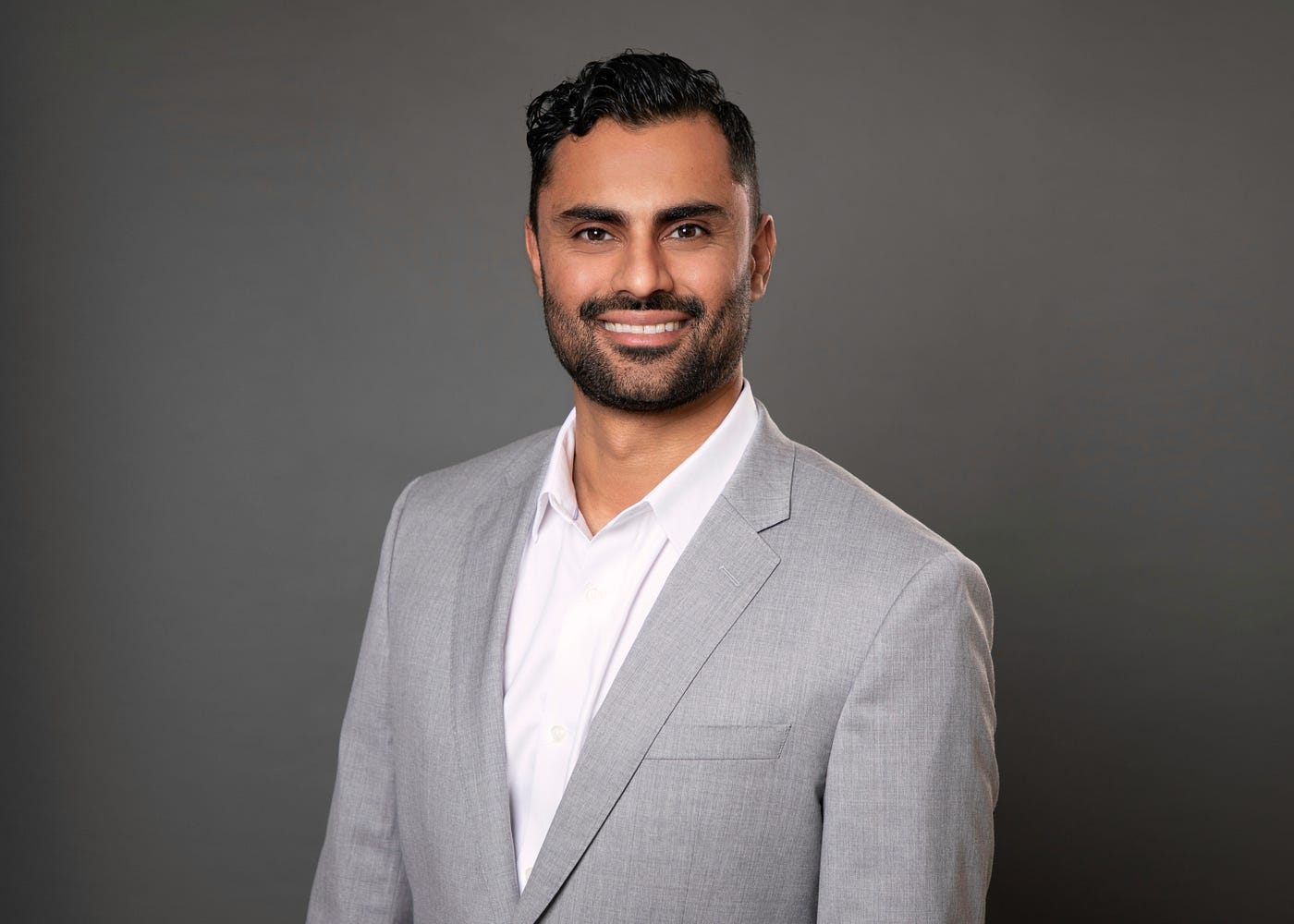
Before joining USRC, Alex Portet most recently served as Optum’s Senior Vice President Operations for the metro Los Angeles area where he oversaw value‐based care programs for their ~120,000 patients. Before joining Optum, he spent five years with the Gates Foundation, overseeing strategy for the Global Health Division, and leading several multi‐disciplinary programs in vaccines, drugs, diagnostics, and nutrition. Earlier in his career, Alex was a Principal for Bain & Company in Chicago and Sao Paulo, and an investment banker for Societe Generale. Alex earned his MBA with high honors from the University of Chicago and has a Bachelor’s degree in finance and economics from ESSEC (France).
Thank you so much for joining us in this interview series! Before we dive into our interview, our readers would like to get to know you a bit. Can you tell us a story about what brought you to this specific career path?
Growing up in France, I was inspired by my parent’s purpose-driven careers – my dad was a surgeon, and my mom was a teacher. After university, I worked for an investment bank, received my Master of Business Administration from the University of Chicago, and then joined Bain & Company where I helped companies grow by leading M&A and improving their operational efficiencies.
By my mid-thirties, I was missing a sense of purpose in my work. I wanted to have a more direct impact on people’s lives, so I jumped at the opportunity to join the Bill and Melinda Gates Foundation to lead operations, strategy, and several investment portfolios for their Global Health Division. The foundation invests about a billion dollars annually to develop new vaccines, drugs, and diagnostics to fight infectious diseases in sub-Saharan Africa and Southeast Asia. Working alongside world-renowned scientists was thrilling and I’m so proud that we made a lasting impact in the global health landscape by making life-saving medicines available to children.
I ended up departing the Bill and Melinda Gates Foundation to join Healthcare Partners (now part of United/Optum) in California because I was intrigued by the challenges facing the U.S. healthcare system. This was my first experience with value based care, where we had full accountability for the clinical and financial outcomes of hundreds of thousands of Medicare and commercially insured patients. During my time there, I saw the game changing impact of value based care: improving clinical outcomes through better prevention and coordination, while reducing costs by putting clinicians at the center of decision-making.
After working in the value based care space and understanding its potential to greatly improve clinical outcomes for patients, I knew my experience was a natural fit at U.S. Renal Care, a kidney care provider whose mission is to change the lives of people living with kidney disease. It has been a privilege to serve U.S. Renal Care as Co-Chief Operating Officer and support our caregivers who work tirelessly to improve access and quality of care for our nearly 30,000 patients nationwide. Over the past year, we have rapidly grown and transformed U.S. Renal Care from a dialysis company into a value-based kidney care organization. Amidst years of navigating a global pandemic, I've been particularly inspired by our physician partners and our staff who have led with excellence and compassion.
Can you please give us your favorite "Life Lesson Quote"? Can you share how that was relevant to you in your life?
An African proverb: “If you want to go fast, go alone; if you want to go far, go together.”
My natural tendency is to move quickly, but creating a lasting impact often means aligning multiple stakeholders, which isn’t always a fast process. The biggest illustration of the importance of this quote in my career was when I was co-leading a large regulatory reform in Africa to accelerate the time it takes to approve new life-saving drugs and vaccines. At the time, the system was riddled with redundancy, and we discovered that it took close to seven years between the time clinical trials were completed to the product being available in the countries we served.
Our approach was simple: a) move from emotions to data by building a thorough fact-base that illustrated all the unnecessary steps; b) use the data to engage and align multiple stakeholders; then carefully balance speed while being respectful of country sovereignty, and finally c) move from engagement to action. Because of our collaboration and teamwork, after just two years, we had completely redesigned the process and cut timelines by more than half. We went together and we went far.
How would you define an “excellent healthcare provider”?
An excellent healthcare provider possesses five important values:
Clinical excellence.
Compassion: someone who leads with heart and treats their patients like they would a family member.
Inclusion: they make sure their patients are educated, supported, and empowered about their healthcare choices.
Partnership: they act as a team and collaborate with the patient and other care providers to ensure the best outcomes possible.
An entrepreneurial spirit: I admire clinicians who are innovative, try new models, and have created and expanded their own business.
Are you working on any exciting new projects now? How do you think that will help people?
Kidney care in the United States is at a turning point. Today, 37 million adults in the U.S. have chronic kidney disease (CKD). As a country, we spend about $300 billion dollars providing care for these individuals, but unfortunately their clinical outcomes are still suboptimal. For instance, 50% of people with advanced CKD do not see a nephrologist today. As a result, 60% of them “crash” into dialysis, with long hospitalizations and high mortality rate. We can do better. That’s why kidney care is primed for a value based care model. We are launching a new value based care business within U.S. Renal Care (called Kidneylink) and transforming the company from a dialysis provider to a value based kidney organization.
Value based kidney care puts the nephrologist at the center of the patient care team and gives nephrologist-led teams full accountability for the clinical outcomes and cost of their patients. These programs provide additional resources and the financial incentives to deliver great care at a lower cost. Physician accountability for outcomes leads to earlier disease identification, slowing disease progression, keeping patients healthy and out of the hospital and ensuring that people who need dialysis are educated on different modalities and ideally choose a therapy where they may treat in their own homes. It’s rewarding to be on the ground floor of something that has the potential to bring life-changing impact and improve the lives of people living with kidney disease, as these patients are often highly complex and vulnerable.
Ok, thank you for that. Let’s now jump to the main focus of our interview. According to this study cited by Newsweek, the US healthcare system is ranked as the worst among high income nations. This seems shocking. Can you share with us 3-5 reasons why you think the US is ranked so poorly?
First, the U.S. healthcare still has payment systems that reward services, not outcomes. Second, the U.S. lacks price and performance transparency. It’s impossible to fix a problem when you don’t have data. Lastly, the systems are fragmented and there is often a lack of coordination for the care of patients. This leads to waste, duplication of services and errors in care delivery. Physicians should be at the center of decision-making for patient care, but often are not empowered and do not have the resources. The U.S. system should have the best outcomes at the lowest costs compared to other countries, but until we address these challenges, we’ll continue to under-perform.
As a “healthcare insider”, If you had the power to make a change, can you share 5 changes that need to be made to improve the overall US healthcare system? Please share a story or example for each.
Payments for outcomes instead of services and continue to adopt risk-based models that reward high quality outcomes.
Giving clinicians autonomy with accountability.
Bring price transparency to patients.
Make measures for performance and patient experience transparent and public.
Open sharing of data to help build consensus to make lasting change.
The COVID-19 pandemic has put intense pressure on the American healthcare system, leaving some hospital systems at a complete loss as to how to handle this crisis. Can you share with us examples of where we’ve seen the US healthcare system struggle? How do you think we can correct these issues moving forward?
Staff shortages throughout the pandemic have put an immense strain on our healthcare system, underscoring the importance of investing in company culture and employee experience. I deeply believe that the magic in our business happens at the frontlines with our caregivers and those interacting with patients. Our most important job as leaders is to be present, listen and do what we can to support our caregivers. Providing our staff with that kind of support allows them to focus all of their efforts on patient care.
At U.S. Renal Care, I helped develop and launch an ambitious multi-year initiative to make U.S. Renal Care the best place to work as a clinician or healthcare operator. Via a staff-driven effort, we redefined our mission and values, launched several onboarding and career development programs, celebrated our diversity, and ensured we recognized our teams for going above and beyond. While our industry is still seeing major staffing struggles, U.S. Renal Care has had a significant improvement in our employee retention and recruitment efforts. We are very proud of this and will continue to invest in our people!
How do you think we can address the problem of physician shortages?
We need to support physicians by:
Building attractive value based care payment models that reward great quality of care and patient outcomes and allow physicians to participate in the savings they generate.
Putting decision-making authority in physicians’ hands while giving them data to make good decisions and to see the outcome of their decisions.
Supporting physicians’ care with the right tools, technology and additional staff that act as the physician’s extension (nurses, dieticians, social workers, pharmacists)
Minimizing administrative tasks and burdensome documentation requirements to deliver care.
Providing financial assistance with medical education to allow all qualified candidates to be able to pursue the rigorous and costly training required.
Assuring compensation is adequate to incent talented individuals to undertake the significant commitment physician training requires.
You are a person of great influence. If you could inspire a movement that would bring the most amount of good to the most amount of people, what would that be? You never know what your idea can trigger. :-)
The movement I would like to inspire is having value based care as the default model of care in the U.S. That means payment for outcomes and incentives to keep physicians at the center of care planning along with transparency about costs and improved patient experience.
What concrete steps would have to be done to actually manifest these changes? What can a) individuals, b) corporations, c) communities and d) leaders do to help?
Stakeholder incentives need to be aligned to make value based care the default model. Healthcare leaders must embrace collaboration and transparency. While all stakeholders are interwoven in healthcare decision making, sometimes, they act as if their interests are more important than others. We need more collaboration and patient-centric decision making to improve our healthcare system.
What are your favorite books, podcasts, or resources that inspire you to be a better healthcare leader? Can you explain why you like them?
I have four young kids at home, so it can be hard to find time to read outside of work. That said, I do recharge and get inspired through competing in triathlons and practicing martial arts. I appreciate any physical activity that tests your resilience and mental strength.
Can you share a story about the funniest mistake you made when you were first starting? Can you tell us what lesson you learned from that?
A turning point in my career was the realization that “people don’t care how much you know until they know how much you care.” Early in my career, I don’t think I emphasized enough how much I cared about my peers and those who worked for me. At work, I was extremely results focused and wanted impact at almost any cost. Because of that, those who I worked with didn’t really see the second side of me that was more fun, casual, and sensitive. So sensitive, in fact, that my mom calls me, “coeur d'artichaut” or, in English, artichoke heart because just like the vegetable, the best part of me was a tender heart.
When I started bringing both sides to work, those on my team came to understand how much I cared about what we were working on. It’s been an incredible leadership journey to begin leading with the heart and caring. I haven’t lost the drive for impact, but it’s been freeing to learn to bring my whole self to work. I think that has also inspired my team and helped me grow as a leader.
How do you think we can address the issue of physician diversity?
I‘m happy you raised this question as it’s something that our organization and I personally reflect on frequently. At U.S. Renal Care, we have a diversity, equity and inclusion team that is dedicated to supporting equity for everyone in our community – our patients, our staff, and our physician partners.
The leader of our DE&I team is Sarrah Johnson, DNP, MBA, RN. Dr. Johnson has been a healthcare provider for decades and has a keen understanding of the critical role DE&I plays in providing better outcomes for people living with kidney disease.
In 2022, 38% of the physician workforce in the U.S. identified as racially or ethnically diverse (National Healthcare Quality and Disparities Report, 2022). However, the physician population in Nephrology specifically is much stronger at 55% identifying as racially or ethnically diverse (American Association of Medical Colleges, 2018).
At U.S. Renal Care, we partner with a diverse group of nephrologists, including those who are foreign graduates in the specialty of nephrology. It’s important for our country to make access to medical schools for diverse populations possible and that the faculty of medical schools is as diverse as the country we live in.
How do you think we can address the issue of physician and nurse burnout?
Provider burnout can happen because doctors are paid per service and are forced to do more, see more, and prescribe more. Value based care gives the physician autonomy and freedom to practice and support patients based on their needs. As discussed previously, limiting burdensome and nonproductive paperwork or other administrative tasks, allowing adequate time away from work and organizing support groups so individuals can have support from peers.
At U.S. Renal Care, we know we need to go even further by championing the wellbeing of our teams, ensuring they have resources to find professional success and satisfaction and support during times of crisis. We have a dedicated Employee Relief Foundation to help employees who are navigating unexpected difficulties because of events outside of their control. If the past few years have taught us anything, it is that distressing circumstances can arise without warning or reason. Taking care of our caregivers is at the heart of our values.
How can our readers further follow your work online?
USRenalCare.com and U.S. Renal Care LinkedIn