Diversity, equity, and inclusion is not only the right thing to do but is a business imperative. We need to hire people who come from different backgrounds and with different perspectives. This diversity helps businesses create more inclusive products.
Business
Ritu Bhargava of SAP CX: How Embracing Diversity, Equity, and Inclusion Can Create the Perfect Breeding Ground for Enterprise Innovation
SAP CX Chief Product Officer Ritu Bhargava shares how taking calculated risks, building a strong work ethic, and fostering diverse perspectives drive enterprise growth.
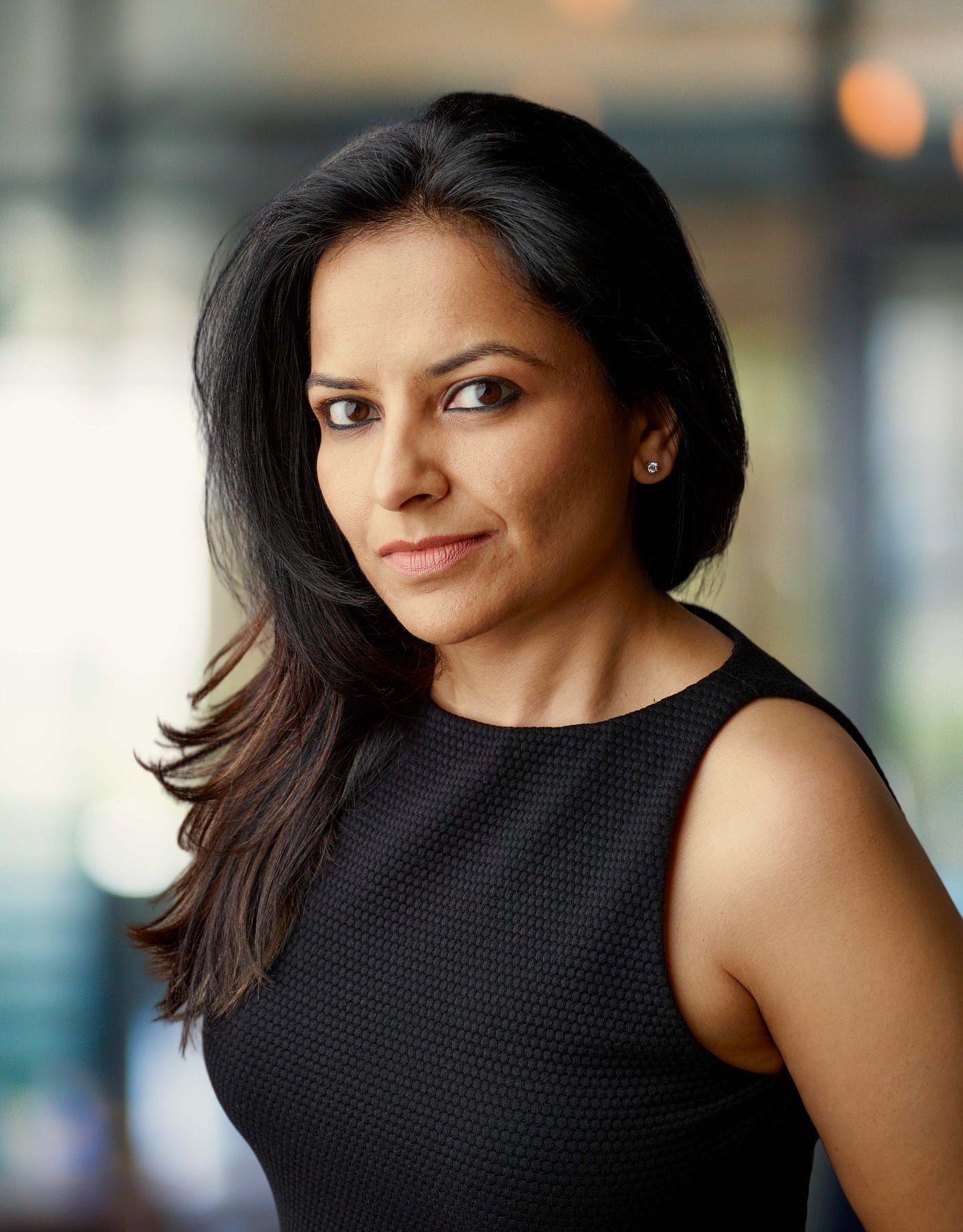
As a part of our interview series called “Women Of The C-Suite” , we had the pleasure of interviewing Ritu Bhargava.
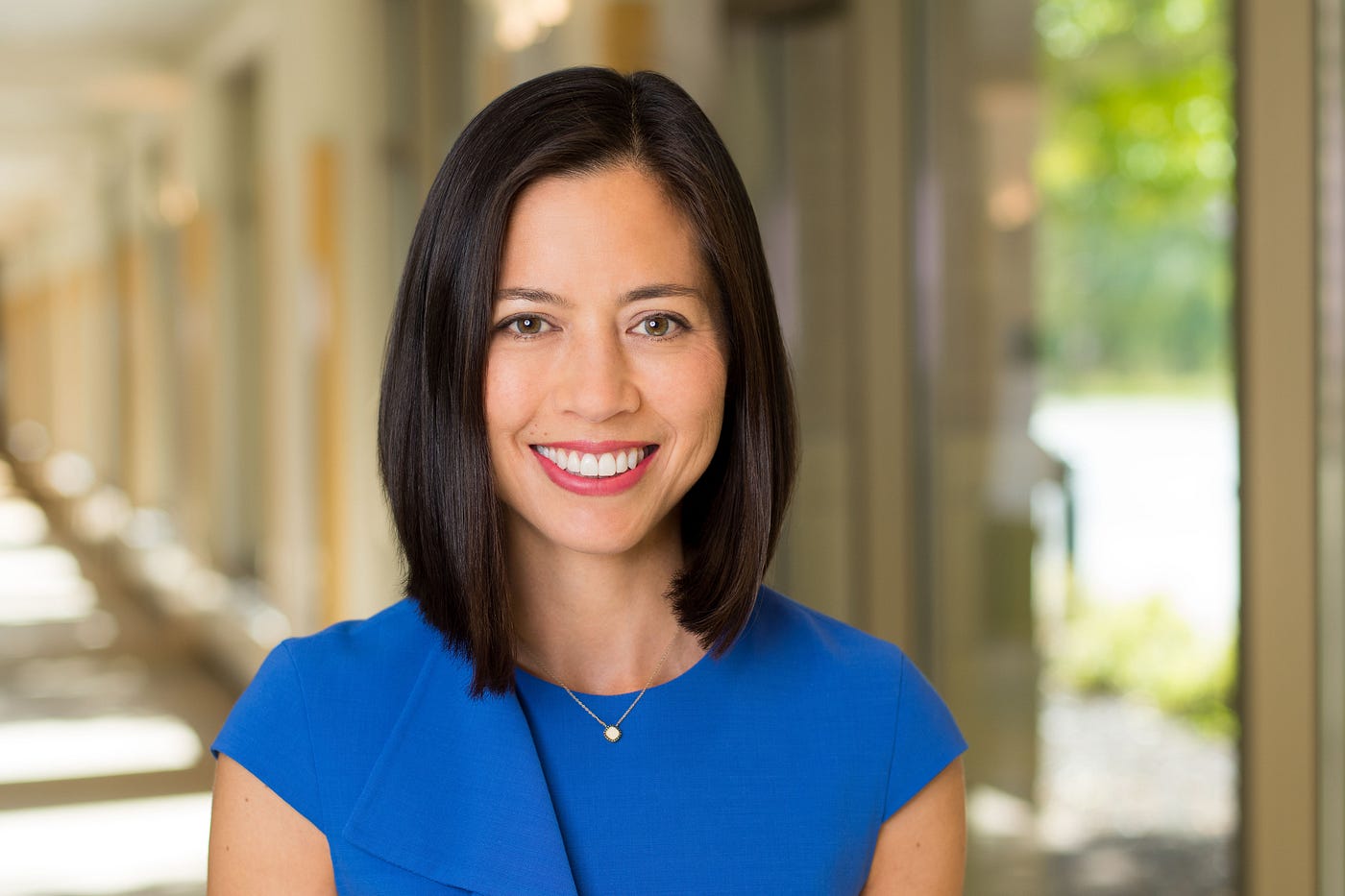
Ritu Bhargava is the Chief Product Officer of SAP Customer Experience (CX), and she heads product, engineering, user experience, strategy, and operations for the entire CX portfolio. Before joining SAP at the end of 2021, Ritu held various technology leadership positions and most recently came from Salesforce as the Senior Vice President of Engineering for Sales Cloud, Salesforce’s flagship product suite. With extensive experience in enterprise applications and the CX space, Ritu brings a strong market focus, both from a business and engineering perspective.
Thank you so much for joining us in this interview series! Before we dig in, our readers would like to get to know you a bit more. Can you tell us a bit about your “backstory”? What led you to this particular career path?
I grew up watching my parents’ careers. My mom worked in education, teaching at colleges, and voluntary work with students from low-income families, and my dad was an architect. They both were deeply passionate about what they did and had extreme pride in their careers which left a deep impact on me.
I am product of that great combination that instilled not only a great work ethic in me, but the important lesson of the doing the right thing even when no one is watching.
I did not study to be an engineer, but I knew that no matter what I did, I would always do the best that I could do. I have a raging fire in my belly, that dragons would envy, and I use that fire to march ahead and keep my mind open to every opportunity.
Can you share the most interesting story that happened to you since you began leading your company?
Before SAP, I spent a decade each at Salesforce and Oracle. But started my career as an SAP developer, so my roots are in SAP. When I came back to SAP in 2021, it felt like I was coming home.
But I also knew that this home I was coming back to had grown from a small cottage to a mansion — with thousands of employees and partnering and serving hundreds and thousands of customers.
For me, the most interesting part has been to witness the amount of admiration, loyalty, and support SAP has surrounded itself with be it employees, partners, or customers.
Since joining, I have met over ninety customers, and they all repeatedly say how they are rooting for SAP. I’m awed by this kind of engagement!
Can you share a story about the funniest mistake you made when you were first starting? Can you tell us what lesson you learned from that?
At one of my previous companies, I had recently relocated to a new city and did not speak the native language nor know anyone there.
On my first day, standing in front of a huge building, unsure of how to find the office, I wondered “what did I get myself into”. I felt uncertain about my decision to start a new job in a place where I knew no one and didn’t even speak the language. I mustered up the courage to ask the security guard for directions and did my best to speak slowly in simple English. To my surprise, he responded immediately in perfect English.
This was an early but extremely important lesson for me into how we so often make assumptions and stereotype people. I have realized that there is power in not assuming and giving people chances.
None of us are able to achieve success without some help along the way. Is there a particular person who you are grateful towards who helped get you to where you are? Can you share a story about that?
A few people stand out to me over my career. First is Liff Thomas, a current vice president at Oracle. She was the first person who took a chance on me by supporting and encouraging me to move to Oracle’s headquarters in Silicon Valley to take on a bigger charter and grow my career. She saw the potential in me and helped open a lot of doors for me.
The second person is Mike Rosenbaum, current CEO of Guidewire. I worked with Mike while at Salesforce. He gave me a seat at the table, he asked questions and truly listened, and that made me so much stronger. He didn’t give me words, gave me work that was impactful which helped boost my confidence.
The last person, who certainly is not the least, is my spouse. I could not do this job without her. Every morning, she wakes up at the same time as me to make me breakfast to just make the morning easier, even if it is at 3:30am. Whenever I have travel coming up, she helps me in creating a look book with pictures of the outfits planned. The night before I leave, we do a dress rehearsal for each outfit! That’s next level. She also has a tech background, so she is always there to listen and riff about business challenges. She is my superpower and secret sauce, which I guess is not so secret anymore!
As you know, the United States is facing a very important self-reckoning about race, diversity, equality and inclusion. This may be obvious to you, but it will be helpful to spell this out. Can you articulate to our readers a few reasons why it is so important for a business or organization to have a diverse executive team?
Diversity, equity, and inclusion is not only the right thing to do but is a business imperative.
We need to hire people who come from different backgrounds and with different perspectives. This diversity helps businesses create more inclusive products.
DEI creates the perfect breeding ground for innovation. It is impossible for one person to know everything about every culture and the way products are used across the world. Diverse points of view bring those different ideas to the table to foster innovation.
Diversity also helps avoid creating ideas in an echo chamber. I don’t need to hear the same ideas over and over again that perhaps I started. There is something unique that comes from lived experiences that only diversity of thought, mind and action can bring in. The more we challenge ourselves and each other, the more we all grow in creating better innovations.
As a business leader, can you please share a few steps we must take to truly create an inclusive, representative, and equitable society? Kindly share a story or example for each.
I pay attention to who has a seat at the table. But more importantly, I pay attention to who does not have a seat at the table. Business leaders must ask themselves, who is missing, whose voice is not being heard, and who is not getting opportunities.
There are a few questions I typically ask when looking at candidates. First, I look for the right attitude, a growth mindset, and fire in their belly. Once that’s out of the way, then we can discuss what it takes to play to their strengths and get them roles where their passion lies. Or sometimes we discover people’s passions do not lie where they thought they did. You will be surprised by how often you go through that elimination process for candidates to discover that the position is not for them. Asking those tough questions is important to play to people’s strengths and ideally uncover the best roles for them.
Ok, thank you for that. Let’s now jump to the primary focus of our interview. Most of our readers — in fact, most people — think they have a pretty good idea of what a CEO or executive does. But in just a few words can you explain what an executive does that is different from the responsibilities of the other leaders?
One of the biggest differences for C-level executives is that just because an idea or initiative is set, you think it will happen. But it often doesn’t. Very often people disagree but don’t commit. Or if they commit, they don’t follow through. And that’s why getting buy-in is important.
As an executive, you often have to repeat yourself over and over again to get buy-in from various stakeholders. I’ve learnt that most often when I get tired of saying something is when my message finally lands.
New ideas take a lot of socializing to account for different angles and perspectives. Rather than just looking at a business challenge from your point of view, you have to pay attention to diversity of thought as well. Executives also have to consider various stakeholders, whether it is customers, your peers, your leader, or your teams. With all these various parties, it makes it even more complex in deciding whose opinion you should listen to and others that you should ignore.
What are the “myths” that you would like to dispel about being a CEO or executive. Can you explain what you mean?
The first myth is that everyone thinks we have it all figured out and oftentimes, we don’t. The higher in your career you get, the more complex and nonbinary answers are, so it takes time to solve problems. It doesn’t just happen overnight.
Second, is that executives live on a different plane where we are “untouchable.” At the end of the day, we’re all human. I have my own faults, and I’m just a person too.
In your opinion, what are the biggest challenges faced by women executives that aren’t typically faced by their male counterparts?
This question, for one. This question gets asked of female executives repeatedly, and every time it is raised, I think it takes away from more substantive questions. I also believe that this question is not asked of my male counterparts.
That said, I feel this question is a simplistic view of the world, and there is not one single answer to this.
Looking at myself, I see all the diversity I carry, and makes me think of the various angles this involves. I happen to be a woman of color, I am a female executive, I am an immigrant, and I am gay. So now think of that intersectionality and imagine the challenges around each one of them. It becomes complex but I focus on being my unique self and working with what I’m best at. I’m not saying it’s easy for women but I’m also saying everyone is fighting their own unique battle, and I’m not in a position to speak for them all.
What is the most striking difference between your actual job and how you thought the job would be?
Many would think that in the technology field, your role would mainly be about your technical expertise. While that expertise is important, for me, it is always about the relationships.
It is vital to have strong and trusted relationships, with customers, employees, peers and even your bosses. I think these strong relationships are the recipe for world class products.
Is everyone cut out to be an executive? In your opinion, which specific traits increase the likelihood that a person will be a successful executive and what type of person should avoid aspiring to be an executive? Can you explain what you mean?
I firmly believe that anyone can be whatever they aspire to be. No one should be bound by the opinions or assumptions of others.
There have been many instances when people who do not know me are surprised to learn that I am the highest-ranking officer in the room.
I cannot speak for everyone, but for me, what has worked is grit, perseverance, hard work and a little bit of luck. I say this often — the harder I work, the luckier I get. They are not my original words but are still very true.
What are your “5 Things I Wish Someone Told Me Before I Started” and why? (Please share a story or example for each.)
First, is that success is what success means to you. Success is not defined by others and is personal to you and your own experiences.
Second, no one but you alone can define what you become. No one else gets to define you. Five years ago, many people might have thought I would never be a Chief Product Officer or an engineering leader, but look at me now.
Third, take risks and put yourself out there. I have moved to several countries and places, trying different jobs and taking chances. That is what has opened doors for me.
Fourth, do not let anyone else be a judge of your character or put you in a box.
Last, leaders are human beings, too. You should talk to leaders like people and not like status report machines.
You are a person of great influence. If you could inspire a movement that would bring the most amount of good for the greatest number of people, what would that be? You never know what your idea can trigger.
I would inspire a movement for the education, employment, and empowerment of women.
I am currently the co-chair of the West Coast Advisory Board for Asian University of Women. The positive influence I would like to see is promoting the cause, making donations, learning about the organization or even joining the board.
Irrespective of AUW, please help in doing something in service of the education of girls.
We are very blessed that some very prominent names in Business, VC funding, Sports, and Entertainment read this column. Is there a person in the world, or in the US with whom you would love to have a private breakfast or lunch with, and why? He or she might just see this if we tag them
David Goggins. If you’re not familiar with him, he is an ultramarathon runner, ultra-distance cyclist, triathlete, public speaker, author and retired United States Navy SEAL.
His childhood was a nightmare, from experiencing poverty, prejudice, and physical abuse.
Through self-discipline, mental toughness and hard work, Goggins transformed himself from a depressed, overweight man into a U.S. Armed Forces icon and one of the world’s top endurance athletes. The Navy magazine named him the toughest man alive.
His memoir “Can’t Hurt Me” continues to inspire me, and his stubborn dedication to achieving his goals is unparalleled. He turned failure and rejection upside down while owning his destiny. What’s not to love?
I also deeply admire Simon Sinek and Adam Grant and would be honored to meet them!
Thank you for these fantastic insights. We greatly appreciate the time you spent on this.
MS
Written by
Ming S. Zhao
Editor & Journalist · Authority MagazineMing S. Zhao is a senior columnist at Authority Magazine covering Pop Culture and Business, conducting primary-source Q&A interviews with founders, executives, and industry leaders.

Published inAuthority MagazineTop Lessons, Top Authorities · 42K Followers
Exclusive, curated interviews with the leaders and changemakers shaping tomorrow. Leadership lessons, industry deep dives, and executive profiles.