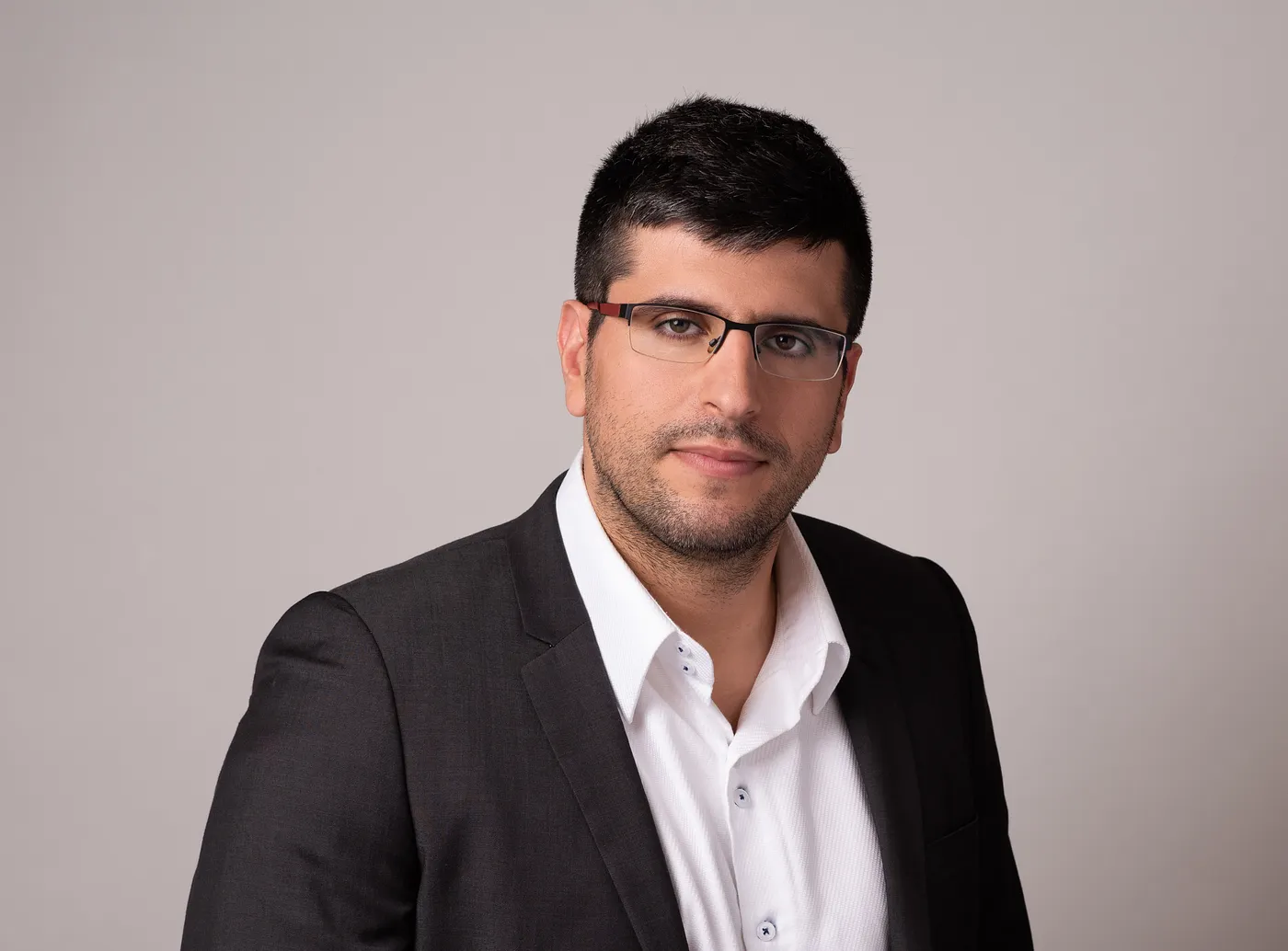
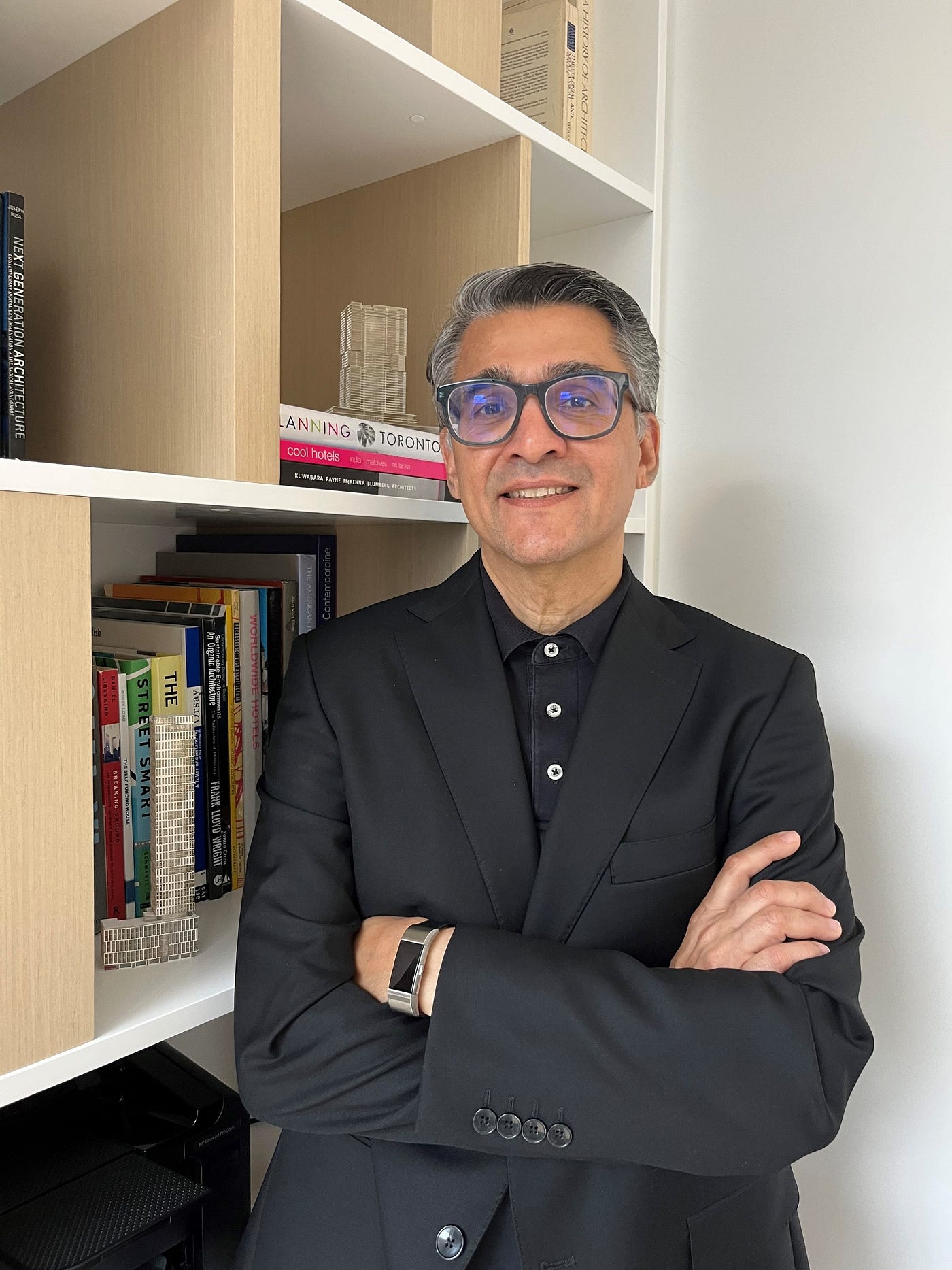
Thank you so much for joining us in this interview series! Can you tell us a story about what brought you to this specific career path?
Interestingly enough, commercial real estate investment was neither my first, nor the most inherent, career choice. You could say I stumbled onto this career path after serving in the Israeli air force in my early 20s. Following my time in service I was anxious to make my mark in the world and launching my own business felt like the most natural career trajectory. I leveraged my financial literacy and ability to influence and manage teams to begin acquiring a portfolio of real assets and homes in foreclosure. Not long after, in 2012, I launched Faropoint. The business has since gone through a number of transformations and we have evolved our strategy and refined our mission over the years to reach our current level of success. Faropoint is one of the most active buyers of last-mile industrial assets in the United States. We have nine offices across the country and more than 120 team members.
Can you tell us a story about the hard times that you faced when you first started your journey?
Launching a new business is never easy. I think two of the most difficult, albeit important, initiatives to prioritize early on as an entrepreneur is to build a strong team and create alignment between your various stakeholders.
Establishing the best team with the right structure was a challenge, in addition to figuring out what our niche would be as an investment manager in the real estate industry. It required identifying the right individuals to turn to for guidance and mentorship, and leveraging our partnerships with shareholders and other organizations to inform our overarching strategy.
Ten years ago, we met with the representatives of a prominent family office in Israel. We desperately wanted them to invest with us, and while they were interested, they asked us a question that stopped us in our tracks: “What’s your focus? What are you selling here?” At the time, we did a little bit of everything — office, industrial, and retail investment. This family office already had relationships, and capital allocated, in all these property types — except industrial. That was our “Aha” moment.
We left that meeting, promptly took down our entire website, and decided to focus solely on industrial assets. Through listening to our clients, we were able to identify our niche, which made growing our business from that point on much easier.
Where did you get the drive to continue even though things were so hard?
What I’ve come to learn over the years is that not every person is equipped with the same drive and determination to persevere through hardship and challenges. My colleagues and I have that drive in our DNA. For me, it goes back to my time in the Israeli Air Force.
At 22 years old, I was promoted to Company Commander and put in charge of the day-to-day lives of 120 soldiers. I was in charge of everything from our schedule (when we woke up, when we returned home), all the way to what core values we would adopt. Most importantly, I was responsible for everyone’s safety. This experience taught me to be able to think beyond myself and my own well-being in the best interest of my team. I learned how to think strategically, how to take ownership for my mistakes, how to change course and pivot when the current path was no longer viable, and how to be comfortable taking risks.
Many smart people steer away from entrepreneurship because they decide it’s not worth the risk. In his book on behavioral economics, Thinking, Fast and Slow, Nobel-Prize winner Daniel Kahneman refers to entrepreneurs as “delusional optimists.” Essentially, if you rationally weighed the odds of success, you’d never start a business. It’s entrepreneurs “delusional’ optimism that gives them the confidence to take risks, pursue innovative ideas, and persevere in the face of challenges.
I count myself as a delusional optimist but as I’ve developed as an entrepreneur over the years, I’ve come to understand how important it is to be more risk-sensitive. I understand now that there’s a lot to lose. When you’re just starting out, the probability that you will succeed is low, so you need to be optimistic, even a little bit delusional. As your business grows, attention to the environment you’re in and an ability to adjust and evolve is what will keep you standing when things get choppy. The delusional optimism becomes less useful.
So, how are things going today? How did grit and resilience lead to your eventual success?
When it comes to thoughts on success, I often refer back to Simon Sinek’s The Infinite Game. In that book, Sinek lays out how leaders who view their businesses as part of an infinite game will make decisions based on long-term strategies that develop long-term strength. Meanwhile, business leaders who play a finite game aim for short-term wins that can weaken their organization in the long run.
I find it difficult to make thoughtful, down-to-earth decisions if I approach them with the mindset of: “if I do this, or achieve this, then I’ll be successful.” I try not to think that way.
Business success should be a long-term improvement process: look for ways to improve by becoming a better leader than you were the day before. Having big picture goals and mission and vision statements to work toward is important, but I look at them as stepping stones along the way to the next goal rather than finish lines.
Can you share a story about the funniest mistake you made when you were first starting? Can you tell us what lesson you learned from that?
One amusing story is from our early days. Faropoint’s first office, in Tel Aviv, was a sublease of one room with no windows that we shared with several other companies. We used the space from 4 p.m. to 2 a.m. When it was our shift to have access to the office, we would print out a logo and use scotch tape to put it up on the door so people could see that it was our office. And it wasn’t even the Faropoint name and logo we use today. We would print out different company names or logos because we had no idea who we were yet, we didn’t know our identity.
On top of that, I was going to school — working towards a joint degree in business and law — and I’d go to the office to get work done or fly to the United States for work — between exams. Those early days taught me how to make the most of what I had.
Times have changed since then — Faropoint has nine offices in the U.S. and one in Tel Aviv. It makes me proud to see how much we’ve grown.
What do you think makes your company stand out? Can you share a story?
What sets Faropoint apart is the company’s integration of real estate and technology. The commercial real estate industry has historically been tech-averse, but as data revolutionizes all industries, it’s imperative that we embrace data or fall behind. At Faropoint, our vision is: Inspire Through Innovation. One of the biggest ways in which we live this mission is through development of our own in-house proprietary technology.
Two years ago, Faropoint established a Research and Development (R&D) department, after I first met Doris Pitilon, who became our Chief Technology Officer. Doris and I share a passion for technology. Since then, we have built a team of 20 engineers, data scientists, and product and design professionals who are constantly innovating and identifying ways to bring us proactive, local, data-driven insights and coming up with ways to streamline our workflow.
Our R&D, coupled with our on-the-ground approach, helps our acquisition and asset management teams build strong relationships with local partners, which in turn enables us to identify and jump on attractive investment opportunities as they arise, and thus create value for stakeholders.
Our industry has a long way to go in terms of technology adoption and data integration, but I’m proud of Faropoint’s progress on this front. I’m excited for the possibilities that lie ahead — both for Faropoint and for the entire commercial real estate industry — as we continue to bridge the gap between real estate and technology.
Which tips would you recommend to your colleagues in your industry to help them to thrive and not “burn out”?
The number one thing I recommend to my colleagues to avoid burnout is to build long-lasting, trusting teams, so that over time the workload can be shared and a healthy balance is created between hard work, family time, and time to relax and recharge. I would also advise my friends and colleagues to take a hard look at their calendar to make sure they’re making time for activities they enjoy.
Personally, unless I’m traveling, I always create a routine for myself that includes starting the day early, working out, taking mindful coffee and lunch breaks (not at my desk!), and calling my mom every morning. You can’t take care of your business if you’re not taking care of yourself!
None of us are able to achieve success without some help along the way. Is there a particular person who you are grateful towards who helped get you to where you are? Can you share a story?
There are two books in particular that have helped me become a better and more thoughtful leader: What It Takes: Lessons in the Pursuit of Excellence by Stephen A. Schwarzman, the Co-Founder and CEO of Blackstone, and Principles, by Ray Dalio, founder of Bridgewater Associates. Both books taught me a great deal about how to handle decision-making as a CEO, how to navigate unforeseen challenges, and how to build excellent, high-functioning teams.
I also would not be where I am today without my father. He’s someone who has always had my back, especially when I’ve had to cope with intense, stressful situations. There was this one Hebrew, and maybe it’s Eastern European, idiomatic expression he would say: “If you haven’t done something properly, don’t try to make it quick and dirty.” Sounds weird in translation, but essentially what it means is that if you didn’t take the time to do something properly when you had the time, you aren’t going to get it done at the last minute. And conversely, if you did do the work, there’s no point worrying or scrambling to perfect it at the last minute.
For instance, before a big meeting, I’ll focus on clearing my mind rather than running through my presentation again or thinking of all the possible things that could go wrong. It’s like trying to learn one last page of information right before an exam, it isn’t always effective. My father would say: “forget that last page and focus on the entirety of the test because a clear mind can help you much more than whatever information you’re trying to memorize at the last minute.”
How have you used your success to bring goodness to the world?
Faropoint is a buyer of urban infill industrial facilities. Our tenant mix often consists of small local businesses, such as roofers, plumbers, and HVAC vendors, that serve the communities in their immediate proximity. Our team is intentional about working with these local businesses and doing business with local vendors in our respective markets as a way to give back to and support local mom-and-pop shops that work so diligently to serve their communities. Right now there are over 600 vendors that Faropoint works with locally.
Outside our work at Faropoint, my leadership team and I mentor young entrepreneurs and professionals in the industry. This is something I’ve always been passionate about. When I was in Israel I volunteered to start and lead the first patriot reserves company, an opportunity that allowed me to bring my management experience in the real world and apply it to the army. I also sit on the board of three different logistics-focused start-up companies including Bionic Hive and Davinci Micro Fulfillment.
What are your “5 things I wish someone told me when I first launched my business,” and why?
- Take your time and slow down. Entrepreneurs have a sense of urgency, which is great, but being overly eager can lead to making avoidable mistakes. I think it’s important to find a business partner early on who can help you differentiate between big and small mistakes. Building a business isn’t easy, and there will be roadblocks, but knowing when it’s okay to make a misstep and when you need to slow down and think can make all the difference.
- One good decision in the long term is better than a lot of fast, quick decisions that aren’t clearly thought out and can lead to mistakes and complications. Not making a decision immediately and taking the time to think or even sleep on it will undoubtedly benefit you in the long run. This can be difficult, especially when you’re so focused on something that it feels like the entire world hangs in the balance of that one decision. Forcing yourself to take a step back, get good outside opinions, and put things in perspective will not only make you a better, more thoughtful decision maker, but also a more effective business leader.
- You have to feel comfortable knowing that you may not be the subject matter expert in the room. The faster you understand this, the faster you’ll be able to create a collaborative environment with smart people to share ideas with. Being able to say both, “I know the answer” and “Others know the answer” will allow you to expand your knowledge and grow your business. Sometimes coming up with an idea and passing it off to someone else to run with is the best path forward.
- Starting a business is a long-term commitment. It’s something you want to undertake with people you genuinely care about. Once you start to gain clients and investors, trying to restart with a new team of people will cause a huge problem. It’s your reputation on the line, so take the time to find the right team the first time — it’s worth it.
- It’s easy to get stuck in the mindset of wanting to maximize every situation, but this isn’t necessary. More often than not, coming to a compromise is more important than maximizing your position. Whether it’s with your team or your clients, making an effort to find the middle ground is better for long-term relationship building and reputation management. It’s okay to leave some money and ego on the table to make sure the other people know how much you value them as partners. No big vision can be pursued alone, so straining relationships will do nothing but hinder you in the long run.
Can you share a few ideas or stories from your experience about how to successfully ride the emotional highs & lows of being a founder?
For me, persevering through the highs and lows of being an entrepreneur is much easier with the right mindset and the right selection of partners. Rather than viewing setbacks as “mistakes,” I like to use them as learning opportunities for both myself and my team. The best way to approach the low points is to recognize something went wrong, evaluate how the situation can be fixed, and apply this knowledge to all future decisions so you don’t make that same misstep again. It’s normal to make mistakes as a founder, but with a positive mindset and strong team, you should be able to use those low times to continuously improve your strategy and outlook.
You are a person of great influence. If you could start a movement that would bring the most amount of good to the most amount of people, what would that be?
I cannot stress the importance of having Diversity, Equity and Inclusion policies in place. Having teams that are diverse in background, culture and gender is imperative for company success and for effective collaboration.
The world is changing, and it is proven that having these policies can increase your customer base, and ultimately increase profits. DEI is not only the right thing to do, it also makes good business sense to have people from various walks of life bringing ideas from their respective backgrounds, identities and experiences to the table. Equitable employers can get a leg up on their competitors by respecting the unique needs, perspectives and potential of all their team members and customers. We all can make better decisions when it comes to DEI.
How can our readers further follow your work online?
Readers can learn more about my work through the Faropoint website linked HERE, or by following me on LinkedIn HERE.
This was very inspiring. Thank you so much for joining us!